
A migration sparse coding image classification method based on dictionary domain adaptation
A sparse coding and classification method technology, applied in the field of machine learning, can solve problems such as differences in coding features and affecting classification performance, and achieve the effects of improving transferability, solving classification performance degradation, and improving knowledge transfer efficiency
Active Publication Date: 2019-02-05
CHINA UNIV OF MINING & TECH
View PDF3 Cites 17 Cited by
- Summary
- Abstract
- Description
- Claims
- Application Information
AI Technical Summary
Problems solved by technology
[0009] In view of the above existing technologies, a migration sparse coding image classification method based on dictionary domain adaptation is proposed, which solves the problem that when training and testing samples come from different distributions, different dictionaries are quantized for samples in different distribution fields, resulting in differences in coding features. which seriously affects the classification performance
Method used
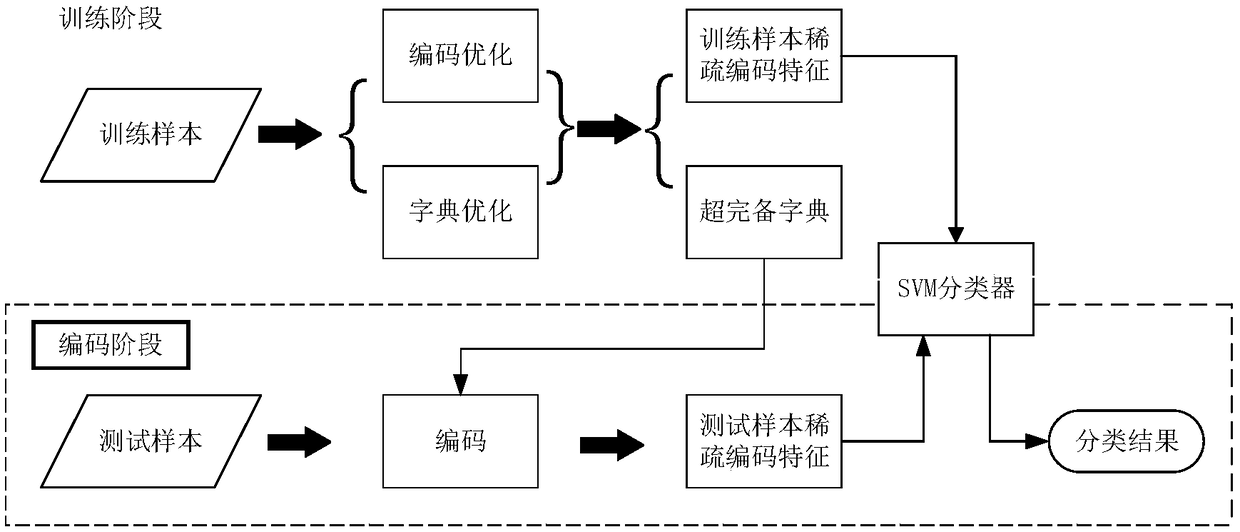
the structure of the environmentally friendly knitted fabric provided by the present invention; figure 2 Flow chart of the yarn wrapping machine for environmentally friendly knitted fabrics and storage devices; image 3 Is the parameter map of the yarn covering machine
View moreImage
Smart Image Click on the blue labels to locate them in the text.
Smart ImageViewing Examples

Examples
Experimental program
Comparison scheme
Effect test
Embodiment 1
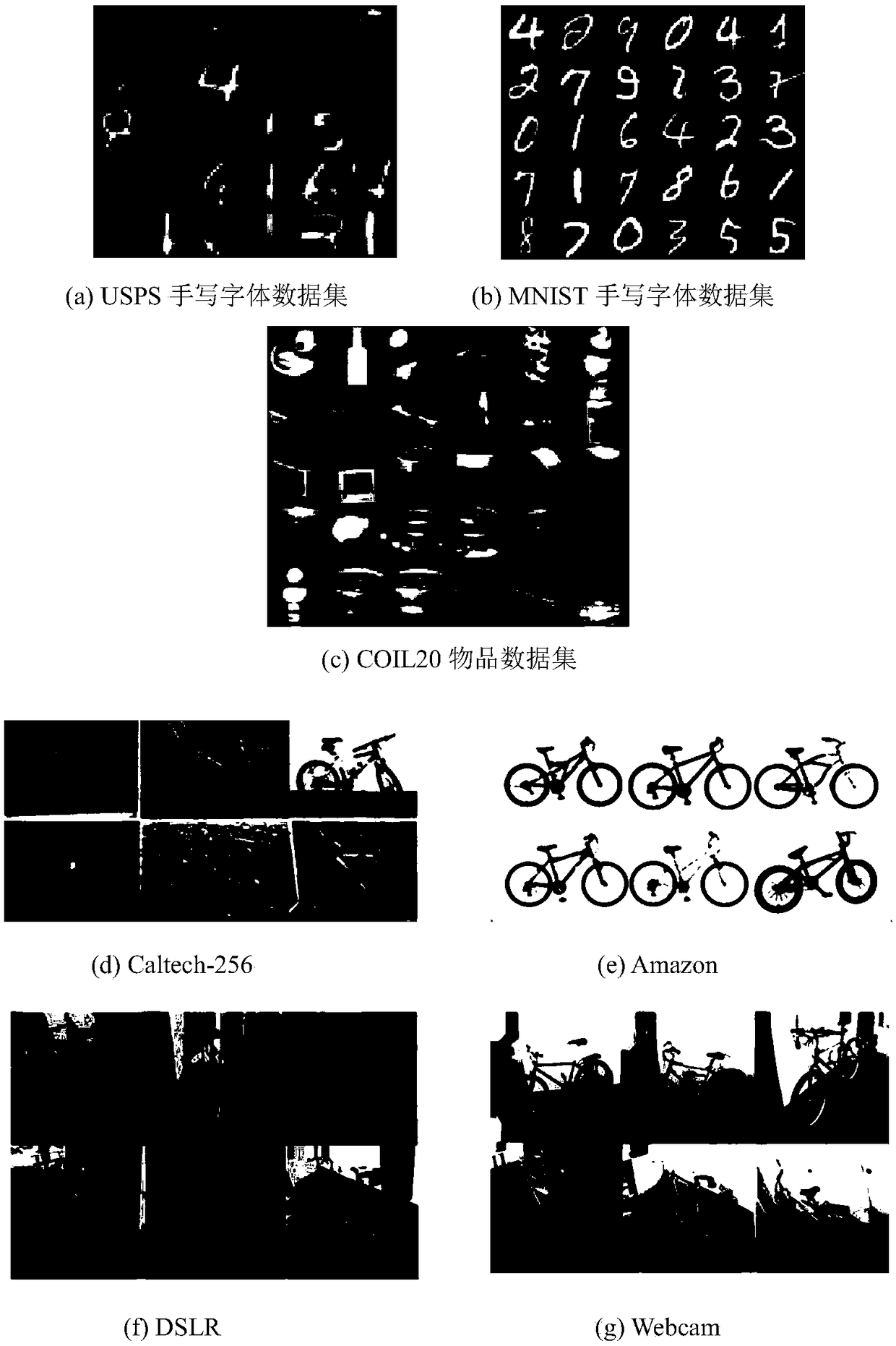
[0071] In order to reflect the credibility and classification performance of the algorithm, three types of benchmark datasets were selected in the experiment: USPS+MNIST handwritten digit dataset, COIL20 object recognition dataset and Office+Caltech256 object recognition dataset, and a total of 16 sets of cross-domain classification tasks were constructed. . The statistical information of each data set is shown in Table 1, and the images of some data sets are shown in figure 1 shown.
[0072] Table 1 Explanation of the experimental image dataset
[0073] dataset name
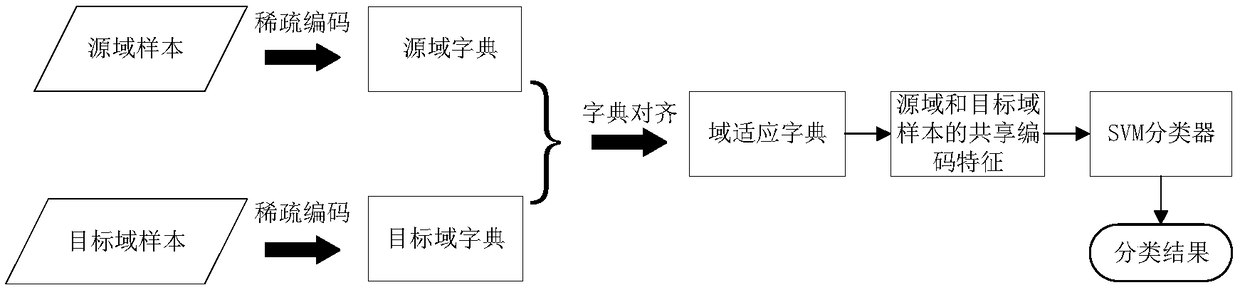
the structure of the environmentally friendly knitted fabric provided by the present invention; figure 2 Flow chart of the yarn wrapping machine for environmentally friendly knitted fabrics and storage devices; image 3 Is the parameter map of the yarn covering machine
Login to View More PUM
 Login to View More
 Abstract
The invention discloses a migration sparse coding image classification method based on dictionary domain adaptation, belonging to the machine learning field. This method introduces dictionary alignment mechanism based on traditional sparse coding model and constructs feature transfer classification model to solve the problem of image cross-domain classification. When the samples in source domain and target domain obey different distributions, the traditional sparse-coded image classification algorithm can not learn from the samples in source domain to obtain the dictionary which can encode thesamples in target domain effectively, so the classification performance is degraded. At first, that dictionary alignment mechanism is introduce into a sparse coding model, then the constraint term ofthe dictionary are converted into an unconstrained optimization problem by L2 regularization, and the knowledge transfer performance of the model is improved by adopting an inter-domain dictionary approximation as a regularization term. The invention can effectively extract cross-domain image sparse feature representation and obtain higher classification accuracy.
Description
technical field [0001] The invention belongs to the field of machine learning, and in particular relates to a migration sparse coding image classification method based on dictionary domain adaptation. Background technique [0002] Image classification using machine learning methods is a popular research topic in the fields of machine vision and pattern recognition. Image classification technology refers to an image processing method that extracts features from image data with the help of a computer to form a description of the image content, and classifies the category of the image according to this description. This technology has broad application prospects, such as: content-based image retrieval in the Internet field, automatic classification of personal gallery, image recognition in the medical field, or face recognition and intelligent video analysis in the security field. At present, researchers have proposed many data-driven image classification algorithms, that is, ...
Claims
the structure of the environmentally friendly knitted fabric provided by the present invention; figure 2 Flow chart of the yarn wrapping machine for environmentally friendly knitted fabrics and storage devices; image 3 Is the parameter map of the yarn covering machine
Login to View More Application Information
Patent Timeline
 Login to View More
 Patent Type & AuthorityApplications(China)
IPC IPC(8): G06K9/62
CPCG06F18/2136G06F18/28G06F18/2411
Inventor王雪松李泽军臧绍飞程玉虎
OwnerCHINA UNIV OF MINING & TECH