
Passive convergence-diffusion micro-mixer for fluids with low diffusion coefficient
A micro-mixer and fluid mixing technology, applied in the field of micro-total analysis system, can solve the problems of high energy consumption of active mixer and high complexity of micro-fluidic system, etc.
- Summary
- Abstract
- Description
- Claims
- Application Information
AI Technical Summary
Problems solved by technology
Method used
Image

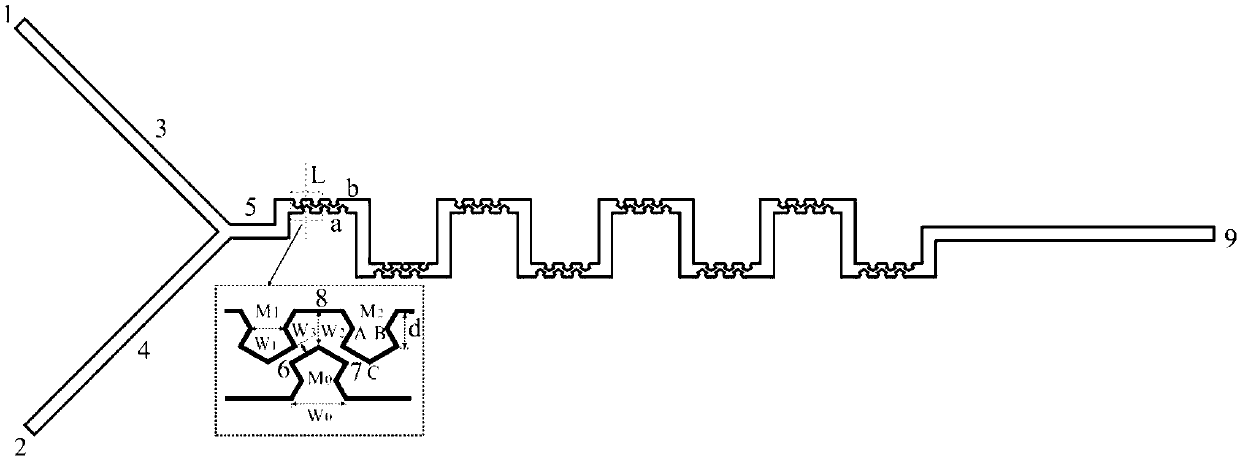
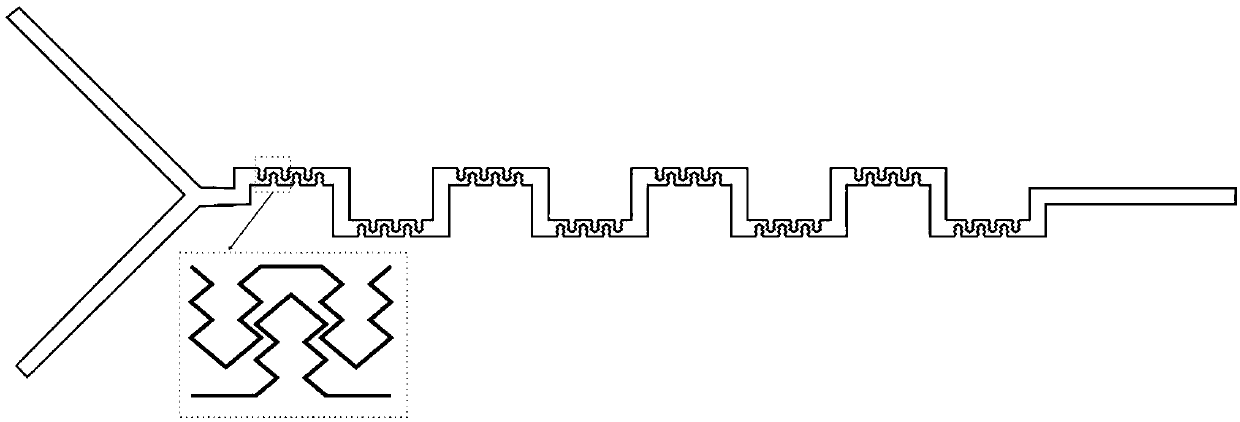
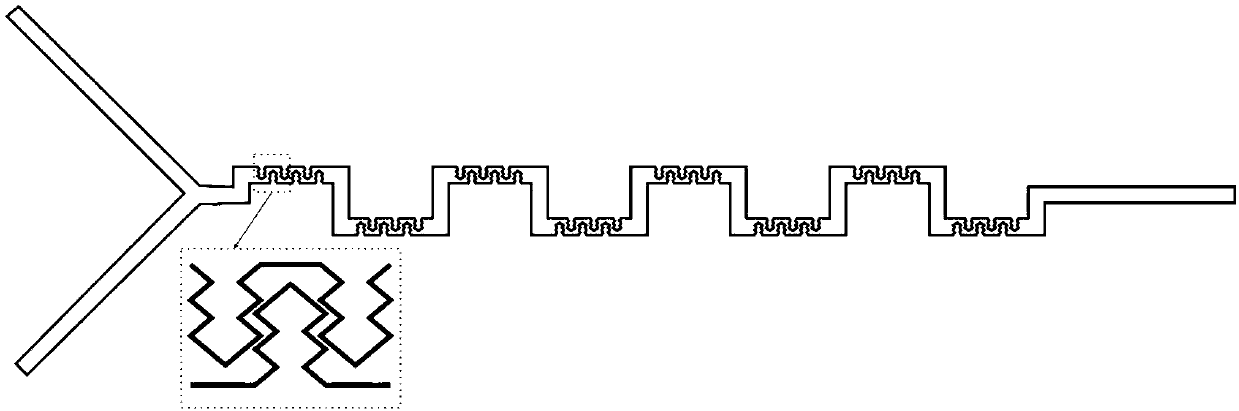
Examples
Embodiment Construction
[0048] The specific implementation manners of the present invention will be further described below in conjunction with the accompanying drawings and technical solutions.
[0049] The present invention proposes a passive convergent-divergent micro-mixer for fluids with low diffusion coefficient. The mixer is made of polydimethylsiloxane (PDMS). The channel structure pattern is transferred to a single crystal silicon wafer to obtain a positive mold; then the PDMS stock solution and the curing agent are mixed evenly at a ratio of 10:1, and the air bubbles in the PDMS mixed solution are discharged using a vacuum drying oven and then applied to the mold, and then vacuumed again Remove the air bubbles on the mold, and then heat at a constant temperature of 80°C for two hours; finally, peel off the heated and cured PDMS from the single crystal silicon wafer in absolute ethanol, then clean it with deionized water, and dry it with nitrogen gas for later use. Permanently bond the PDMS ...
PUM
 Login to View More
 Abstract
Description
Claims
Application Information
 Login to View More