A Semantic Segmentation Method of Mechanical Parts Based on Separate Encoding Network

A technology for encoding network and mechanical parts, applied in the field of semantic segmentation of mechanical parts, can solve the problems of accurate attenuation, severe dynamic changes, low semantic segmentation accuracy, etc., and achieve the effect of improving the average intersection ratio

CN111126407BActive Publication Date: 2022-07-01KUNMING UNIV OF SCI & TECH
8 Cites 0 Cited by

Patent Information

Authority / Receiving Office
CN · China
Patent Type
Patents(China)
Current Assignee / Owner
Publication Date
2022-07-01

Smart Images

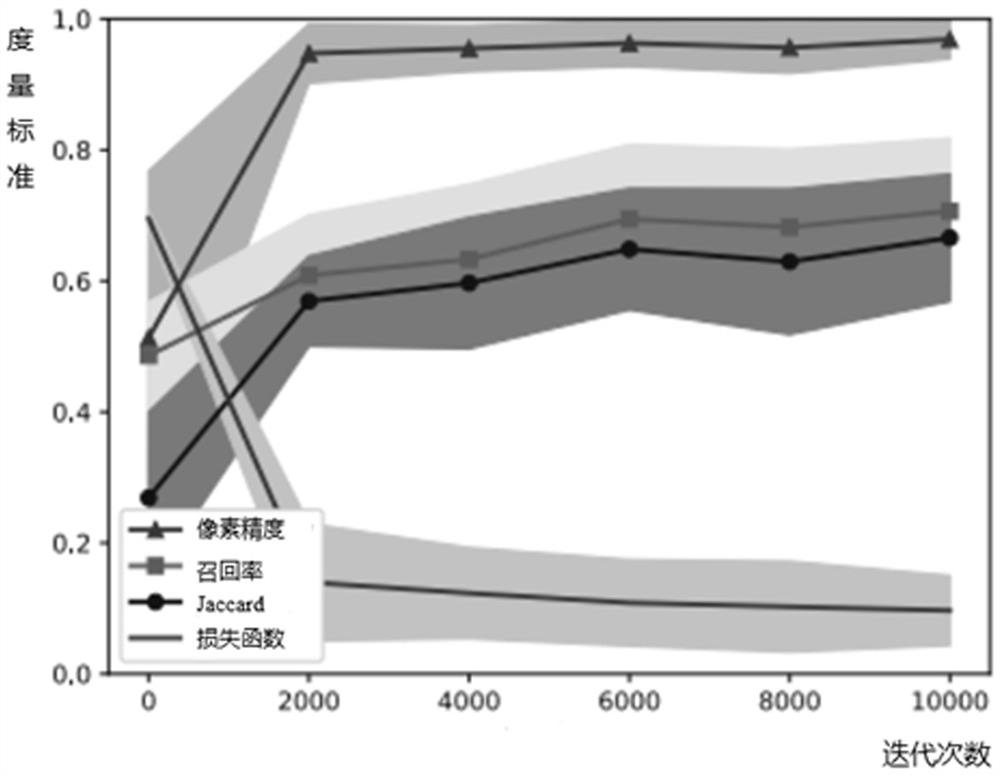
  • Figure 1
    Figure 1
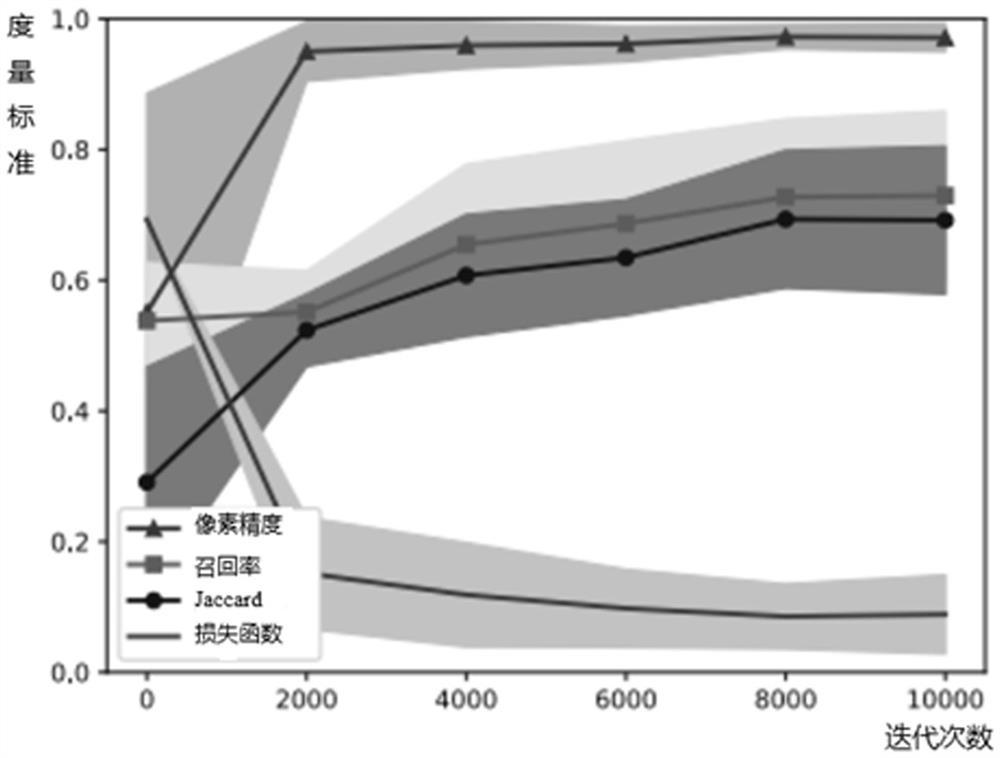
  • Figure 2
    Figure 2
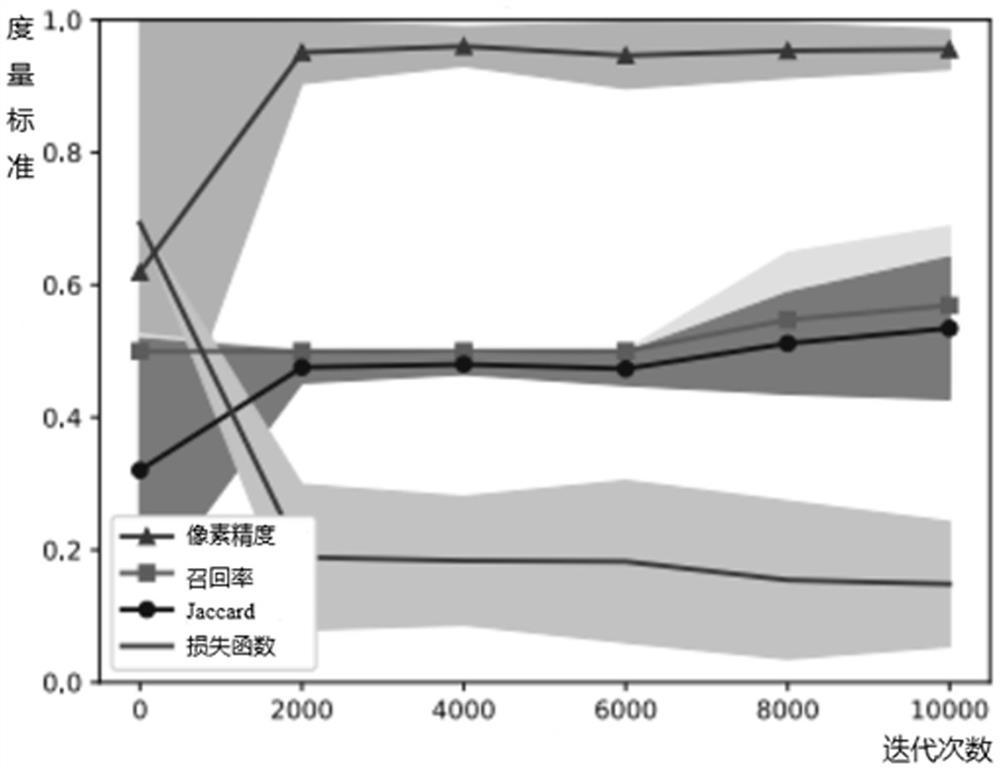
  • Figure 3
    Figure 3
Patent Text Reader

Abstract

The invention discloses a method for semantic segmentation of mechanical parts based on a separate coding network. The segmentation method uses a separate coding model to separately code a single or multiple mechanical parts to be divided to achieve semantic segmentation. The invention utilizes the separate coding model to separately encode the single or multiple mechanical parts to be divided, thereby realizing the semantic segmentation of the mechanical parts, and improving the semantic segmentation accuracy and the average intersection-union ratio on the union measure. The number of outputs of the last convolutional layer in each of the four Spatial Pyramid Pooling (ASPP) branches is 2 to obtain binary predictions for individual mechanical parts.
Need to check novelty before this filing date? Find Prior Art

Description

technical field

[0001] The invention relates to a method for semantic segmentation of mechanical parts based on a separate coding network. Background technique

[0002] Semantic segmentation of objects in natural scenes is a fundamental problem in the field of computer vision research. In addition, semantic segmentation also plays an important role in high-tech fields of autonomous robot navigation, self-driving vehicles, security monitoring, and industrial automation.

[0003] In the field of practical industrial inspection, semantic segmentation of mechanical parts is a hugely challenging task. First, mechanical parts captured by cameras often suffer from large dynamic changes in appearance and scale, which are caused by changes in lighting and viewing distances at the manufacturing site. Appearance and scale variations of mechanical parts will inevitably inhibit image segmentation performance in terms of accuracy. Second, a typical production line often needs to handle...

Examples

Embodiment Construction

[0038] The method for semantic segmentation of mechanical parts based on a separate coding network provided by the present invention utilizes a separate coding model to separately encode a single or multiple mechanical parts to be segmented to achieve semantic segmentation.

[0039] The individual encoding models used here include:

[0040] convolutional layer conv ( l , o , h , p ) for feature extraction of the mechanical parts to be segmented, l represents the kernel of the convolutional layer, o represents the number of outputs of the convolutional layer, h represents the convolutional layer dilation factor, p Represents the padding of the convolutional layer;

[0041] pooling layer ( l , s , p ), which is used to perform partition sampling on the features extracted by the convolution layer to form a small matrix containing the features of the mechanical parts to be segmented, l and s represents the stride of the pooling layer, p Represents the padding of the ...