A transformer and its winding structure

A winding structure and transformer technology, applied in the field of transformers, can solve the problems of inability to achieve reinforced insulation, and it is difficult for transformers to meet partial discharge requirements, and achieve the effect of increasing insulation thickness

CN112216483BActive Publication Date: 2022-04-08SUNGROW POWER SUPPLY CO LTD
9 Cites 0 Cited by

Patent Information

Authority / Receiving Office
CN · China
Patent Type
Patents(China)
Current Assignee / Owner
Publication Date
2022-04-08

Smart Images

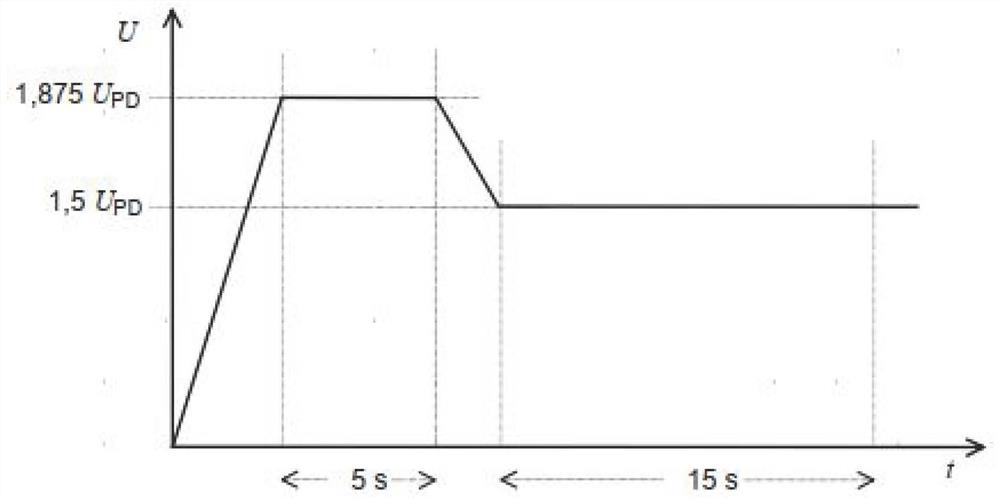
  • Figure 1
    Figure 1
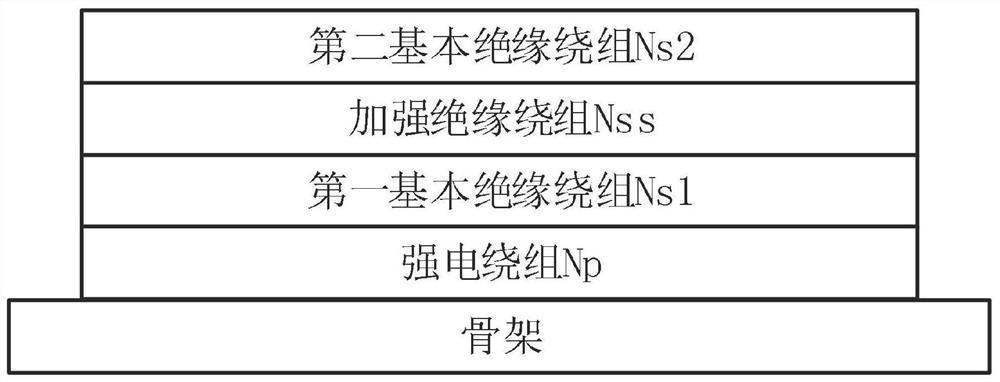
  • Figure 2
    Figure 2
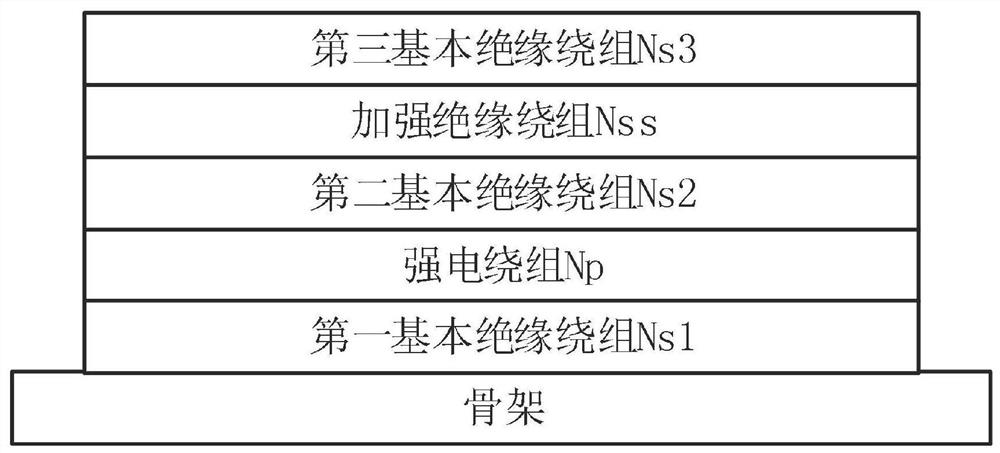
  • Figure 3
    Figure 3
Patent Text Reader

Abstract

The application provides a transformer and its winding structure. In the winding structure of the transformer, the reinforced insulation winding, all the basic insulation windings and all the high-voltage windings are layered and wound along the skeleton of the transformer main structure; and, adjacent to the reinforced insulation winding, there are at least one basic insulation Winding, so that at least one basic insulation winding is wound between the reinforced insulation winding and any strong current winding, so that the insulation thickness between the strong current winding and the reinforced insulation winding increases, and the discharge capacity of the partial discharge test of the transformer The reduction has a significant effect, so it solves the problem in the prior art that the transformer in the photovoltaic high-voltage system cannot achieve reinforced insulation due to its own partial discharge detection is difficult to meet the partial discharge requirements.
Need to check novelty before this filing date? Find Prior Art

Description

technical field

[0001] The invention relates to the technical field of transformers, in particular to a transformer and its winding structure. Background technique

[0002] In the photovoltaic safety standard, the voltage with a decisive voltage level higher than DVC-A (DC voltage ≤ 60V, AC voltage rms ≤ 25V, AC voltage peak ≤ 35.4V) is regarded as unsafe voltage, referred to as strong voltage; in practice In applications, circuits that are directly connected to strong electricity or separated only by functional insulation are also regarded as strong electricity; and if the human body is directly exposed to strong electricity, there will be a risk of electric shock. Therefore, for the sake of human safety, shells or barriers can be added around electrical appliances, and the power supply windings that supply power to conductive components such as external communication interfaces can also be insulated, such as photovoltaic inverters (the voltage of the battery panel string i...

Examples

Embodiment Construction

[0035] The following will clearly and completely describe the technical solutions in the embodiments of the application with reference to the drawings in the embodiments of the application. Apparently, the described embodiments are only some of the embodiments of the application, not all of them. Based on the embodiments in this application, all other embodiments obtained by persons of ordinary skill in the art without creative efforts fall within the protection scope of this application.

[0036] In this application, relational terms such as first and second, etc. are only used to distinguish one entity or operation from another entity or operation, and do not necessarily require or imply any relationship between these entities or operations. an actual relationship or order. Moreover, the term "comprises", "comprises" or any other variation thereof is intended to cover a non-exclusive inclusion such that a process, method, article or apparatus comprising a set of elements inc...