

Automatically detecting unauthorized re-identification
A technology for identification and computing equipment, applied in the field of automatic detection of unauthorized re-identification, which can solve the problems of being unable to identify content providers and determining how content is selected
- Summary
- Abstract
- Description
- Claims
- Application Information
AI Technical Summary
Problems solved by technology
Method used
Image



Examples
Embodiment Construction
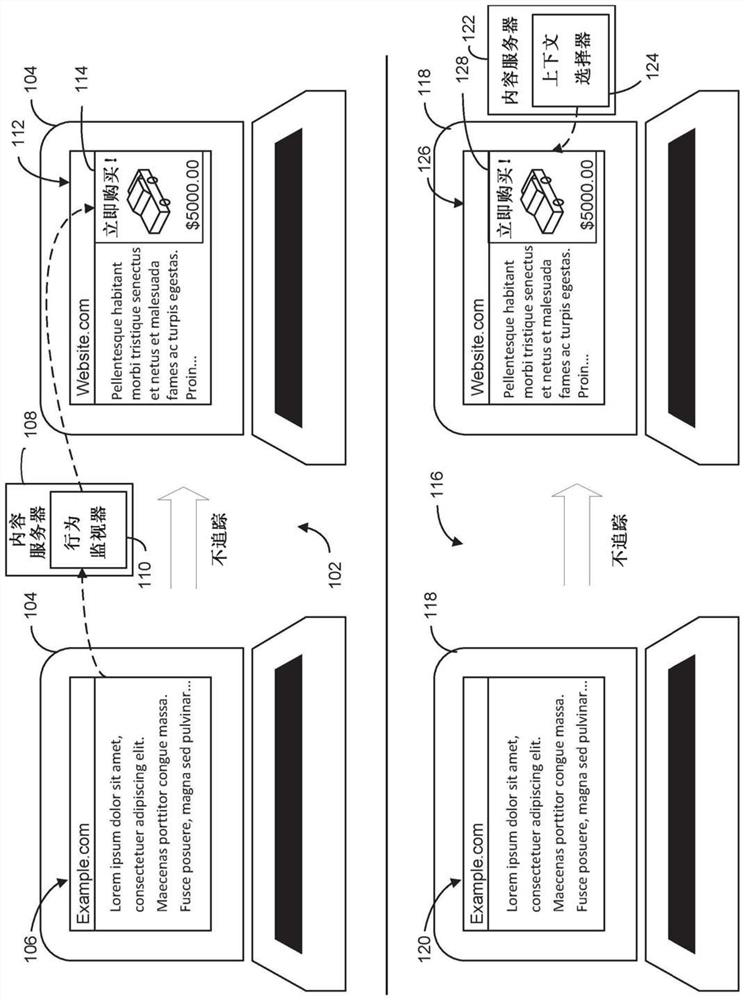
[0026] After a user selects the option to disable cookies in a browser or enable LAT on a mobile device, it may be difficult for a computer system or web browser to determine whether a user is being tracked by a third-party content provider. For example, a user may open a browser and select the option to disable cookies. A user can go to a webpage that talks about cars, and then go to another non-automotive-related webpage that has content about cars. The same content could be presented as a result of tracking the user from a website about cars, or chosen randomly and contextually selected and presented by the server. Although the user has selected the option to disable cookies, prior systems and methods have been unable to determine how content was selected (eg, targeted or randomly or contextually) to identify whether the content provider is tracking the user. While web browsers can currently block content providers that track users, prior systems and methods have been unab...
PUM
 Login to View More
 Abstract
Description
Claims
Application Information
 Login to View More