
Encryption key exchange process using access device
a key exchange and encryption technology, applied in the field of encryption key exchange process using access device, can solve the problems of communication device not being able to connect, communication device not being able to communicate with remote provisioning server computer to receive such encryption keys, and inability to receive encryption keys directly from remote provisioning server computers over cellular networks
- Summary
- Abstract
- Description
- Claims
- Application Information
AI Technical Summary
Benefits of technology
Problems solved by technology
Method used
Image

Examples
Embodiment Construction
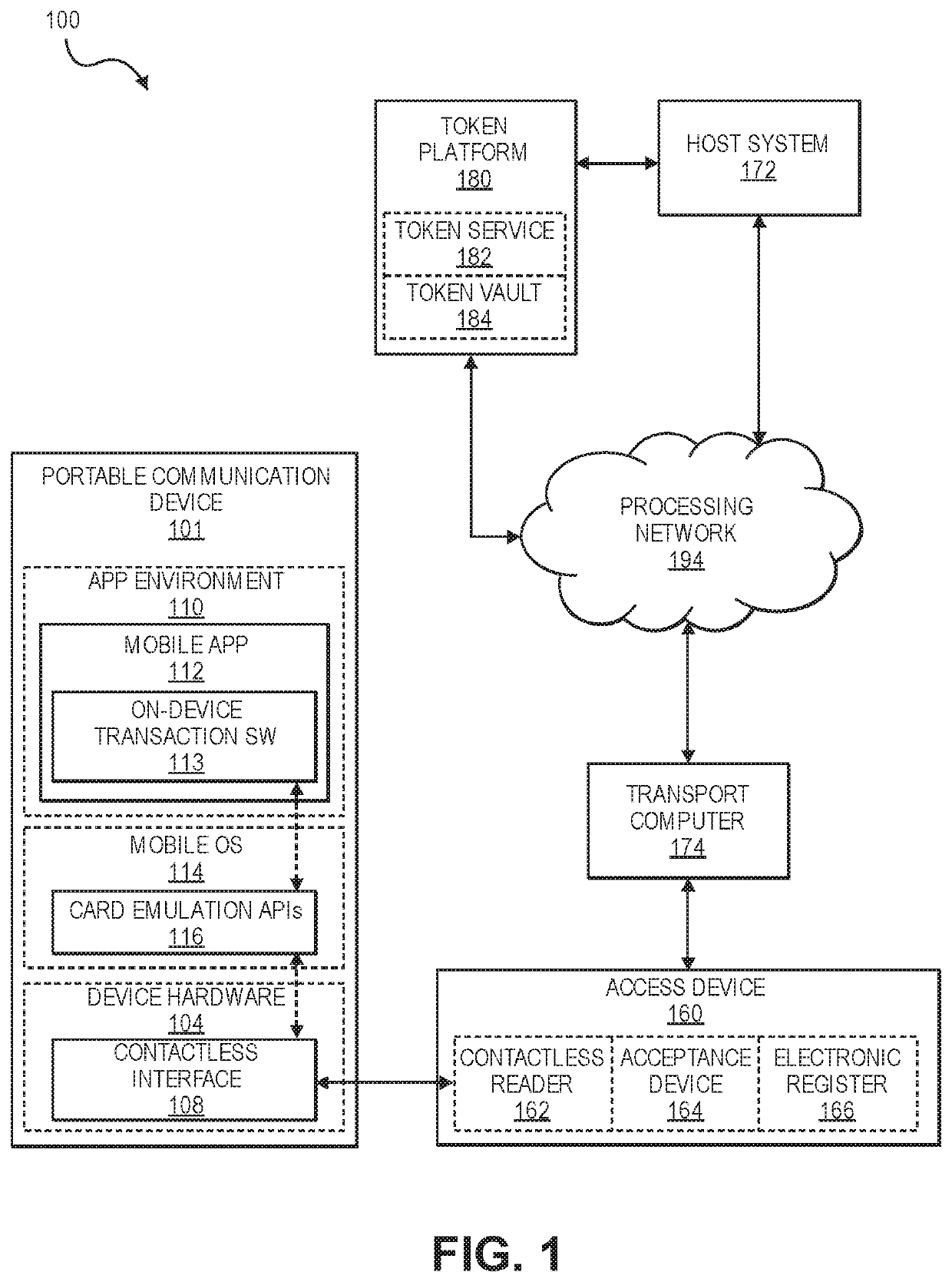
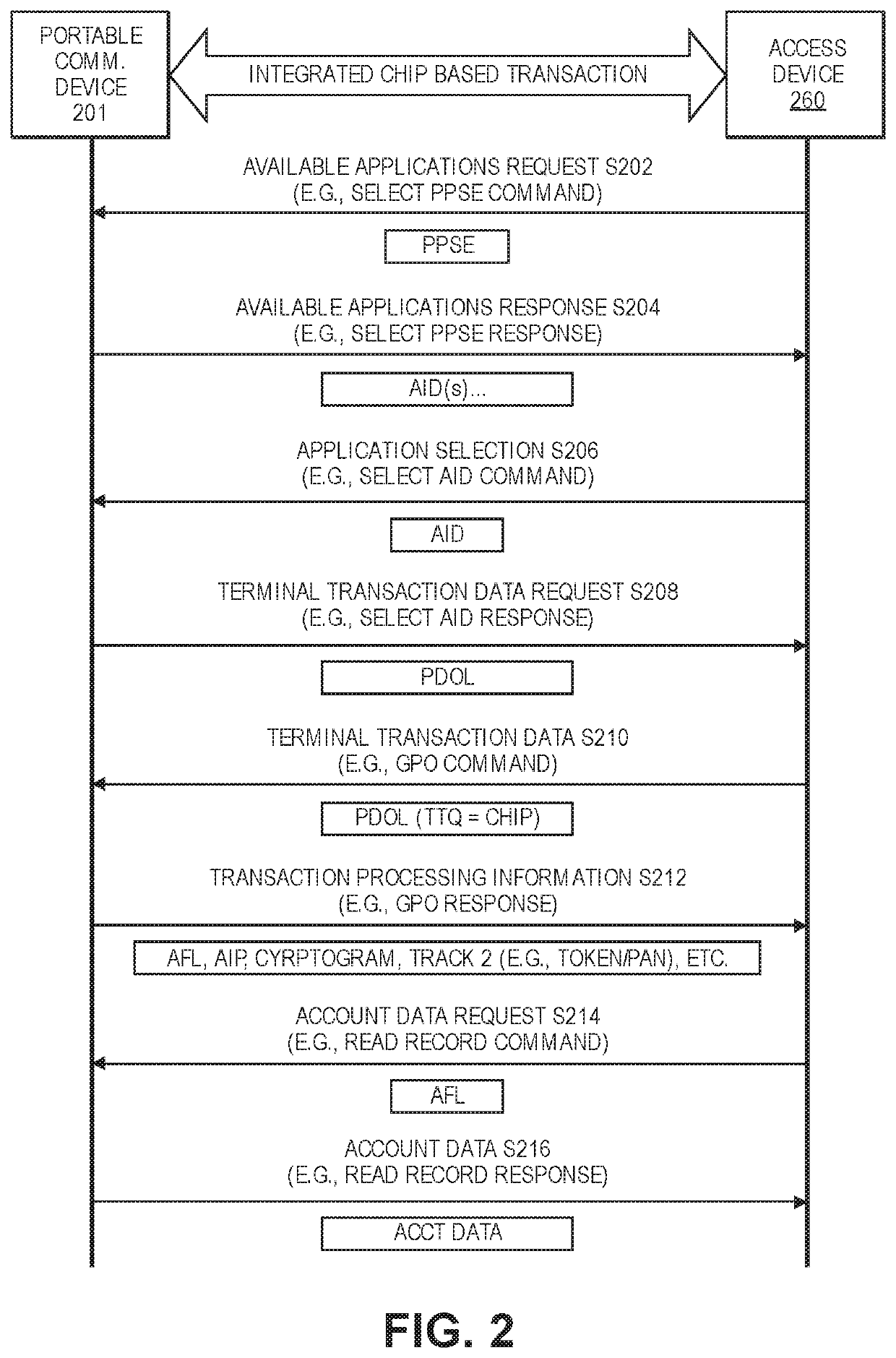
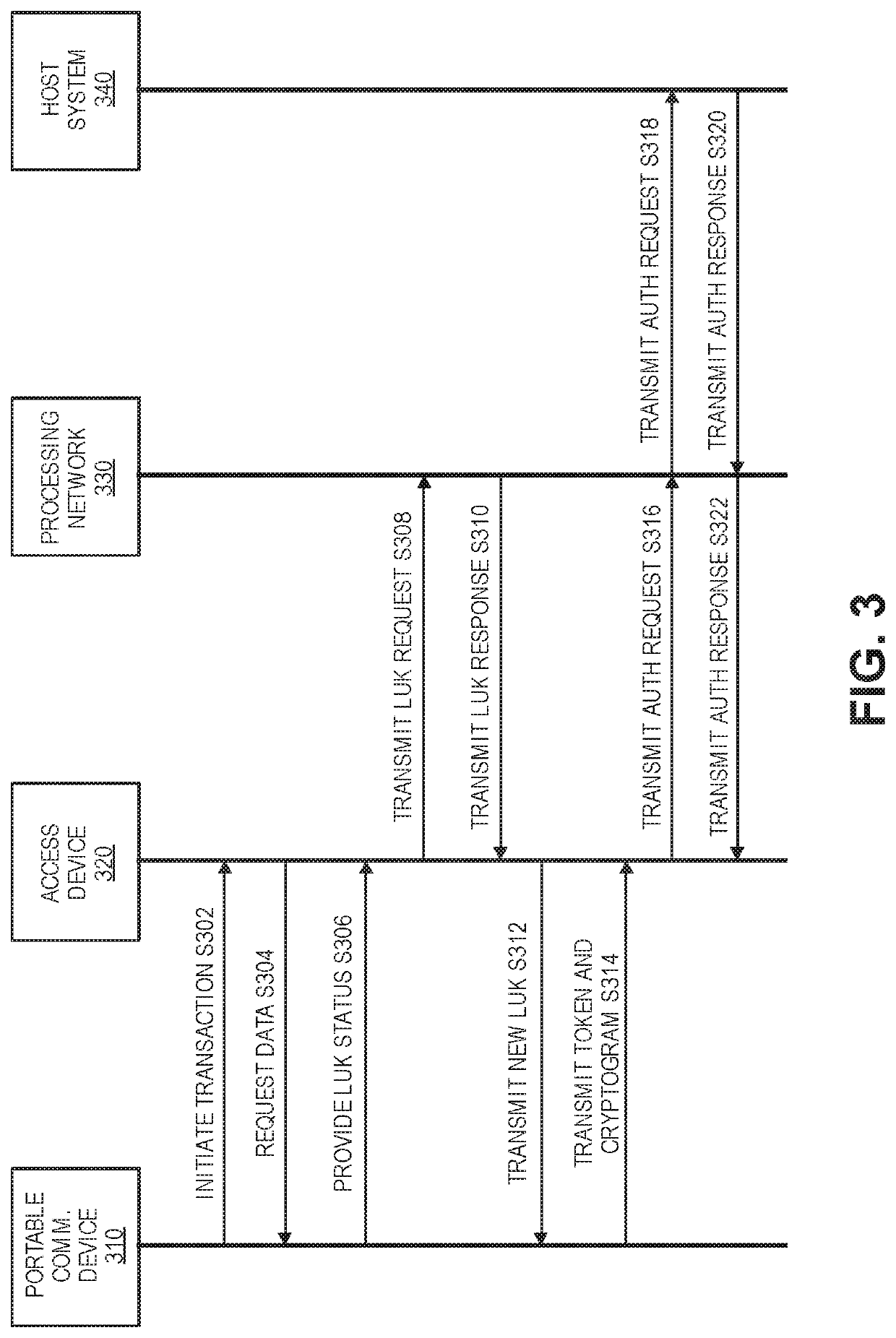
[0024]HCE (host card emulation) based token deployments do not rely on secure hardware to store tokens. In a conventional HCE based token deployment, a limited use encryption key or “LUK” is provisioned to a mobile phone over the air along with a payment token. The LUK may be used by the mobile phone to generate a cryptogram. In a transaction, the cryptogram and the access token are passed from the mobile phone to an access device such a POS terminal. The access device transmits the cryptogram and the access token to a remote server computer, which then validates the cryptogram and continues to processes the access token if the cryptogram is valid.
[0025]While conventional methods for delivering LUKs to mobile phones are effective, many other form factors are not capable of communicating with a provisioning server to receive the LUK. For example, payment cards, wearable devices such as rings and watches, and key fobs are capable of being used to conduct payment transactions as they m...
PUM
 Login to View More
 Abstract
Description
Claims
Application Information
 Login to View More