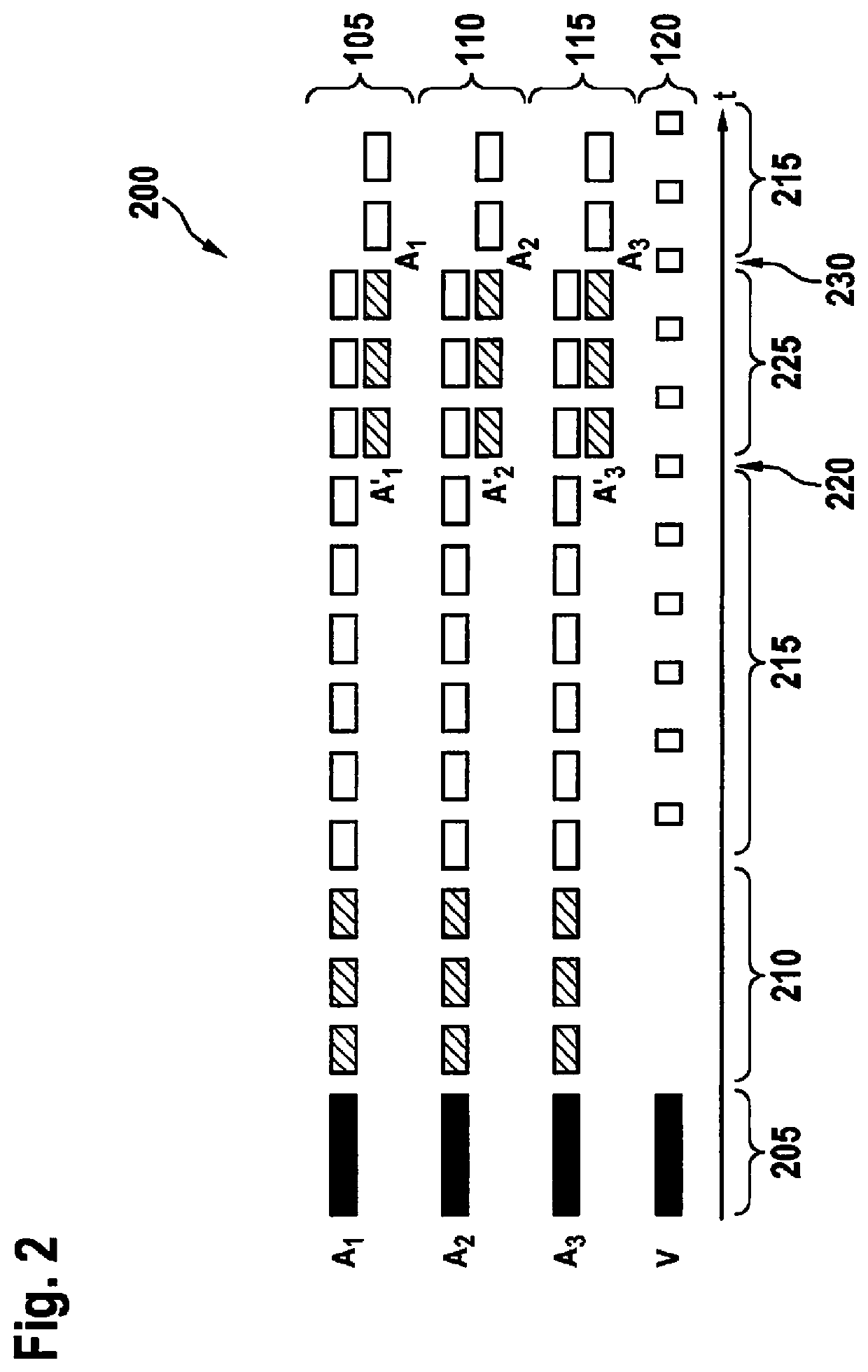
[0007]Instead of transferring from one processing device to another the parameters required for execution of a processing process, it is proposed to start several processing processes concurrently on one processing device. The restarted processing process can be initialized on the basis of the input information items so that, for example, a physical model, an algorithm, or a mathematical filter is sufficiently stabilized for the intended processing. This can require, for example, processing of a predetermined number of epochs (measured data intervals). As soon as the restarted processing process has stabilized, the original processing process that is running on the same processing device can be stopped. The new processing process can thus replace the old one, so that the processing apparatus can furnish information that is processed uninterruptedly.
[0011]Periodic restarting of processing processes makes it possible to prevent faults, for example a memory leak, from causing greater damage. In particular, the processing processes can be restarted on the processing devices in a staggered manner, i.e. with a time offset. Faults that relate to the processing of all the processing processes can thereby be decorrelated in time. The probability that a fault will simultaneously affect all the participating processing processes or processing devices can thereby be greatly decreased.
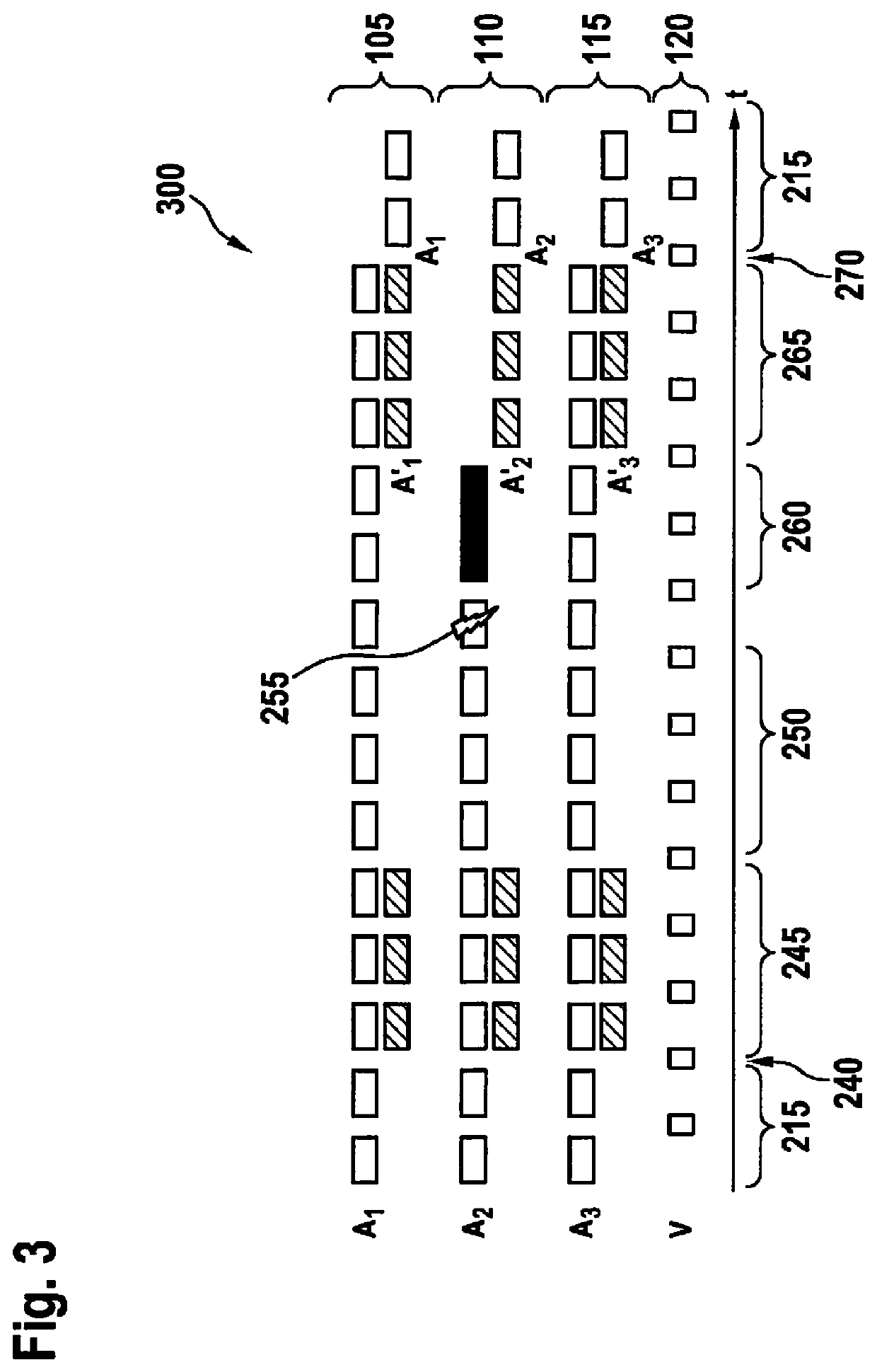
[0012]In a second variant, similarly to the first variant, a further processing process is restarted on each processing device and initialized with the input information items. After the determination that one of the processing processes is operating defectively, the processing device on which the defectively operating processing process is running is reset. Alternatively, the processing process can also be terminated, and a new processing process can be started and initialized, without restarting the processing device itself. An operating system executing on the processing device can continue to run. The processing device can then ramp back up into an operation-capable state (system start, reboot), and a processing process can then be restarted on that processing device and can be initialized with the relevant input information items. As soon as initialization is complete, the existing processing processes on the other processing devices can be replaced by the further processing processes. This transition can occur particularly quickly, since the further processing processes are already initialized and can be used immediately.
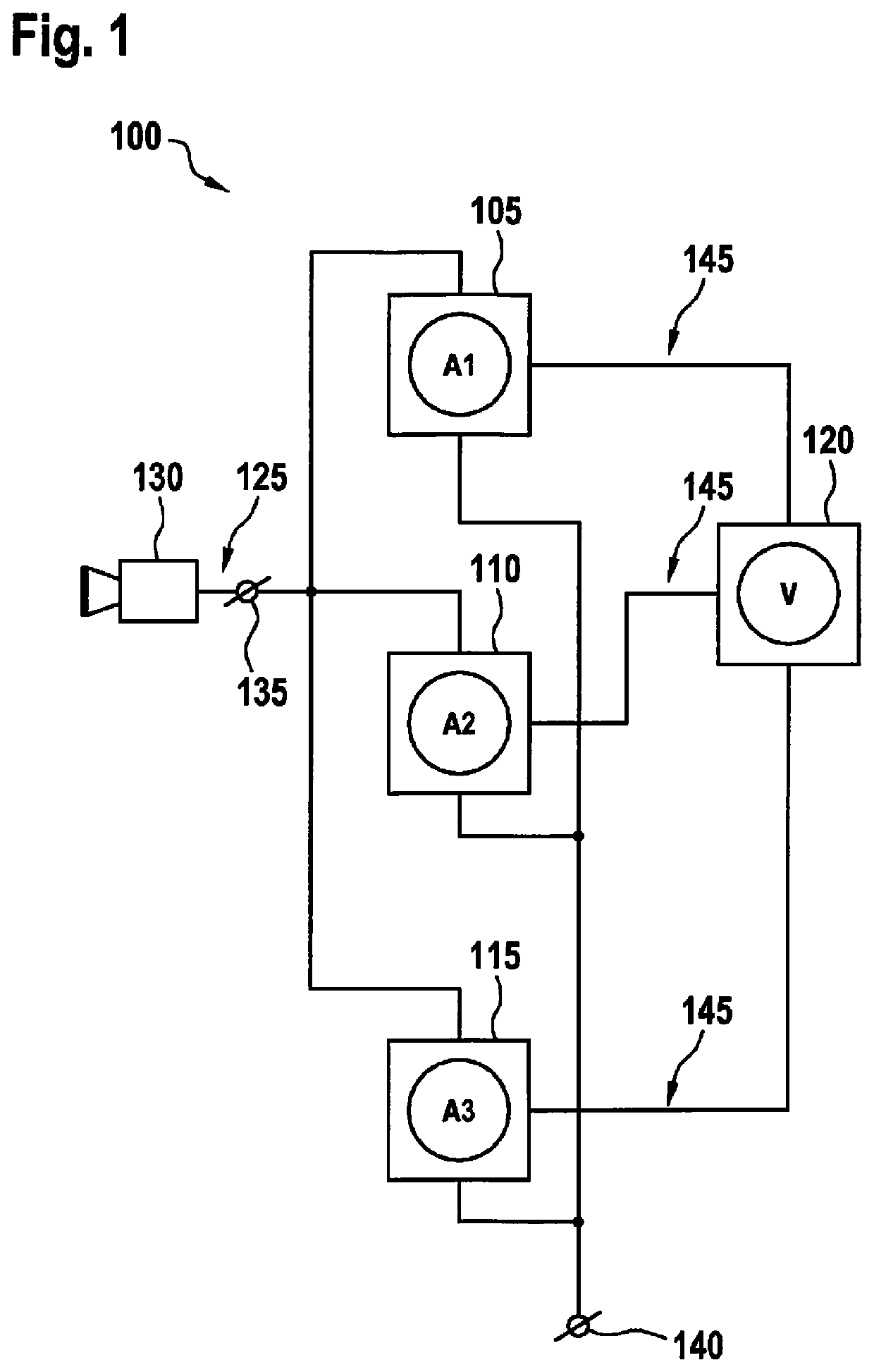
[0016]In order to determine which processing process is operating defectively, at least three processing processes may be provided. Also, these may be carried out on processing apparatuses that differ pairwise from one another, so that three processing apparatuses are also required. A processing process can be determined to be operating defectively if its characteristic value differs from the characteristic values of the other processing devices. The characteristic values of the other processing devices are usually in agreement. An output value, an interim result, a combination of a number of parameters (in particular a signature, for example a hash value), a memory snapshot, a parameter set or variable set, or another information item, can be used, for example, as a characteristic value. It may be provided that the characteristic value be determined in such a way that it changes when the processing process changes, for example because of a modified model, a memory error, an unforeseen result, or a technical fault in the region of the underlying processing device. It further may be provided that the characteristic value be determined in such a way that it can be determined easily and, if possible, without greatly stressing the processing device. The characteristic value should advantageously also be small, in order to facilitate transfer to the comparison device and evaluation therein.


 Login to View More
  Login to View More