
Water treatment system
- Summary
- Abstract
- Description
- Claims
- Application Information
AI Technical Summary
Benefits of technology
Problems solved by technology
Method used
Image

Examples
example 2
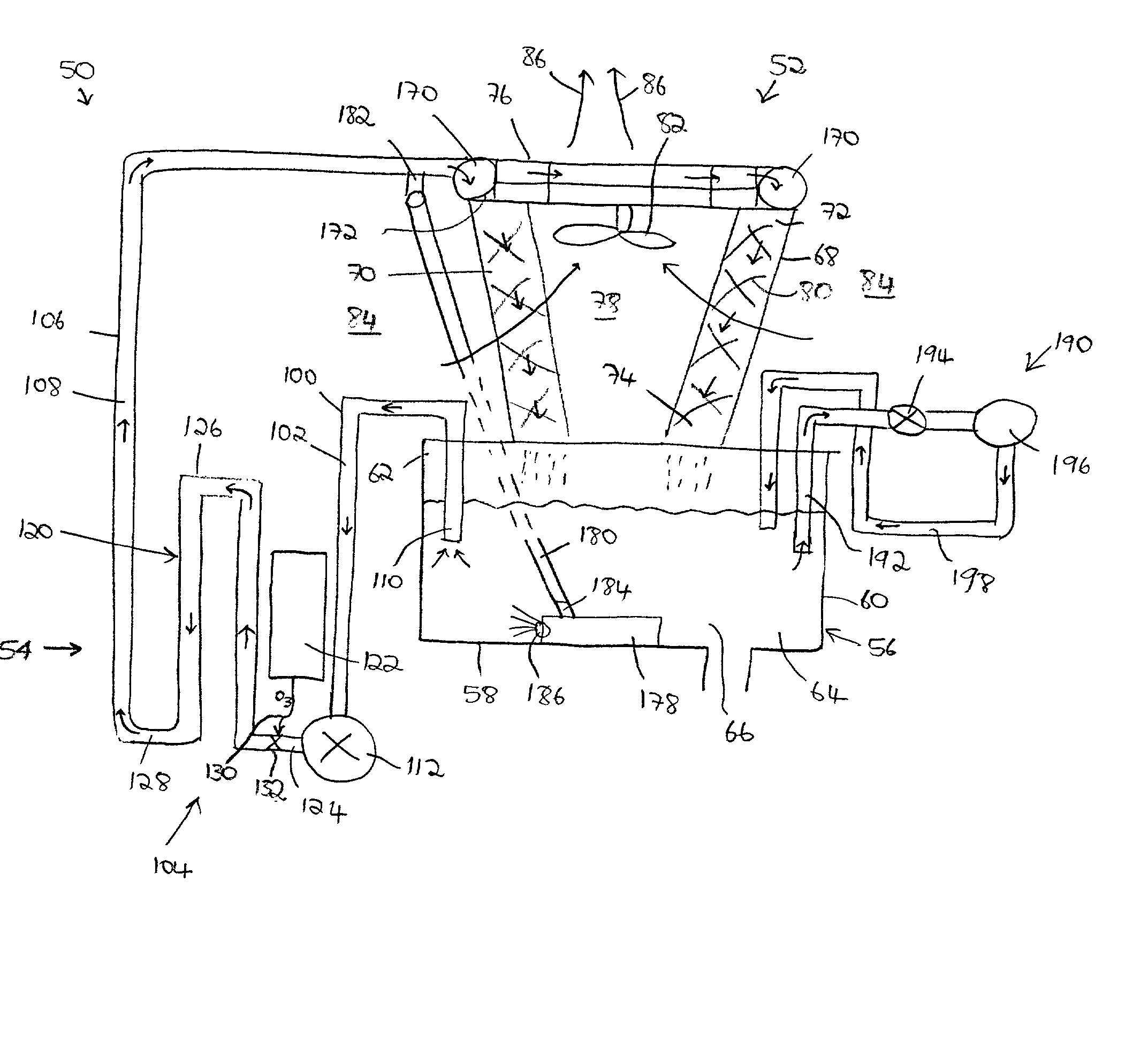
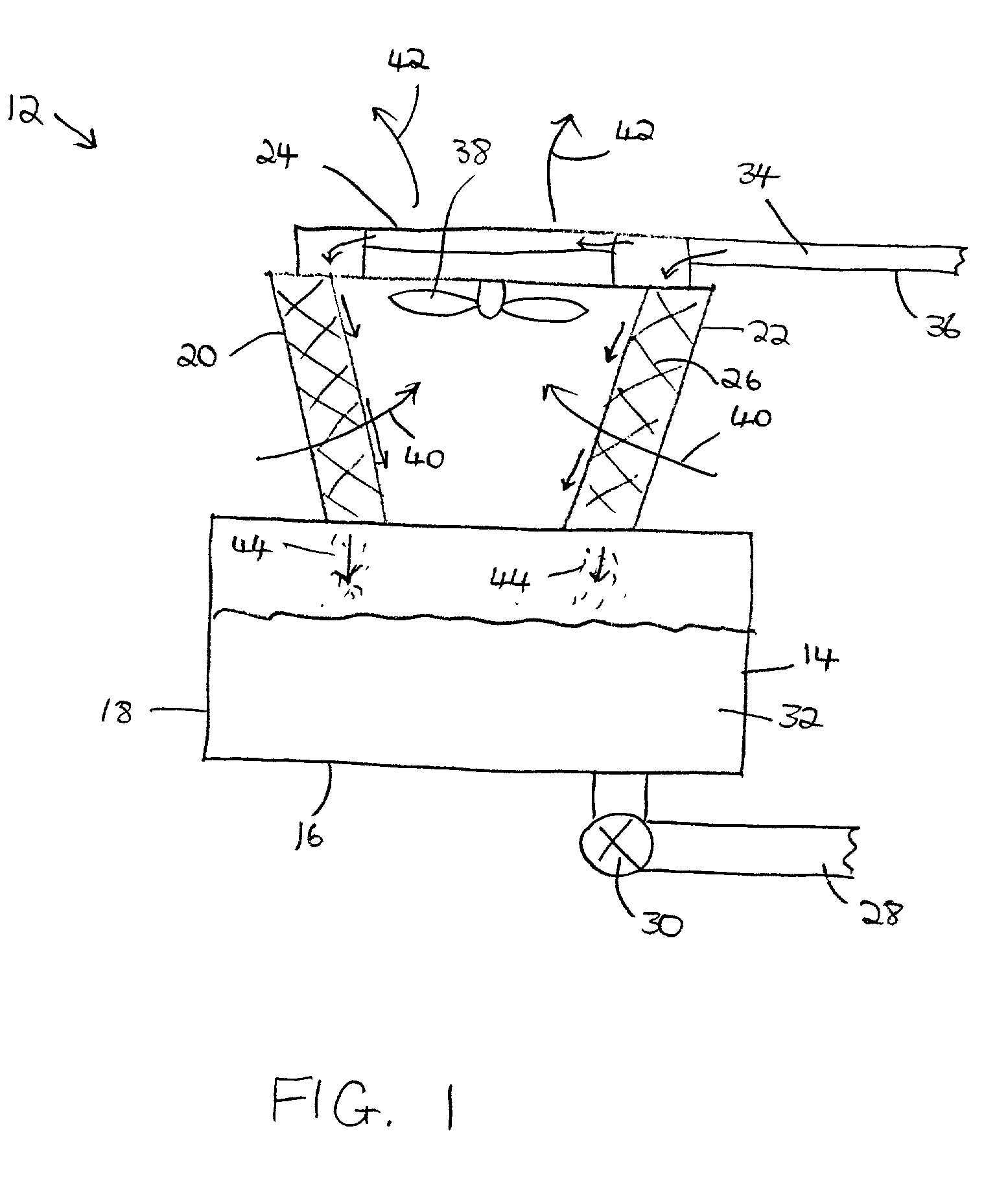
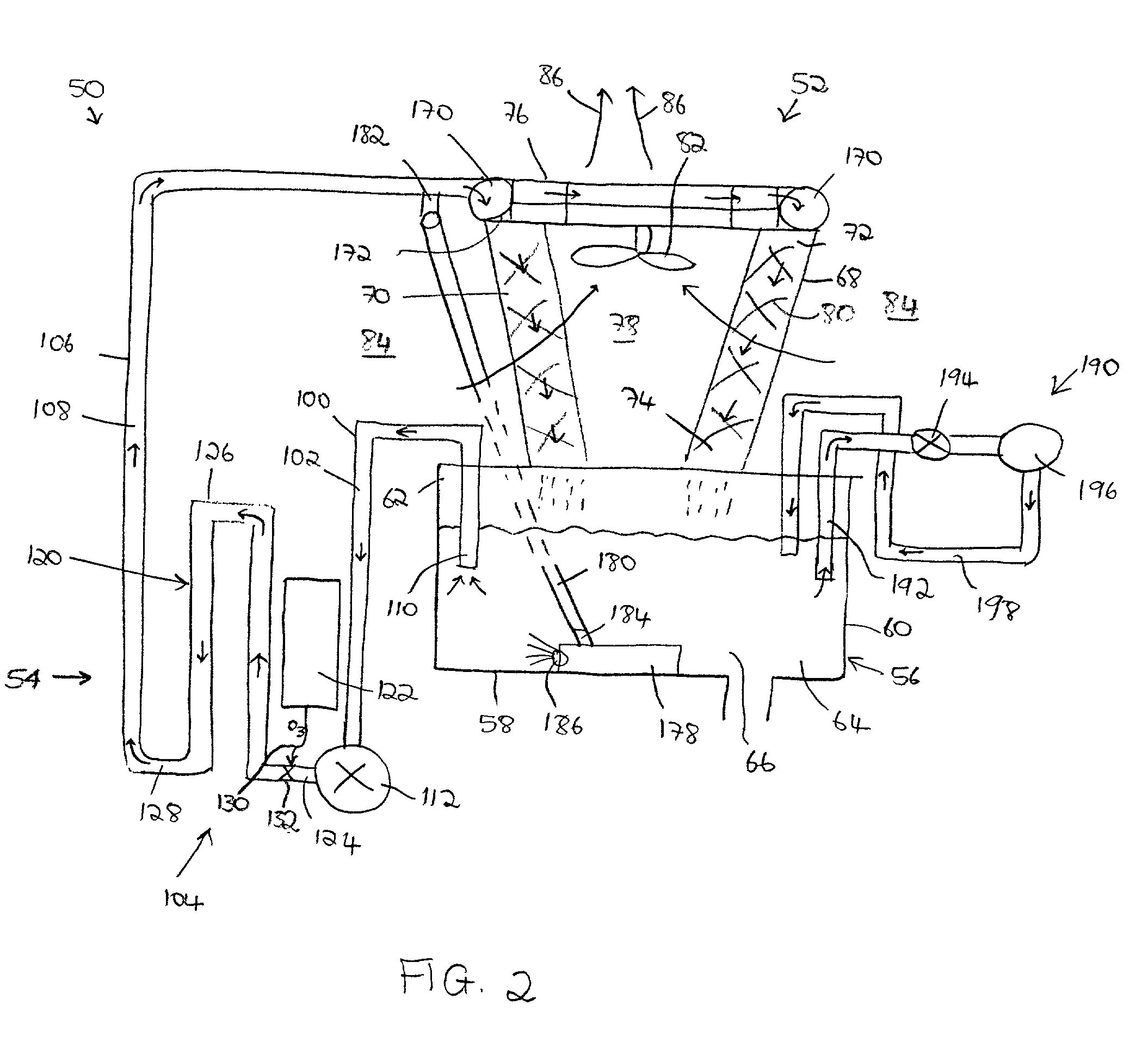
[0059] Dosing experiments were also conducted, since finding the optimal or appropriate dosage of ozone injection into a system is a problem for all ozone systems. In order to address and resolve this problem, an experiment was conducted whereby the ozonator was turned off for four days, and the plate counts measured daily until an unacceptable level of bacteria had developed in the sump water. At the beginning of the study, the plate counts were 700 cfu / ml. The experiment was, at least to some extent, influenced by the surroundings and use of the cooling tower and, since it was carried out at a college, the dosing experiments were conducted at times when classes were not in session, limiting the amount of time the tower could go untreated. Further, the counts were not allowed to go too high, and about 700 cfu / ml was considered adequate for the test. The average water temperature during the study was 68.degree. F.
[0060] The ozonator was turned on in the morning at approximately 8:00...
PUM
| Property | Measurement | Unit |
|---|---|---|
| Diameter | aaaaa | aaaaa |
| Diameter | aaaaa | aaaaa |
| Diameter | aaaaa | aaaaa |
Abstract
Description
Claims
Application Information
 Login to View More