
Thermal balance temperature control system
a temperature control system and temperature control technology, applied in the field of temperature control systems, can solve the problems of unneeded energy costs, shortening the life of the unit, increasing the maintenance cost of the unit, etc., and achieve the effects of reducing the excess cycling of components, eliminating/reducing undesirable temperature swings in the regulated environment, and eliminating/reducing the utilization of unneeded excess capacity
- Summary
- Abstract
- Description
- Claims
- Application Information
AI Technical Summary
Benefits of technology
Problems solved by technology
Method used
Image

Examples
Embodiment Construction
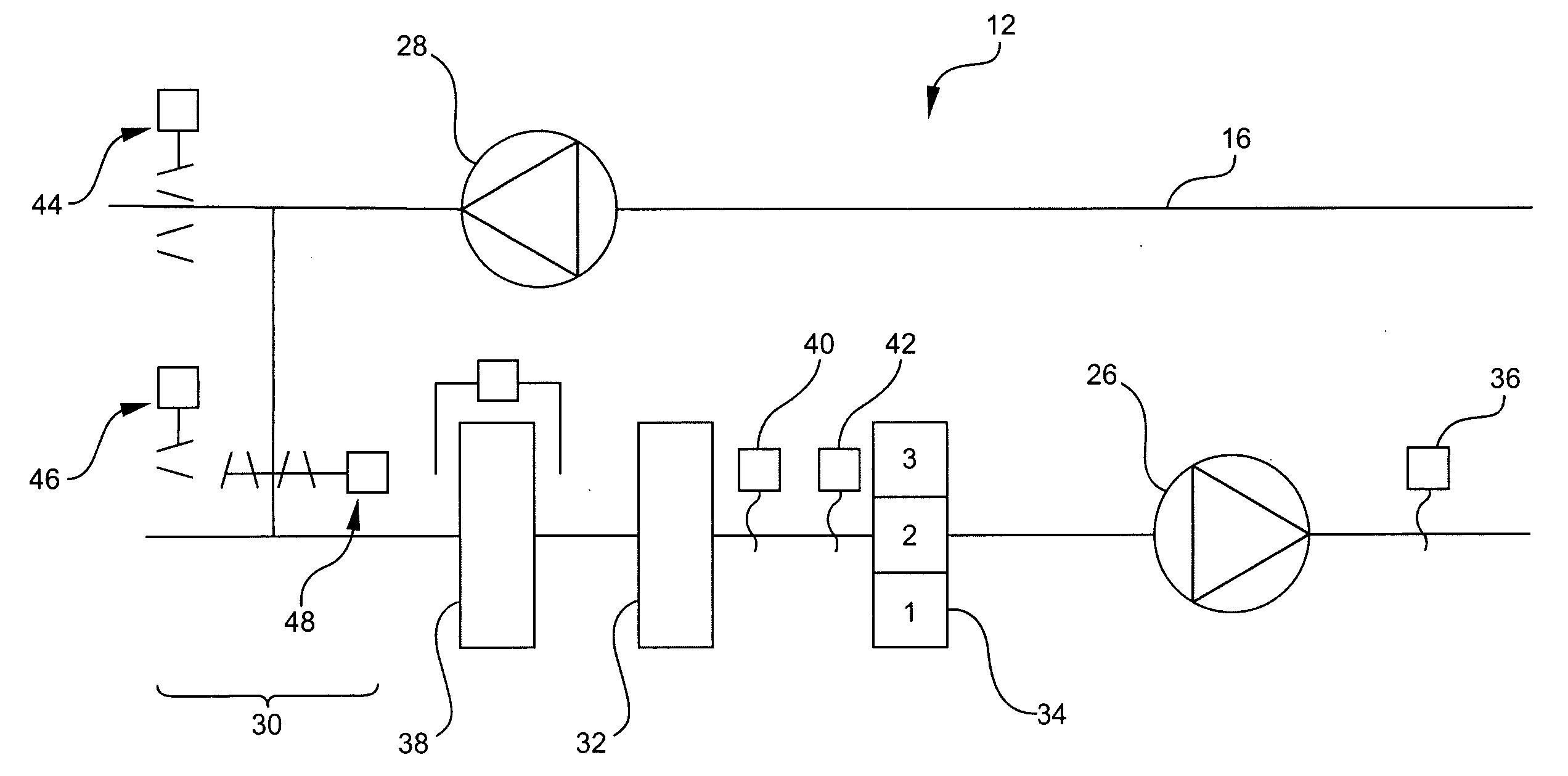
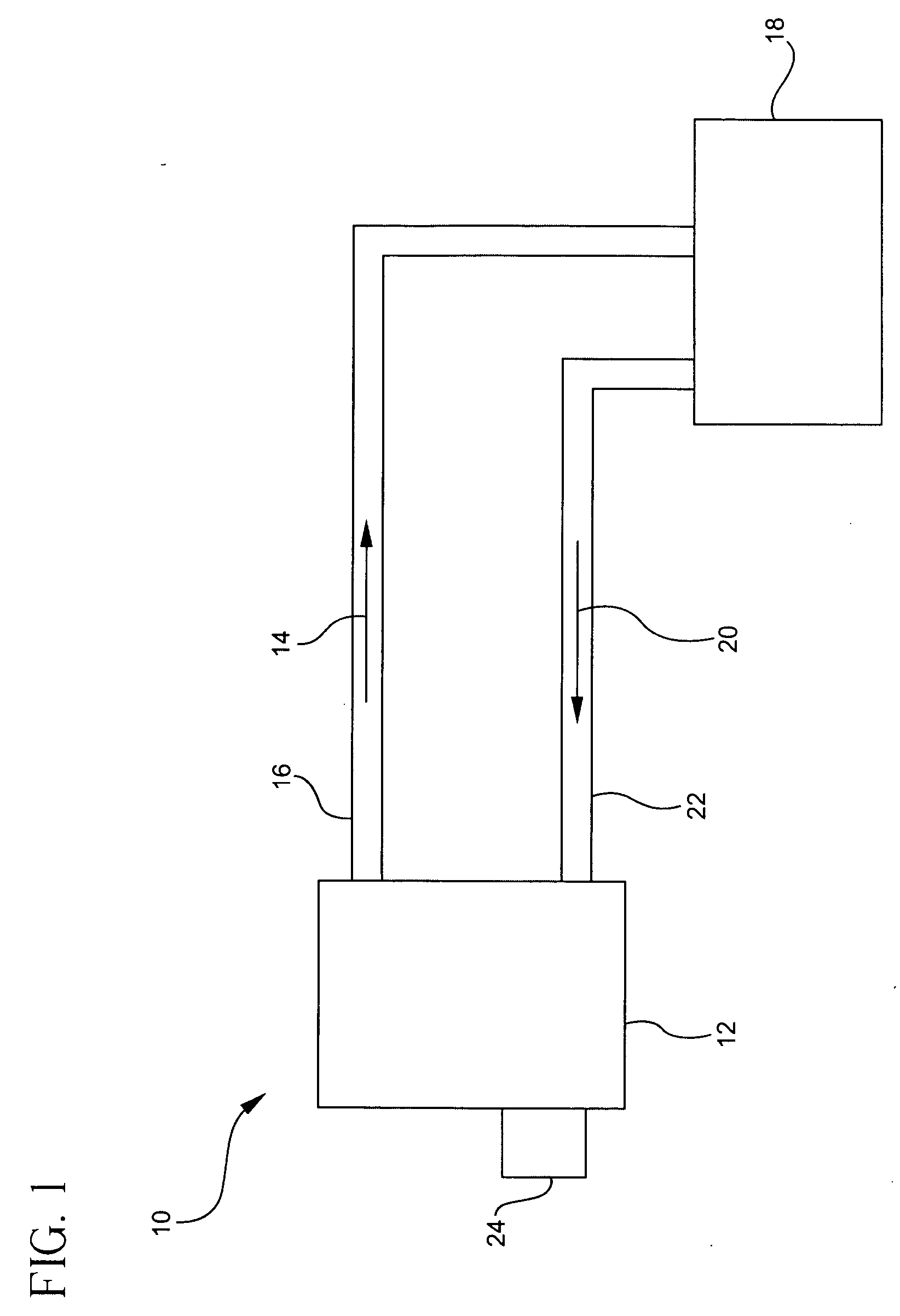
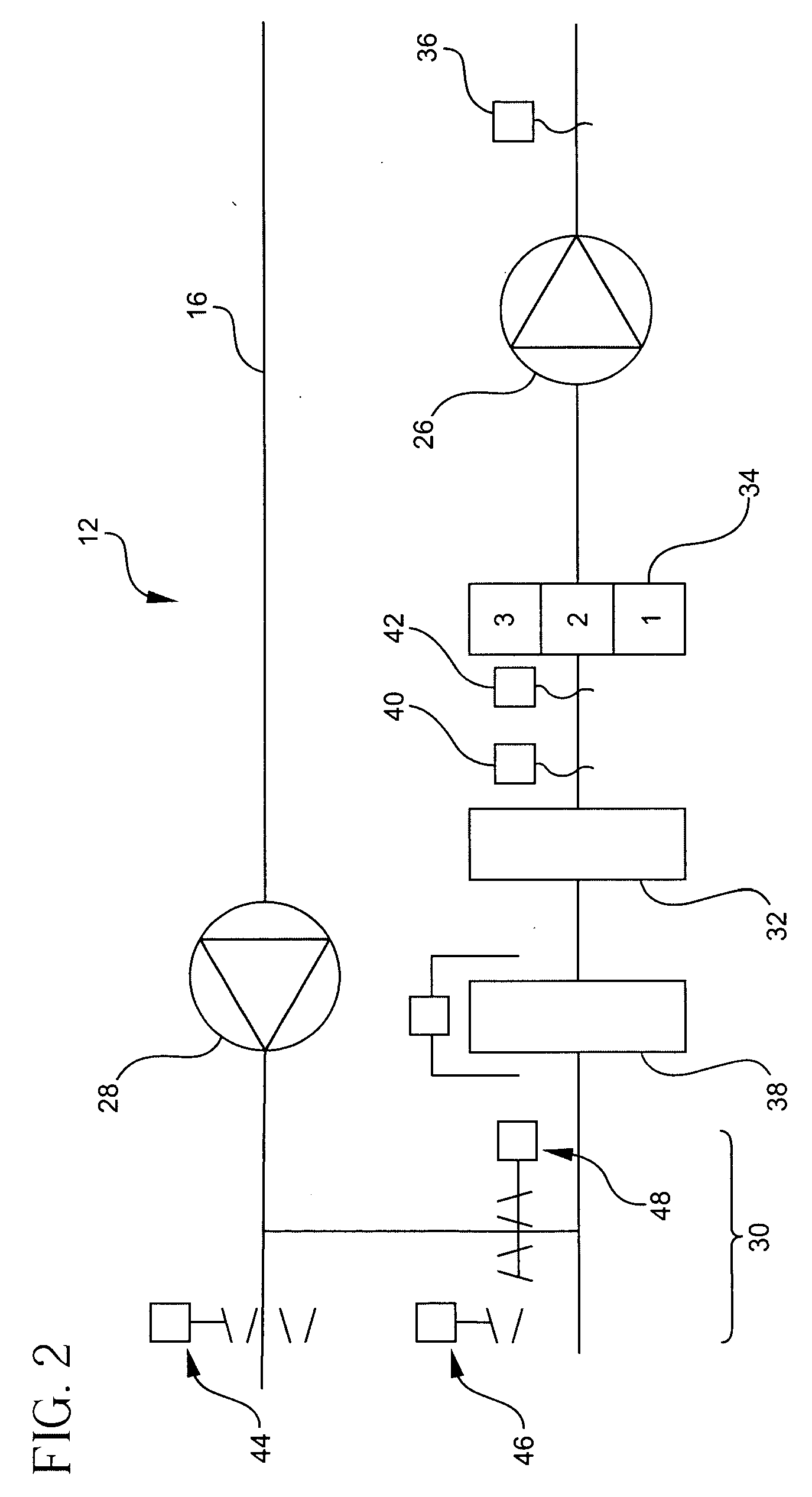
[0022] As discussed more fully hereinbelow, the present invention is directed to a method and apparatus for controlling a temperature-regulated zone utilizing a thermal balance temperature control system. The thermal balance control system is a dynamic real time control system that constantly measures the sensible thermal load in the mentioned zone, and directly regulates the BTU output of the HVAC package to balance such output with the measured sensible thermal load, thus providing a state of system equilibrium. The system will continue to operate in this equilibrium state (without time cycling of any heating / cooling components) until the system measures a change in the sensible thermal load within the mentioned zone.
[0023] The sensible thermal load is the amount of deviation (measured in degrees) between the set point temperature for the zone and the actual zone temperature. When the actual room temperature is above the set point temperature, the sensible thermal load is a cooli...
PUM
 Login to View More
 Abstract
Description
Claims
Application Information
 Login to View More