
Non-elastomeric respirator mask that has deformable cheek portions
a respirator mask and non-elastomeric technology, applied in the field of non-elastomeric respirator masks with deformable cheeks, can solve the problems of masks that may have a tendency to collapse onto the user's face, heavy respirator wear, and thick rubber, etc., and achieves the effect of sufficiently rigid and thin material
- Summary
- Abstract
- Description
- Claims
- Application Information
AI Technical Summary
Benefits of technology
Problems solved by technology
Method used
Image

Examples
example
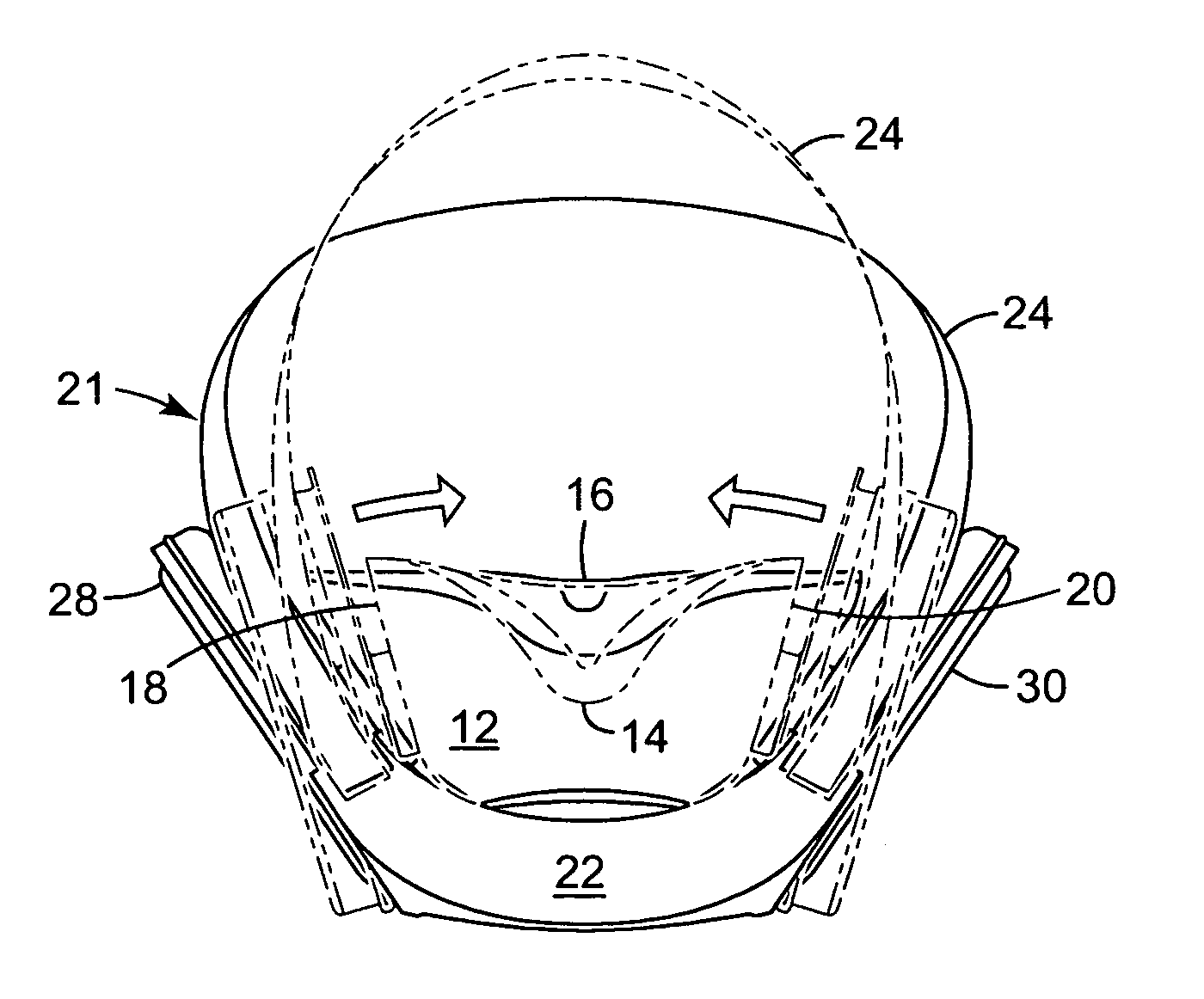
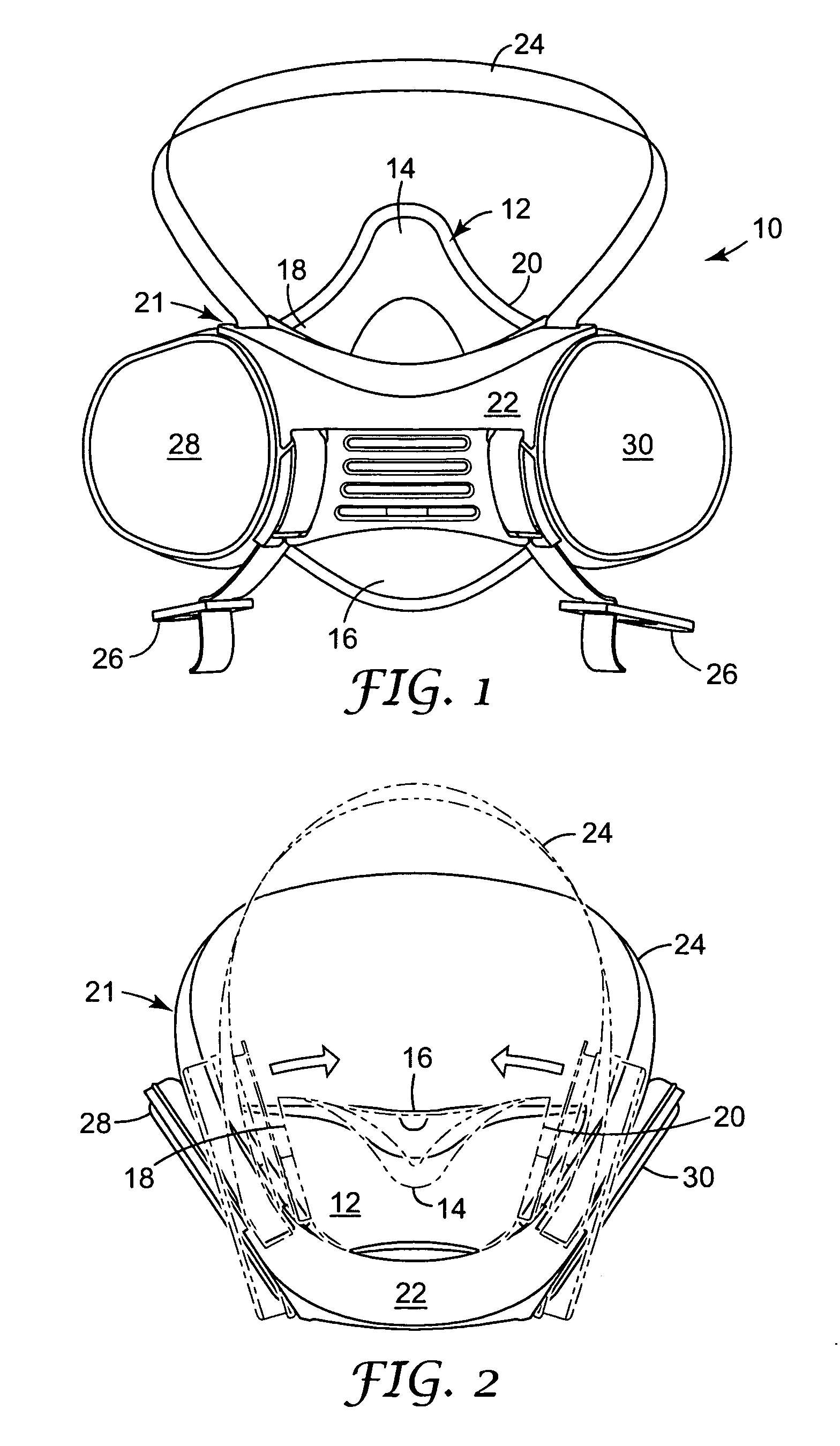
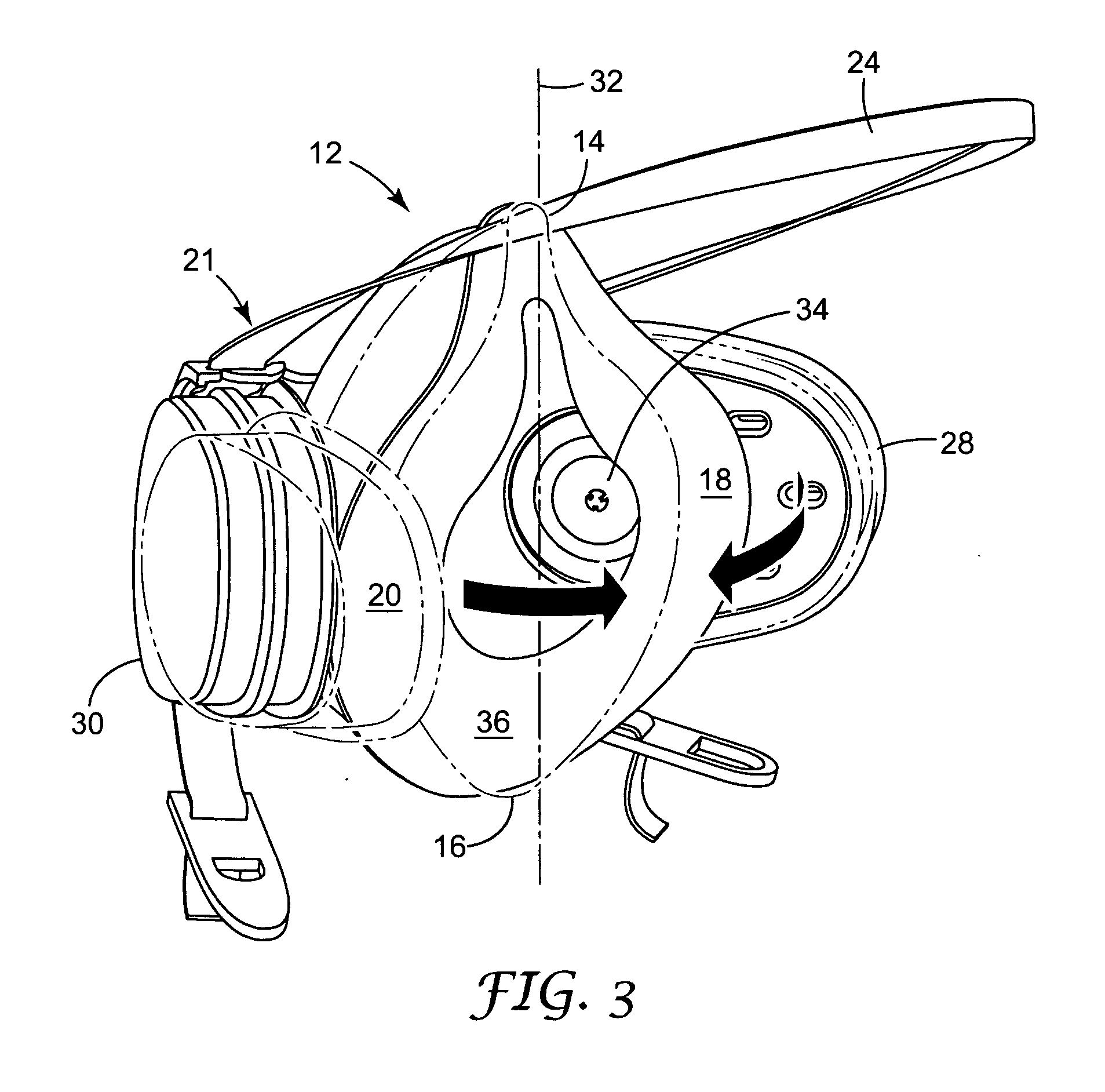
[0047] The respiratory mask shown in the drawings was assembled using a non-elastomeric mask body, an elastomeric face sealing ring, a valve body, a valve cover, a carriage, a foam nose bridge, filter cartridges, and a harness. The mask body was formed from a 1.5 mm thick sheet of thermoformable polypropylene (PP) (“Adflex” Q100F from Basell Polyolefins Company Hoofddorp Netherlands) using a vacuum forming device (available from Formech International Ltd Harpenden UK). Material used to form the mask body had a flexural modulus of 1172 MPa and a softing point of 170° C. To mold the mask body, a 30 cm×27 cm section of thermoformable PP sheet was positioned in a frame fixture and heated to approximately 170° C. (the softening point of the material) and placed over the mold form. The mold form, mounted on a flat surface approximating the inner dimensions of the frame fixture, was then raised into the softened sheet and a vacuum was provided through ports on the mold and support surface ...
PUM
 Login to View More
 Abstract
Description
Claims
Application Information
 Login to View More