Check patentability & draft patents in minutes with Patsnap Eureka AI!

Method and system for generating stacked register dumps from backing-store memory

a register dump and memory technology, applied in the field of computer system debugging and programbehavior analysis support, can solve the problems of reducing the processor bandwidth available for other calculations, deep nesting of routine calls, and stacking of very large numbers of stack frames onto the system stack,

Active Publication Date: 2006-02-02
VALTRUS INNOVATIONS LTD +1
View PDF10 Cites 12 Cited by
  • Summary
  • Abstract
  • Description
  • Claims
  • Application Information

AI Technical Summary

Problems solved by technology

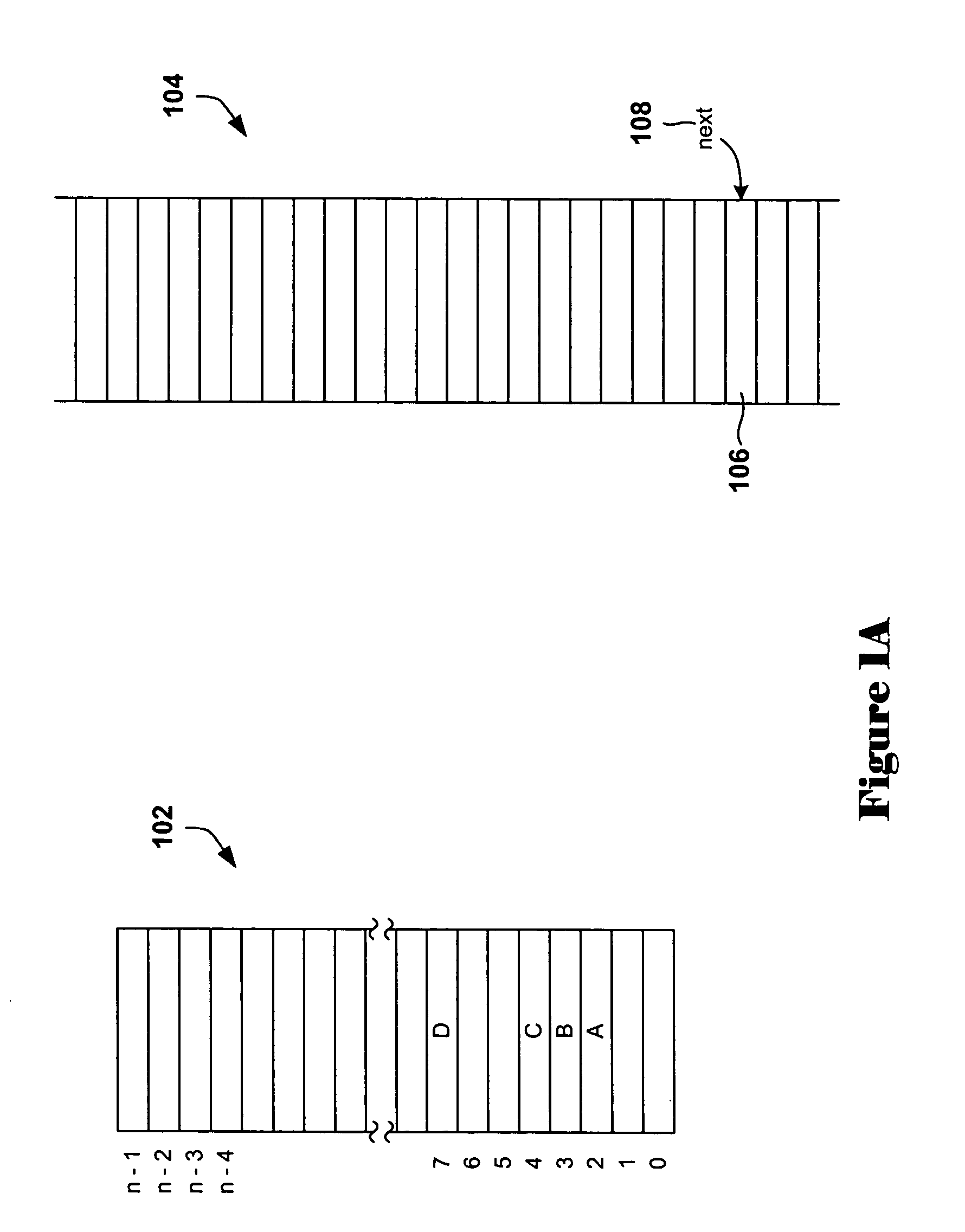
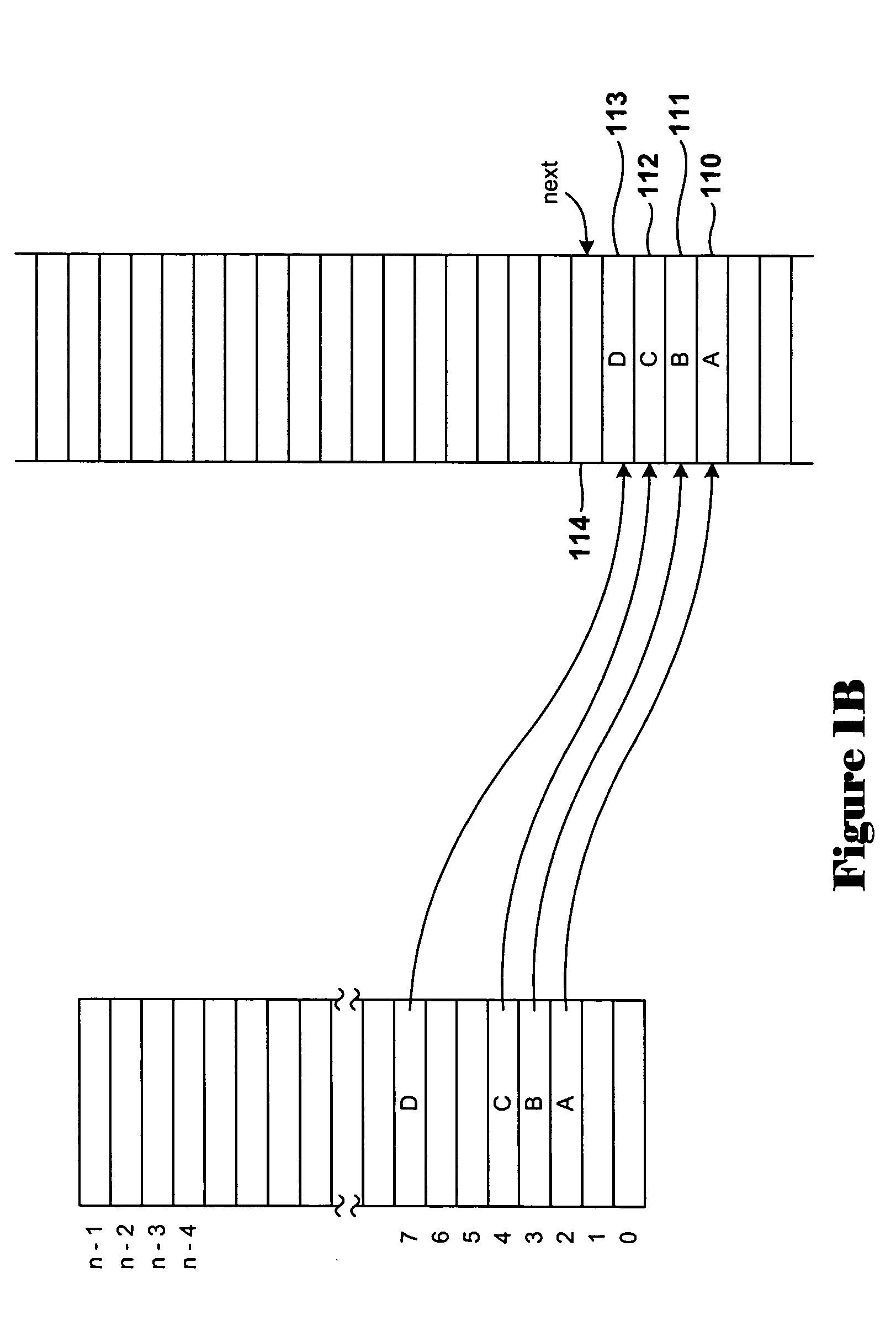
In modern computing, execution of even moderately complex programs can lead to very deep nesting of routine calls and stacking of very large numbers of stack frames onto the system stack.
Each register store and restore operation costs valuable processor cycles, decreasing the processor bandwidth available for other calculations.
A slight complexity in this calculation concerns storage of the contents of the NAT collection register AR[RNAT] at regular intervals within the backing-store memory.
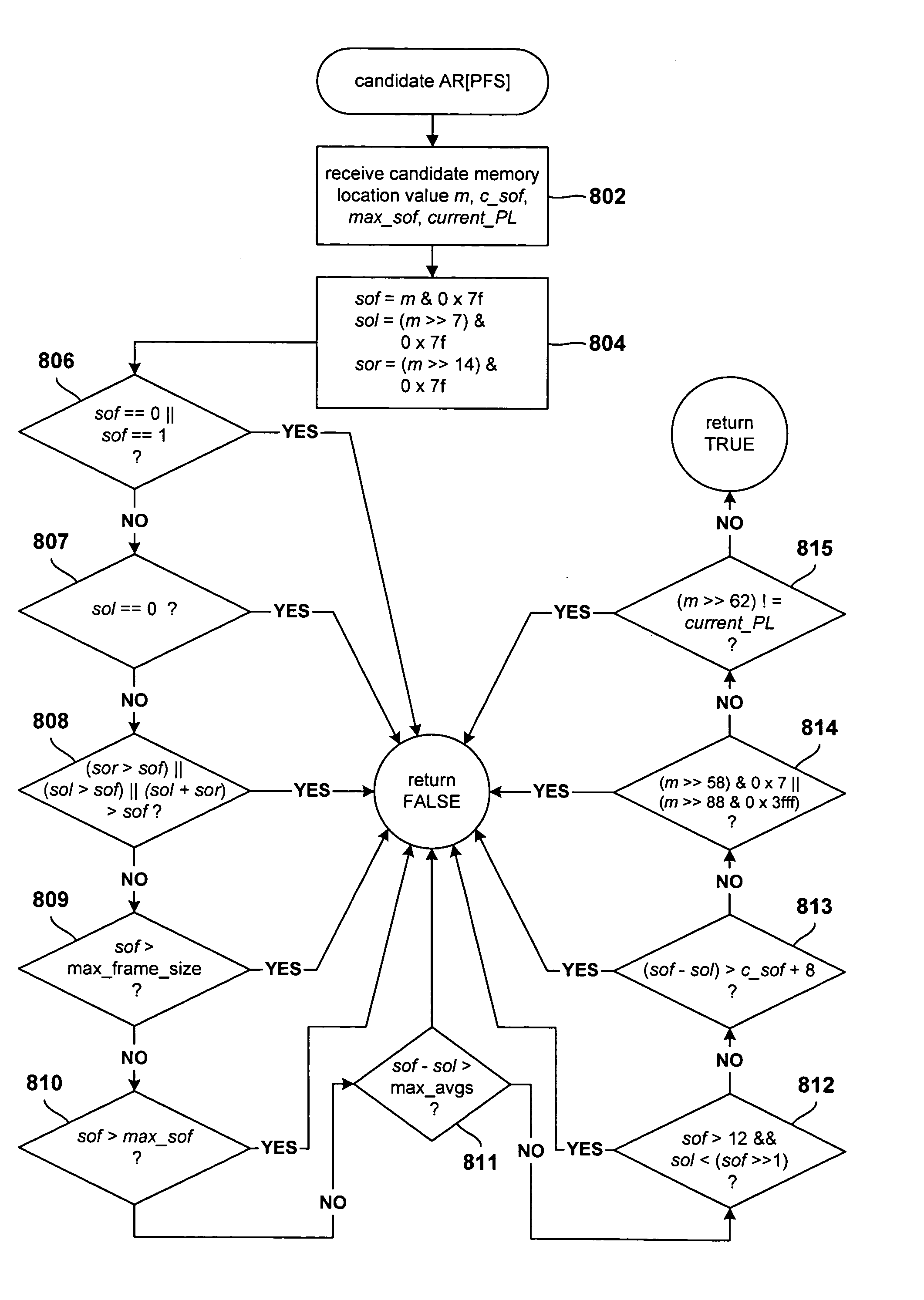
Thus, the only significant challenge in traversing the stored stack frames in backing-store memory is identifying the memory locations at which the contents of the AR[PFS] register have been saved.
It would be convenient if those memory locations were found at a particular, fixed offset from the beginning of a stack frame, but unfortunately this is not the case.
Such an imbalance in the sizes of the local portion of the stack frame versus the total size of the stack frame, or output portion of the stack frame, is possible, but infrequently encountered.

Method used

the structure of the environmentally friendly knitted fabric provided by the present invention; figure 2 Flow chart of the yarn wrapping machine for environmentally friendly knitted fabrics and storage devices; image 3 Is the parameter map of the yarn covering machine
View more

Image

Smart Image Click on the blue labels to locate them in the text.
Viewing Examples
Smart Image
  • Method and system for generating stacked register dumps from backing-store memory
  • Method and system for generating stacked register dumps from backing-store memory
  • Method and system for generating stacked register dumps from backing-store memory

Examples

Experimental program
Comparison scheme
Effect test

Embodiment Construction

[0020] Various embodiments of the present invention employ techniques to interpret stored register values within the backing-store memory allocated for, and used by, the register stack engine of Intel IA-64 processors, and similar processors with different architectures, for automatically spilling and reloading register values to facilitate routine calls. Use of the backing-store memory obviates the need for allocating special memory, and devoting compiler and assembler support, for storing debug information during execution of programs to facilitate reconstruction of the register-based processor states for nested routines. Moreover, the register-based processor states for nested routines can be recovered by embodiments of the present invention whether or not the routines and programs are compiled with various debugging options that store additional debugging information at run time.

[0021] Many embodiments of the present invention concern the Intel IA-64, or IPF, processor architec...

the structure of the environmentally friendly knitted fabric provided by the present invention; figure 2 Flow chart of the yarn wrapping machine for environmentally friendly knitted fabrics and storage devices; image 3 Is the parameter map of the yarn covering machine
Login to View More

PUM

No PUM Login to View More

Abstract

In various embodiments of the present invention, debugging and program-behavior-analysis software can reconstruct register-based processor states for nested routine calls from the backing-store memory employed by a modern processor, and by processors of similar architectures, to automatically spill and restore register values via a register stack engine. Sufficient information resides in the backing-store memory to reconstruct the stack frames for all nested routines. However, reconstructing the stack frames from the backing-store memory depends on identifying stored register vales in the backing-store memory containing saved values of the previous-frame-marker application register. Various embodiments of the present invention employ a set of heuristic tests to evaluate stored values in the backing-store memory in order to identify those values corresponding to the stored contents of the previous-frame-marker application register.

Description

TECHNICAL FIELD [0001] The present invention is related to debugging and program-behavior analysis support for computer systems and, in particular, to a method for obtaining nested stack frames containing stacked register values from the backing store employed by a modern processor for automatic storage and retrieval of register values. BACKGROUND OF THE INVENTION [0002] In modern programming, it is common for routine calls to be deeply nested. The processor state, as at least partially reflected by the values stored in a number of different registers, is generally saved on a system stack by a calling routine, so that a called routine can freely use register resources for the called routine's computations, and so that the processor state of the calling routine can be restored when the called routine completes. Deeply nested routine calls are reflected in a corresponding large number of stack frames stacked in a system stack. When problems arise, and processes are aborted or debugger...

Claims

the structure of the environmentally friendly knitted fabric provided by the present invention; figure 2 Flow chart of the yarn wrapping machine for environmentally friendly knitted fabrics and storage devices; image 3 Is the parameter map of the yarn covering machine
Login to View More

Application Information

Patent Timeline
no application Login to View More
IPC IPC(8): G06F9/45
CPCG06F11/362
Inventor GARDNER, ROBERT D.
Owner VALTRUS INNOVATIONS LTD
Features
  • R&D
  • Intellectual Property
  • Life Sciences
  • Materials
  • Tech Scout
Why Patsnap Eureka
  • Unparalleled Data Quality
  • Higher Quality Content
  • 60% Fewer Hallucinations
Social media
Patsnap Eureka Blog
Learn More