Brace assembly for truss legs of offshore structures

US20060042181A1Inactive Publication Date: 2006-03-02OFFSHORE TECH DEVMENT PTE
5 Cites 13 Cited by

Patent Information

Authority / Receiving Office
US · United States
Current Assignee / Owner
Publication Date
2006-03-02
Estimated Expiration
Not applicable · inactive patent

Smart Images

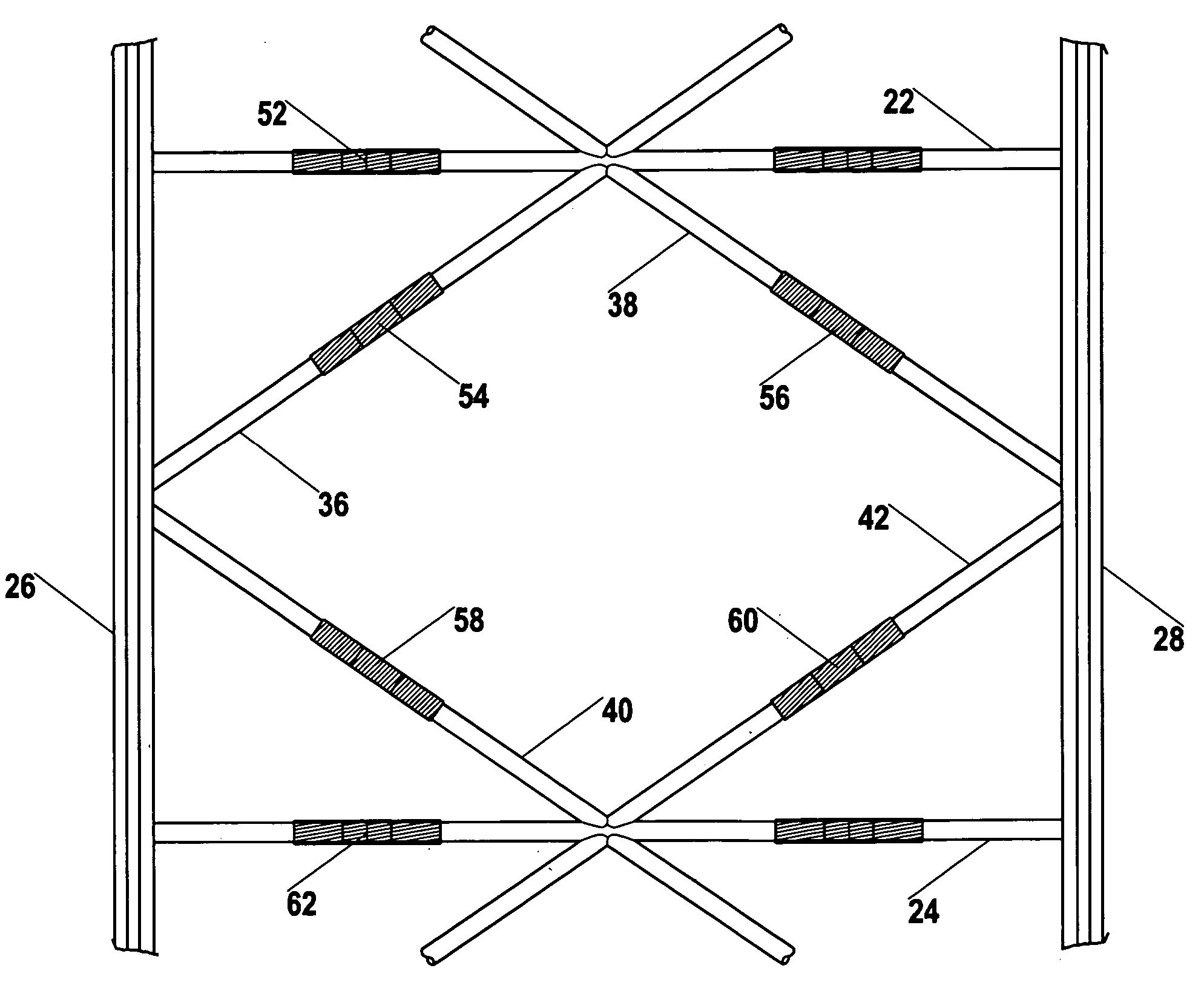
  • Figure 1
    Figure 1
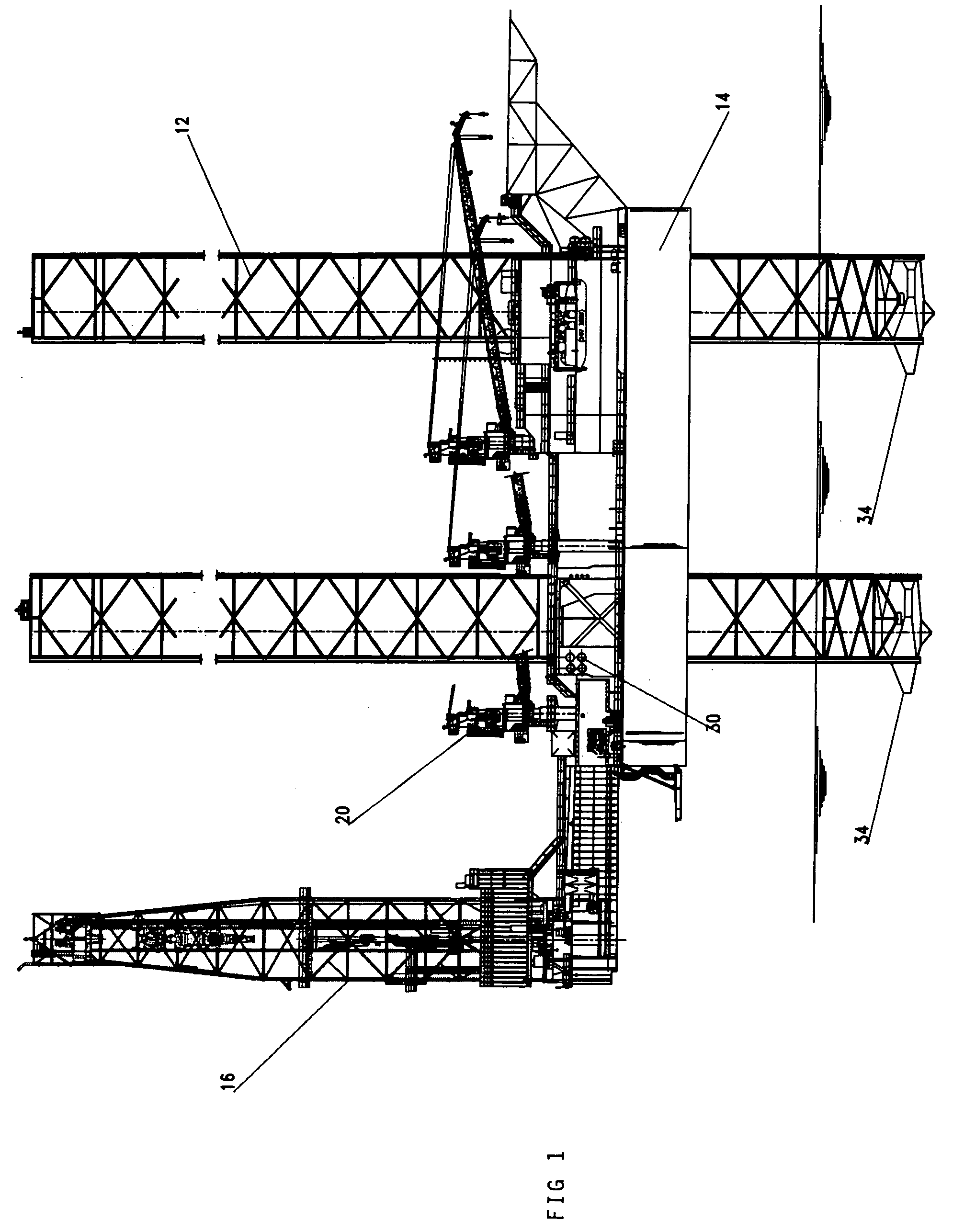
  • Figure 2
    Figure 2
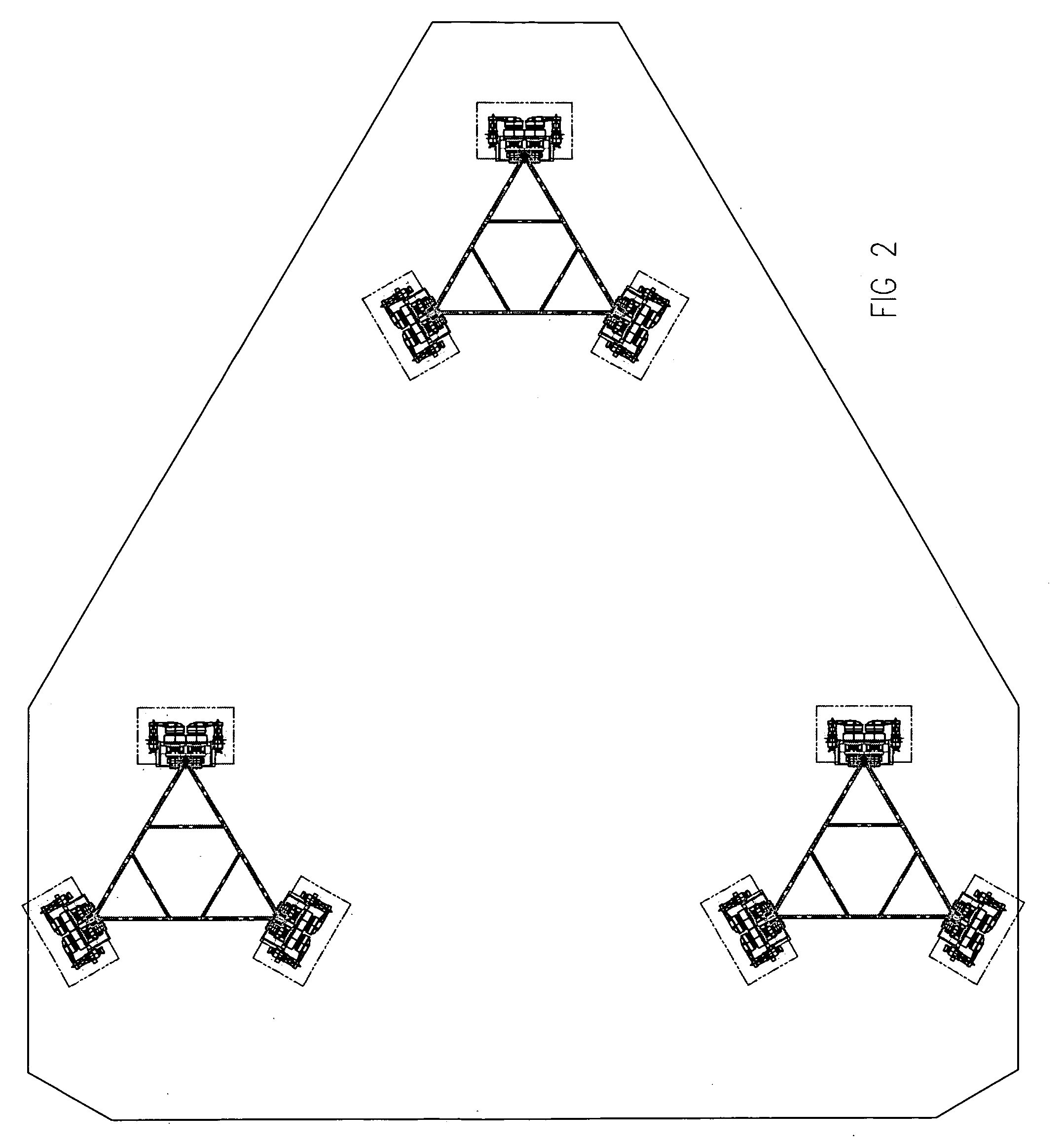
  • Figure 3
    Figure 3
Patent Text Reader

Abstract

A brace assembly for truss legs of offshore structures is provided with a reinforcing sleeve mounted on the brace member in the portion of the brace member most prone to buckling under the force of horizontal moment acting on the brace member. The reinforcing sleeve surrounds the critical area of the brace member and provides additional load bearing capacity to the brace member. The reinforcing sleeve is made from a non-corrosive material having physical characteristics suitable to withstand the environmental forces in the location. The reinforcing sleeve may be installed at the shipyard when the offshore structure is manufactured or mounted on the existing rig by an easy retrofit not requiring towing of the offshore structure to the shipyard.
Need to check novelty before this filing date? Find Prior Art

Description

BACKGROUND OF THE INVENTION

[0001] The present invention relates to offshore structures, and more particularly, to a brace assembly for a truss leg.

[0002] Leg-supported offshore structures are extensively used for mineral exploration and production. Convention truss legs comprise a system of horizontal and diagonal braces. The legs are raised or lowered by an elevating system, for instance a self-elevating jacking system that contains racks and pinions. In a typical system using triangular truss legs, there are a total of nine jacking assemblies, three assemblies per leg, One jacking assembly is mounted at each chord of the leg. Each jacking assembly unit has four to six pinions, which are house and supported on bearings.

[0003] A series of guide plates is installed above and below the jacking mechanism. The guide system consists of upper guide plates, middle guide plates and lower wear plates. Gaps between guide plates and rack are pre-determined to ensure smooth transition in rai...

Examples

Embodiment Construction

[0018] Reference will now be made to the following detailed description, taken in conjunction with the accompanying drawings, wherein like parts are designated by like numerals.

[0019]FIG. 1 shows a self-elevating jack-up unit. The jack-up unit is a mobile offshore structure that is used for mineral exploration and production. A typical jack-up unit is provided with a plurality of truss legs 12, which extend through openings in a floatable hull 14 of the jack-up unit. Although any number of legs may be used to support the hull 14, for illustration purposes, the jack-up rig shown in FIG. 1 has three such legs 12. The legs 12 are formed by a system of horizontal and diagonal braces.

[0020] As the legs 12 are “jacked,” the hull 14 is elevated above an anticipated wave action to support the offshore exploration and / or production operations. Conventional offshore structures, such as the jack-up unit, are equipped with a derrick 16 mounted on the hull 14. The derrick 16 may be also mounte...