

Decoy device and system for anti-missile protection and associated method
a technology of anti-missile protection and decoy devices, applied in the field of anti-missile protection, can solve the problems of sacrificing flight efficiency, using several flares and pellets, and aircraft being susceptible to attacks
- Summary
- Abstract
- Description
- Claims
- Application Information
AI Technical Summary
Benefits of technology
Problems solved by technology
Method used
Image

Examples
Embodiment Construction
[0024] The present invention now will be described more fully hereinafter with reference to the accompanying drawings, in which some, but not all embodiments of the invention are shown. Indeed, this invention may be embodied in many different forms and should not be construed as limited to the embodiments set forth herein; rather, these embodiments are provided so that this disclosure will satisfy applicable legal requirements. Like numbers refer to like elements throughout.
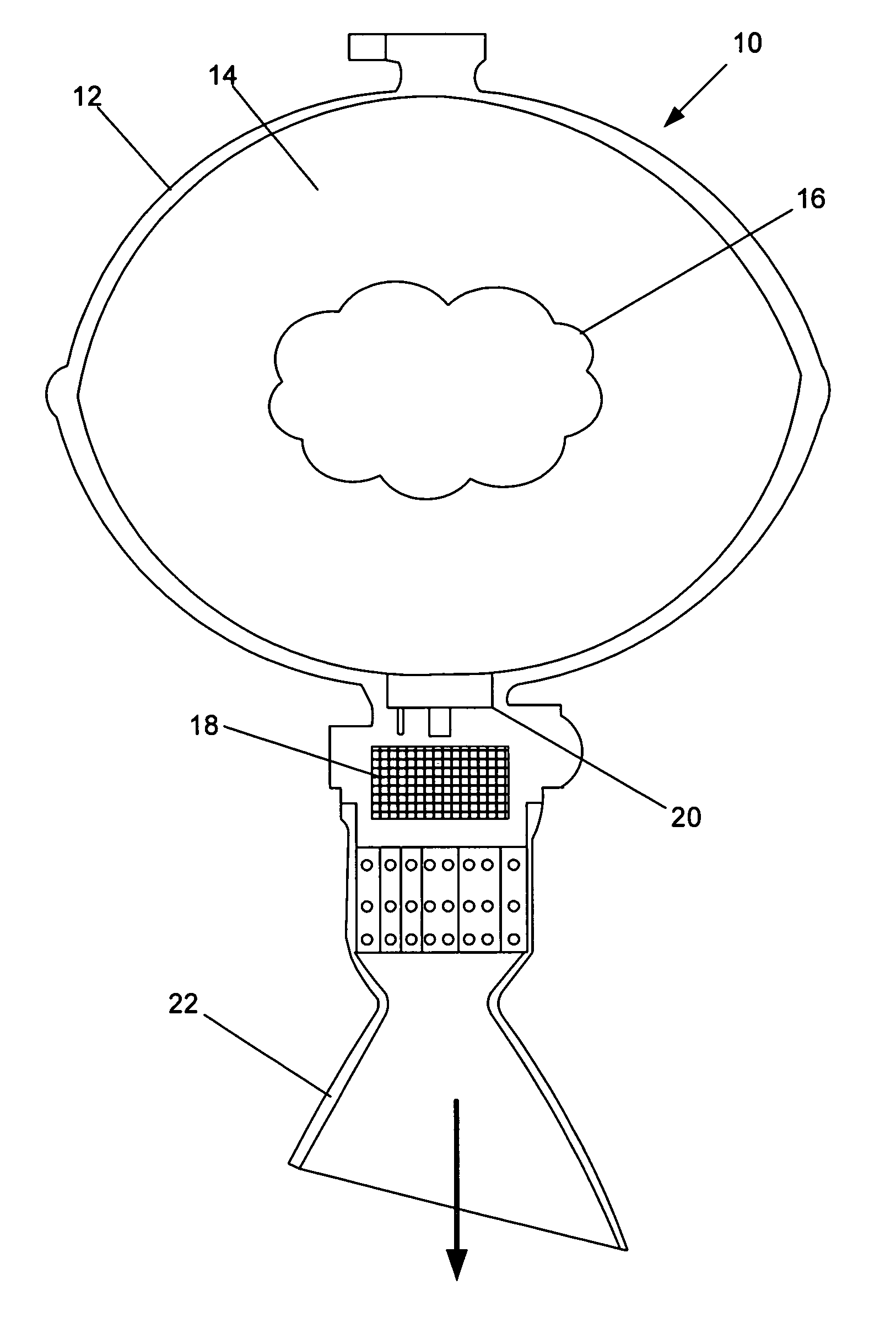
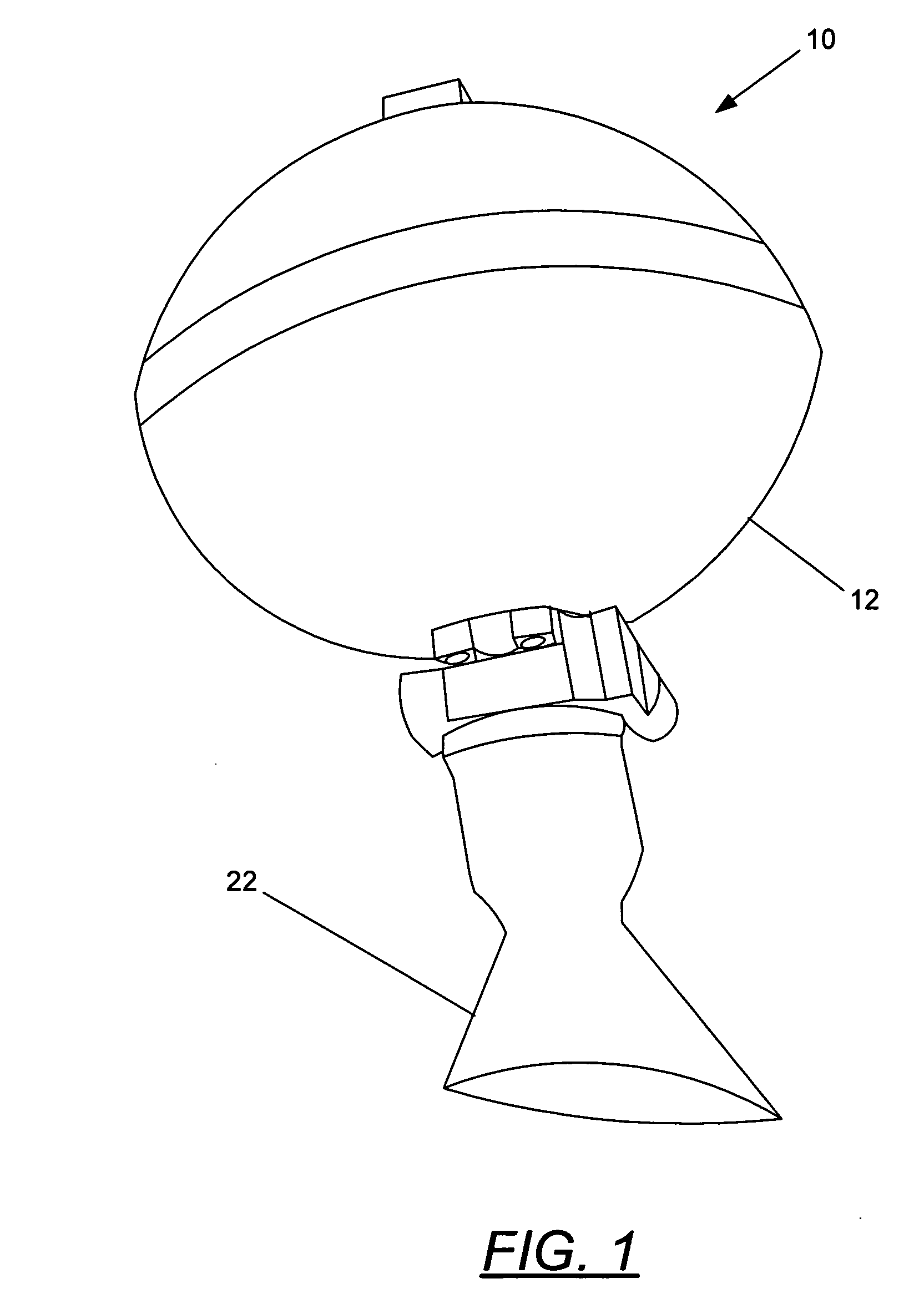
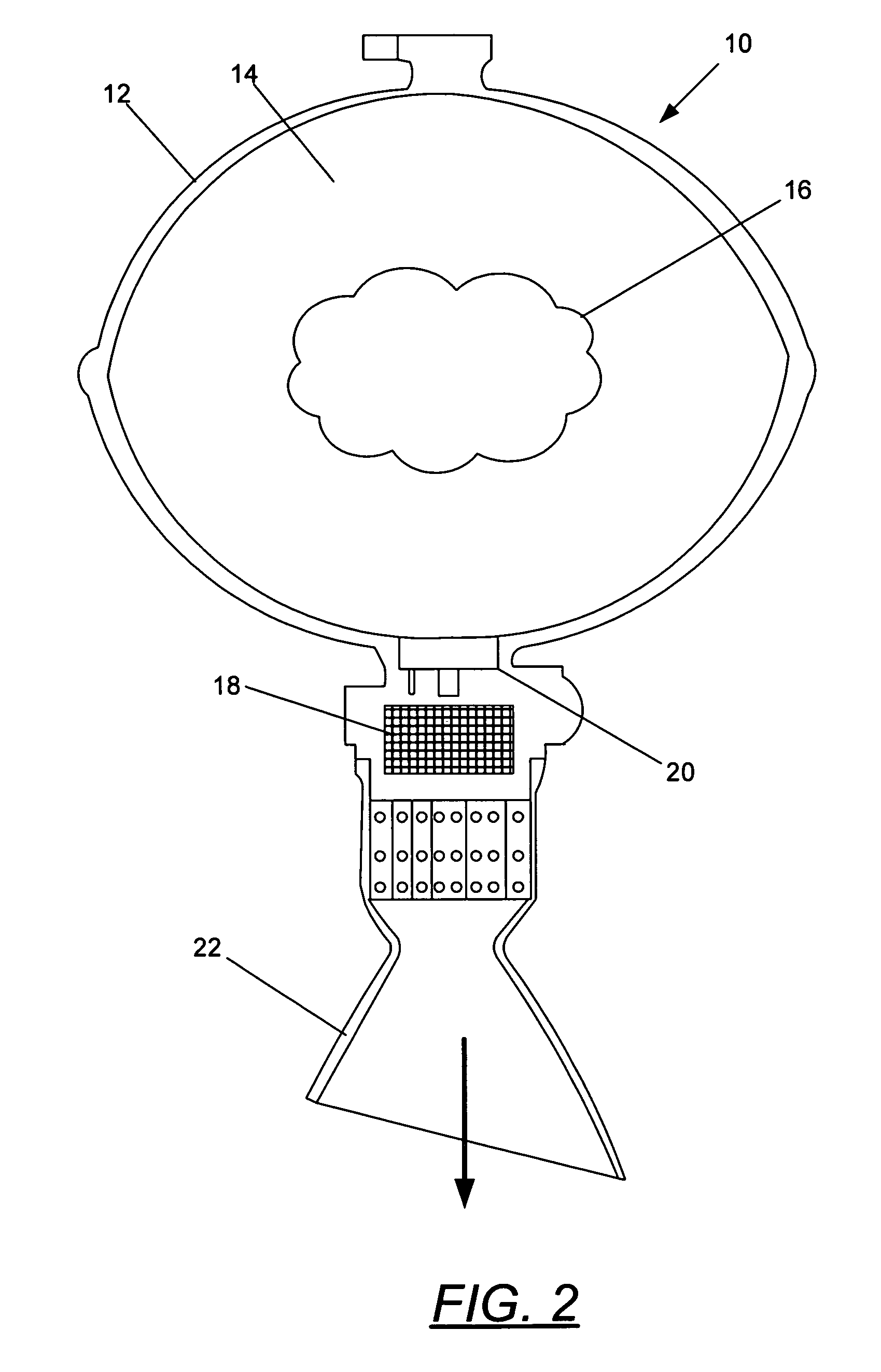
[0025] Referring now to the drawings and, in particular to FIG. 1 there is shown a decoy device 10. The decoy device 10 is capable of using a propellant to provide thrust to the decoy device, as well as serve as a decoy for infrared or heat-seeking missiles such that the missile is lured away from a target vehicle. The decoy device 10, as the term is used herein, is not meant to be limiting and may include any device capable of being deployed from a vehicle and providing anti-missile protection for the vehicle. ...
PUM
 Login to View More
 Abstract
Description
Claims
Application Information
 Login to View More