

An orthopedic appliance and method to reduce anterior dislocation of shoulder and to provide post reduction immobilization
an orthopedic appliance and shoulder technology, applied in the field of orthopedic appliances and methods to reduce anterior dislocation of shoulder and provide post-reduction immobilization, can solve the problems of unfavorable forceful manual reduction, high cost, and high pain of forceful manual reduction, and achieve the effect of preventing unfavorable occurren
- Summary
- Abstract
- Description
- Claims
- Application Information
AI Technical Summary
Benefits of technology
Problems solved by technology
Method used
Image

Examples
Embodiment Construction
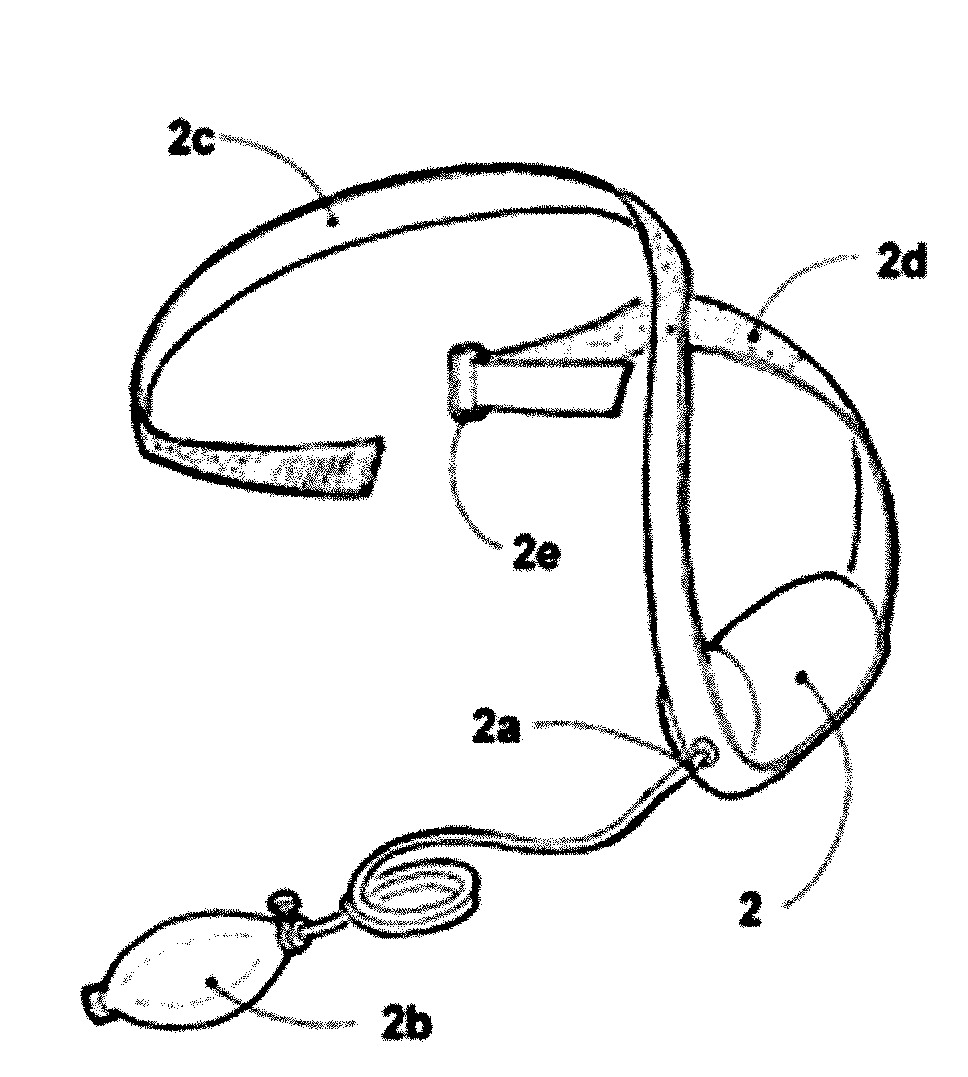
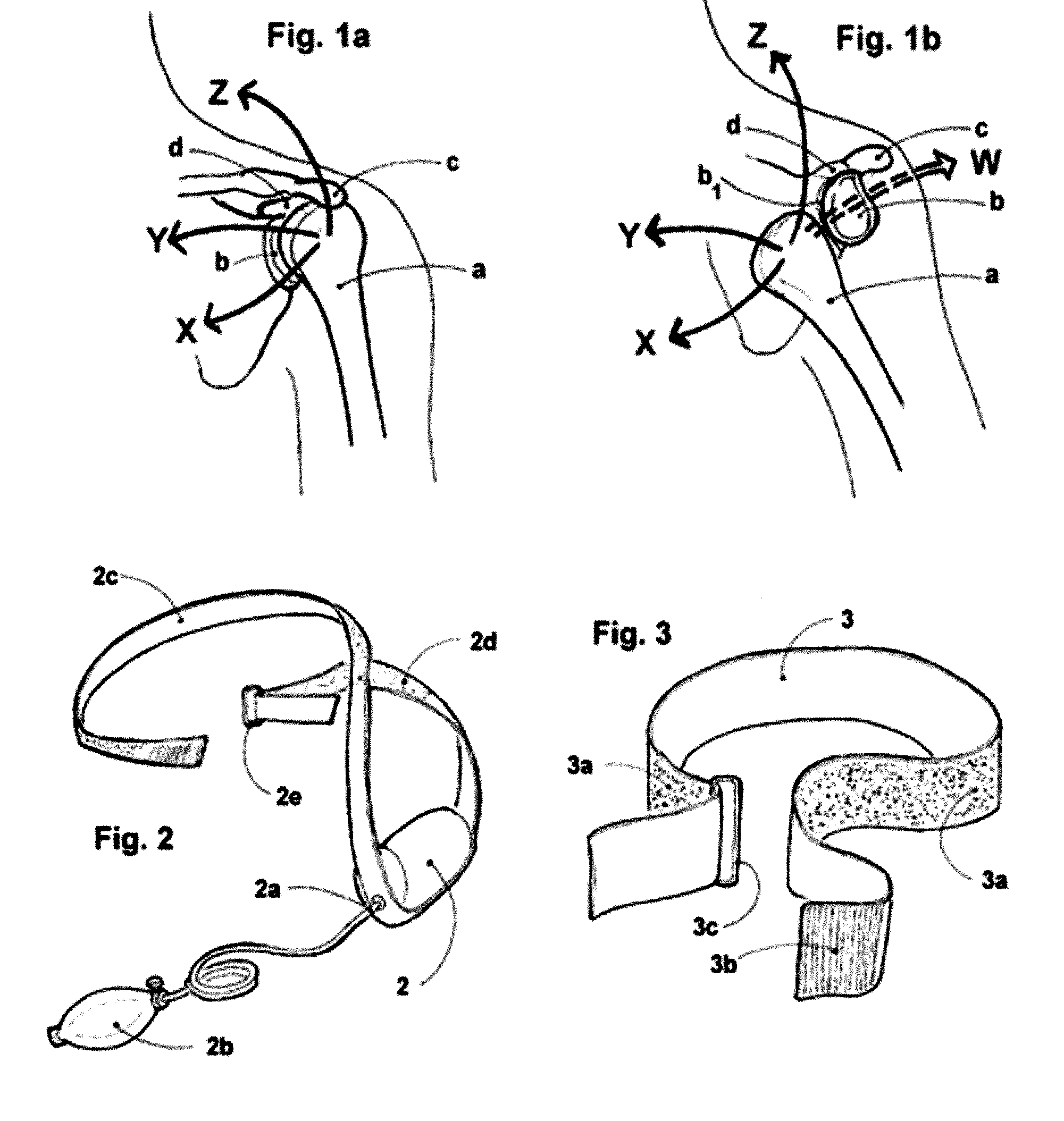
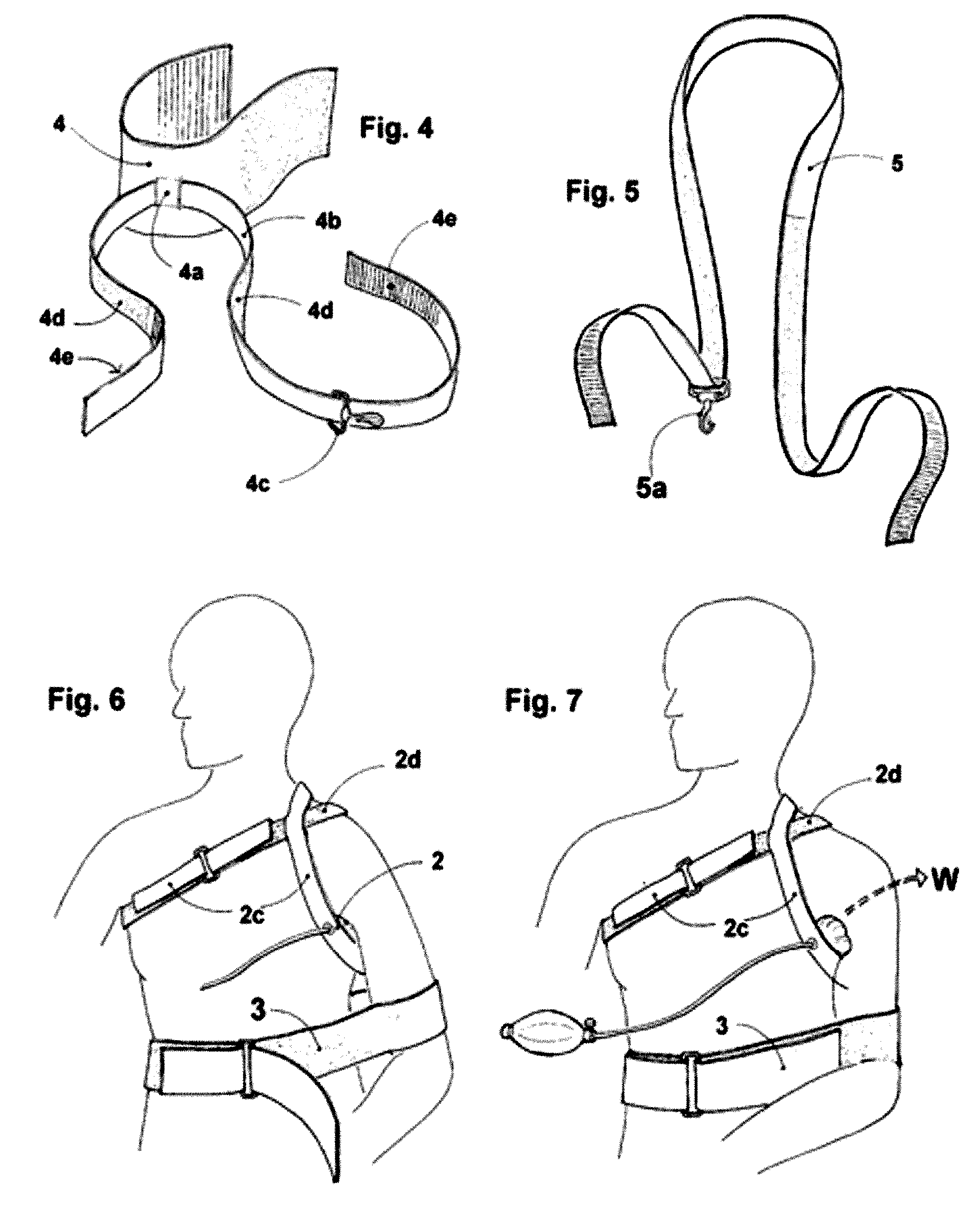
[0012] The invention is comprised of an inflatable auxiliary pouch with straps (FIG. 2) and a three part elbow / shoulder immobilizer. (FIGS. 3, 4, 5)
[0013] The inflatable cylindrical pouch (FIG. 2) is made of a strong airtight material (2). It is inflated through rubber or plastic tubing located at front of the pouch (2a). The tubing is connected to a pump (bulb) allowing for the gradual inflation of the pouch (2b). The pump is equipped with two valves. The inlet “one way” valve allows air into bulb only. The outlet “two way” valve directs the air to the pouch during inflation, allowing for gradual pressure built up. At the same time, if needed, it permits immediate or gradual release / adjustment of the pressure. In an alternative embodiment, instead of a pump, a connector is provided to connect the tubing with the pumps that are used to inflate the cuffs of blood pressure sphingometers that are widely available in health care facilities.
[0014] The pouch is attached to the strap at ...
PUM
 Login to View More
 Abstract
Description
Claims
Application Information
 Login to View More