
Tape
a technology of tape and surface, applied in the field of tape, can solve the problems of increasing environmental pollution, increasing the disposal and disposal of gypsum board sheathing and other panels, and even lethal to humans, and achieves the effects of increasing the length dimension, and increasing the resistance to pulling for
- Summary
- Abstract
- Description
- Claims
- Application Information
AI Technical Summary
Benefits of technology
Problems solved by technology
Method used
Image

Examples
Embodiment Construction
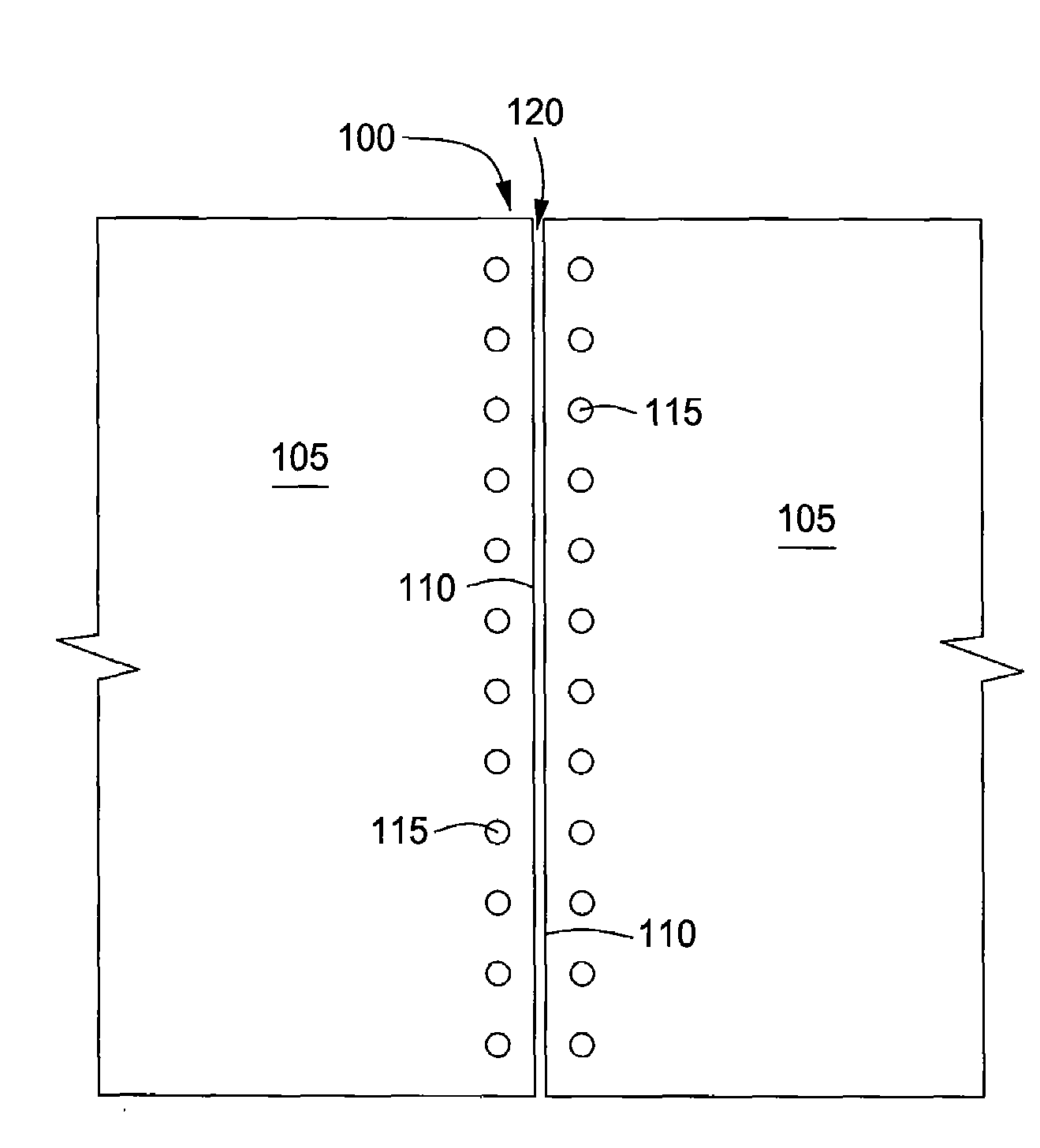
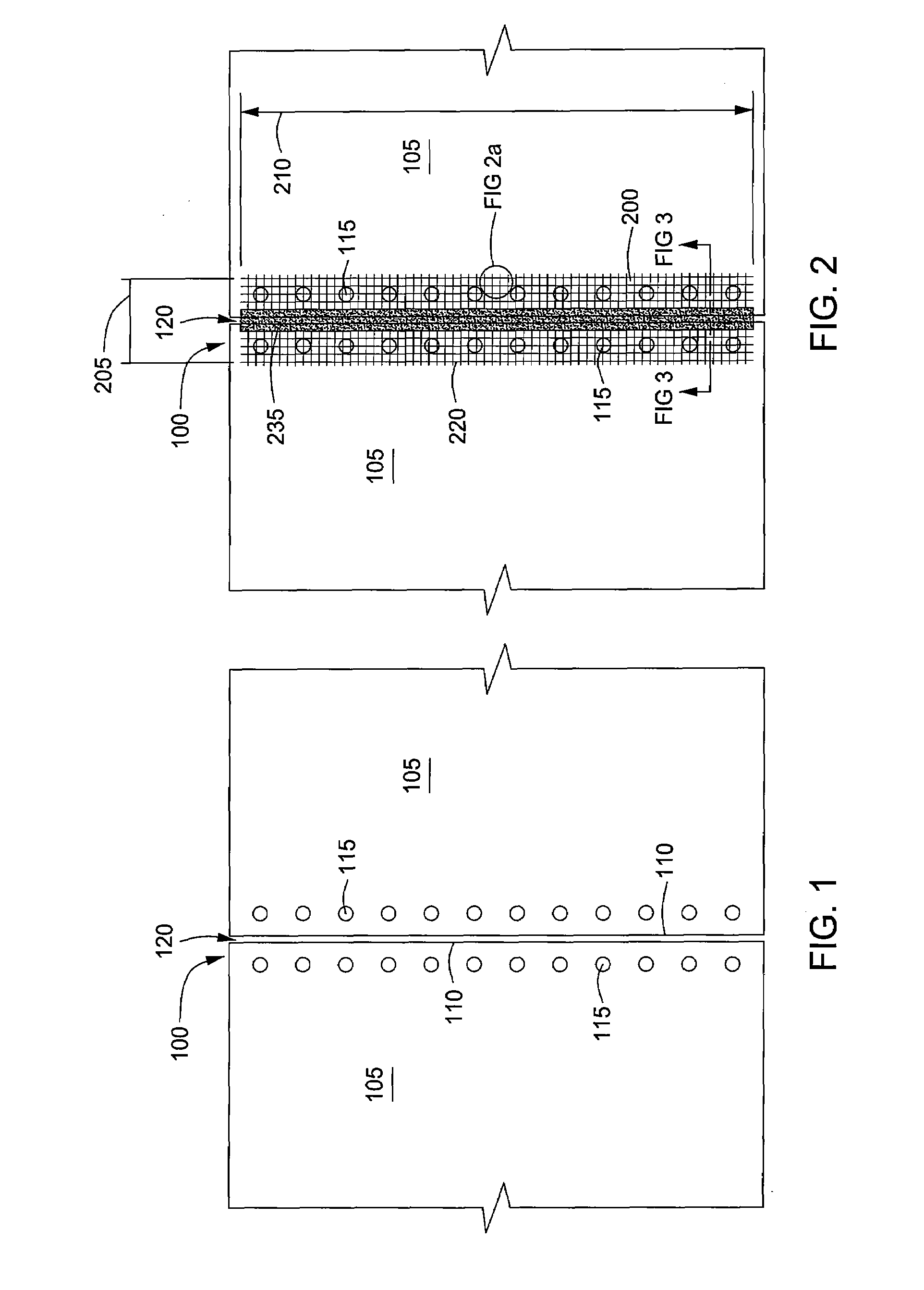
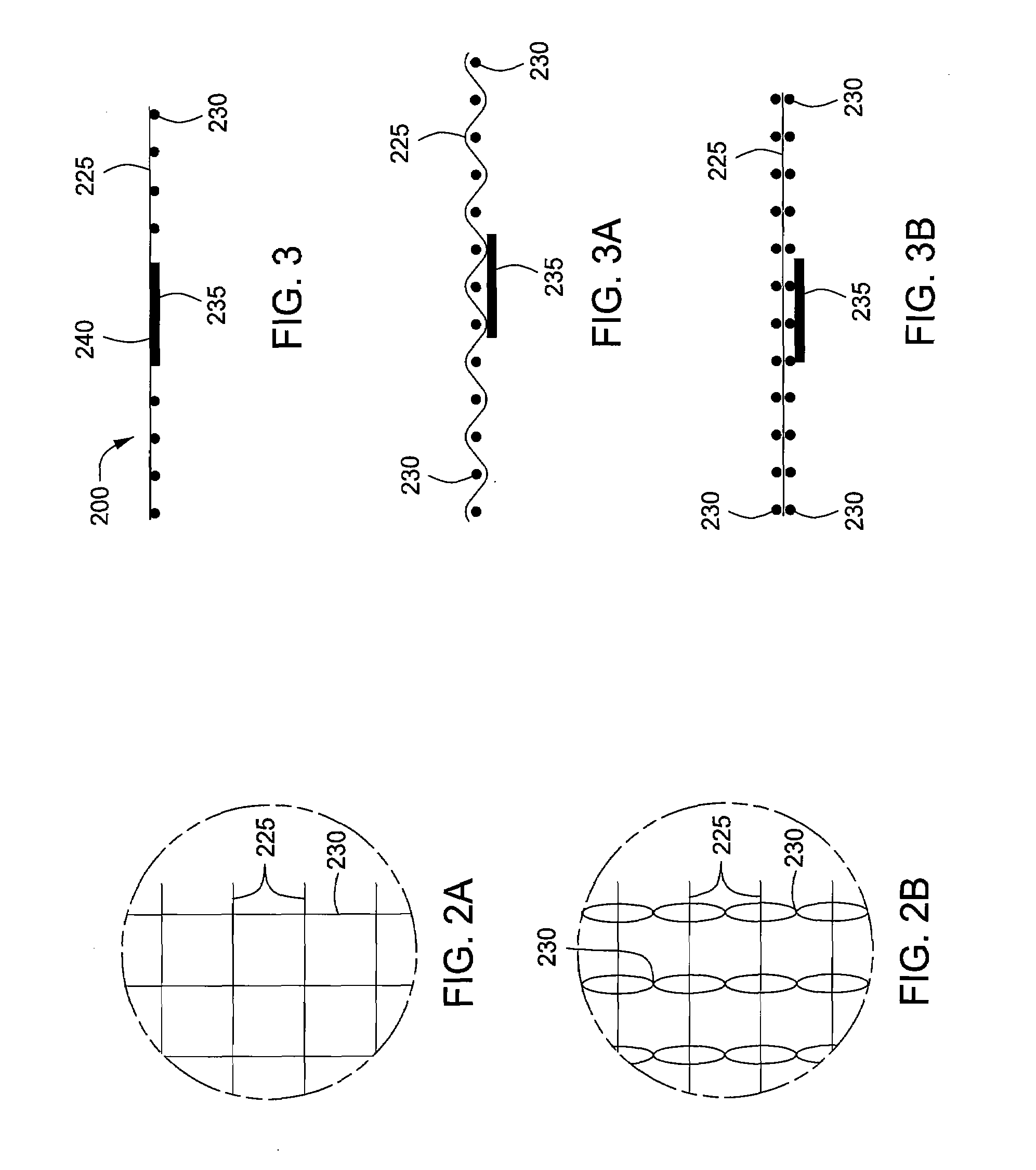
[0030]FIG. 1 is a front view of a portion of a panel joint 100. The panel joint 100, as shown, has two panels 105 which are adjacent at edges 110. The panels 105 connect to a support element, not shown, with fasteners 115. The support element may be any element for supporting the panels 105 including, but not limited to, wood studs, metal studs, concrete blocks, or furring channels. The fasteners 115 may be any fastener including, but not limited to, screws, or nails, or an adhesive. In one embodiment, the panels 105 are gypsum board sheathing panels. Although it should be appreciated that any paneling may be used. With the panels 105 attached to the support element, a small gap 120 or discontinuity exists between the panels 105. In order to finish the panel surface, a tape and a compound are applied to the panel joint 100. The compound cures into a hardened material which covers the tape and the joint. The compound is then smoothed into a continuous surface as will be described in ...
PUM
| Property | Measurement | Unit |
|---|---|---|
| angle | aaaaa | aaaaa |
| length | aaaaa | aaaaa |
| length | aaaaa | aaaaa |
Abstract
Description
Claims
Application Information
 Login to View More