
Vascularized human skin equivalent
a human skin and equivalent technology, applied in the field of tissue grafting, can solve the problems of poor endothelial cell survival, hampered current efforts, and moderate success of clinical use of engineered skin for burn treatment, and achieve the effect of accelerating the rate of vascularization and enhancing clinical utility
- Summary
- Abstract
- Description
- Claims
- Application Information
AI Technical Summary
Benefits of technology
Problems solved by technology
Method used
Image

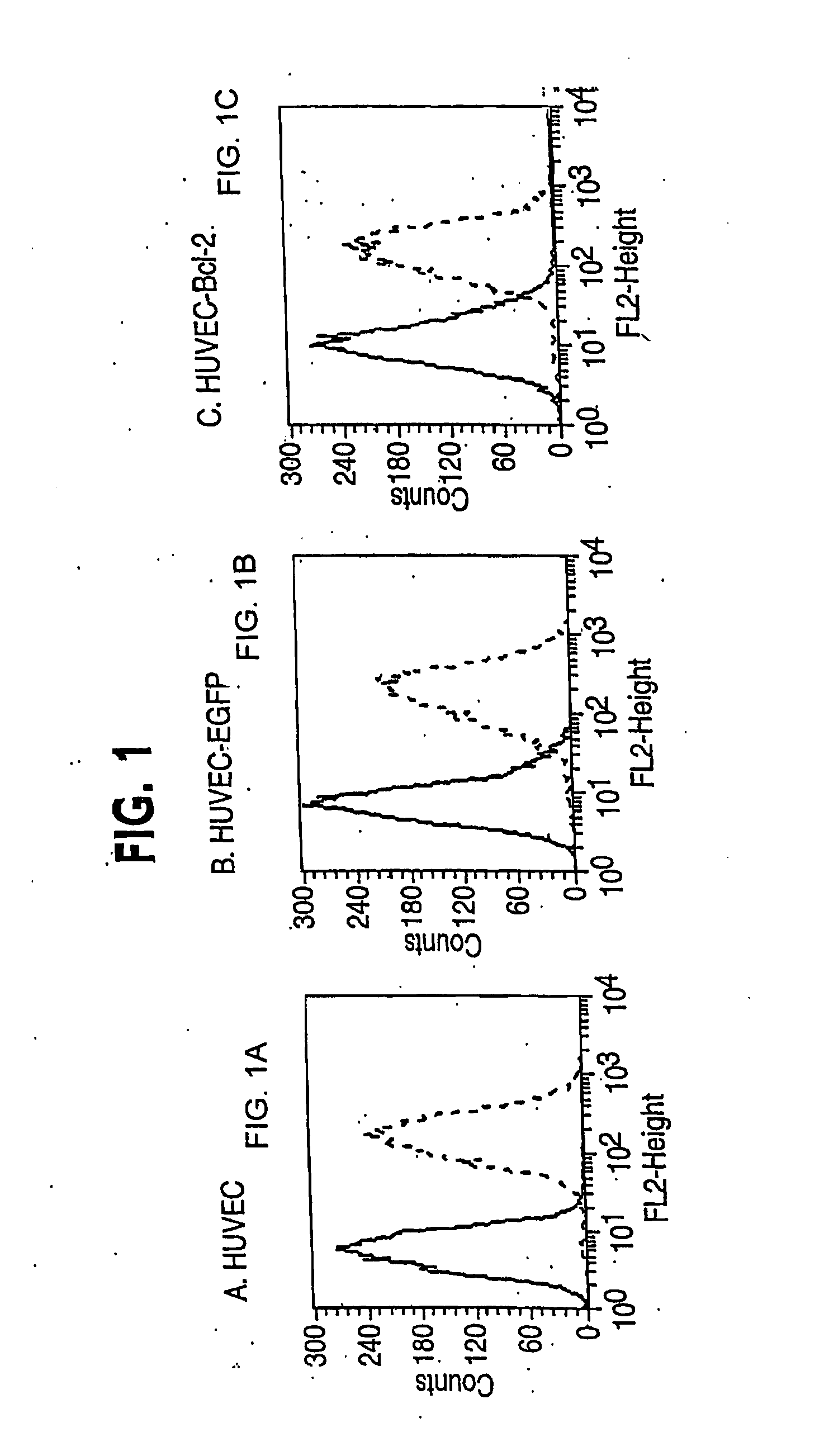
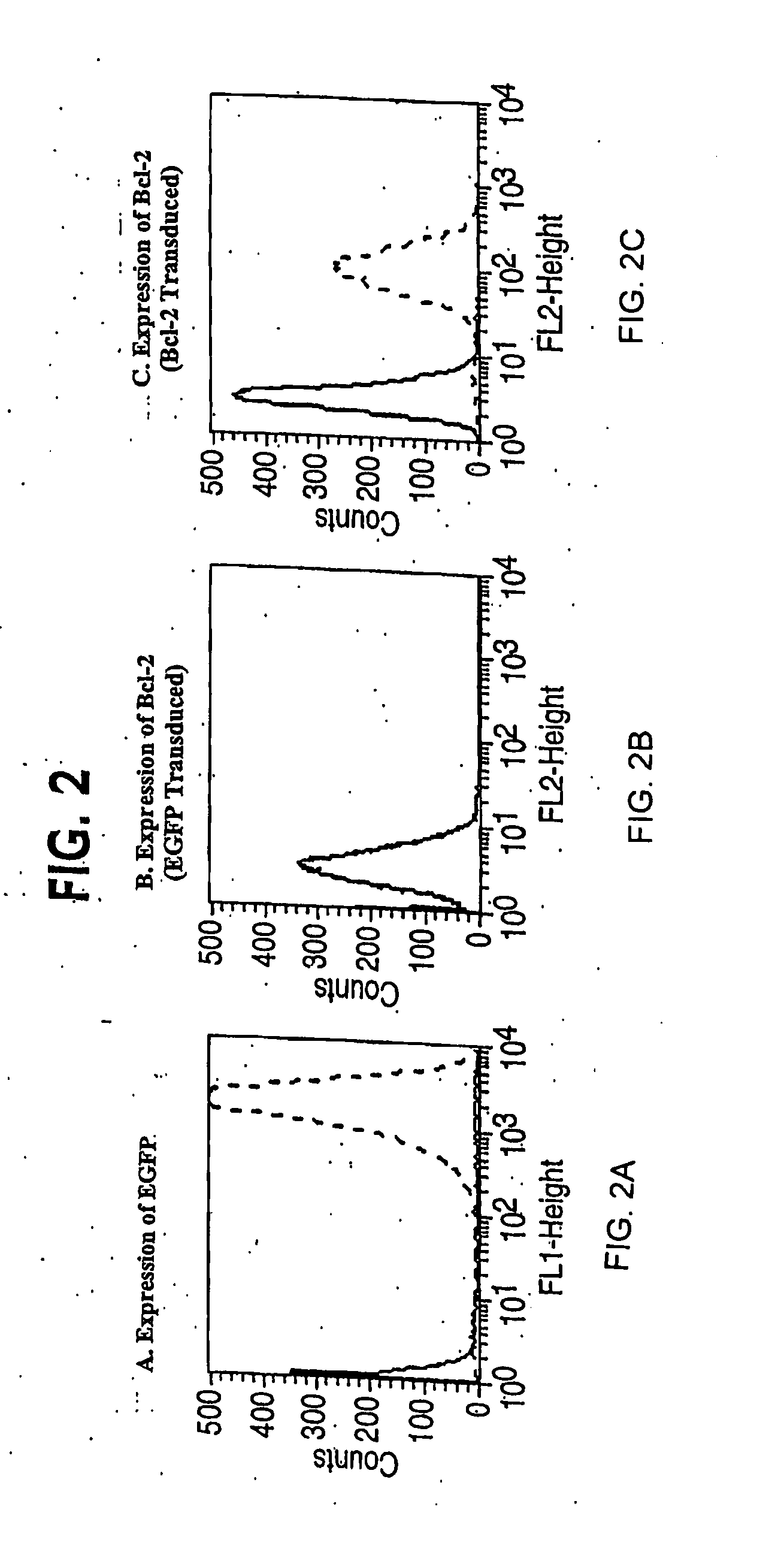
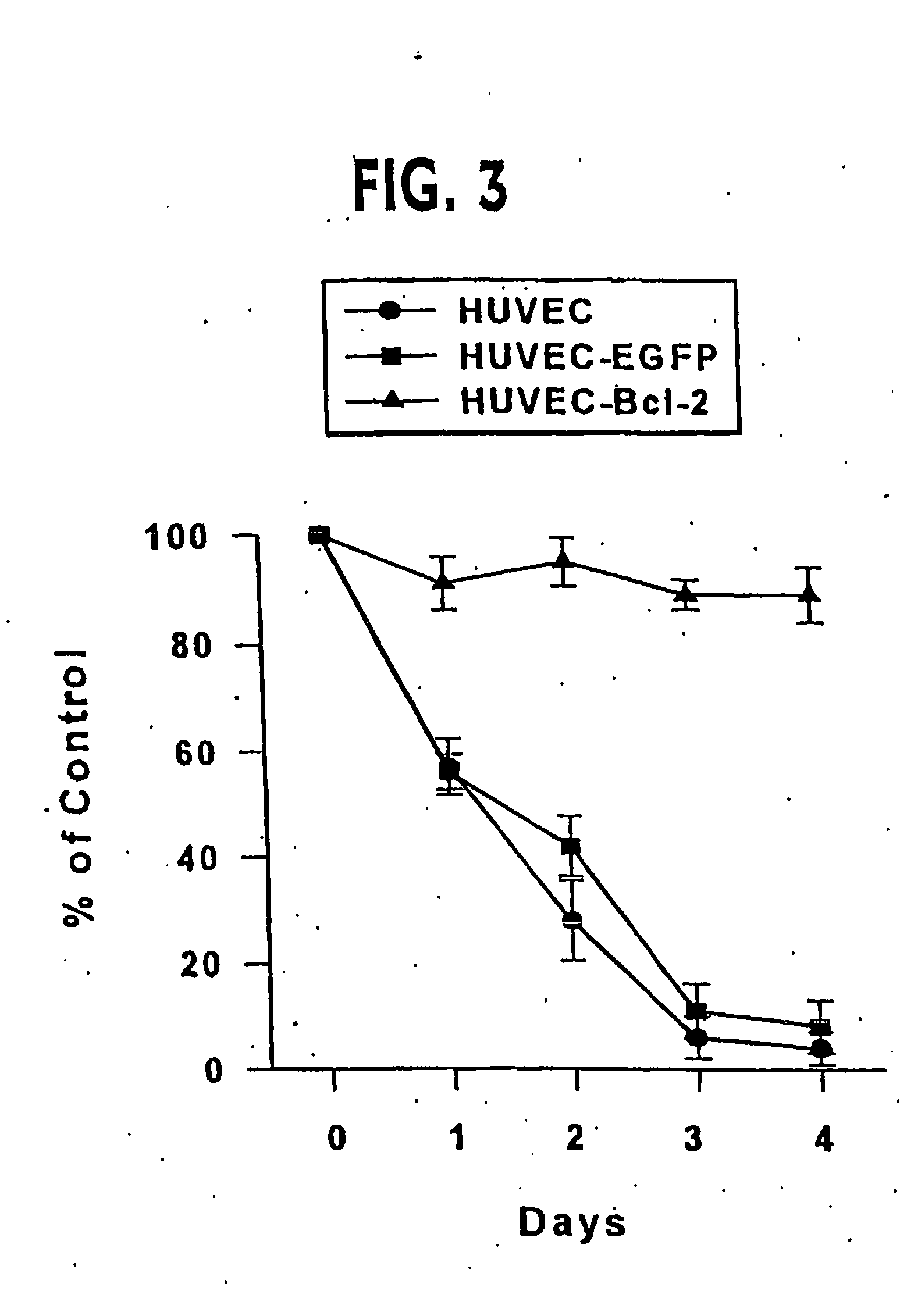
Examples
example 1
Isolation and Culture of HUVEC Cells
[0243] HUVEC were isolated by collagenase treatment of human umbilical veins as previously described (Gimbrone (1976) Prog. Hemostasis Thromb. 3, 1-6) and cultured on 0.2% gelatin-coated plastic in Medium 199 with 20% FCS, 50 μg / ml endothelial cell growth supplement (ECGS) (Collaborative Research / Becton Dickinson), 100 μg / ml heparin (Sigma), 2 mM L-glutamine, 100 U / ml penicillin, and 100 μg / ml streptomycin. All of the EC used in these experiments were at passage levels 1 through 6. Such cultures are homogeneous for EC markers (von Willebrand factor, CD31, inducible E-selectin) and are free of contaminating CD45+ leukocytes.
example 2
Construction of the Retroviral Vector Expressing Caspase Resistant Bcl-2
[0244] The D34A caspase-resistant form of Bcl-2 DNA (SEQ ID NO: 1) in the pSG5 expression Vector has been described (Cheng et al. (1997) Science 278, 1966-1968). The 800 bp cDNA insert was isolated by PCR and subcloned into the pCRII vector. DNA sequence of the insert of subclone #10 indicated the following terminal sequences:
(SEQ ID NO: 3)5′-AATTCGGATCACGGTCA CCATGGCGCACGCT(SEQ ID NO: 4). . . CTGAGCCACAAGTGAGTCGACCTCGAGGAATTC-3′.
EcoRI sites (GAATTC and the translation start (ATG) and stop (TGA) codons are underlined. The EcoRI excisable DNA insert was subcloned into the LZRSpBMN-Z retroviral vector. This retroviral vector DNA containing the caspase resistant form of Bcl-2 DNA was directly transfected into the Phoenix-Ampho packaging cell line by lipofection and puromycin-resistant cells were derived which served as the source of retroviral stocks.
[0245] To generate a control retroviral vector, Enhanced Gr...
example 3
Stable Transduction of Caspase-Resistant Bcl-2 or Control DNA
[0246] Infection of HUVEC was accomplished by four serial infections over two weeks without drug selection (Inaba et al. (1997) J. Surg. Res. 78, 31-36). In brief, standard viral infections in the presence of polybrene (5 μg / ml) were performed for six hours with 1×10⁵ HUVEC at passage one. The normal growth medium was replaced and cells were maintained overnight. The infection was repeated the next day. Cells were carried in culture for a week and then the process of double infection repeated starting with 1×10⁵ cells. Control transductions used the EGFP-encoding retroviral vector, or no retroviral vector. In general, each single retroviral infection produced 30-50% stably transduced cells. By performing two double cycles of infection, early passage HUVEC lines were reproducibly generated of which at least 95% of the cells expressed the expected cDNA.
[0247] Alternatively, the infection of HUVEC can be accomplished by se...
PUM
| Property | Measurement | Unit |
|---|---|---|
| Vascularization | aaaaa | aaaaa |
Abstract
Description
Claims
Application Information
 Login to View More