
Apparatus and method for receiving digital video signals
a digital video and apparatus technology, applied in the field of apparatus and methods for receiving transmitted digital video signals, can solve problems such as affecting the quality of service, affecting the service quality affecting the service quality of broadcast information, etc., to achieve the effect of reducing the power consumption of digital video devices or terminals, reducing the power consumption of digital video devices, and high power saving efficiency
- Summary
- Abstract
- Description
- Claims
- Application Information
AI Technical Summary
Benefits of technology
Problems solved by technology
Method used
Image

Examples
Embodiment Construction
[0022]The preferred embodiment of the present invention will be described in detail by way of following examples and with reference to the above-mentioned figures.
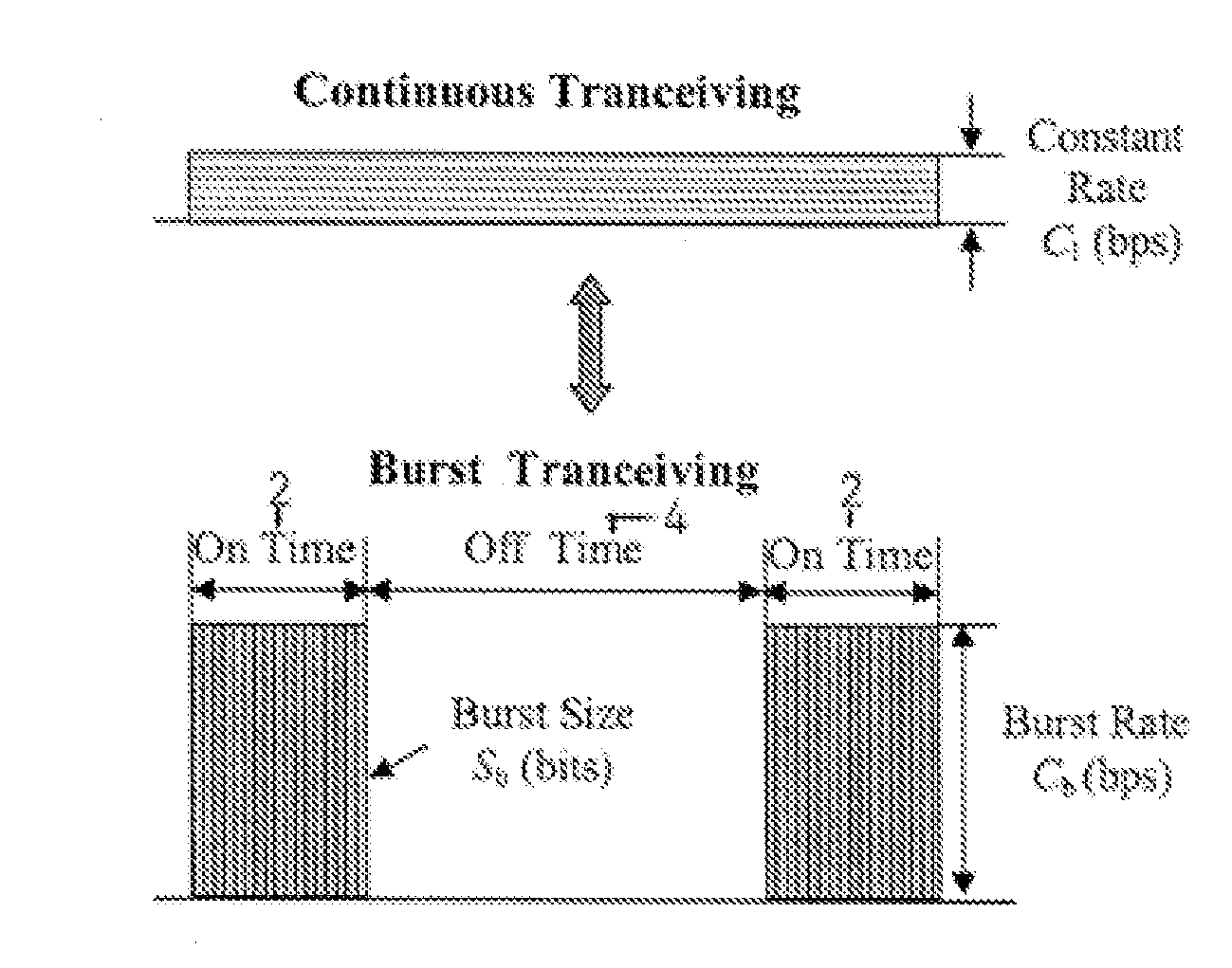
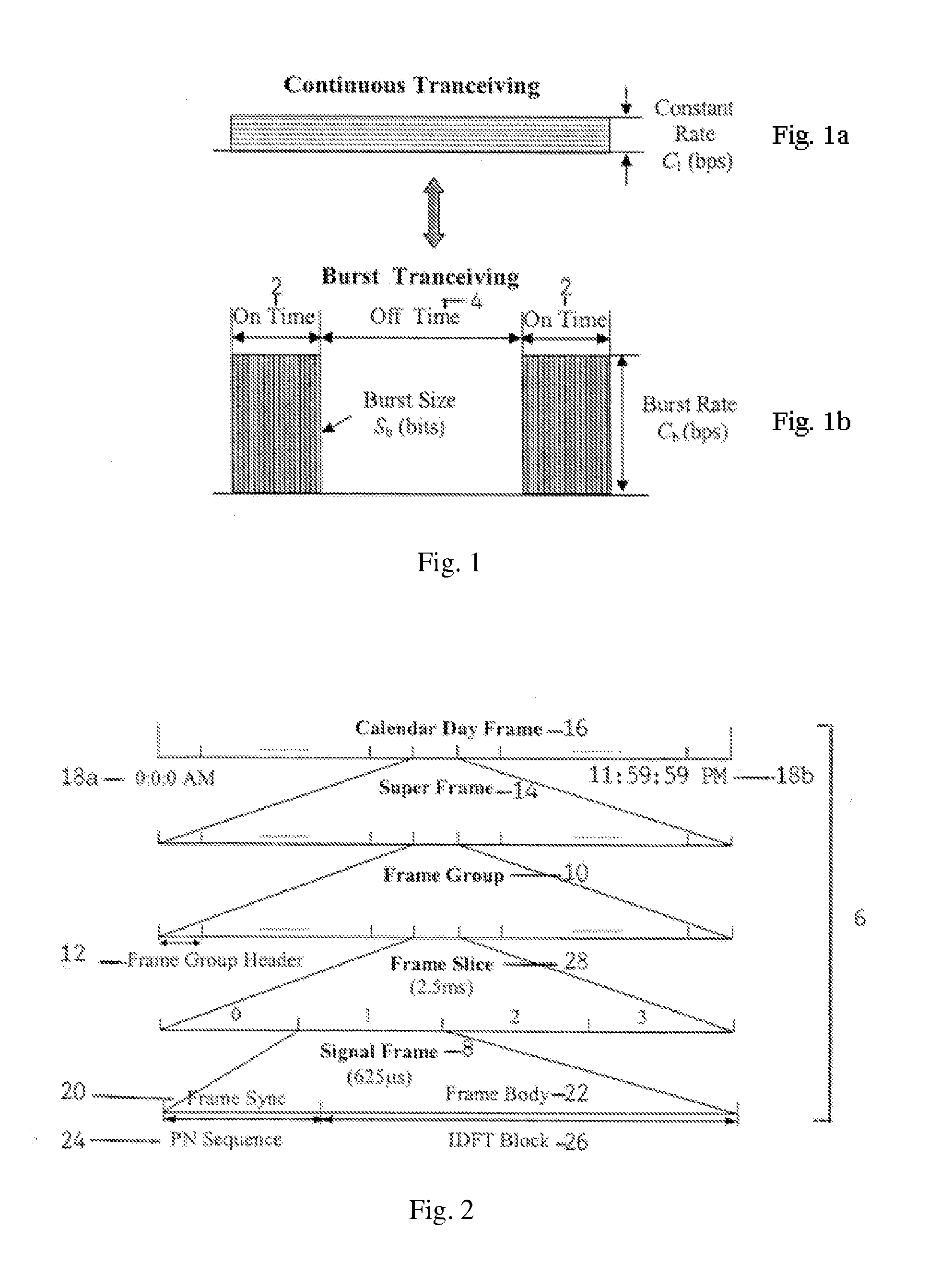
[0023]The above analysis on time-slicing and frame-slicing power reduction schemes show that a high burst data-rate, Cb in equation (1), is necessary for both time-slicing and frame-slicing schemes to achieve the required power saving efficiency. Also, to maintain a certain level of quality of service (QoS), the required high Cb should be always achievable independent of channel environment variations. Together, in practice, these requirements imply that the system architecture design and the choice of related algorithms should make the high-rate transmission workable under the worst channel conditions such as a fast fading environment (with larger Doppler frequency shift—a significant problem for mobile devices).
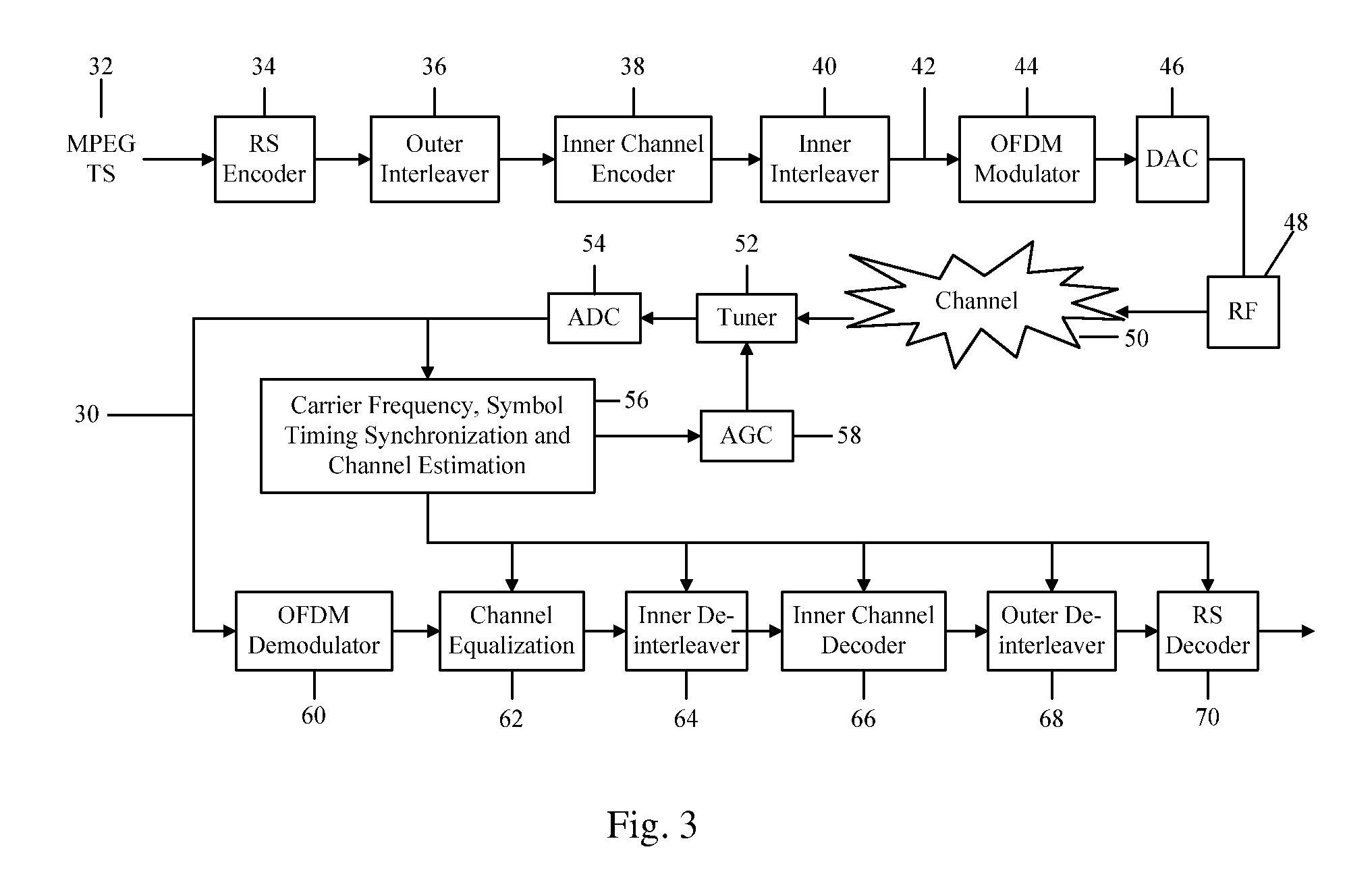
[0024]FIG. 3 depicts a simplified architecture 30 of a DTT transceiver. At the transmitter side, the MPEG TS 32...
PUM
 Login to View More
 Abstract
Description
Claims
Application Information
 Login to View More