System and method for automated patient anatomy localization

US20080159611A1Active Publication Date: 2008-07-03GENERAL ELECTRIC CO
11 Cites 35 Cited by

Patent Information

Authority / Receiving Office
US · United States
Current Assignee / Owner
Publication Date
2008-07-03

Smart Images

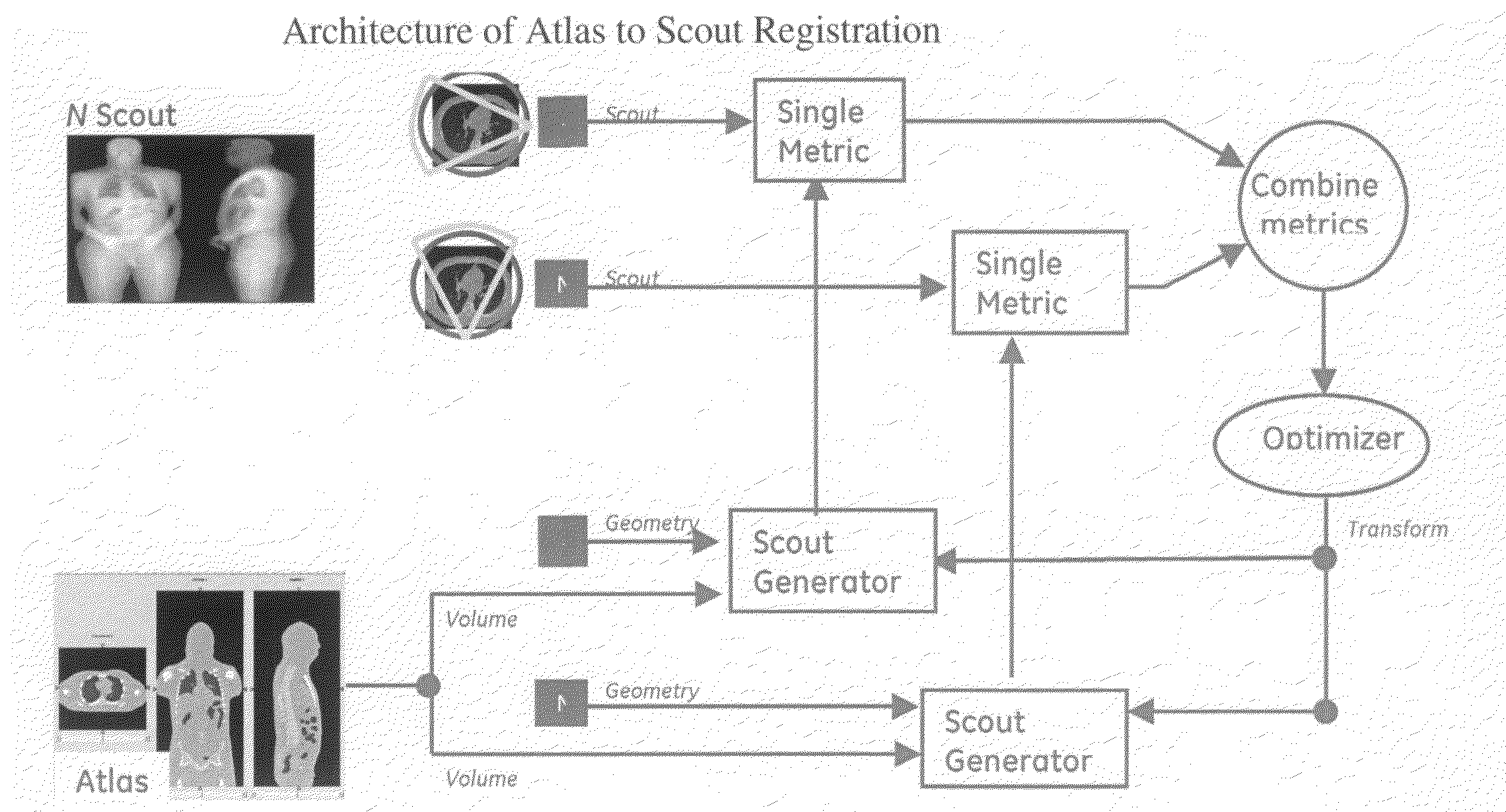
  • Figure 1
    Figure 1
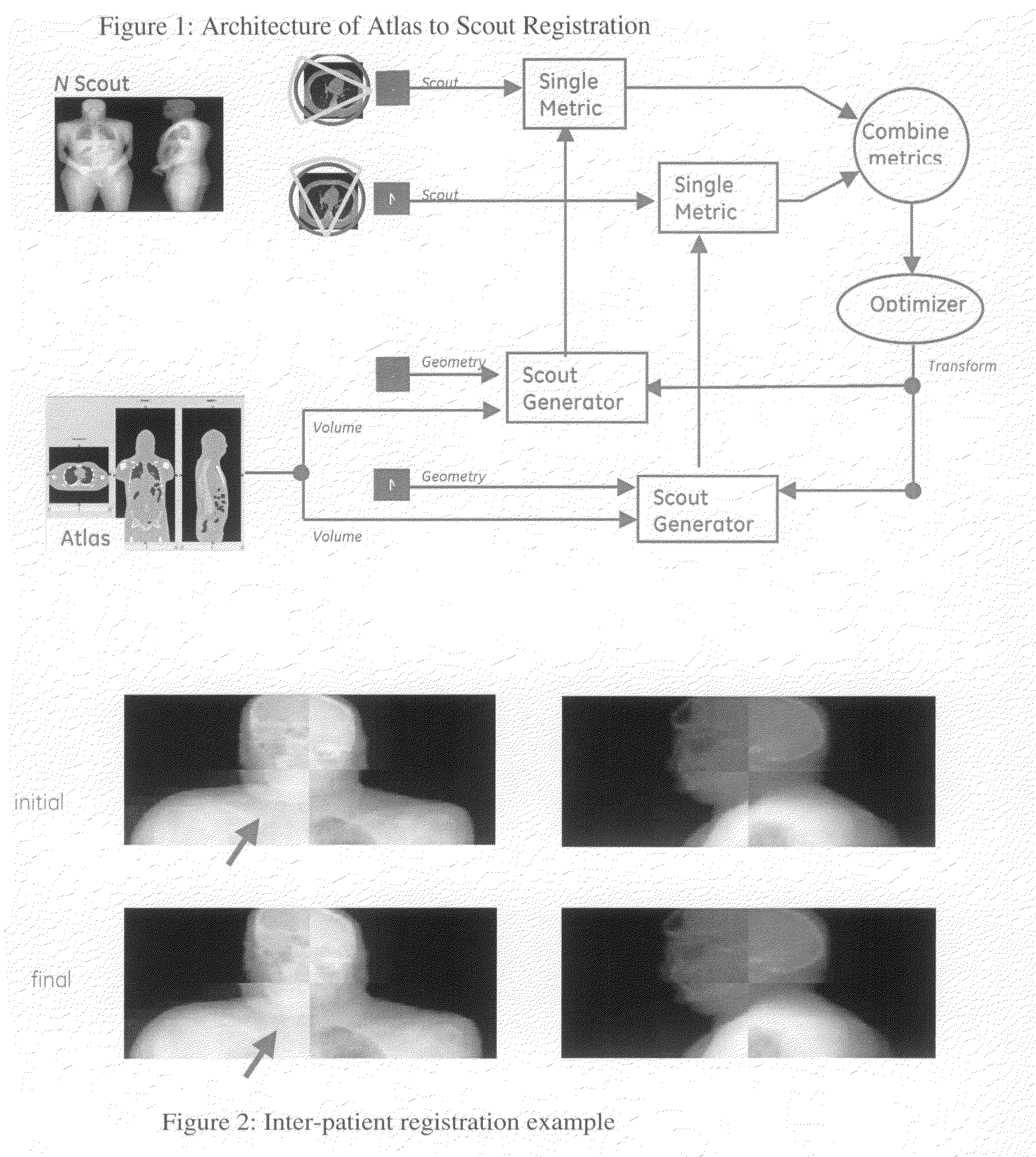
  • Figure 2
    Figure 2
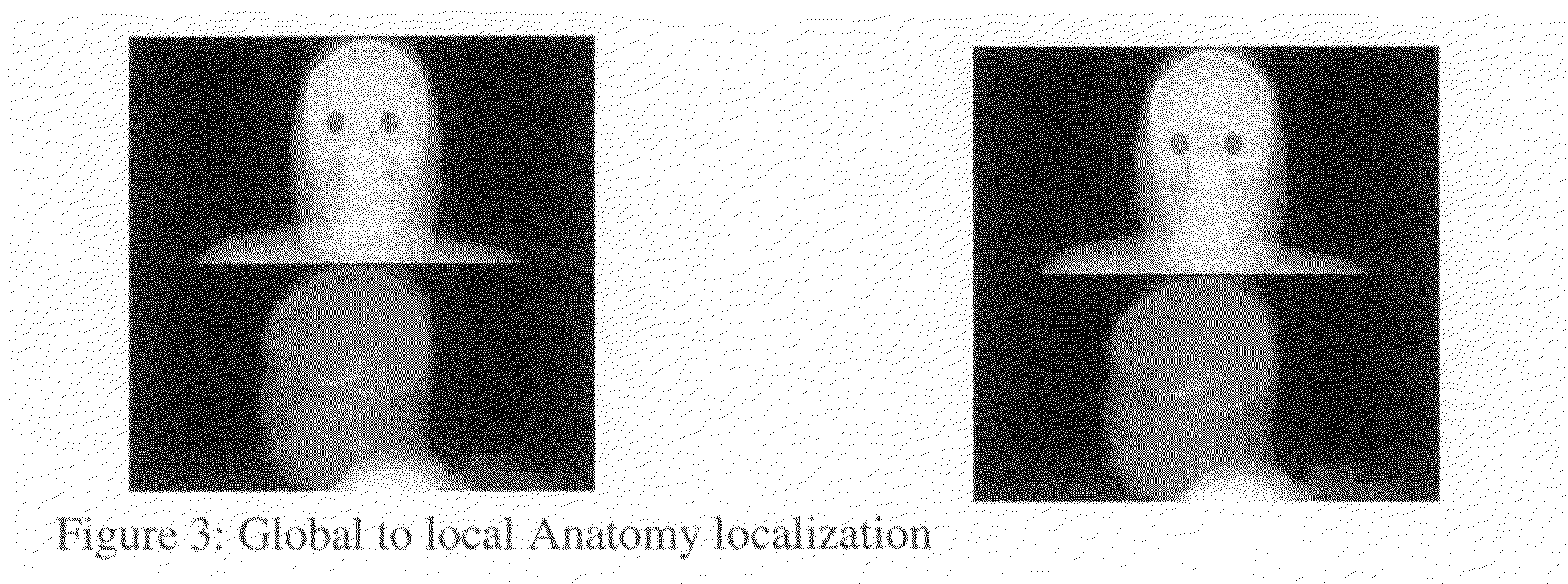
  • Figure 3
    Figure 3
Patent Text Reader

Abstract

A method of imaging comprises performing a scout image of an object and aligning major regions of interest within the object by comparing the scout image with a pre-determined atlas image. In a further embodiment, a method of imaging using a computed tomography (CT) scanner is provided and comprises performing a scout image of a subject and aligning major anatomical regions of interest within the subject by comparing the scout image with a pre-determined atlas image. Further, an imaging system for us with a computed tomography (CT) imaging device is provided and comprises a processor configured to perform aligning major anatomical regions of interest within a subject by comparing a scout image with a pre-determined atlas image, and wherein the major anatomical regions are used for automated localization for Scan Range and / or Exam split
Need to check novelty before this filing date? Find Prior Art

Description

CROSS REFERENCE TO RELATED APPLICATIONS

[0001] This application is related to Provisional Application U.S. Ser. No. 60 / 860,639, entitled “SYSTEM AND METHOD FOR AUTOMATED PATIENT ANATOMY LOCALIZATION USING SCOUTS”, filed Nov. 22, 2006, the contents of which are herein incorporated by reference and the benefit of priority to which is claimed under 35 U.S.C.119(e).BACKGROUND

[0002] In the current computed tomography (CT) image acquisition process, X-Ray scout images are acquired for anatomy localization. An operator reviews the scouts and sets scanning parameters to acquire images of patient region of interest. Patient anatomy is unknown to the scanner. Furthermore, after the images have been reconstructed, typically the operator has to divide the scanned images into anatomical regions to bill and network to the appropriate department within radiology e.g. Chest, Abdomen etc. This is called Exam Split.

[0003] The annotation on the images depends on the patient's orientation within the gantry...

Examples

Embodiment Construction

[0012]This invention solves the problem of automatic localization of patient anatomy. This can be done from one or more scout images or from a 3D dataset acquired from a low dose helical “scout”. For example, in a typical CT imaging session, two scout images are acquired first. An operator reviews the scouts and sets scanning parameters to acquire images of patient region of interest. This invention automates this process by automatically finding the patient anatomy from the scout image(s) (2D or 3D). This also allows for automation of the Exam Split process thus improving the workflow and increasing the efficiency.

[0013]In embodiments of the present invention, there is provided a system and method to automatically localize patient anatomy from scout images (one or more 2D scouts or a low dose helical scout) by registering a pre-labeled atlas into the patient space and transforming the atlas labels to find patient anatomy. The system can also recognize the patient orientation. The s...