
Positive electrode for nonaqueous electrolyte secondary battery, and production method thereof
a technology of nonaqueous electrolyte and secondary batteries, which is applied in the manufacture of final products, cell components, and nickel compounds, etc., can solve the problems of rapid deterioration of lithium cobalt oxide to which a different metal element is added, battery blistering, and deterioration of cycle performance, etc., to achieve excellent initial efficiency, excellent performance, and high safety
- Summary
- Abstract
- Description
- Claims
- Application Information
AI Technical Summary
Benefits of technology
Problems solved by technology
Method used
Image

Examples
eighth embodiments
First to Eighth Embodiments
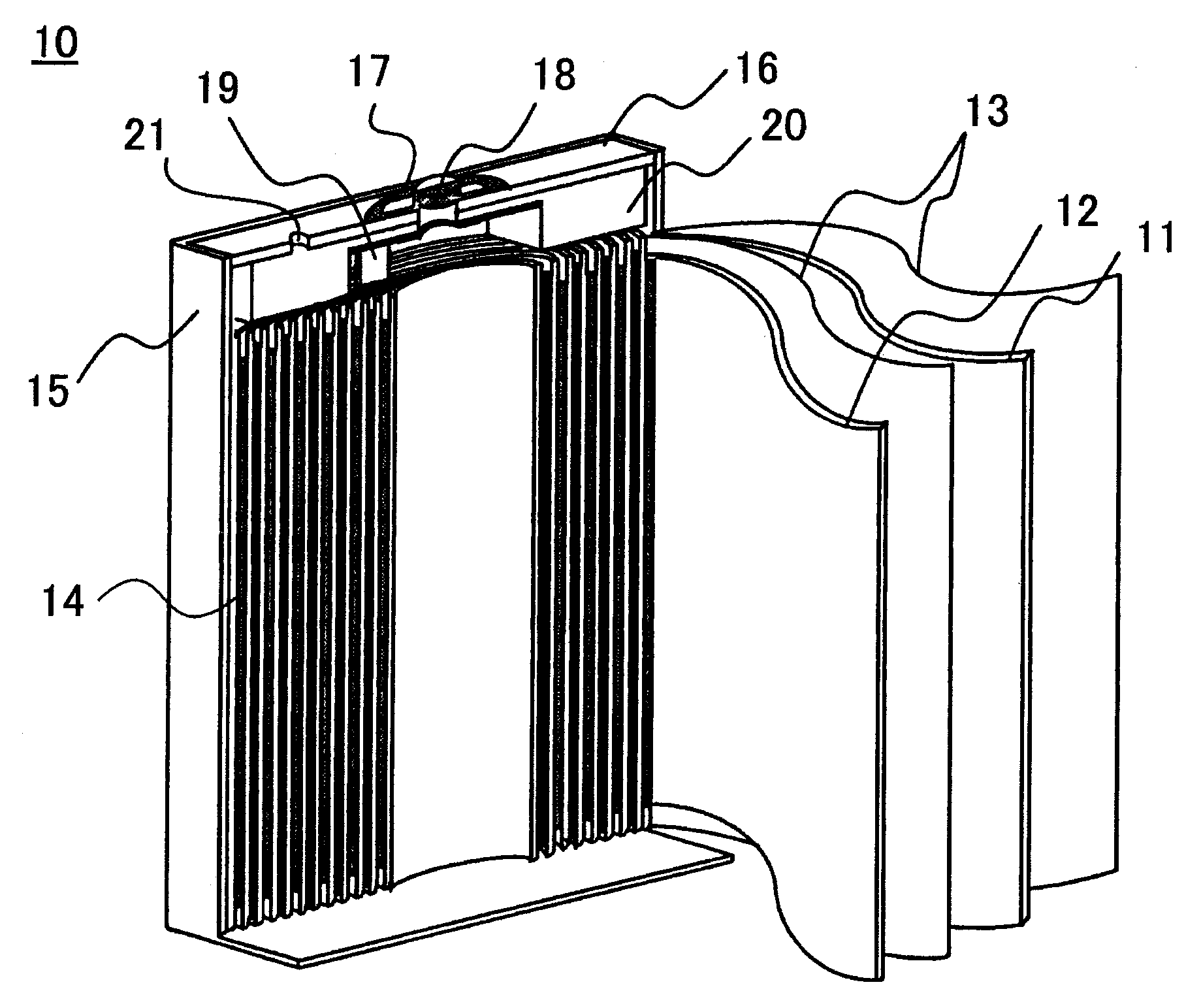
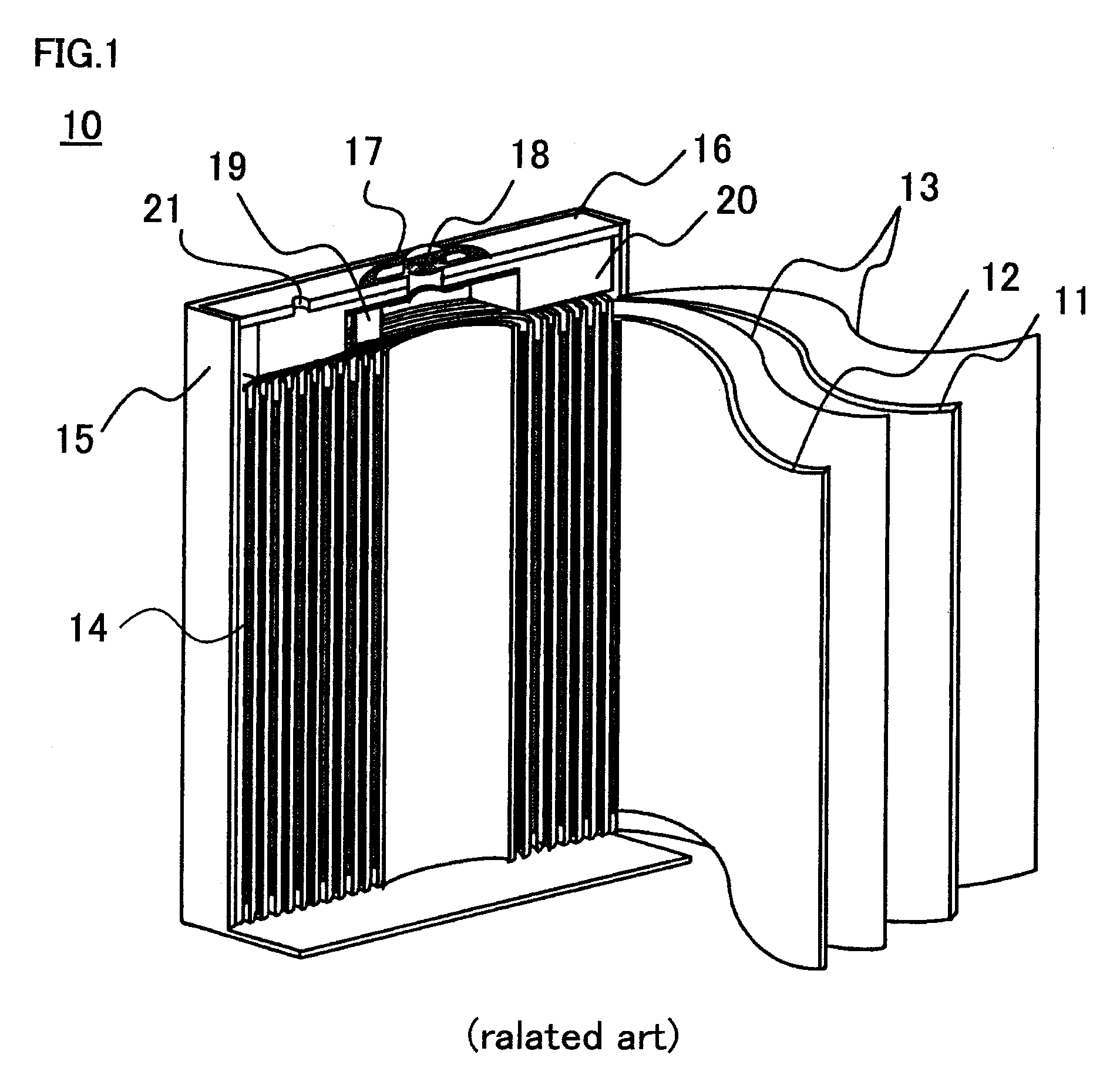
[0036]First, specific production methods of the nonaqueous electrolyte secondary batteries used in the First to Eighth Embodiments are described.
Preparation of Positive Electrode Active Material
[0037]For preparing cobalt-based lithium composite oxide, with respect to the starting material, as a lithium source, lithium carbonate (Li2CO3) was used and as a cobalt source, different metal elements-added tricobalt tetraoxide (Co3O4) was used. Among them, as different metal elements-added tricobalt tetraoxide, used was different metal elements-added cobalt carbonate produced by a method including: adding an acid aqueous solution containing respectively predetermined concentrations of magnesium (Mg), aluminum (Al), zirconium (Zr), and titanium (Ti) as different metal elements to an acid aqueous solution of cobalt, and mixing the resultant mixture; and precipitating cobalt carbonate (CoCO3) and simultaneously coprecipitating magnesium, aluminum, zirconium, and tit...
ninth and tenth embodiments
[0048]Next, the specific production methods of the nonaqueous electrolyte secondary batteries used in the Ninth and Tenth Embodiments are described. The nonaqueous electrolyte secondary battery of the Ninth Embodiment was prepared in substantially the same manner as in the First to Eighth Embodiments, except that the first positive electrode active material composed of cobalt-based lithium composite oxide represented by a molecular formula: LiCo0.99Al0.01O2 (corresponding to s=0.01) and having an average particle diameter of 13.1 μm, was used. Further, the nonaqueous electrolyte secondary battery of the Tenth Embodiment was prepared in substantially the same manner as in the First to Eighth Embodiments, except that the first positive electrode active material composed of cobalt-based lithium composite oxide represented by a molecular formula: LiCo0.95Al0.02Mg0.01Zr0.01Ti0.01O2 (corresponding to s=0.05) and having an average particle diameter of 12.8 μm, was used.
[0049]Next, the spec...
PUM
| Property | Measurement | Unit |
|---|---|---|
| particle diameter r2 | aaaaa | aaaaa |
| charging voltage | aaaaa | aaaaa |
| charging voltage | aaaaa | aaaaa |
Abstract
Description
Claims
Application Information
 Login to View More