System and method for continuous broadcast service from non-geostationary orbits

a technology of continuous broadcast service and non-geostationary orbit, which is applied in the field of system and method for providing satellite broadcast service, can solve the problems of limiting the maximum number of channels that existing dbs service can provide, requiring much higher bandwidth, and worsening of spectrum/channel shortag

a technology of continuous broadcast service and non-geostationary orbit, which is applied in the field of system and method for providing satellite broadcast service, can solve the problems of limiting the maximum number of channels that existing dbs service can provide, requiring much higher bandwidth, and worsening of spectrum/channel shortag

US20080307466A1Inactive Publication Date: 2008-12-11THE DIRECTV GRP INC

Image

Smart Image Click on the blue labels to locate them in the text.
Viewing Examples
Smart Image
  • System and method for continuous broadcast service from non-geostationary orbits
  • System and method for continuous broadcast service from non-geostationary orbits
  • System and method for continuous broadcast service from non-geostationary orbits

Examples

Experimental program
Comparison scheme
Effect test

Embodiment Construction

[0020]In the following description, reference is made to the accompanying drawings which form a part hereof, and which is shown, by way of illustration, several embodiments of the present invention. It is understood that other embodiments may be utilized and structural changes may be made without departing from the scope of the present invention.

Video Distribution System

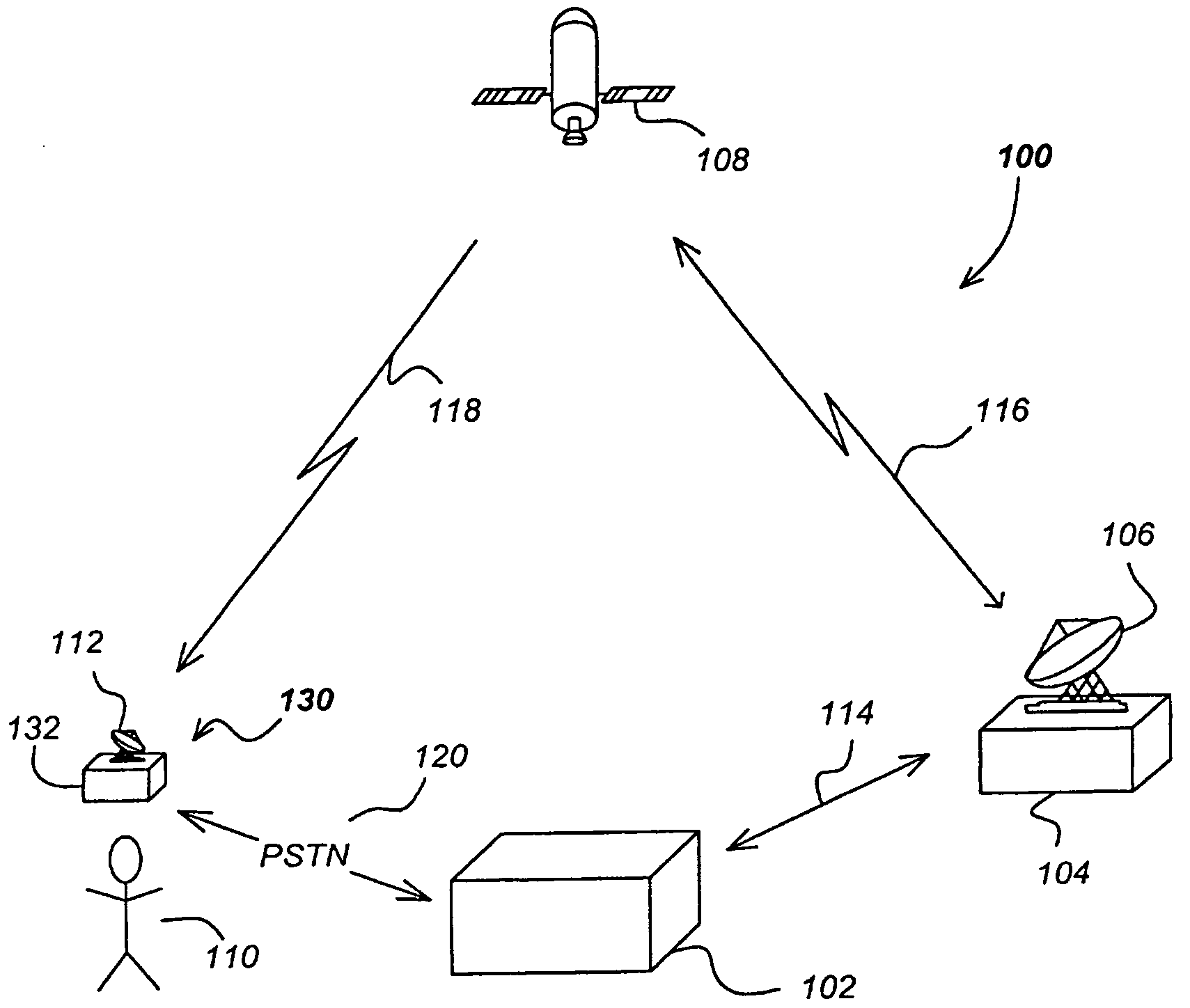
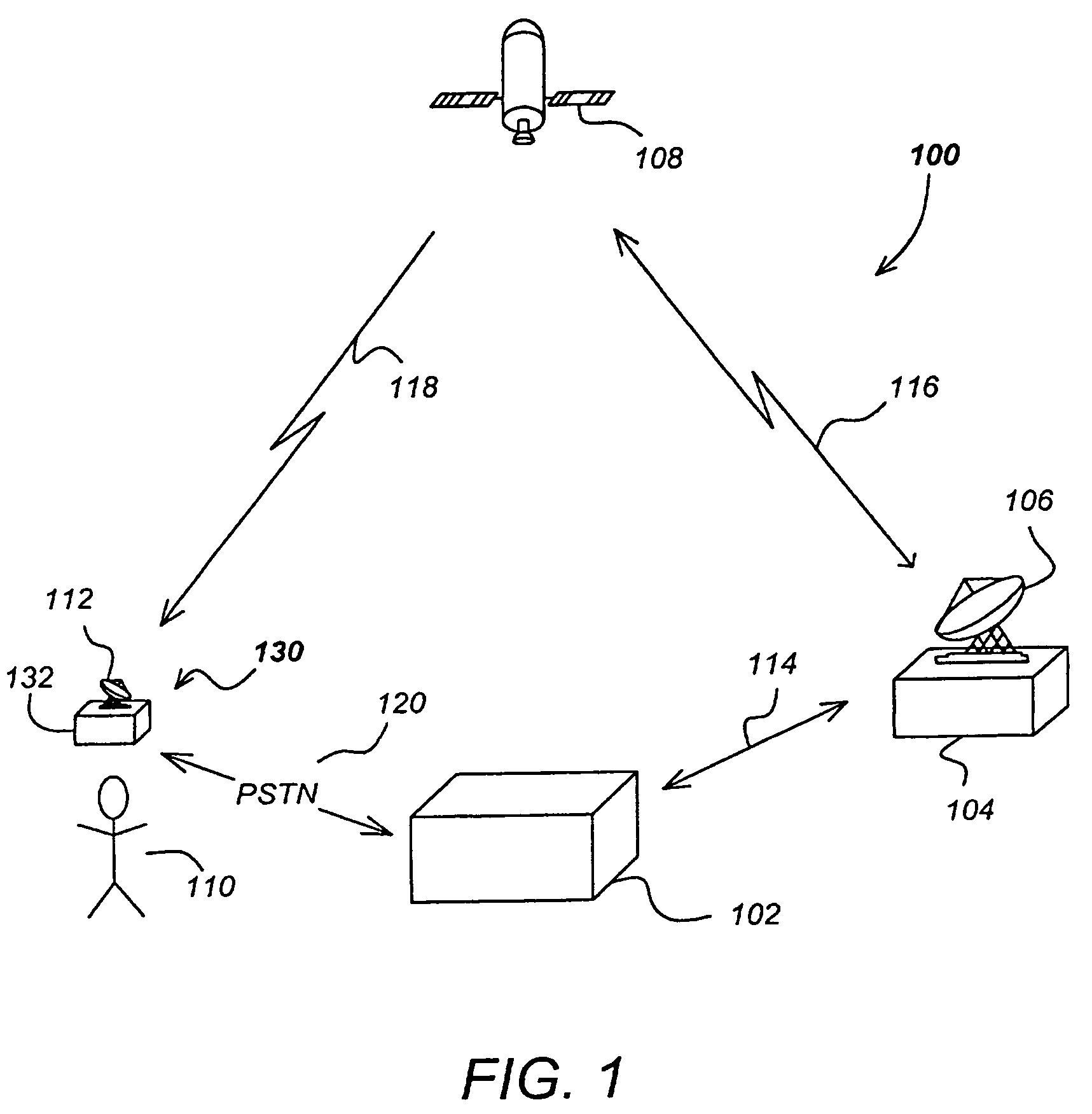
[0021]FIG. 1 is a diagram illustrating an overview of a video distribution system 100. The video distribution system 100 comprises a control center 102 in communication with an uplink center 104 via a ground or other link 114 and an integrated receiver / decoder (IRD) 132 at terrestrial receiver station 130 via a public switched telephone network (PSTN) or other link 120. The control center 102 provides program material to the uplink center 104, coordinates with the receiver station 130 to offer subscribers 110 pay-per-view (PPV) program services, including billing and associated decryption of video programs.

[0022]The ...

the structure of the environmentally friendly knitted fabric provided by the present invention; figure 2 Flow chart of the yarn wrapping machine for environmentally friendly knitted fabrics and storage devices; image 3 Is the parameter map of the yarn covering machine
Login to View More

PUM

No PUM Login to View More

Abstract

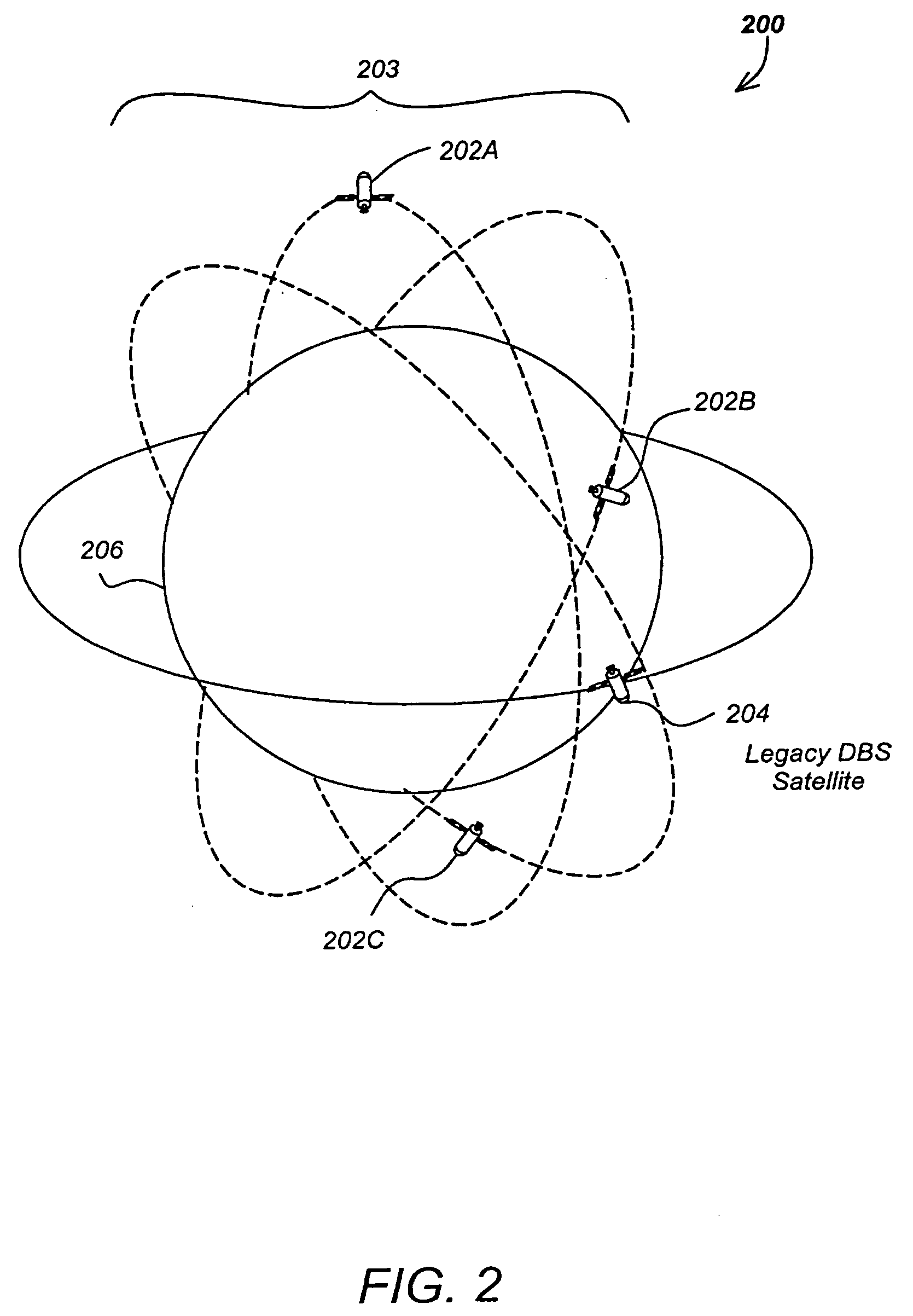
A method, apparatus for providing at least near continuous broadcast services to one or more terrestrial receiver stations is disclosed. The system comprises a plurality of satellites, each satellite in an inclined, elliptical geosynchronous orbit, each satellite providing a portion of the at least near continuous broadcast service to the terrestrial receiver. In one embodiment, the system also comprises a receiver station having an legacy antenna modified so as to include a sensitivity pattern substantially matched to the track of the apparent position of the satellites actively broadcasting information to the receiver stations. The present invention is also embodied in a method for receiving at least near continuous broadcast service from at least one of a plurality of satellites at a time, each satellite in an inclined, elliptical, geosynchronous orbit.

Description

BACKGROUND OF THE INVENTION[0001]1. Field of the Invention[0002]The present invention relates to systems and methods for providing satellite broadcast services, and in particular to a low cost system for increasing channel capacity in a satellite broadcast network.[0003]2. Description of the Related Art[0004]The past decade has seen the development of Direct Broadcast Satellite (DBS) services for providing video, audio, data, and other program material to subscribers. The electromagnetic spectrum allocated for DBS in the United States has been limited to 500 MHz. This constraint limits the maximum number of channels that existing DBS service can offer from one geostationary orbit (GSO) slot, since each video channel typically occupies about 2-6 MHz of bandwidth, depending on the data rates. This shortage of spectrum / channels becomes worse with the emerging demand for High Definition TV (HDTV) which requires much higher bandwidth per channel than traditional video channels. The short...

Claims

the structure of the environmentally friendly knitted fabric provided by the present invention; figure 2 Flow chart of the yarn wrapping machine for environmentally friendly knitted fabrics and storage devices; image 3 Is the parameter map of the yarn covering machine
Login to View More

Application Information

Patent Timeline
11 Dec 2008
Publication
US20080307466A1
IPC
H04N7/20
CPC
H04B7/18523; H04B7/18521
Inventors
WANG, ARTHUR W.