In the face of financially severe but unlikely events, people may make decisions to act in a risk adverse manner to avoid the possibility of such outcomes.
Such decisions may negatively affect business activity and the economy when beneficial but risky activities are not undertaken.
In addition, regulatory requirements often require companies to report on their
risk exposure and require the companies to have sufficient reserves and capital on hand to support the
risk profile associated with the financial guarantees they have sold.
Valuing financial guarantees embedded in life insurance products for financial, risk management and regulatory reporting, is a computationally challenging prospect for insurance companies.
Every time a company, or what is known as a direct writer, sells one of these insurance products it accumulates systemic market risk in its portfolio.
It is generally complex and costly to hedge variable
annuity risks given the complexity of the guarantees and their financial and regulatory reporting requirements.
As a result of these challenges, it is difficult,
time consuming and expensive to successfully maintain a portfolio with manageable risk.
These shortcomings lead to increased costs to consumers as companies charge more for the risk they assume, and the security of the portfolio is less than would be preferred.
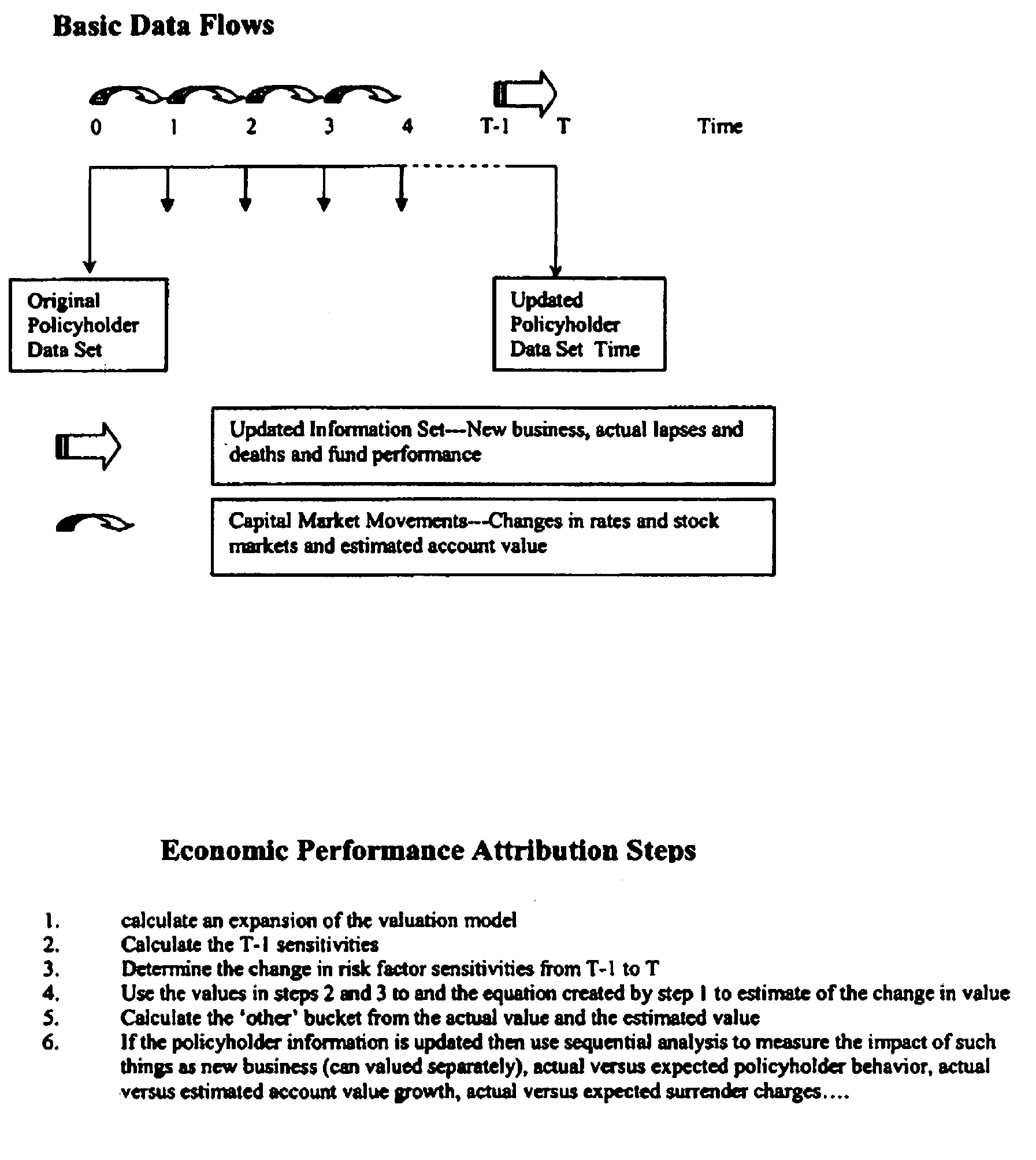
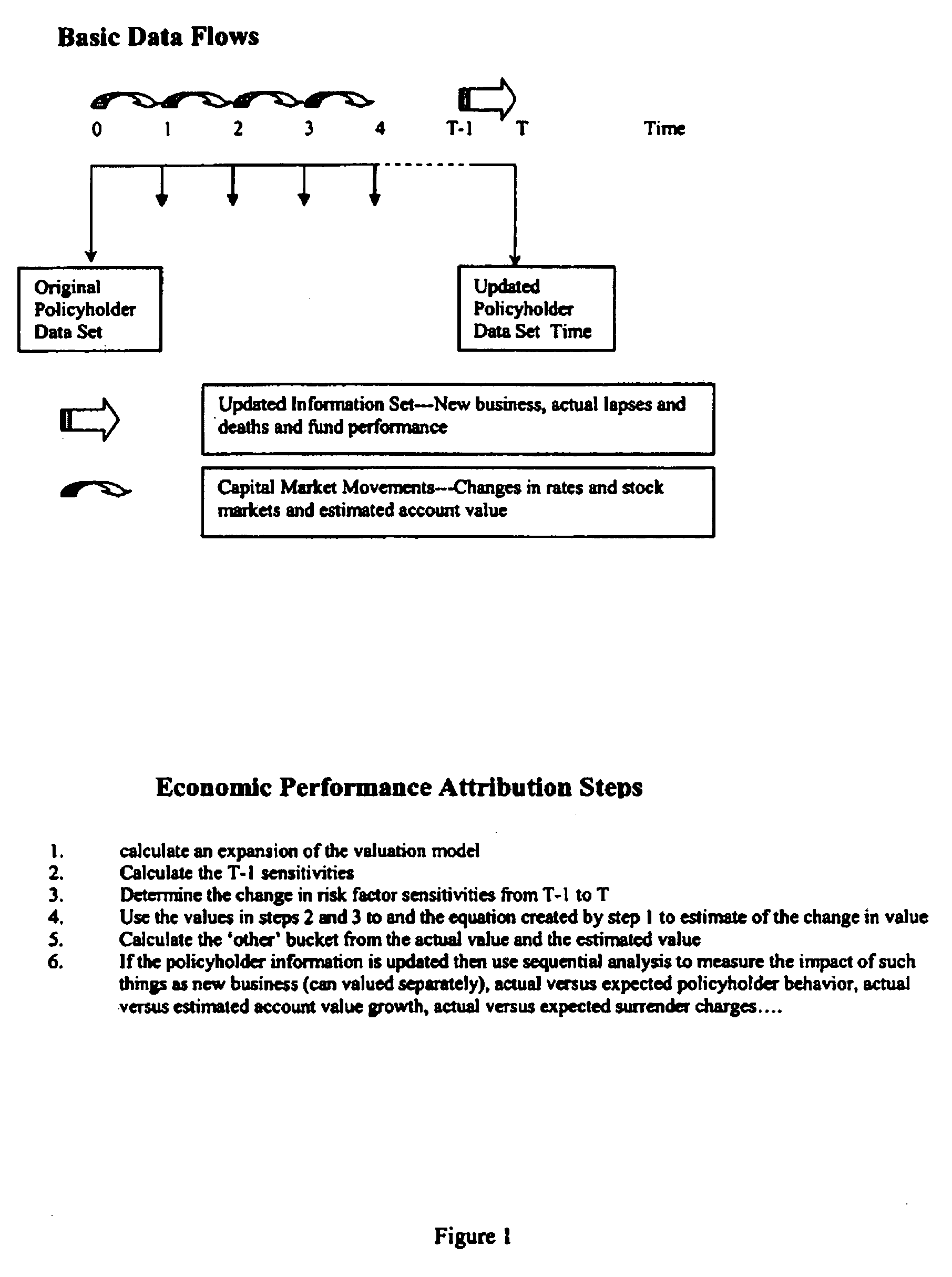
Many direct writers struggle with creating a performance attribution framework for variable annuity hedge programs to explain the hedge program performance from one period to the next.
This is generally a capricious approach because the performance attribution results depend on the ordering of the identified
risk factor changes.
In addition, it is not clear if the information produced by such a performance attribution system provides the value-added feedback to actually improve hedge program performance in way that traders and hedge program managers can understand.
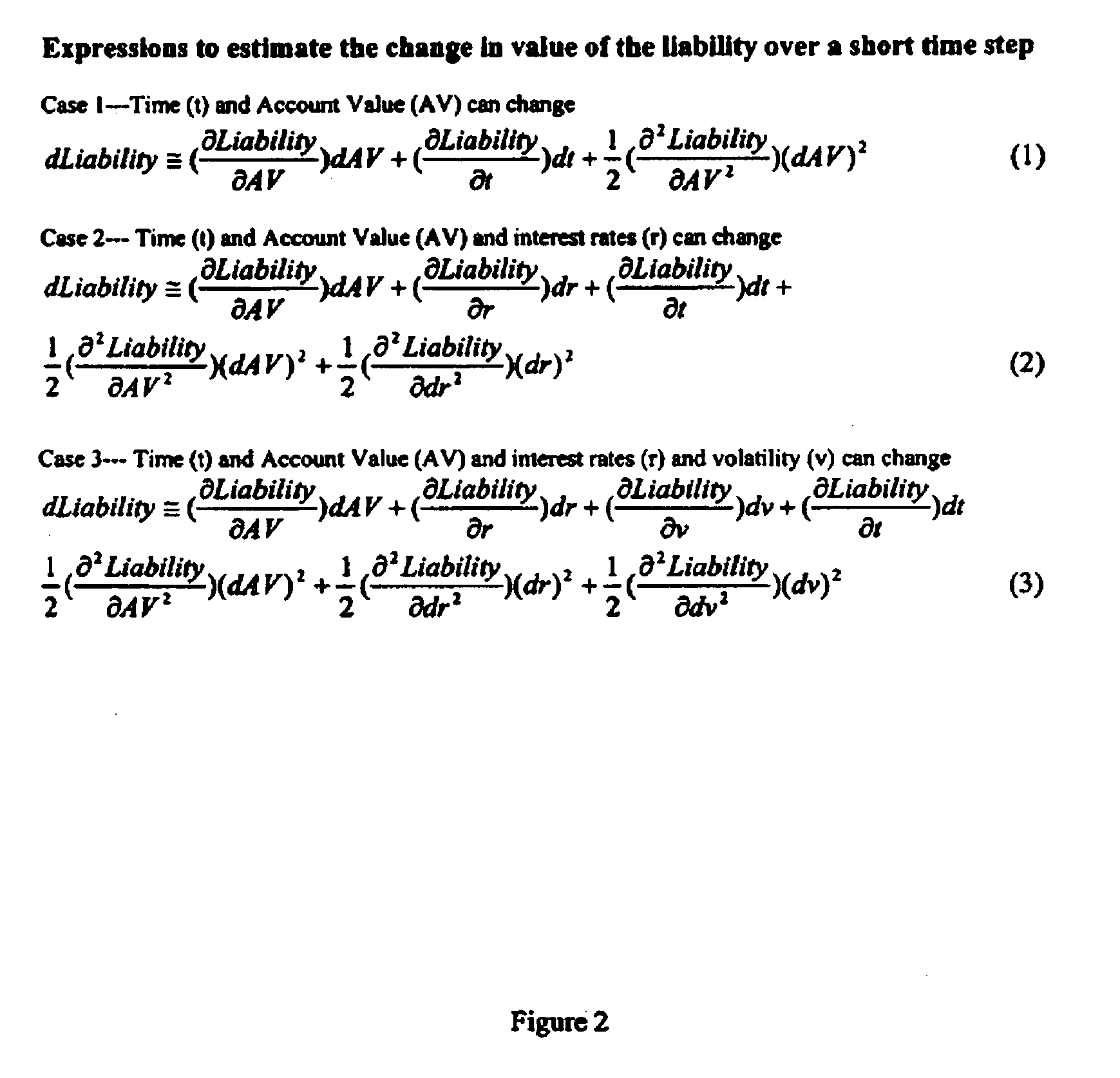
Many direct writers also struggle with trying to estimate the intra-day values and sensitivities of the
risk exposure in a variable annuity hedge program because they cannot calculate this information explicitly on an intra-day basis due to the large runtimes associated with calculating the necessary results for liability.
For example, the liability might depend on twenty inputs and as the market opens in the course of the day eighteen of these inputs may change in value, and direct writers are faced with the challenging prospect of re-estimating the liability value and sensitivities to these inputs as
market conditions change.
There are no known great solutions to this difficult re-
estimation problem, which is fundamentally a liability problem.
However the estimates from the overnight runs are generally difficult to interpolate because of the
noise in the results because a Monte Carlo or
scenario based valuation method is used and because of the comparatively few sample observations from a liability function with
high dimensionality or one with so many inputs.
However doing so provides the direct writer with only a rough guess of the sensitivity and value of the liability due to capital market changes on an
intra day basis because only a very small part of the possible
sample space is used.
Such techniques do not smooth out the
noise resulting from the Monte Carlo simulations, and some produce spurious jumps in estimated results.
In addition, most techniques can only reliably
handle two dimensional
estimation problems.
Generally companies have detailed information on the liability in one system, and detailed back office information on the hedge portfolio's assets in another system making it a challenge to collect, store and access information for the hedging program.
Direct writers are typically skilled at building and maintaining large databases or building and maintaining a company
web site, but they are not skilled at creating complex tools that pull in information from different systems, and combining information with live
market based pricing feeds.
Because of these difficulties, many variable annuity hedging programs just rebalance and monitor risk exposures based on overnight runs and use rules of
thumb to manage and monitor the risk on an
intra day basis.


 Login to View More
  Login to View More