
Fuel cell membrane-electrode assembly and production method therefor
a technology of fuel cell membrane and electrolectrode, which is applied in the direction of primary cells, cell components, electrochemical generators, etc., can solve the problems of difficult effective increase of exposed surface area, difficult dispersion of small metal catalyst particles, and high cost of electrode catalysts, etc., to restrain the decline of fuel cell durability and improve catalyst utilization rate.
- Summary
- Abstract
- Description
- Claims
- Application Information
AI Technical Summary
Benefits of technology
Problems solved by technology
Method used
Image

Examples
Embodiment Construction
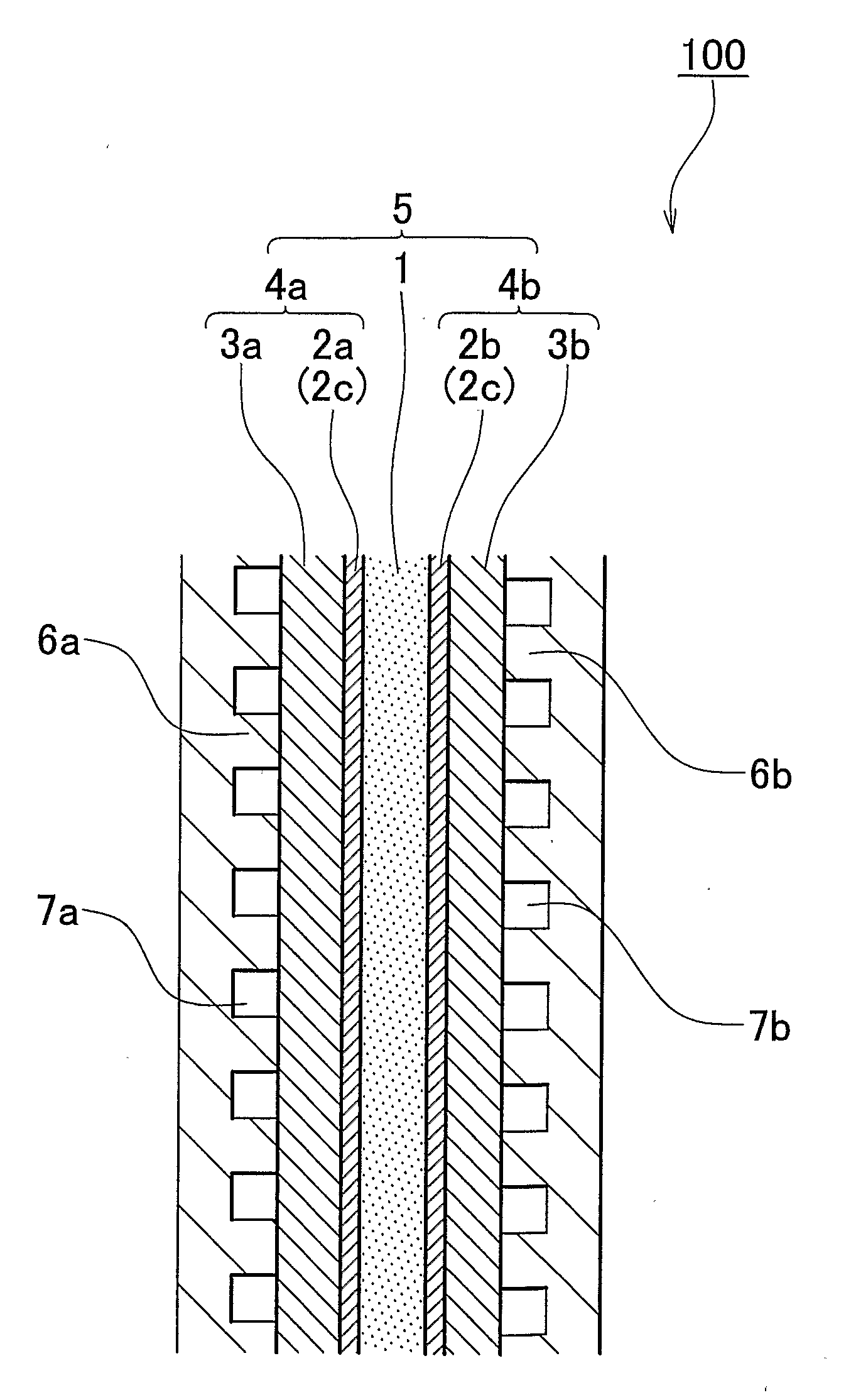
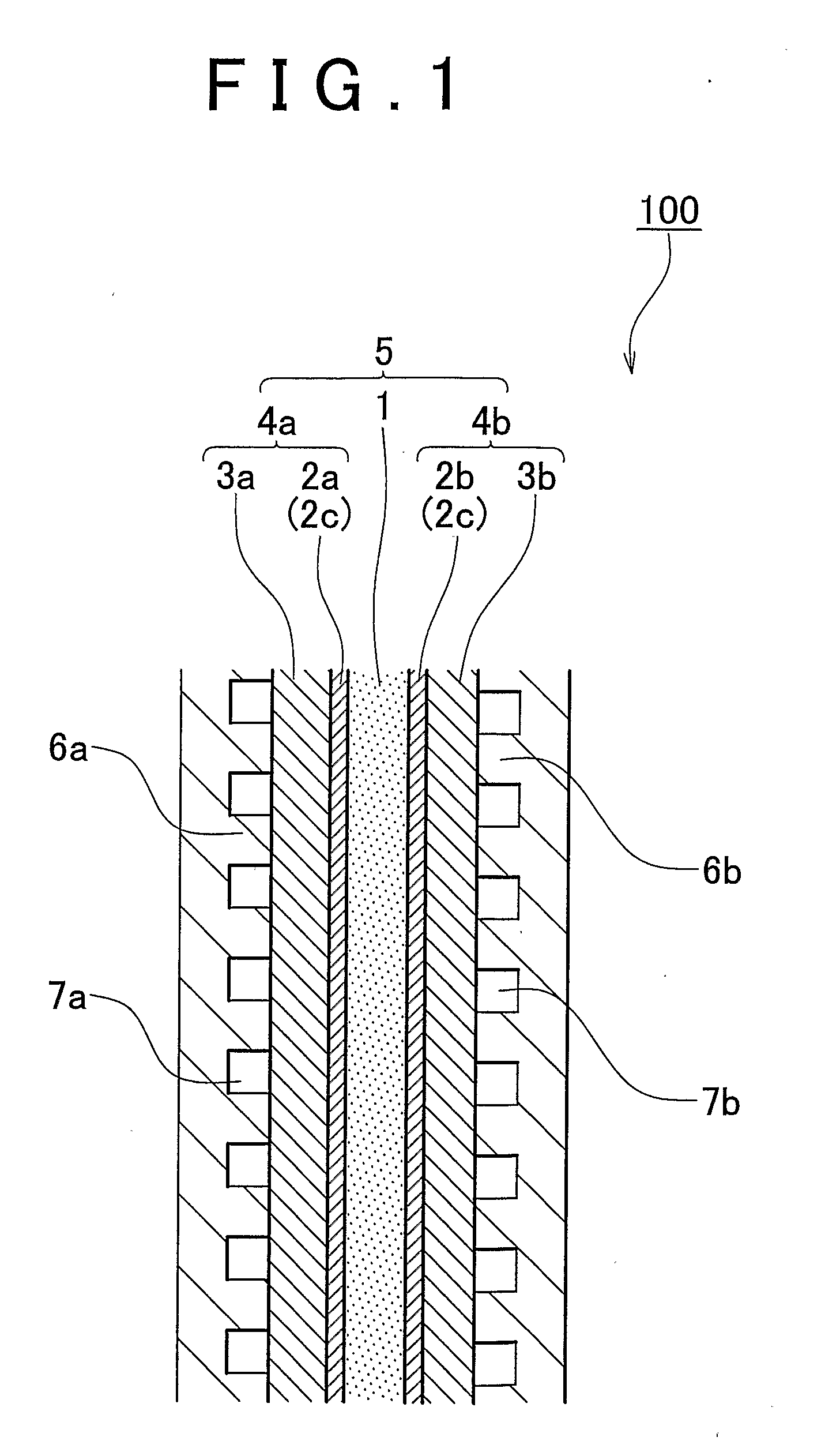
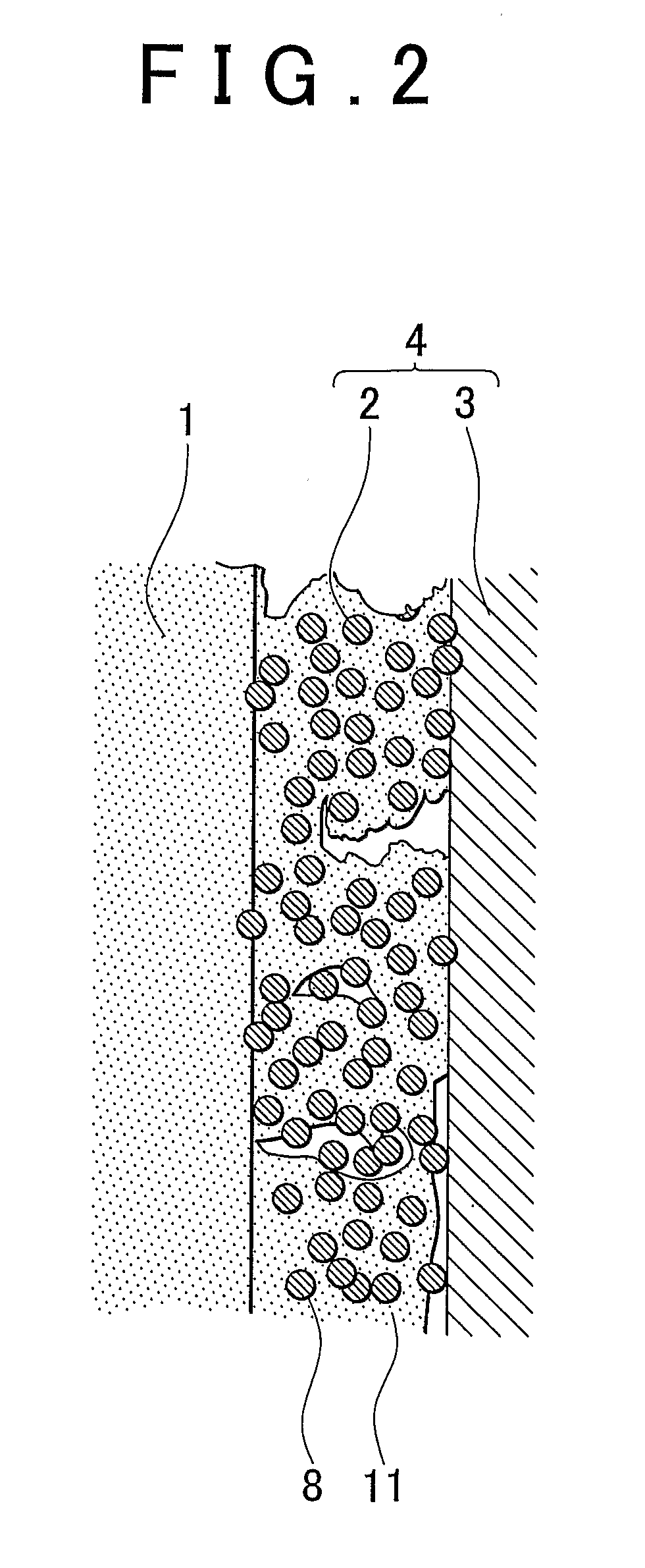
[0057]A fuel cell membrane-electrode assembly (hereinafter, referred to simply as “membrane-electrode assembly”) of an embodiment of the invention is a fuel cell membrane-electrode assembly that has a fuel electrode at one surface side of an electrolyte membrane, and an oxidant electrode at the other surface side thereof. At least one of the fuel electrode and the oxidant electrode has a non-supported-catalyst containing catalyst layer that contains a metal catalyst nanoparticle of 0.3 nm to 100 nm in primary particle diameter that is not supported on a support, and an electrochemically active surface area of the metal catalyst nanoparticle is 10 m2 / g to 150 m2 / g, and a layer thickness of the non-supported-catalyst containing catalyst layer is less than or equal to 10 μm.
[0058]An fuel cell membrane-electrode assembly of an embodiment of the invention will be described hereinafter with reference to FIGS. 1 and 2. FIG. 1 is a diagram showing an embodiment of the fuel cell membrane-ele...
PUM
| Property | Measurement | Unit |
|---|---|---|
| thickness | aaaaa | aaaaa |
| particle diameter | aaaaa | aaaaa |
| particle diameter | aaaaa | aaaaa |
Abstract
Description
Claims
Application Information
 Login to View More