Mechanical semicircular canal stimulator

US20100010569A1Inactive Publication Date: 2010-01-14COCHLEAR LIMITED
6 Cites 6 Cited by

Patent Information

Authority / Receiving Office
US · United States
Current Assignee / Owner
Publication Date
2010-01-14
Estimated Expiration
Not applicable · inactive patent

Smart Images

  • Figure 1
    Figure 1
  • Figure 2
    Figure 2
  • Figure 3
    Figure 3
Patent Text Reader

Abstract

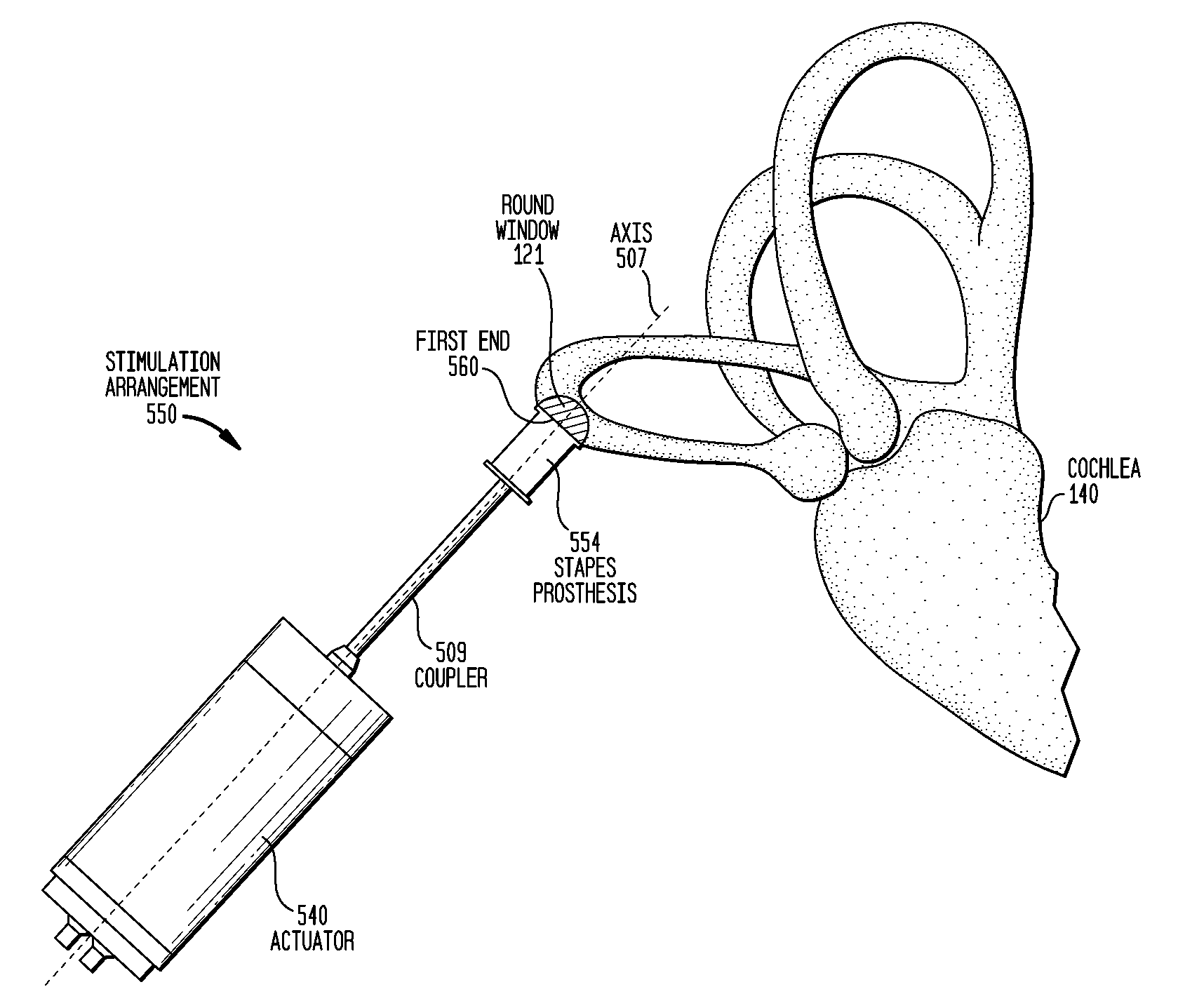
A mechanical stimulator for evoking a hearing percept by directly generating waves of fluid motion of fluid in a recipient's semicircular canal. The mechanical stimulator comprises a sound processing unit configured to process a received sound signal; and an implantable stimulation arrangement, comprising: a stapes prosthesis having a first end configured to be positioned abutting an opening in the semicircular canal, an actuator configured to receive electrical signals representing the processed sound signal and configured to vibrate in response to the electrical signals, and a coupler connecting the actuator to the stapes prosthesis such that vibration of the actuator results in waves of fluid motion in a recipient's semicircular canal that evoke a hearing percept of the received sound signal.
Need to check novelty before this filing date? Find Prior Art

Description

CROSS-REFERENCE TO RELATED APPLICATIONS

[0001] The present application claims the benefit of U.S. Provisional Patent Application 61 / 041,185; filed Mar. 31, 2008, which is hereby incorporated by reference herein. Furthermore, this application is a related to commonly owned and co-pending U.S. patent application entitled “MECHANICAL SCALA TYMPANI STIMULATOR,” filed concurrently herewith under Attorney Docket No. 22409-00499-US. This application is hereby incorporated by reference herein.BACKGROUND

[0002] 1. Field of the Invention

[0003] The present invention is related to a hearing prosthesis, and particularly to, a mechanical semicircular canal stimulator.

[0004] 2. Related Art

[0005] Hearing loss, which may be due to many different causes, is generally of two types, conductive and sensorineural. In some cases, an individual may have hearing loss of both types. In many people who are profoundly deaf, however, the reason for their deafness is sensorineural hearing loss. Sensorineural hearing lo...

Examples

Embodiment Construction

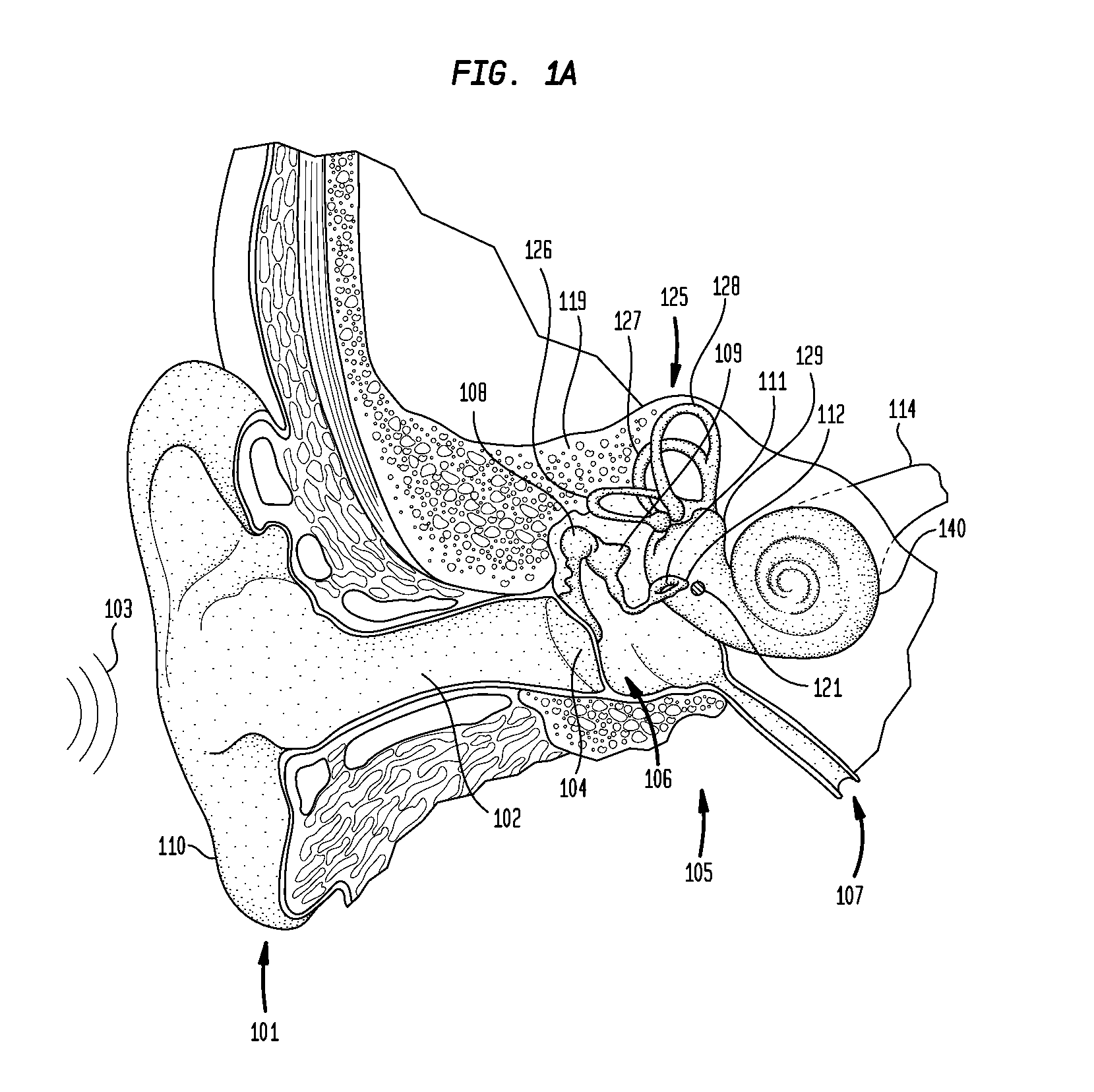
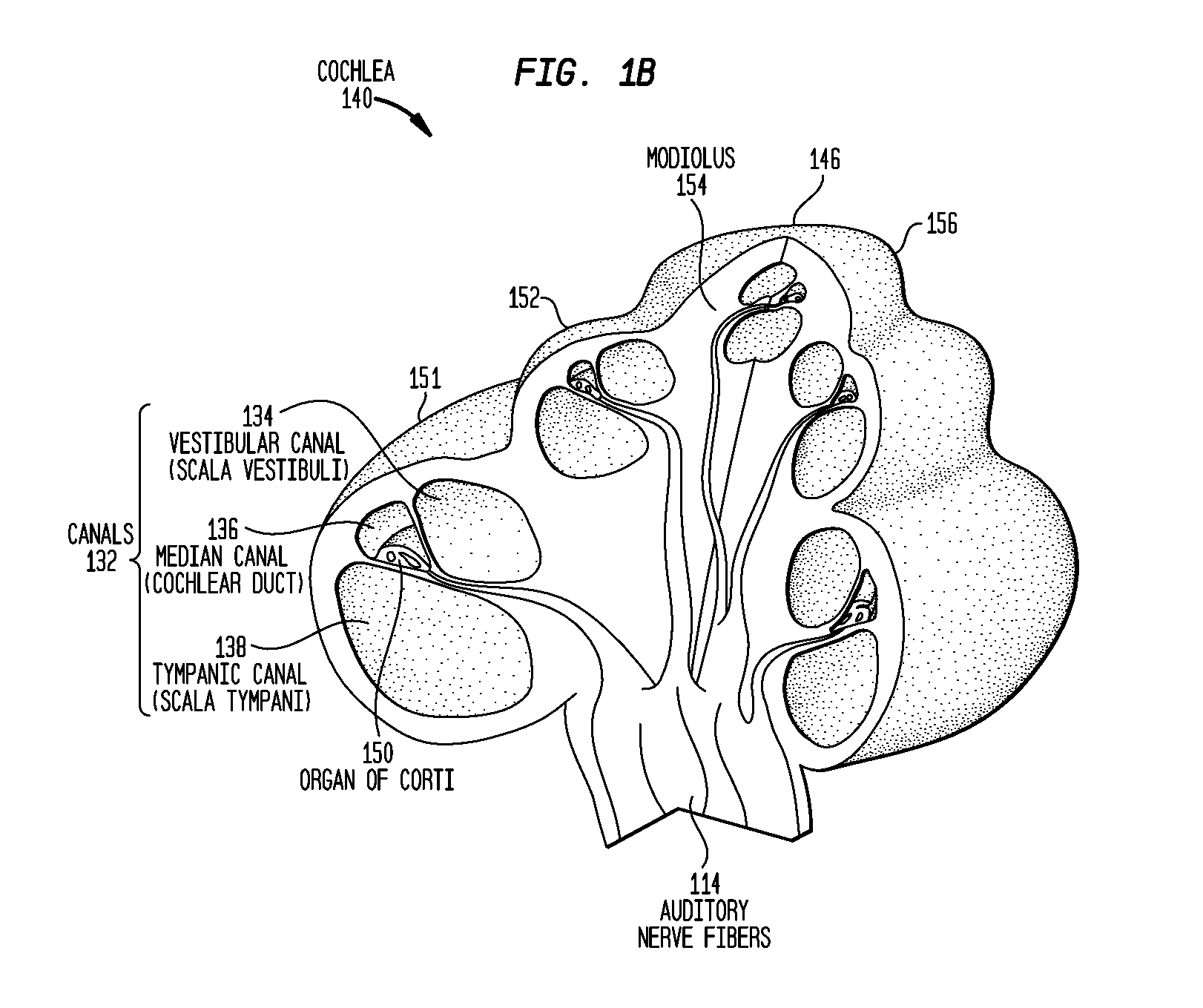
[0029]Aspects of the present invention are generally directed to a hearing prosthesis which simulates natural hearing by generating mechanical motion of the fluid within a recipient's cochlea. Such a hearing prosthesis, referred to herein as direct mechanical stimulator, bypasses the recipient's outer and middle ears to directly generate waves of fluid motion of the cochlear fluid, thereby activating cochlear hair cells and evoking a hearing percept

[0030]Specifically, a direct mechanical stimulator in accordance with embodiments of the present invention comprises a stapes prosthesis abutting an opening in the recipient's inner ear. Coupled to the stapes prosthesis is an implanted actuator which is configured to vibrate the stapes prosthesis. The vibration of the stapes prosthesis generates the waves of fluid motion of the cochlear fluid.

[0031]FIG. 1A is perspective view of an individual's head in which a direct mechanical stimulator in accordance with embodiments of the present inve...