
Method of fabricating device
- Summary
- Abstract
- Description
- Claims
- Application Information
AI Technical Summary
Benefits of technology
Problems solved by technology
Method used
Image

Examples
Embodiment Construction
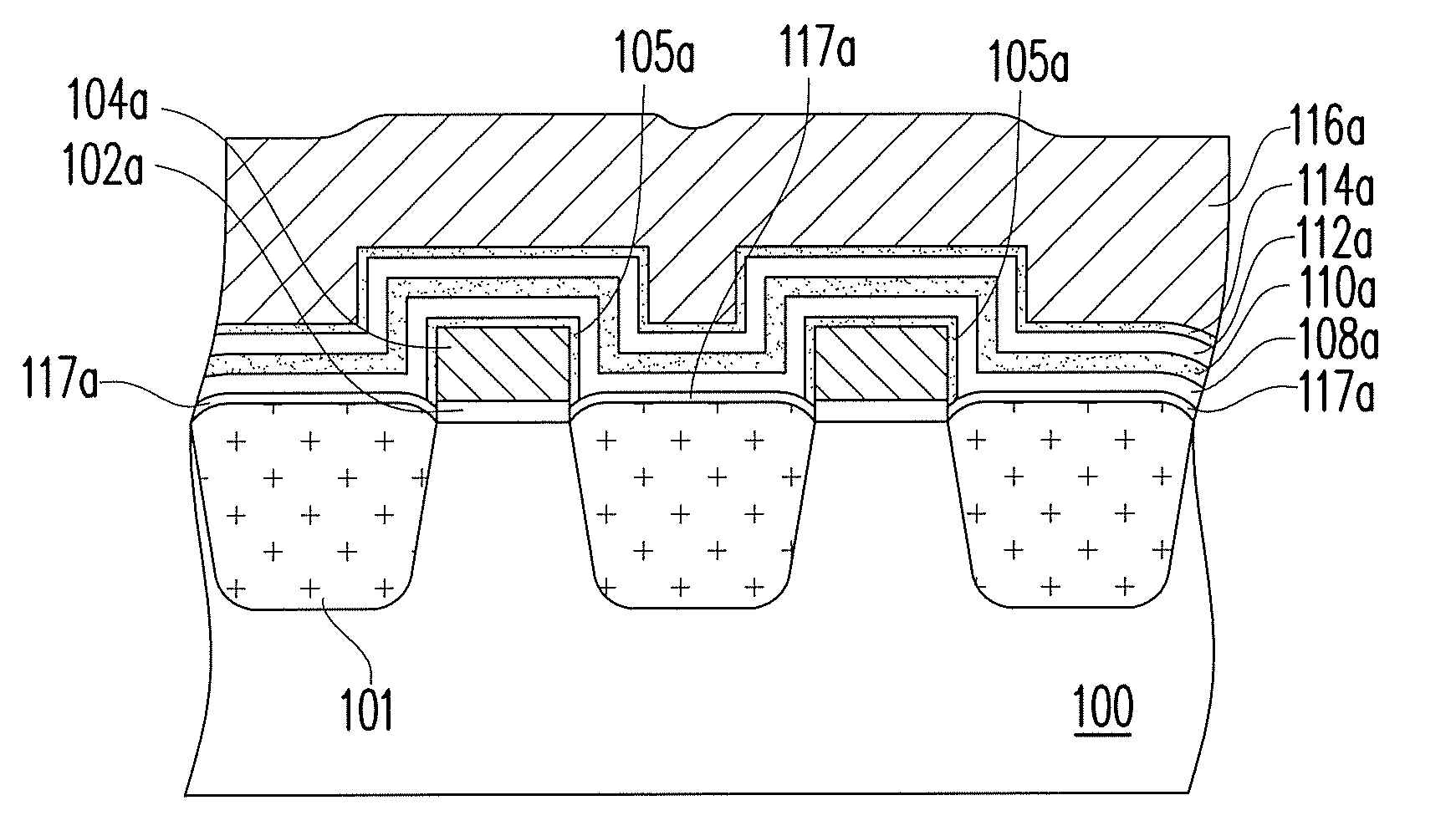
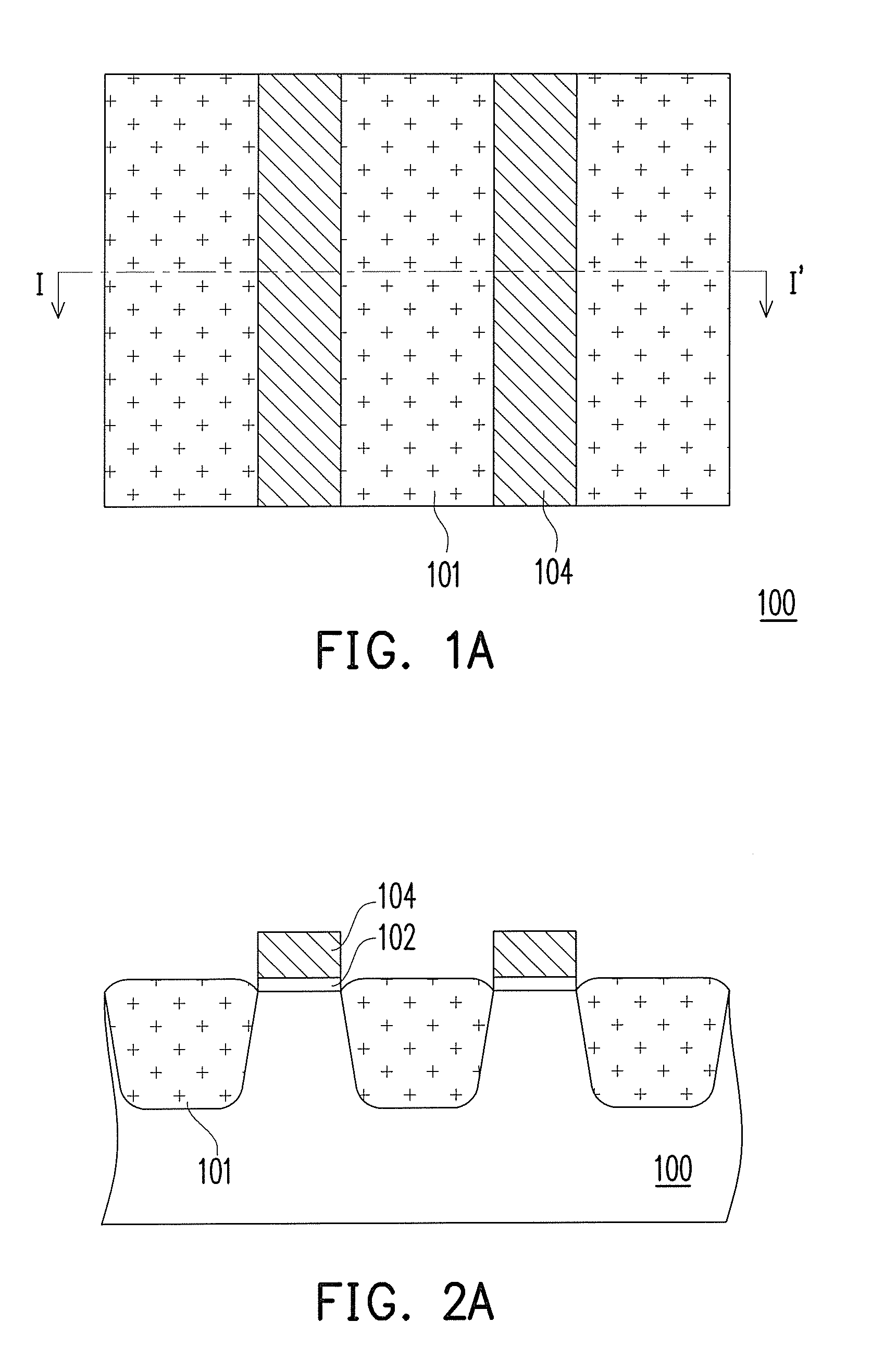
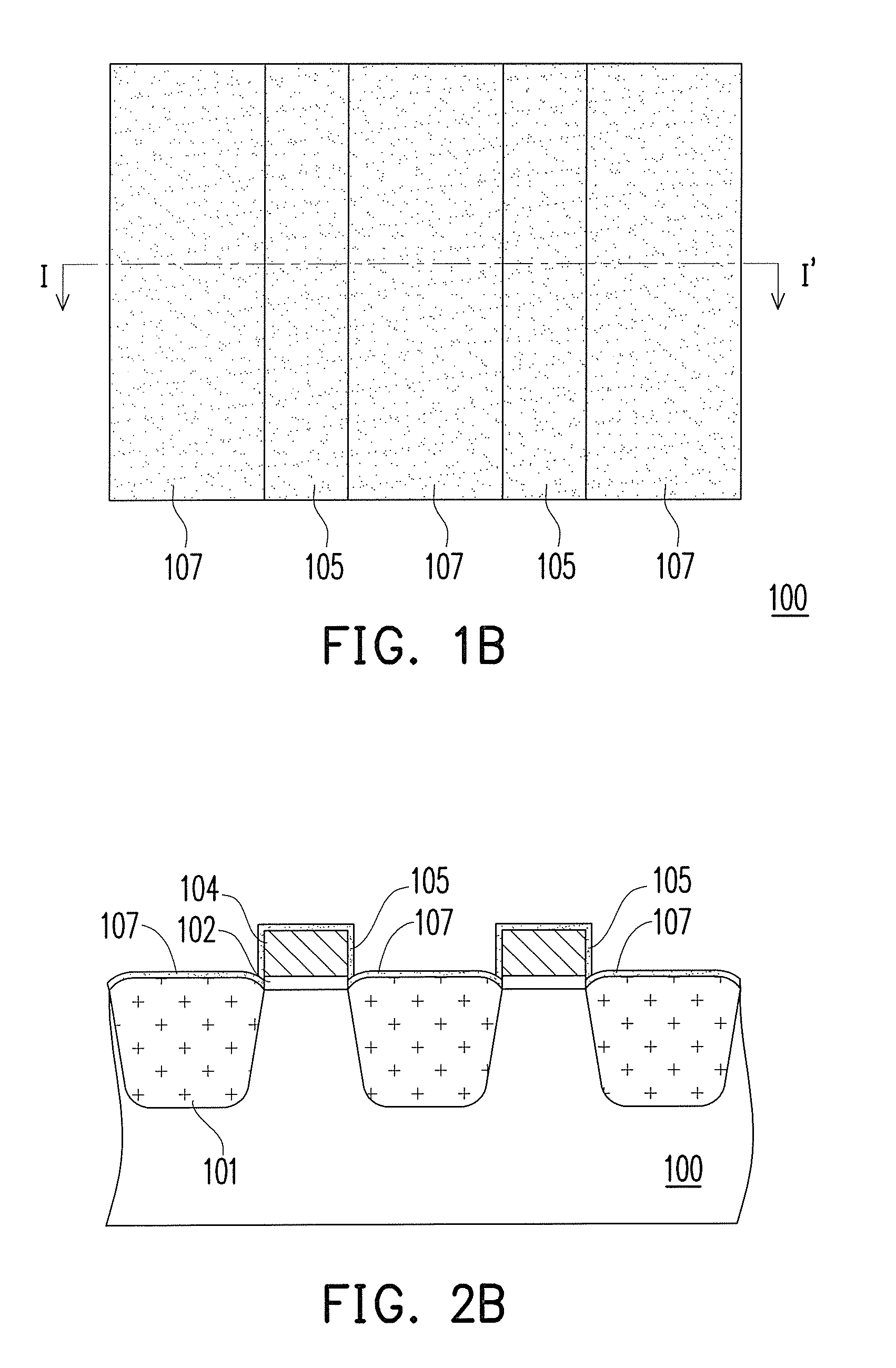
[0025]FIGS. 1A to 1F are schematic top views illustrating a method of fabricating a device according to an embodiment of the present invention. FIGS. 2A to 2F are schematic cross-sectional views taken along the line I-I′ in FIGS. 1A to 1F.
[0026]Referring to FIGS. 1A and 2A, a substrate 100 is provided, and at least two isolation structures 101 have been formed in the substrate 100. In an embodiment, the isolation structures 101 are shallow trench isolation (STI) structures disposed in parallel in the substrate 100. The substrate 100 includes a semiconductor substrate, and the material thereof includes silicon, polysilicon or amorphous silicon, for example. Thereafter, an oxide layer 102 and a conductive layer 104 are sequentially formed on the substrate 100 between the isolation structures 101. The oxide layer 102 includes silicon oxide, for example. The conductive layer 104 includes polysilicon, for example. The method of forming the oxide layer 102 and the conductive layer 104 inc...
PUM
 Login to View More
 Abstract
Description
Claims
Application Information
 Login to View More