Today, cooking appliances are maintained and serviced, however, by a food service industry—that with exceptions—is too poorly equipped and untrained to do so.
Most, however, consist of just a few employees which are unfortunately burdened with the responsibility for preparing invoices, repairs, inventories, warranties, credits, returns, and the like.
For example, these service agencies not only have to generate invoices, but also have to collect payment, which for obvious reasons is time consuming.
With such other duties, service agencies have little time to keep up with the technology of today's complex kitchen or cooking appliances.
With the existing food service industry so fragmented and ill-suited to handle administrative tasks as well as appliance repairs, it is estimated that their efficiency may be as low as 20%.
The food service industry is also faced with the problem of a difficult labor market.
There is stiff competition for good employees and not enough workers to fill open positions.
Supervision is difficult as well, especially for an owner / operator of multiple commercial units spread over many miles.
Workers may be inadequately trained, careless or may take shortcuts in completing their tasks properly.
Any of these problems can adversely affect food quality, level of service to the consumer, and compliance with various health and safety standards (for example, the Hazard Analysis Critical Control Point (HACCP) regulations created by the Food Safety and Inspection Service of the United States Department of Agriculture to minimize bacteria-related illnesses which can result from improper food handling, preparation, and holding).
These problems plague even computerized kitchen systems, because those systems can neither independently verify that the ascribed tasks have been properly completed, nor identify employees who are cheating the system.
Computerized task lists could also provide important training for employees (especially new trainees), which due to high employee turnover rates in the food service industry, has become especially problematic for restaurant managers who have precious little time to spare for training in the first instance.
However, such lists do not have any real-time feedback and thus are not dynamic, and do not adapt to actual and ever changing operating conditions and requirements in a restaurant.
This situation has been problematic for supervisors who in the fast-paced food service industry cannot possibly watch all their employees constantly to ensure that tasks are actually being properly performed.
Furthermore, cheating by employees can have a detrimental financial impact on the fast-food and other restaurants.
For example, pulling food prepared in a deep vat fryer out before it is done can adversely affect food quality (e.g., taste, texture, appearance, etc.) and shelf life.
Likewise, for example, bakers who pull products out of ovens before they are finished baking adversely affect food quality.
Improperly prepared food causes customer dissatisfaction and loss of repeat business which translates into financial losses for food service providers.
Another example where cheating adversely affects the food service industry is in the area of maintenance Employees who are lazy or busy may often seek shortcuts by simply skipping maintenance tasks, or performing them inadequately, but still hit the bump bar.
Known systems cannot detect and provide a sufficient check on this type of cheating.
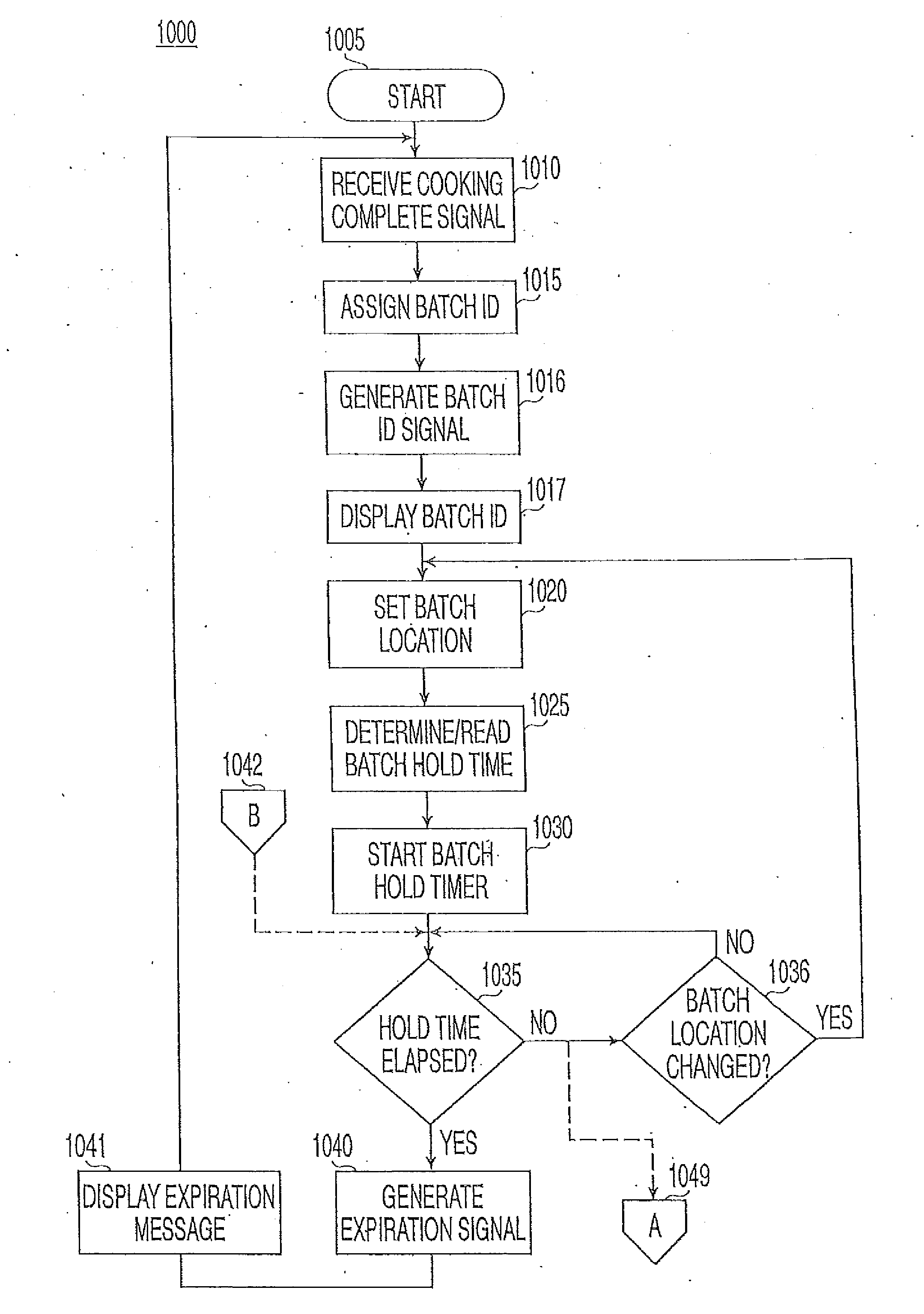
Another known system uses electric or mechanical timers at each successive location; however, it is complicated to set each successive timer based on the amount of time left on the timer at the previous location.
These known systems have not worked well, and much food is often sold beyond its proper hold time, thereby subjecting food service operators to liability for violating HACCP standards and potentially exposing consumers to food-borne related illnesses.
However, the cooking medium degrades with each cooking cycle.
Fryer controllers are often hardwired to demand cleaning at a fixed time each day; thus making it impossible to adapt fryer maintenance to actual operating data (such as sales conditions, number of cooking cycles, etc).
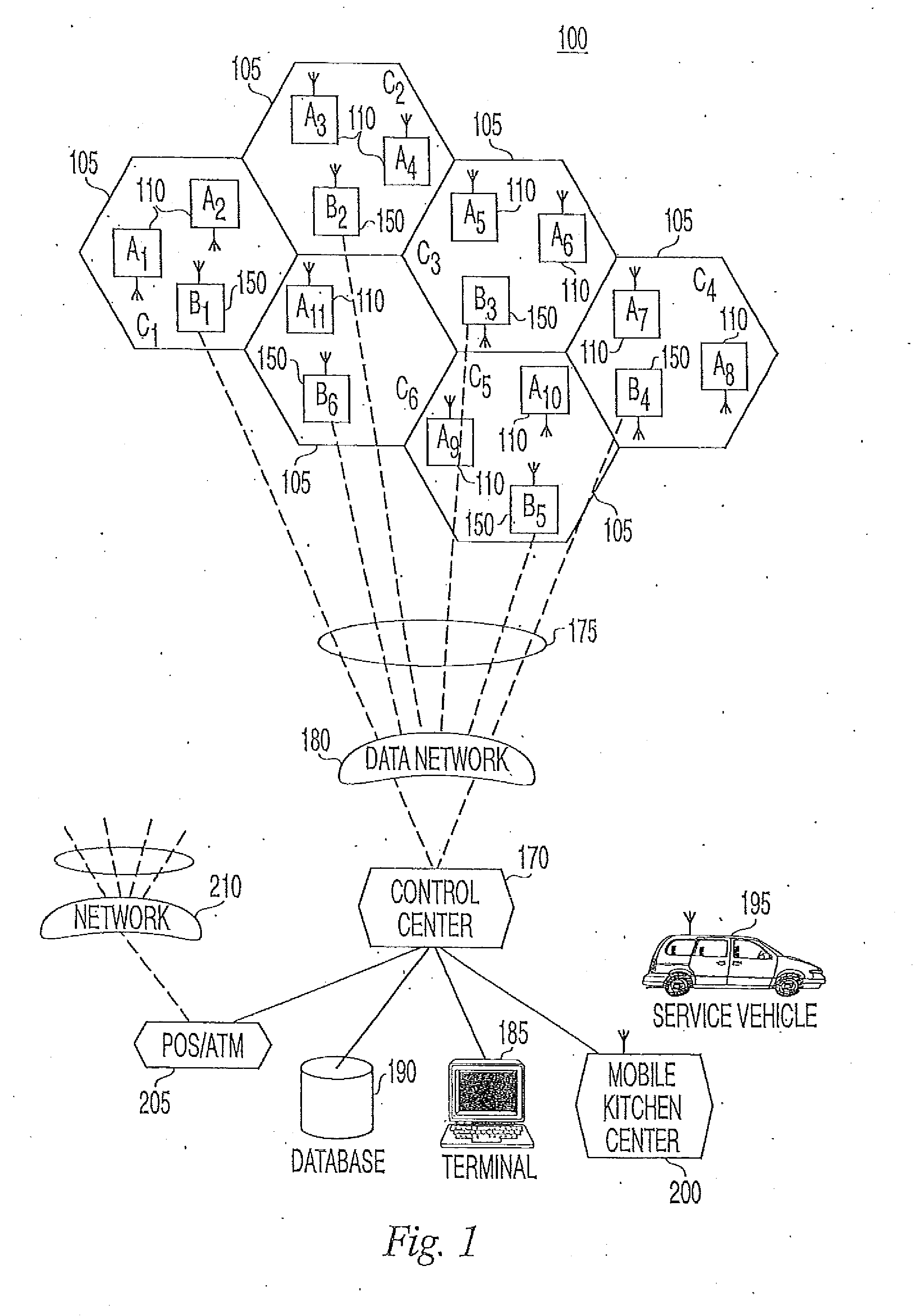
However, an individual fryer cooking computer only determines when cooking medium maintenance is required for the particular fryer with which it is physically associated, without regard for any other fryers.
This is problematic for restaurant management because it is not desirable to have too many flyers unavailable due to maintenance when the restaurant is busy and demand for food is highest.


 Login to View More
  Login to View More