
Glasses hinge structure
a technology of hinges and hinges, applied in the field of glasses hinges, can solve the problems of inconvenient assembly, disassembly or replacement of glasses, and achieve the effect of easy manufacturing
- Summary
- Abstract
- Description
- Claims
- Application Information
AI Technical Summary
Benefits of technology
Problems solved by technology
Method used
Image

Examples
Embodiment Construction
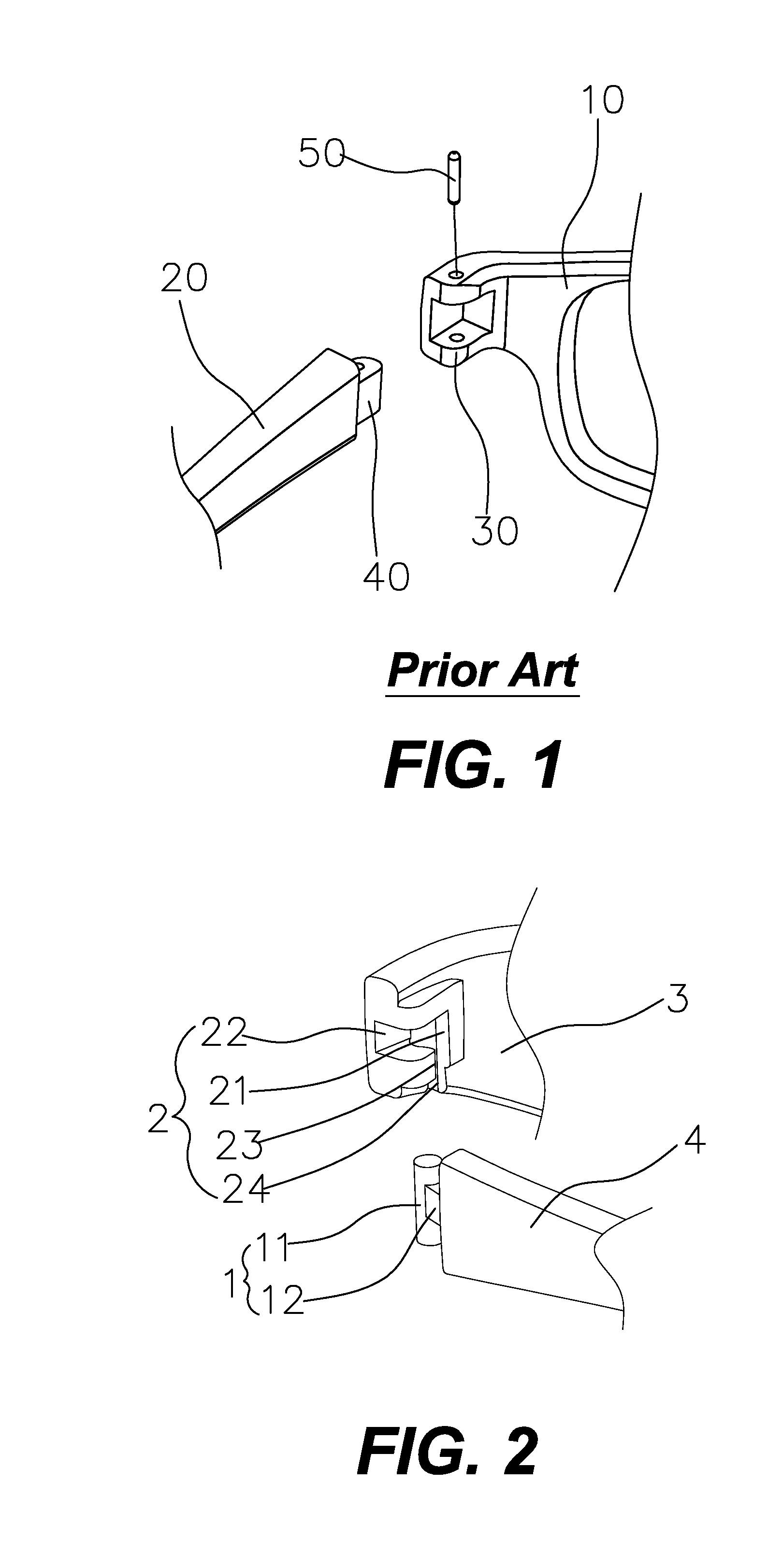
[0014]Embodiments of the present invention will now be described, by way of example only, with reference to the accompanying drawings.
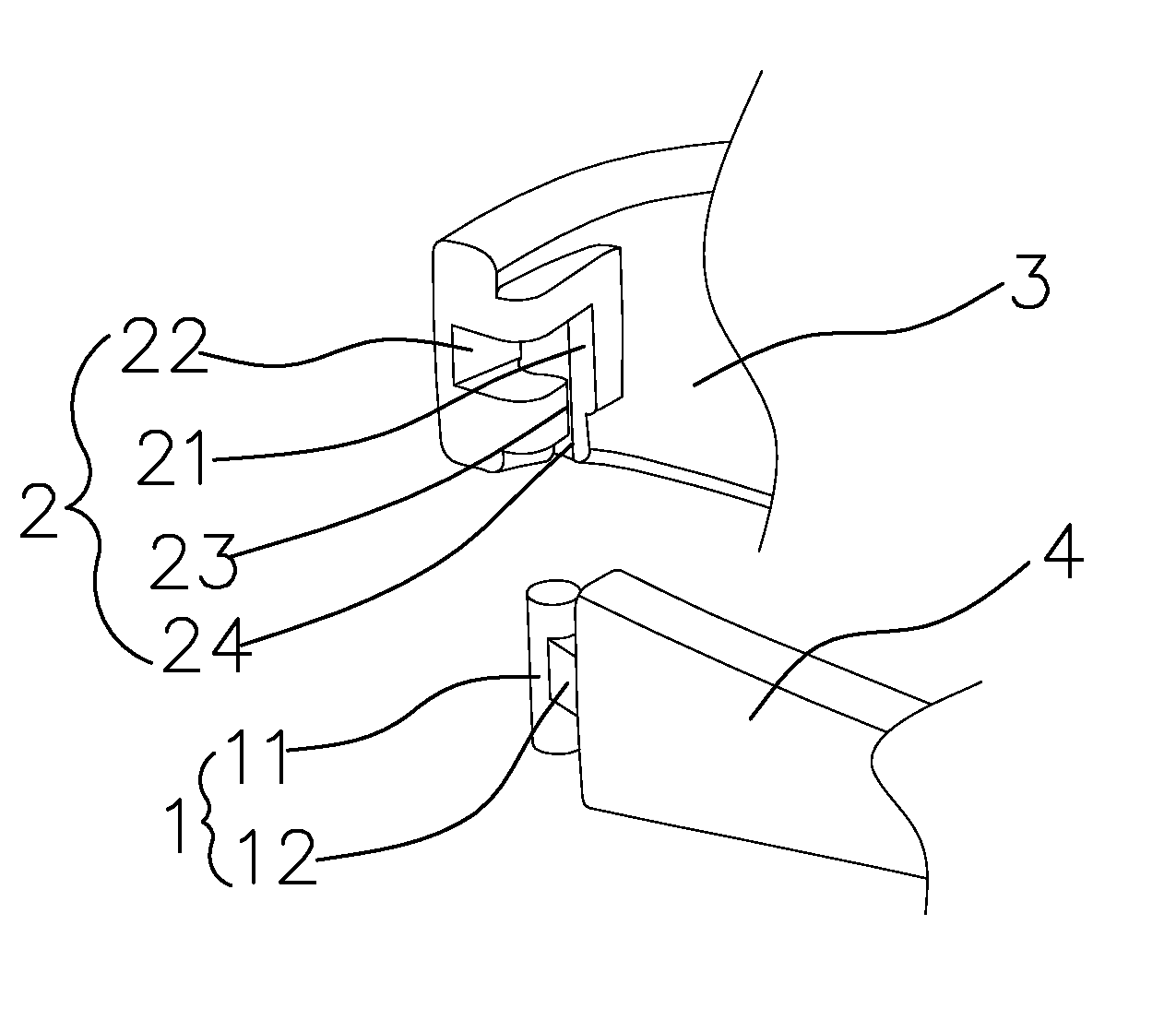
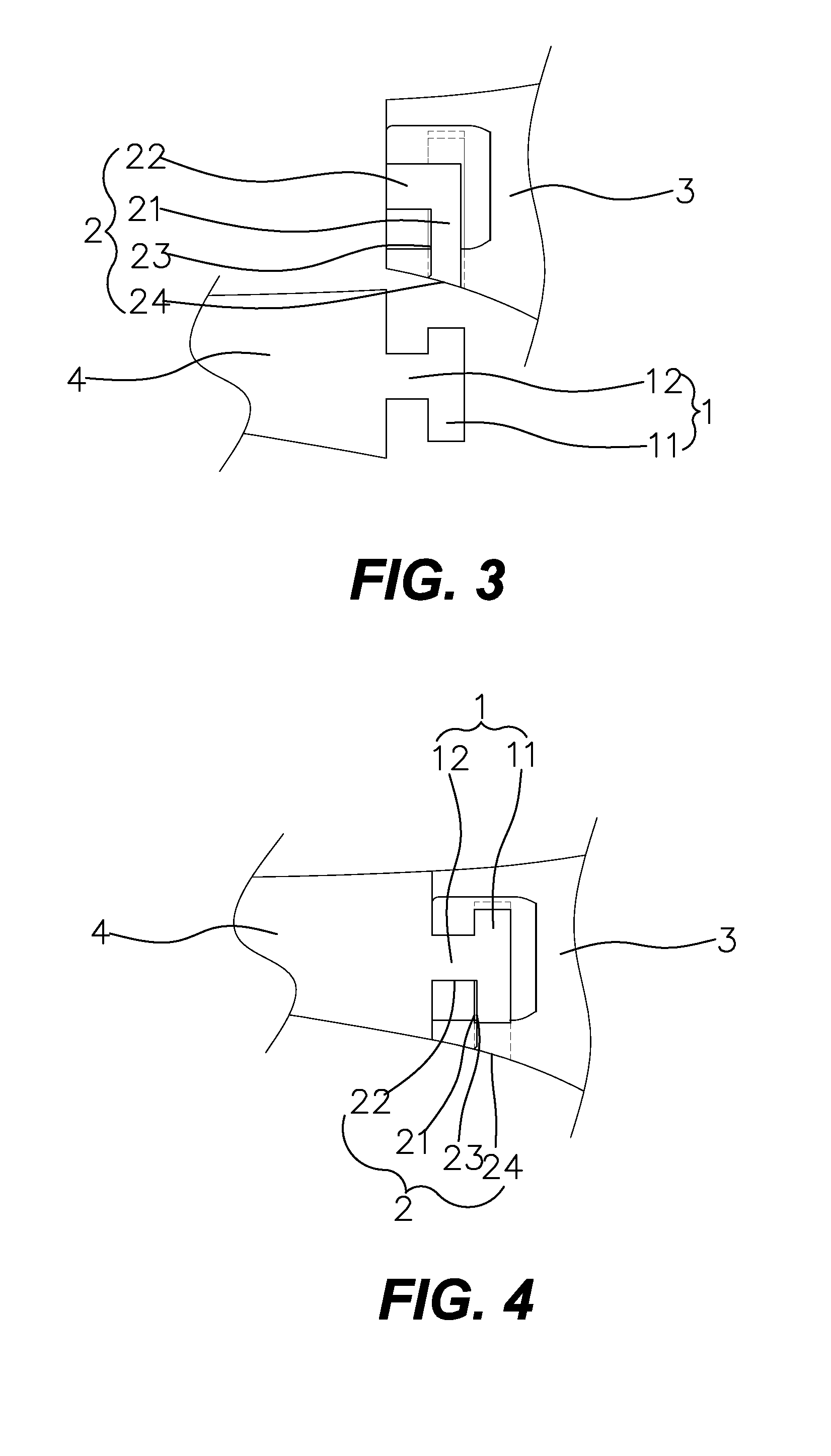
[0015]As shown in FIG. 2, a glasses hinge structure according to a preferred embodiment of the present invention comprises a pivot 1 and a pivot seat 2. The pivot seat 2 and the pivot 1 are integrally formed with a corner panel 3 of a glasses frame and a glasses foot 4, respectively. In the embodiment, the pivot 1 is integrally formed with the glasses foot 4. The pivot 1 has a vertical portion 11 in a cylinder shape and a horizontal connecting portion 12. The vertical portion 11 has a middle section connected with a front end of the horizontal connecting portion 12. The horizontal connecting portion 12 has a rear end connected to the glasses foot 4.
[0016]The pivot seat 2 is integrally formed with the corner panel 3 of the glasses frame. The pivot seat 2 has a vertical trough 21 and a recess 22. The vertical trough 21 is adapted for insertion of the ve...
PUM
 Login to View More
 Abstract
Description
Claims
Application Information
 Login to View More