
Segmental orthopedic device for spinal elongation and for treatment of scoliosis
a segmental, orthopaedic technology, applied in the field of orthopaedic devices, can solve the problems of aggravated spinal disc degeneration, loss of spinal growth, and loss of spinal mobility
- Summary
- Abstract
- Description
- Claims
- Application Information
AI Technical Summary
Benefits of technology
Problems solved by technology
Method used
Image

Examples
Embodiment Construction
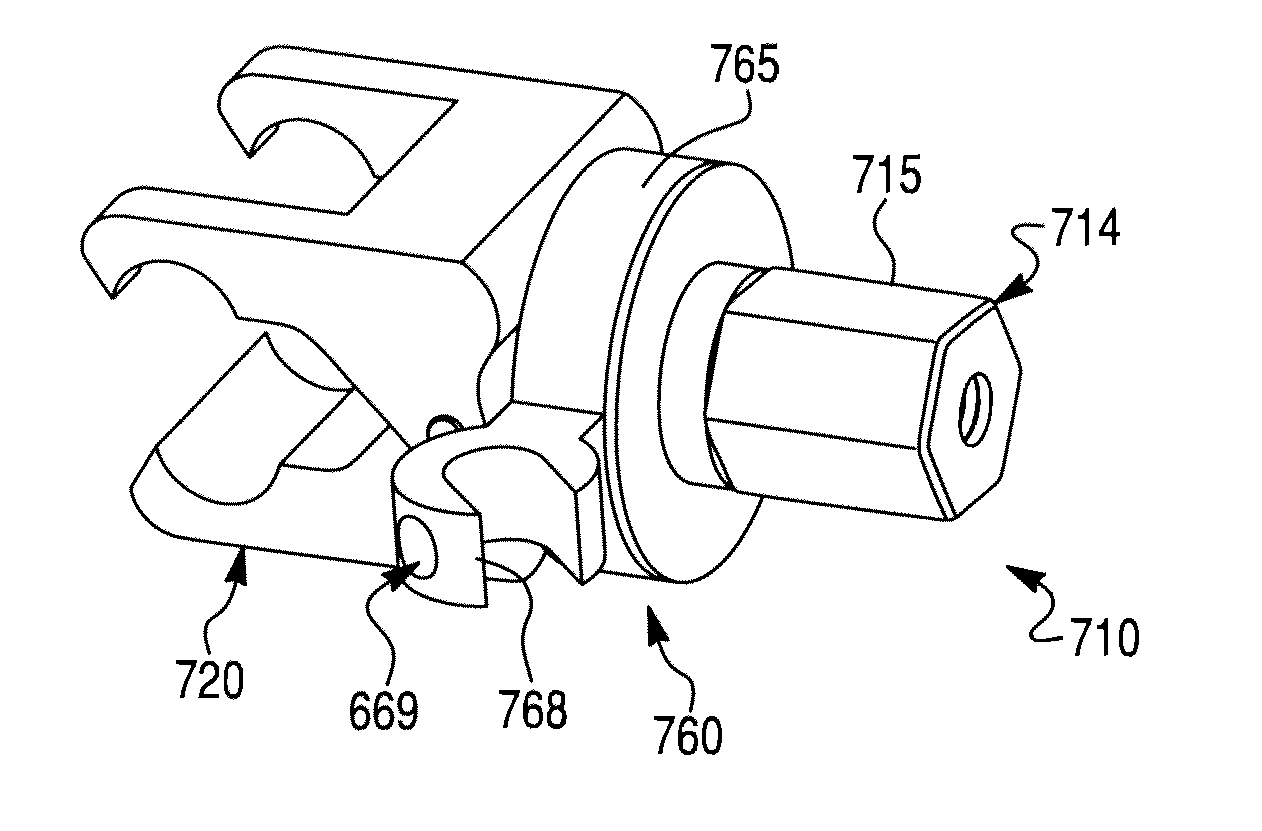
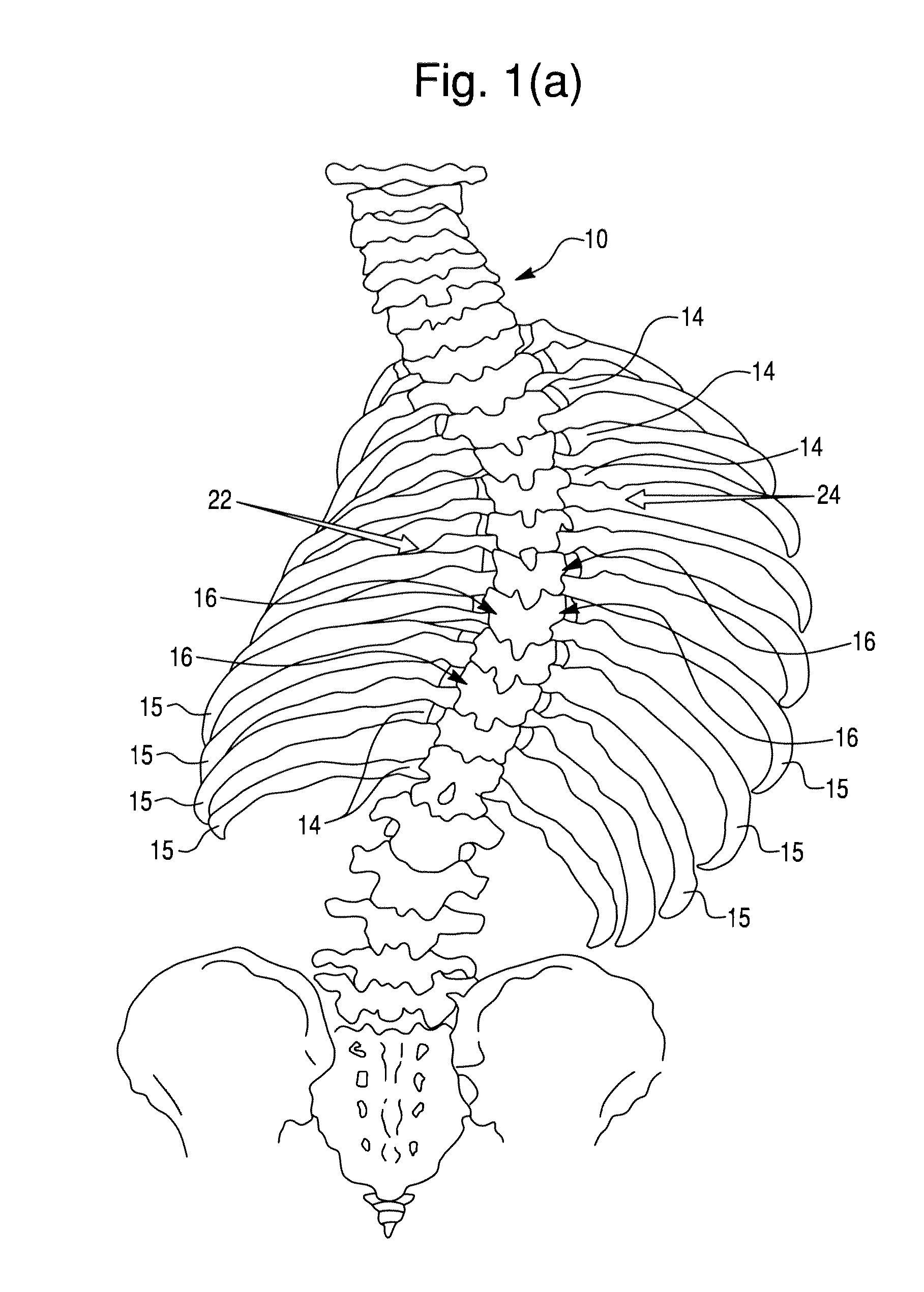
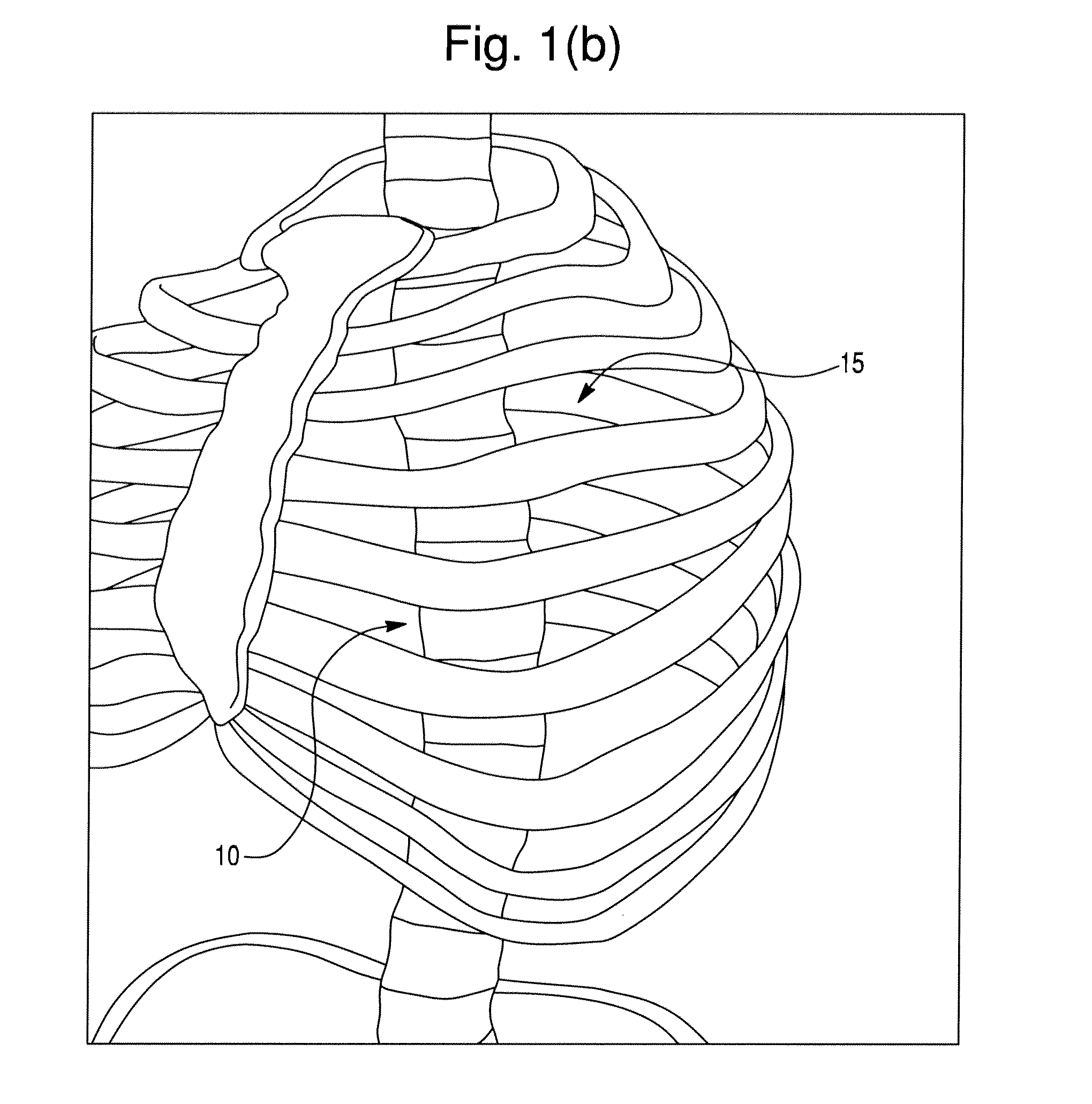
[0047]The disclosure relates to an orthopaedic device to realign bone segments. The orthopaedic device can have multiple components, each including attachment members to attach to hone and a spacer member or a fixing rod (hereinafter referred to as a spacer member), a strut and / or a spacer member, that allow segmental realignment of bone. The orthopaedic device can be anchored to adjacent segments of hone by attachment members and may be expanded via the spacer member to realign the bone segments. The attachment members alternate with the spacer members as will be understood from the FIGURES. The spacer members also may allow bending within themselves or at the connection between the spacer members and the attachment members. The strut allows a horizontal connection between attachment members that are arranged between vertebra or within a vertebral segment so that a surgeon may lever and axially rotate the vertebra. For example, in scoliosis, vertebrae may be rotated axially from th...
PUM
 Login to View More
 Abstract
Description
Claims
Application Information
 Login to View More