
Rate-Adaptive Bundling of Data in a Packetized Communication System
a data and packetized communication technology, applied in data switching networks, frequency-division multiplexes, instruments, etc., can solve problems such as message waiting, packet latency, messages to wait, etc., and achieve the effect of preventing saturation of hardware resources
Patent Information
- Authority / Receiving Office
- US · United States
- Current Assignee / Owner
- Publication Date
- 2011-08-18
- Estimated Expiration
- Not applicable · inactive patent
Smart Images
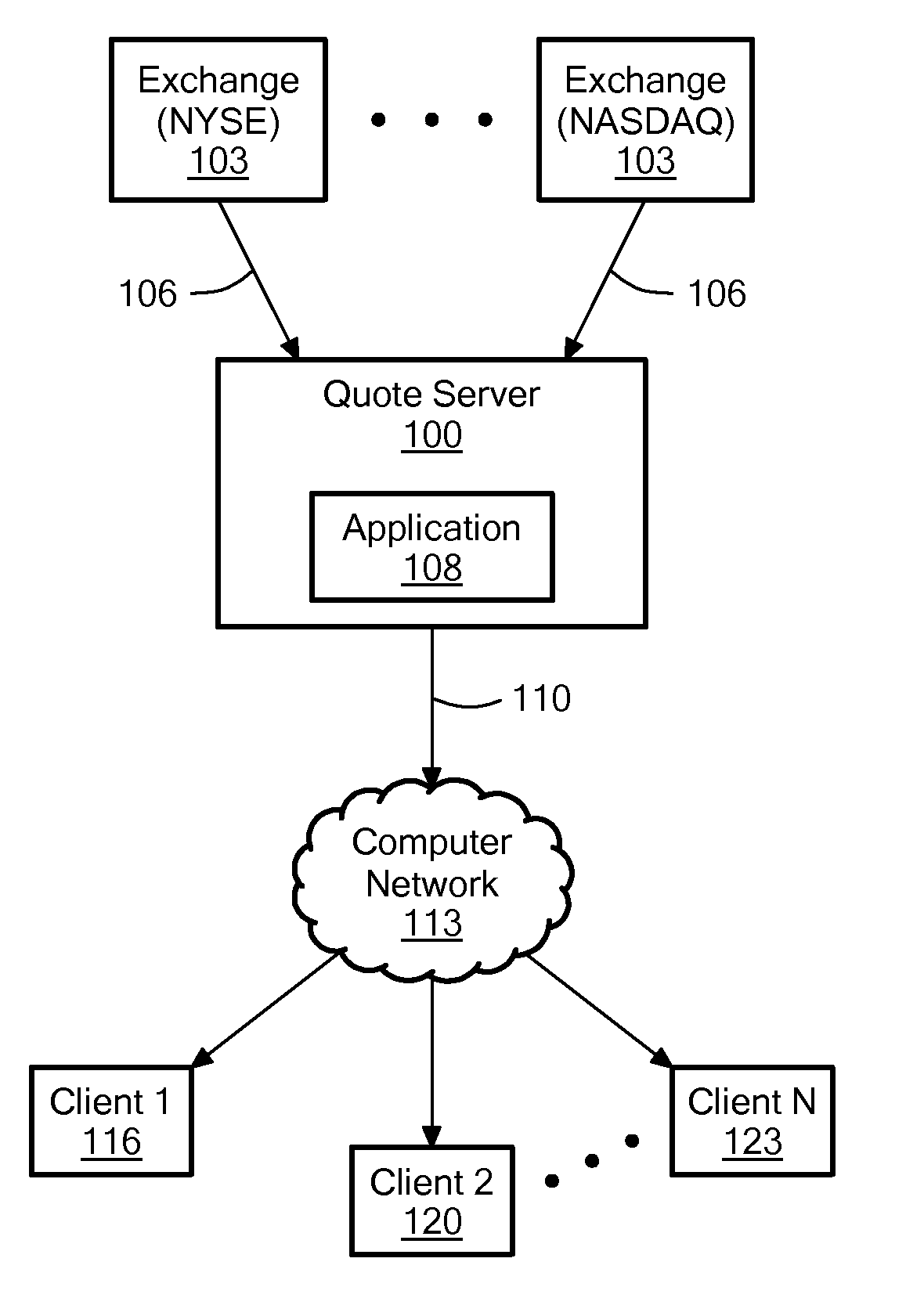
Figure 1 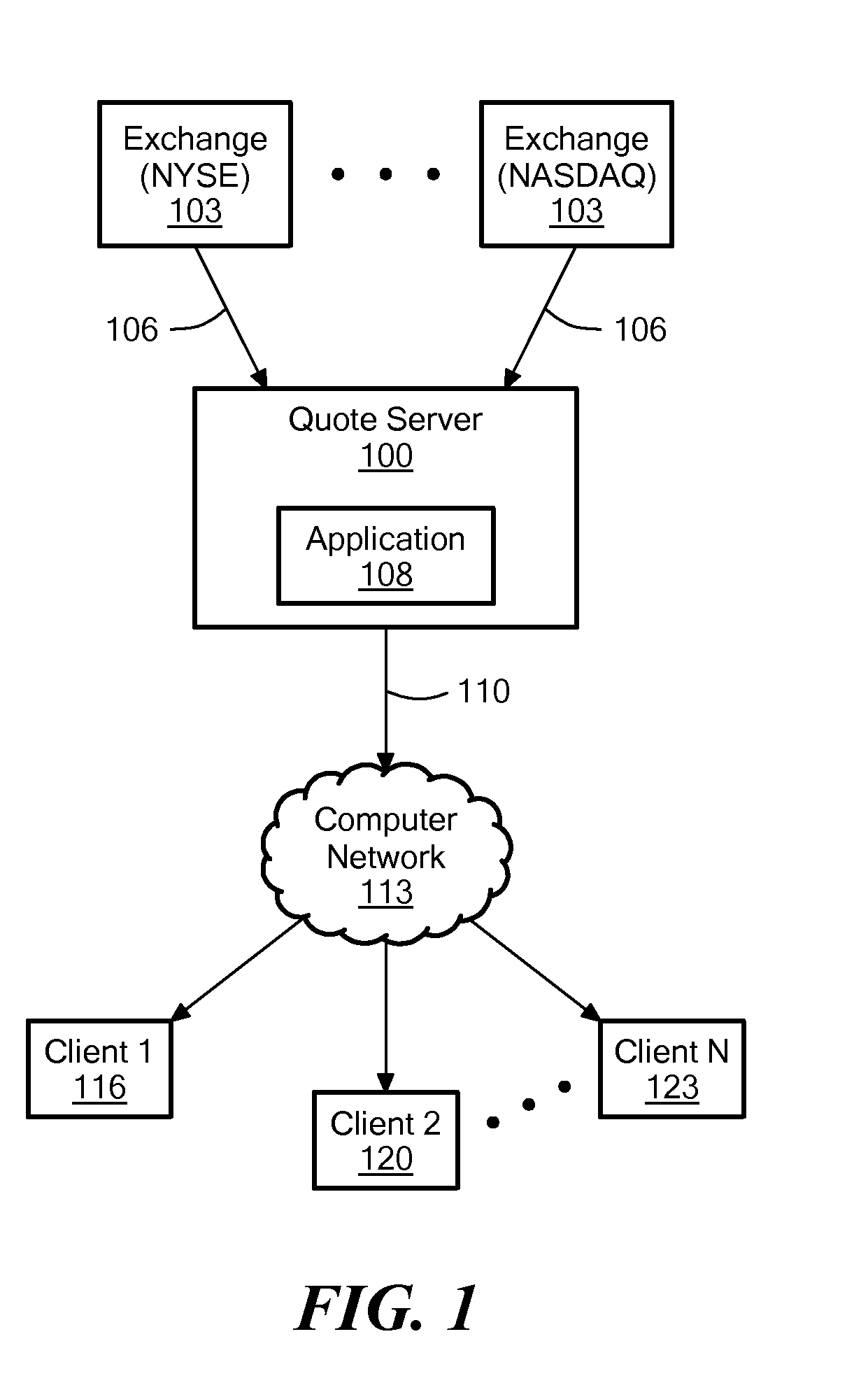
Figure 2 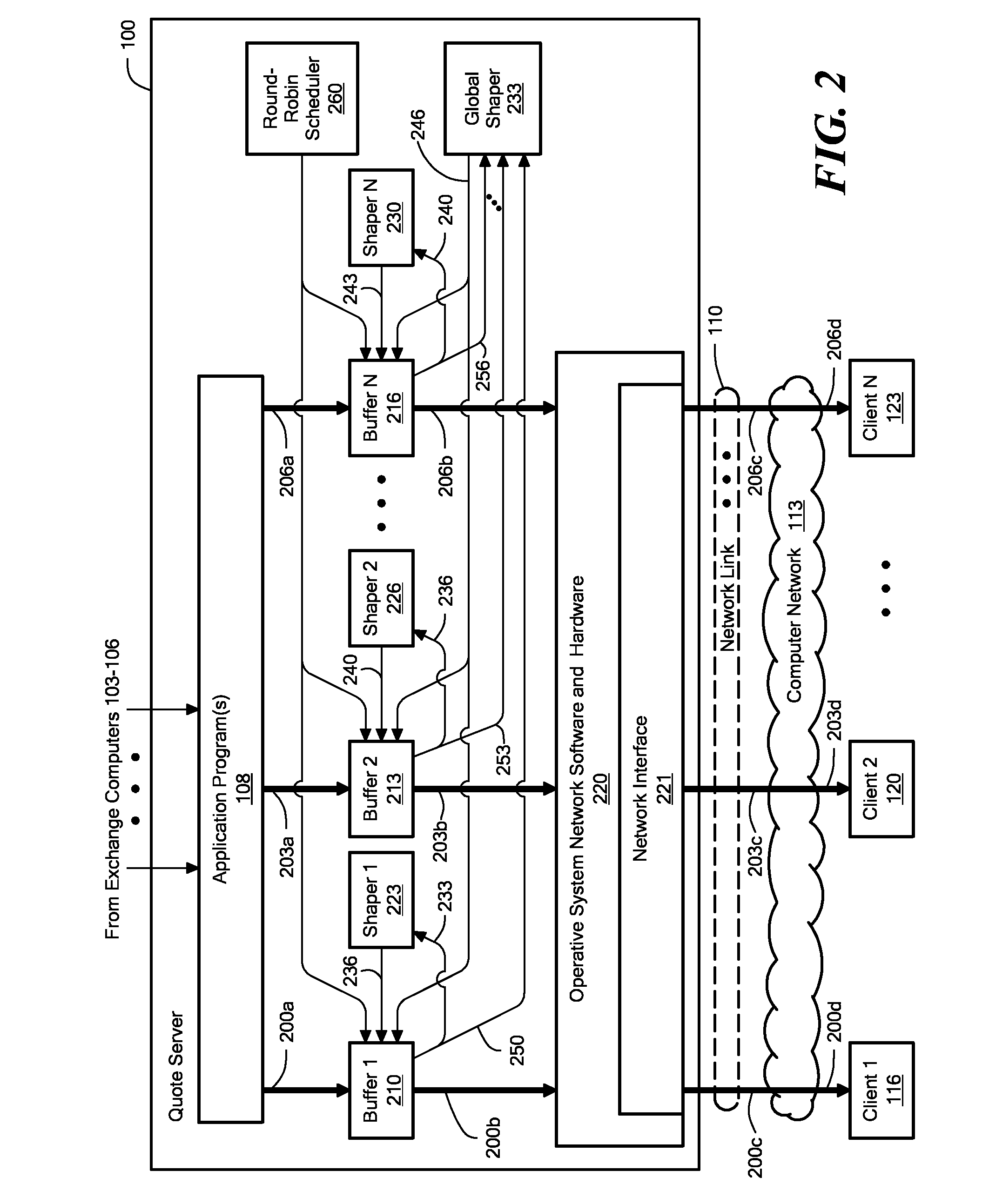
Figure 3
Abstract
Description
TECHNICAL FIELD
[0001] The present invention relates to packetized data communication systems and, more particularly, to such systems that dynamically vary an extent to which messages are bundled into packets, based on rates at which the messages are generated and predetermined limits related to estimated communication channel capacity.BACKGROUND ART
[0002] Packetized communication systems send and receive data in packets over communication links between senders and receivers. Each packet contains header, and sometimes footer, information (collectively referred herein to as “overhead”), as well as payload data. The overhead is used to store information necessary for delivering the packet, such as source and destination address information, error correcting information, and the like. The format and contents of the overhead depends on which communication protocol is used.
[0003] Messages large enough to exceed the payload capacity of a single packet are segmented, and each segment is sent i...
Examples
Embodiment Construction
[0037]In accordance with embodiments of the present invention, methods and apparatus are disclosed for minimizing message latency time by dynamically controlling an amount of bundling that occurs. Unbundled messages are allowed while a bottleneck resource is lightly utilized, but the amount of bundling is progressively increased as the message rate increases, thereby progressively increasing resource efficiency. In other words, the bottleneck resource is allocated to a set of consumers, such that no consumer “wastes” the resource to the detriment of other consumers. However, while the resource is lightly utilized, a busy consumer is permitted to use more than would otherwise be the consumer's share of the resource. In particular, the consumer is permitted to use the resource in a way that is less than maximally efficient, so as to reduce latency time.
[0038]As noted, latency time can be critically important in some communication systems, such as financial applications that support hi...