

Osteospermum and dimorphoteca plants having an altered flower phenotype
a technology of dimorphoteca and osteospermum, which is applied in the field of altered flower phenotypes, can solve the problems of other limitations of the related art, and achieve the effect of reducing the number of invasive species
- Summary
- Abstract
- Description
- Claims
- Application Information
AI Technical Summary
Benefits of technology
Problems solved by technology
Method used
Image

Examples
example 1
Genotype OE 2008 248
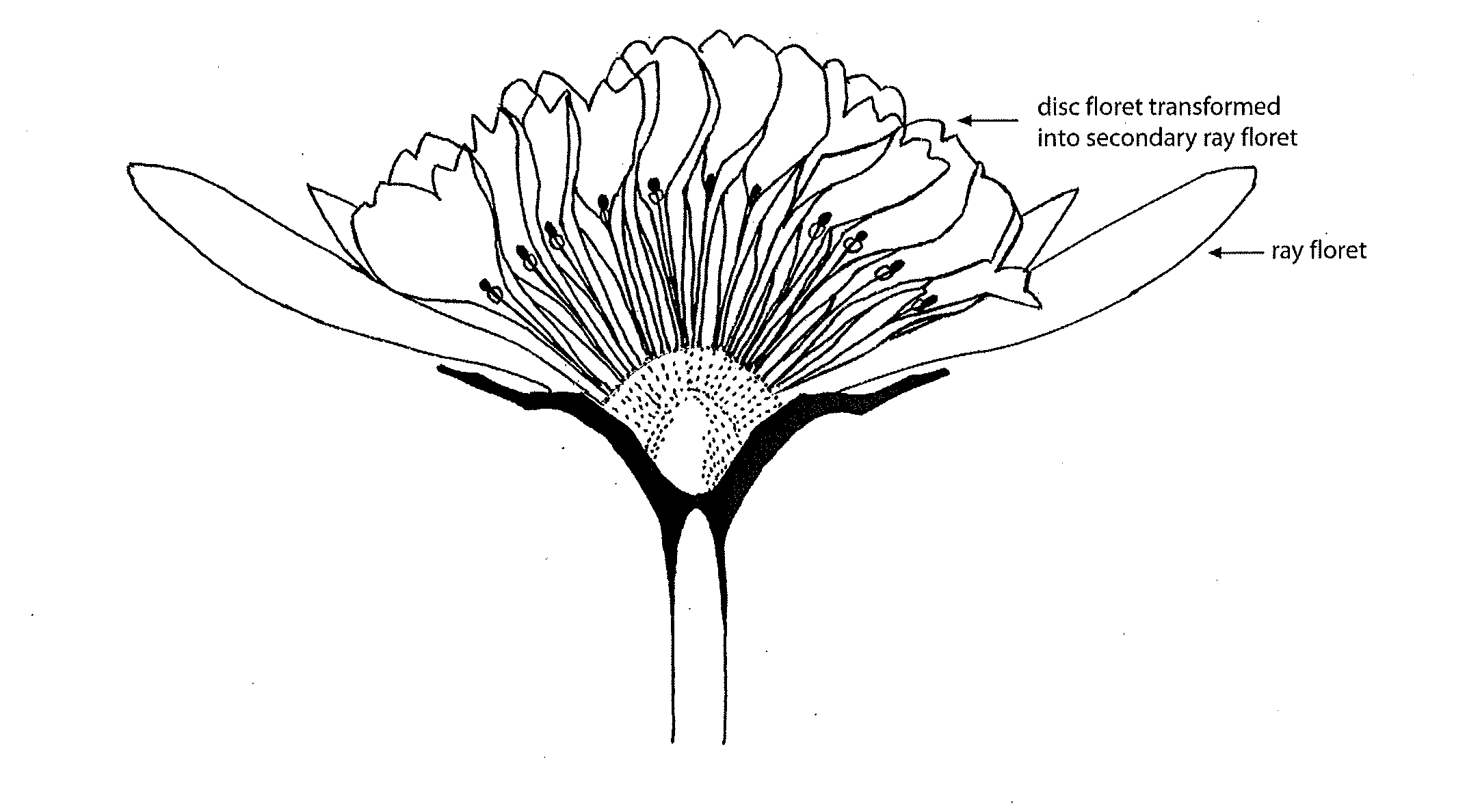
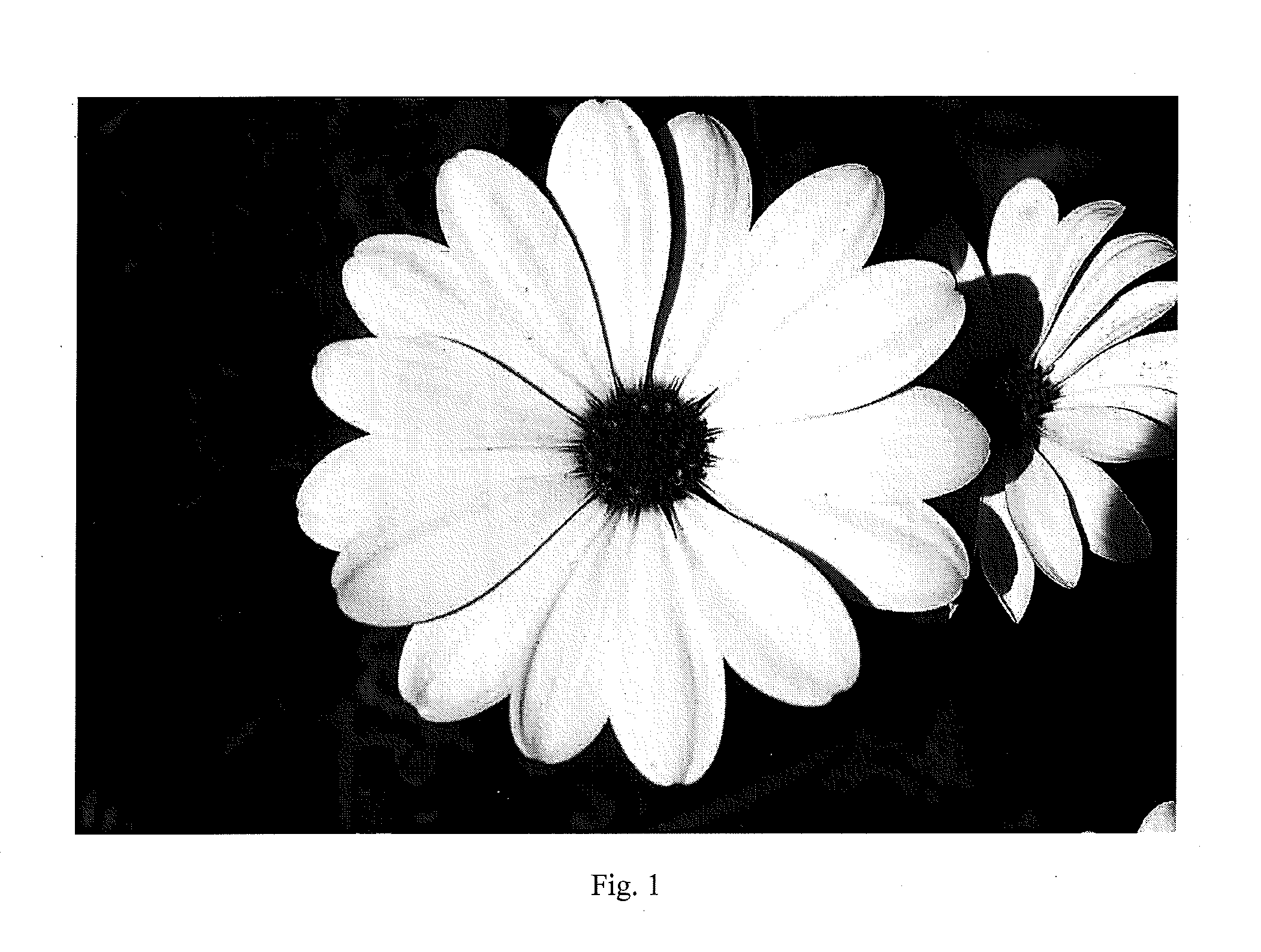
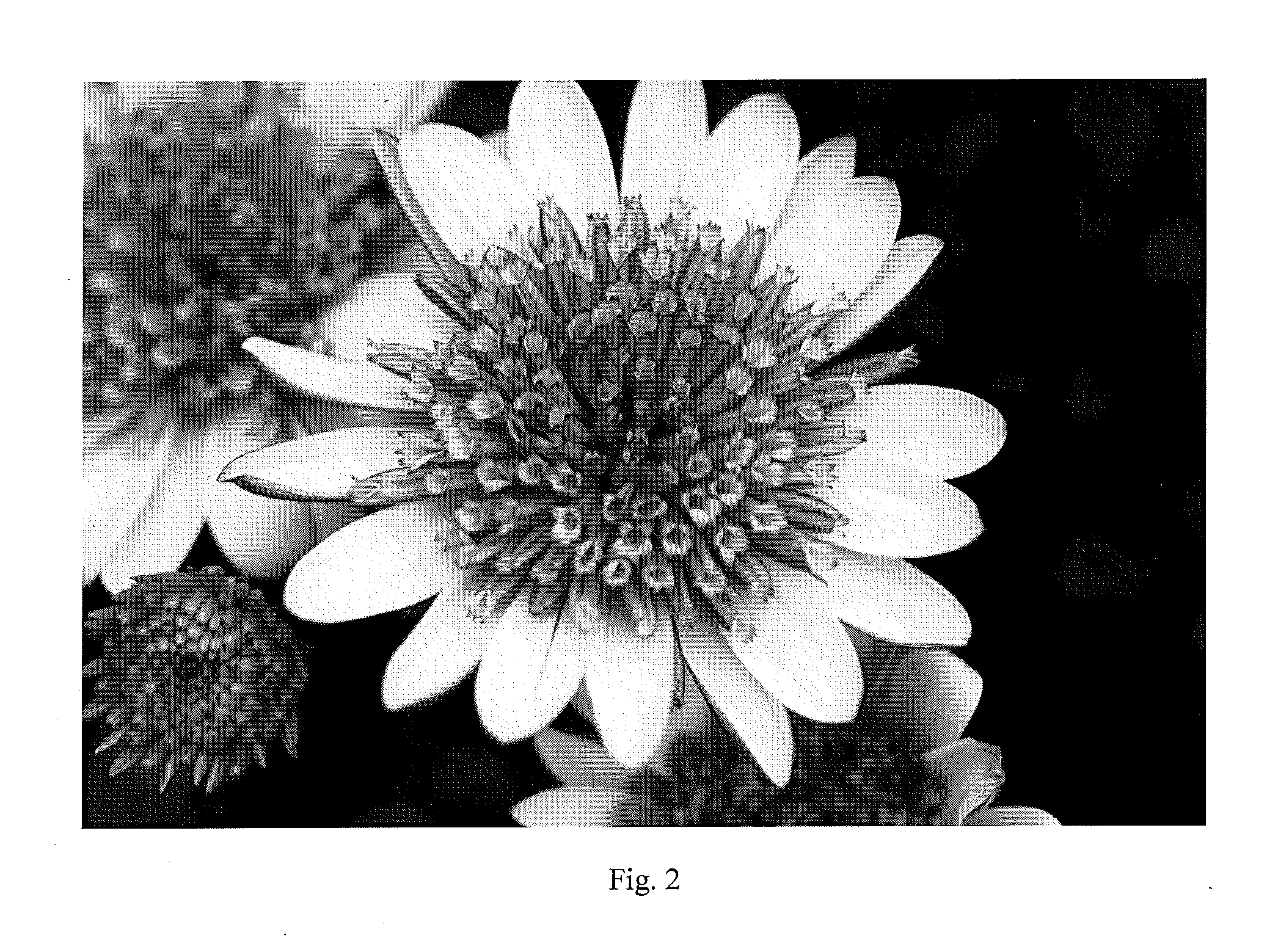
[0097]Through the breeding process described above, Osteospermum genotype OE 2008 248 was developed. OE 2008 248 displays the altered-flower phenotype of the present invention having enlarged disc florets.
TABLE 4PHENOTYPIC DESCRIPTION OF GENOTYPE OE 2008 248PLANT: Ploidy level: 4x Number of basal shoots: 6 Internode length: 0.05 cm to 1.0 cmFOLIAGE: Immature leaves: Length: 3.5 cm Width: 0.9 cm Mature leaves: Length: 4.8 cm to 5.0 cm Width: 1.6 cm to 1.9 cm Colour: RHS 146ARAY FLORETS: Number: 14 to 16 Length: 3.0 cm Width: 0.7 cm Colour of upper surface: RHS 92D Colour of lower surface: RHS 85ADISC FLORETS: Number: 80 to 85 Length: 1.3 cm to 2.1 cm Colour of inner surface: RHS 85D Colour of outer surface: RHS 91A
example 2
Genotype OE 2008 258
[0098]Through the breeding process described above, Osteospermum genotype OE 2008 258 was developed. OE 2008 258 displays the altered-flower phenotype of the present invention having enlarged disc florets.
TABLE 5PHENOTYPIC DESCRIPTION OF GENOTYPE OE 2008 258PLANT: Ploidy level: 4x Number of basal shoots: 5 Internode length: 0.5 cm to 1.0 cmFOLIAGE: Immature leaves: Length: 3.2 cm Width: 0.8 cm Mature leaves: Length: 5.2 cm Width: 1.9 cm to 2.0 cm Colour: RHS 144ARAY FLORETS: Number: 17 to 18 Length: 2.6 cm to 2.7 cm Width: 0.7 cm to 0.8 cm Colour of upper surface: RHS 92D Colour of lower surface: RHS 76ADISC FLORETS: Number: 73 to 89 Length: 1.0 cm to 1.9 cm Colour of inner surface: RHS 85D Colour of outer surface: RHS 76C
example 3
Genotype OE 2008 274
[0099]Through the breeding process described above, Osteospermum genotype OE 2008 274 was developed. OE 2008 274 displays the altered-flower phenotype of the present invention having enlarged disc florets.
TABLE 6PHENOTYPIC DESCRIPTION OF GENOTYPE OE 2008 274PLANT: Ploidy level: 4x Number of basal shoots: 5 Internode length: 0.5 cm to 1.0 cmFOLIAGE: Immature leaves: Length: 3.2 cm Width: 0.8 cm to 0.9 cm Mature leaves: Length: 4.5 cm to 4.9 cm Width: 2.0 cm Colour: RHS 146ARAY FLORETS: Number: 25 Length: 2.6 cm to 2.9 cm Width: 0.7 cm to 0.9 cm Colour of upper surface: RHS 78B Colour of lower surface: RHS 82ADISC FLORETS: Number: 95 to 96 Length: 1.3 cm to 1.7 cm Colour of inner surface: RHS 78A Colour of outer surface: RHS 82D
PUM
| Property | Measurement | Unit |
|---|---|---|
| length | aaaaa | aaaaa |
| length | aaaaa | aaaaa |
| length | aaaaa | aaaaa |
Abstract
Description
Claims
Application Information
 Login to View More