
Anti-counterfeiting marking with asymmetrical concealment
a technology of anti-counterfeiting and concealment, applied in the field of anti-counterfeiting markings with asymmetric concealment, to achieve the effect of effectively preventing counterfeiting, effectively reducing counterfeiting, and effectively reducing counterfeiting
- Summary
- Abstract
- Description
- Claims
- Application Information
AI Technical Summary
Benefits of technology
Problems solved by technology
Method used
Image

Examples
Embodiment Construction
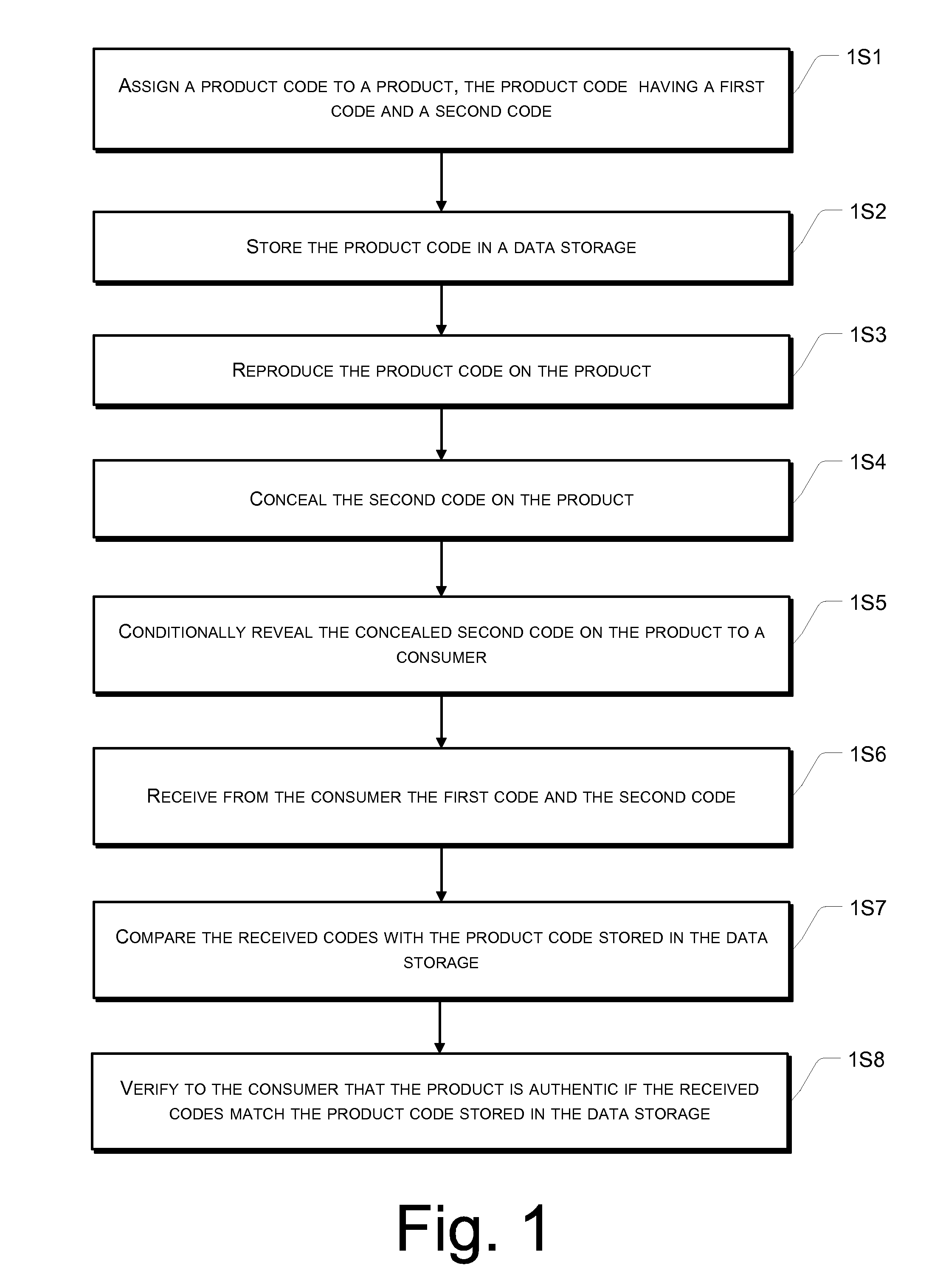
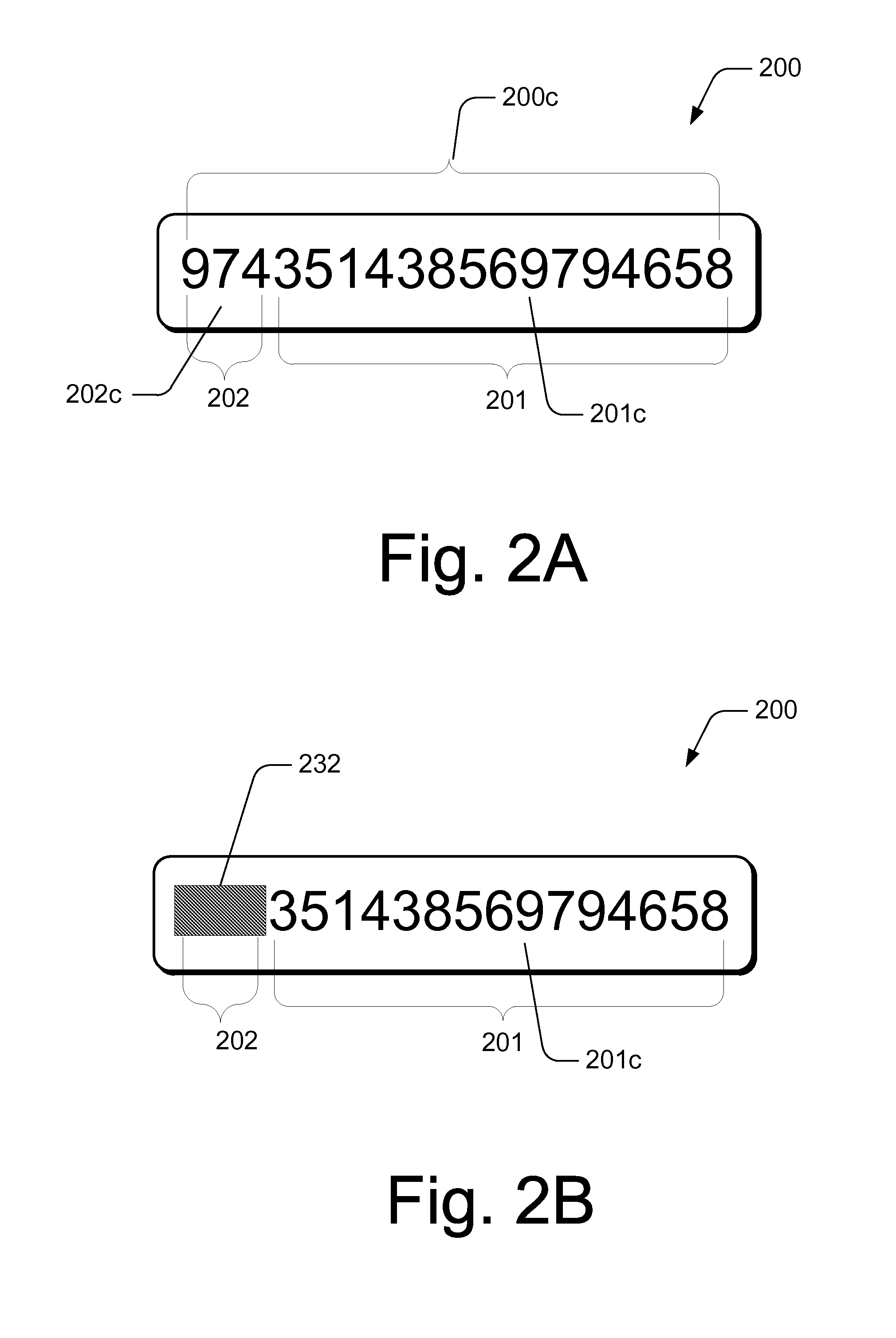
[0021]The anti-counterfeiting method is disclosed in further detail below using several exemplary embodiments with reference to various figures. In this description, the order in which a process is described is not intended to be construed as a limitation, and any number of the described process blocks may be combined in any order to implement the method, or an alternate method.
[0022]A typical anti-counterfeiting process involves a manufacturer, a retailer and a consumer, and possibly also other parties such as a shipping company and a distributor. However, anti-counterfeiting process may also involve a non-retailing process, such as a banking or government transaction involving documents, bills or checks that need to be authenticated. In the exemplary embodiments of this detailed description, a product is described as the object of authentication by a buyer or consumer. Such description is not meant to be restrictive but only illustrative. The product can be any article that needs ...
PUM
 Login to View More
 Abstract
Description
Claims
Application Information
 Login to View More