
Attack-Resistant Multivariate Signature Scheme
a multi-variate, signature scheme technology, applied in the field of cryptography methods and systems, can solve the problems of large signatures, high cost, and limited computing resources, and achieve the effect of reducing the number of attacks
- Summary
- Abstract
- Description
- Claims
- Application Information
AI Technical Summary
Benefits of technology
Problems solved by technology
Method used
Image

Examples
Embodiment Construction
Overview
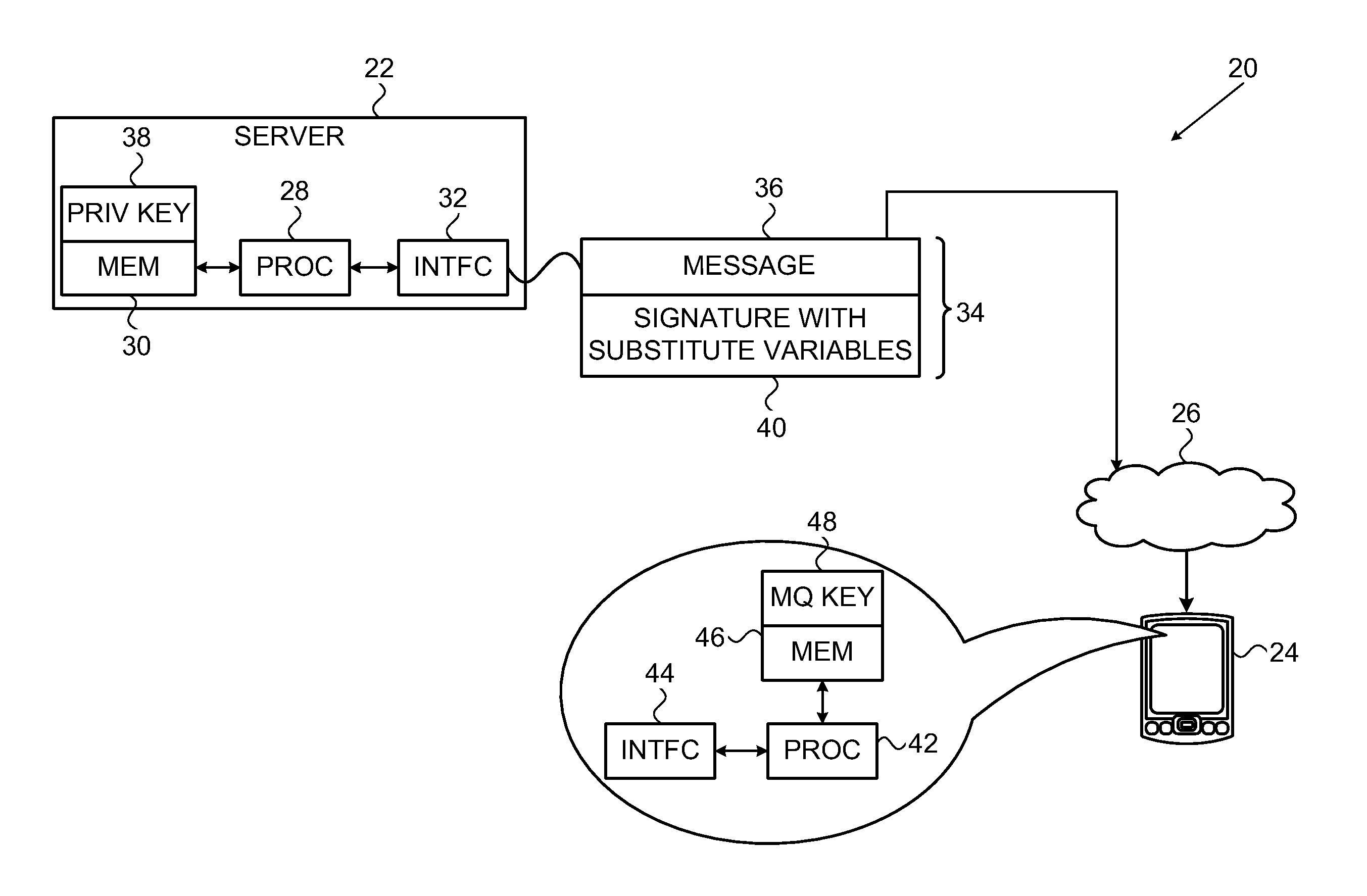
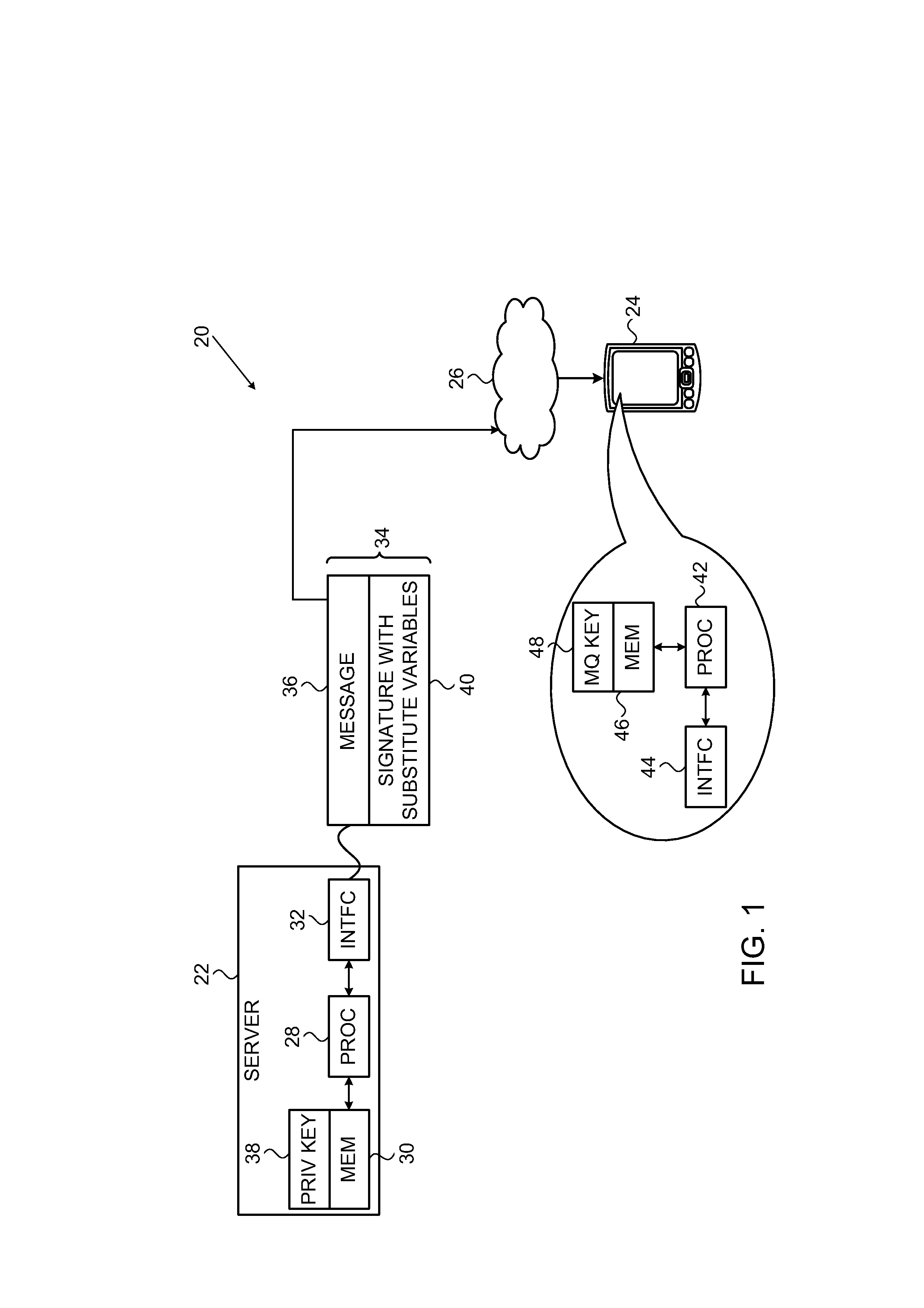
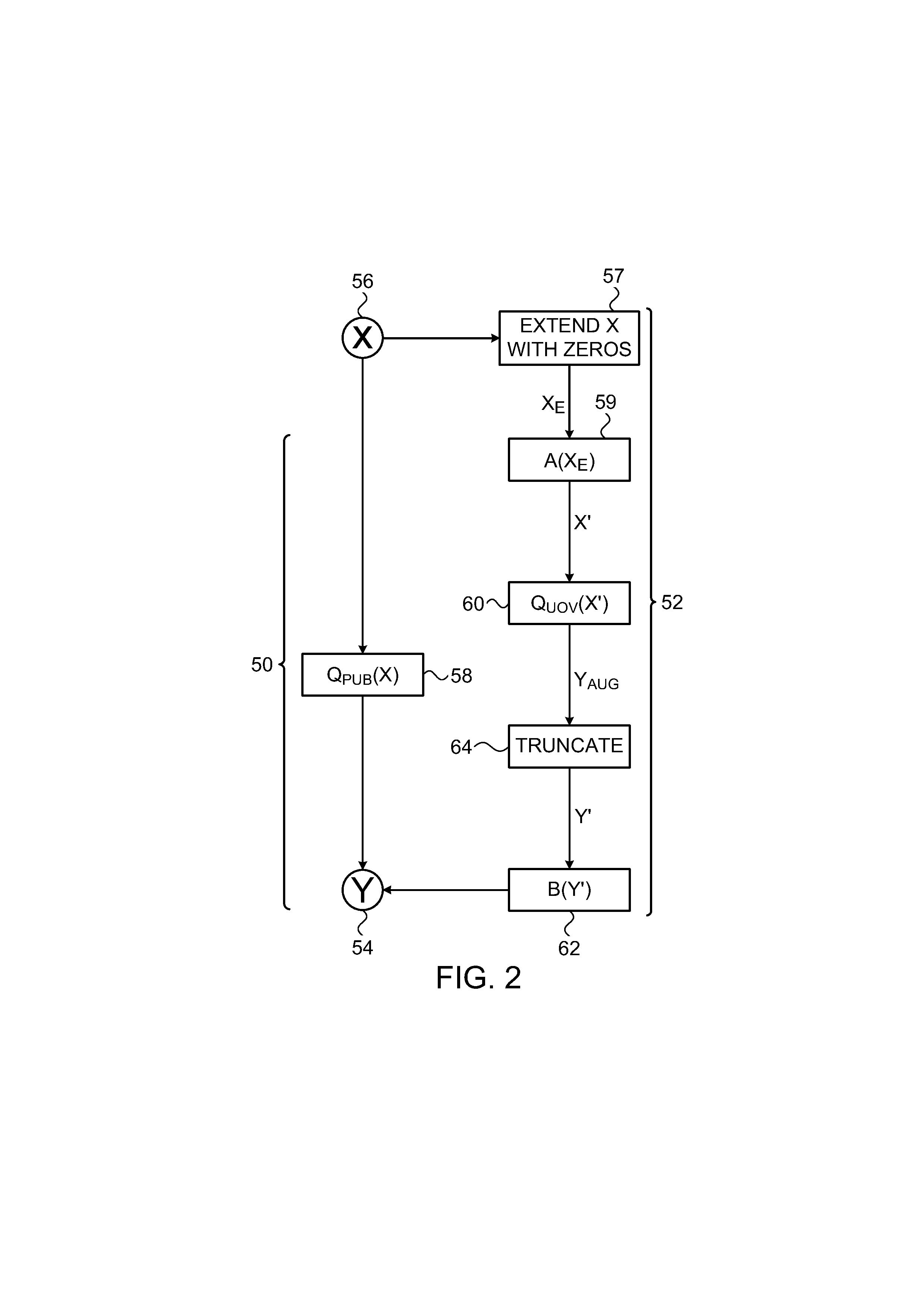
[0019]Embodiments of the present invention that are described hereinbelow provide a method for enhancing the security of existing multivariate polynomial schemes for public-key signature with moderate expansion in signature size and computational cost. These embodiments improve the security of the original scheme, while using relatively short signatures (by comparison with existing enhancement methods such as the ones surveyed in the above-mentioned paper by Wolf and Preneel) and requiring less computation for signature generation than other proposed multivariate polynomial enhancement schemes. The disclosed embodiments are based on multivariate quadratic equations, but the principles of the present invention may be extended, mutatis mutandis, to multivariate polynomial equations of higher order.
[0020]Typically, multivariate signature schemes operate as follows: To enable authentication of a message, the sender uses a private key to generate a digital signature over the mess...
PUM
 Login to View More
 Abstract
Description
Claims
Application Information
 Login to View More