Ophthalmic device to guide and aid the use of an eye drop dispenser
What is AI technical title?
AI technical title is built by PatSnap AI team. It summarizes the technical point description of the patent document.
a technology of eye drop dispenser and ophthalmic device, which is applied in the field of ophthalmic device, can solve the problems of not being widely used, ophthalmic device cannot be used with all types of eye drop dispenser, and difficulty in many people using eye drop dispensers, etc., to achieve convenient use, add stability, and stabilize the user's hand.
Inactive Publication Date: 2014-12-18
REZAEI ABBASSI NIMA
View PDF9 Cites 7 Cited by
Summary
Abstract
Description
Claims
Application Information
AI Technical Summary
This helps you quickly interpret patents by identifying the three key elements:
Problems solved by technology
Method used
Benefits of technology
Benefits of technology
The present invention is an ophthalmic device that helps users to easily and accurately position an eye drop dispenser and stabilize their hand. The device has a unique design that allows it to work with different types of eye drop dispensers. It consists of a nasal bridge and a body that connects to the dispenser, and it is designed to rest on the user's nose and allow the dispenser to point towards the eye. The device can be easily attached to any eye drop dispenser using measures like Velcro or adhesive tape. Overall, the device provides users with a secure and easy way to administer eye drops to the desired location in the eye.
Problems solved by technology
Using eye drop dispensers are difficult for many people.
However, only a handful of these patents have become commercially available products, and out of those that are commercially available, none have become widely used.
Some of the reasons for this are that the ophthalmic devices cannot be used with all types of eye drop dispensers, do not stabilize the user's hand, or do not consistently get the drop into the user's eye.
Method used
the structure of the environmentally friendly knitted fabric provided by the present invention; figure 2 Flow chart of the yarn wrapping machine for environmentally friendly knitted fabrics and storage devices; image 3 Is the parameter map of the yarn covering machine
View more
Image
Smart Image Click on the blue labels to locate them in the text.
Viewing Examples
Smart Image
Click on the blue label to locate the original text in one second.
Reading with bidirectional positioning of images and text.
Smart Image
Examples
Experimental program
Comparison scheme
Effect test
Embodiment Construction
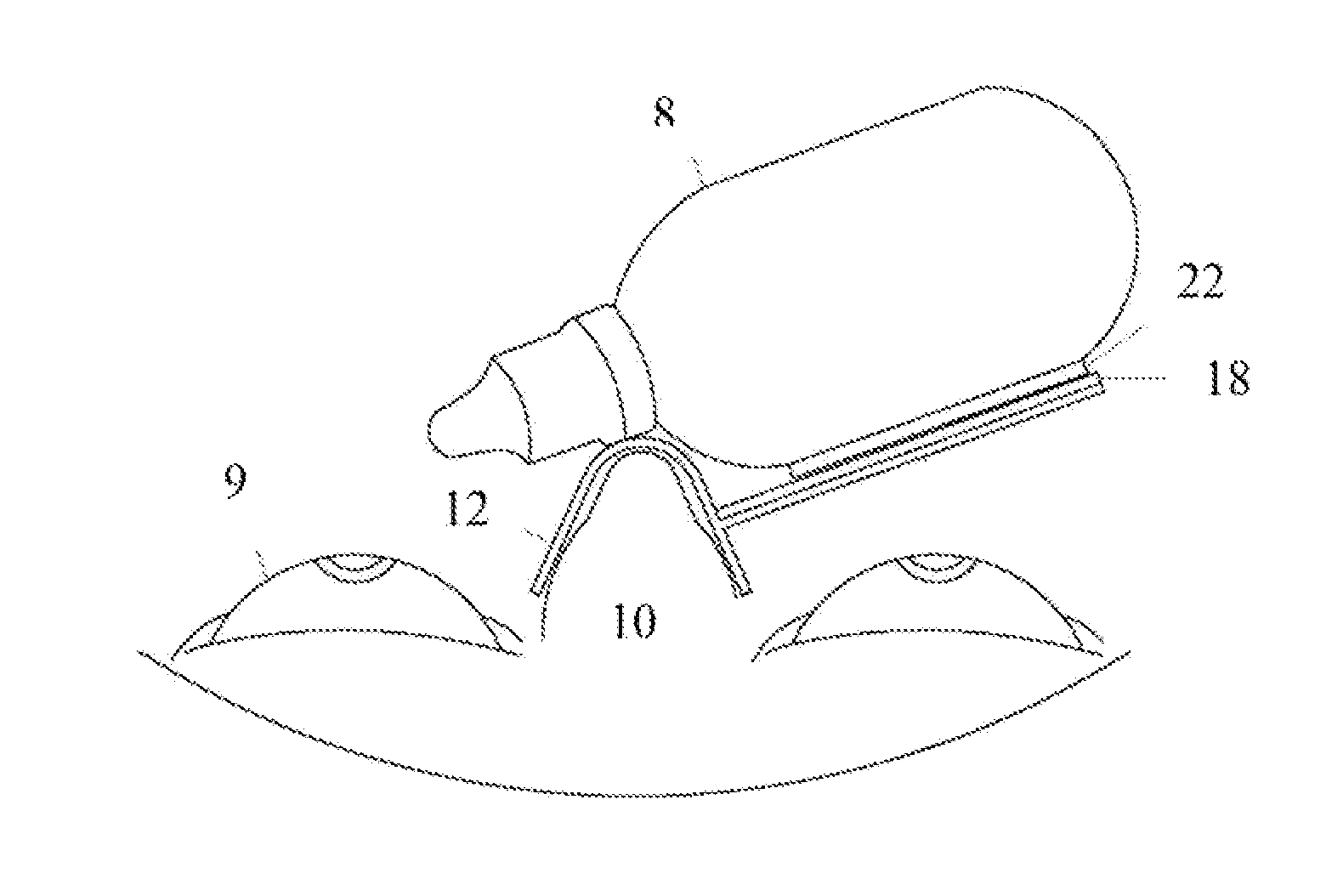
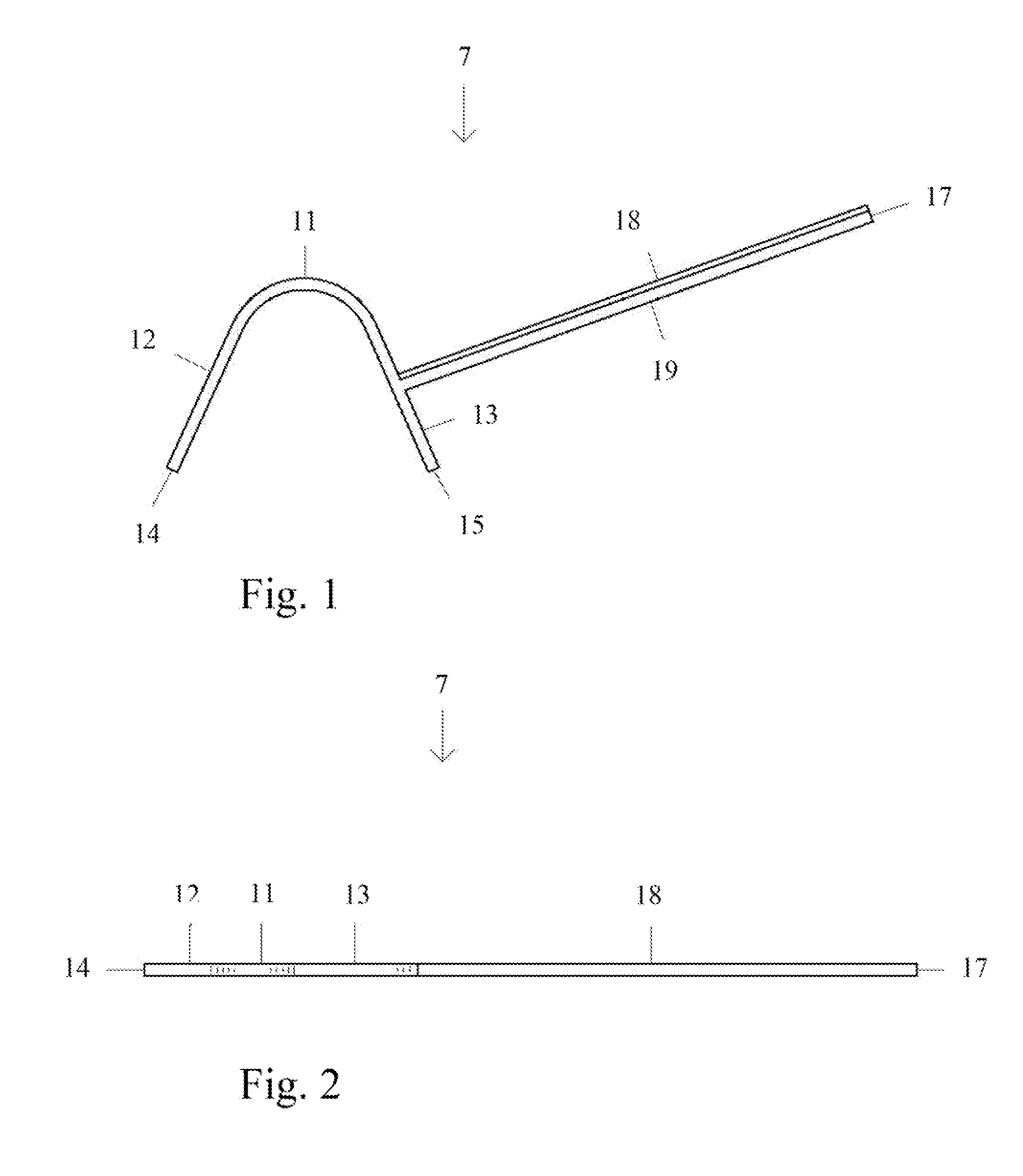
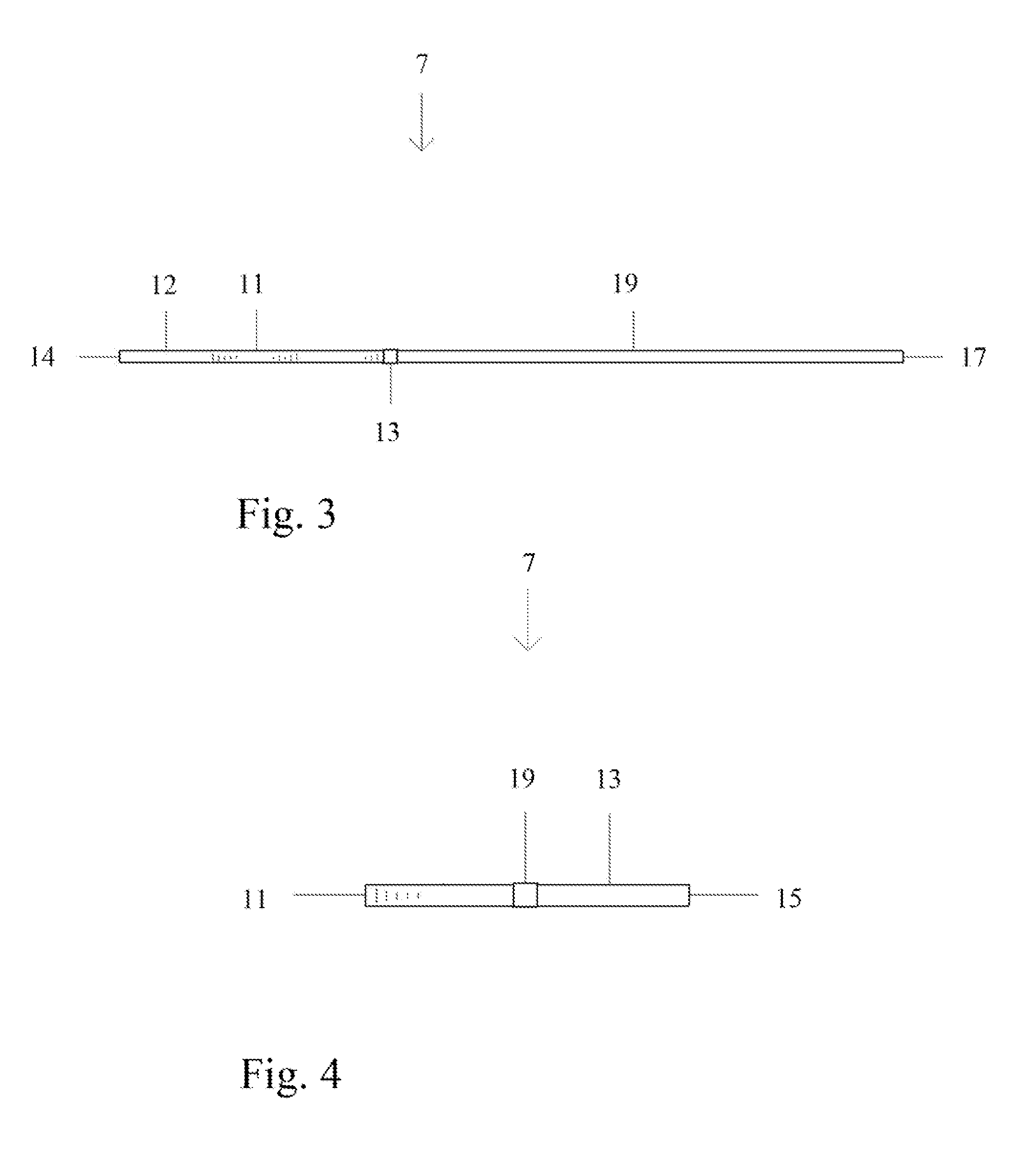
[0014]It is to be understood by one of ordinary skill in the art that the present discussion is a description of preferred embodiment only and is not intended as limiting the broader aspects of the present invention. FIGS. 1 through 4 illustrate the preferred embodiment of an ophthalmic device 7 in accordance with the principles of the present invention. Whereas, FIGS. 5 to 6 illustrate how the ophthalmic device 7 is used by a user of the present invention. FIG. 5 shows the ophthalmic device 7 attached to a conventional eye drop dispenser 8. FIG. 6 shows the ophthalmic device 7 attached to a conventional eye drop dispenser 8 over a recipient eye 9 and supported on a facial area 10. None of the figures portray the users hand given it is common knowledge how eye drops are dispensed.
[0015]Ophthalmic device 7 has a nasal bridge 11 to assist in correct position and stabilization of the ophthalmic device 7. The nasal bridge 11 is arcuate shaped. A proximal surface 12 is located on the sam...
the structure of the environmentally friendly knitted fabric provided by the present invention; figure 2 Flow chart of the yarn wrapping machine for environmentally friendly knitted fabrics and storage devices; image 3 Is the parameter map of the yarn covering machine
Login to View More
PUM
Login to View More
Abstract
The present invention relates to an ophthalmic device designed to ease the use of eye drop dispensers. It is one ophthalmic device but can be thought of as consisting of two parts: the nose bridge (11), which rests on the user's nose and the body (19), which connects to the eye drop dispenser. The body is flat and comes off of the nose bridge at an angle, allowing the eye drop dispenser to point toward the eye. The body attaches to the eye drop dispenser by Velcro (18), adhesive tape, strap, or any other measure to adhere two things together. This allows the ophthalmic device to work with any type of eye drop dispenser. Together, the nose bridge and the body, allow the user to securely and easily administer an eye drop to the medial part of their eye.
Description
BACKGROUND OF THE INVENTION[0001]1. Field of Invention[0002]The present invention relates to an ophthalmic device designed to ease the use of eye drop dispensers.[0003]2. Prior Art[0004]Using eye drop dispensers are difficult for many people. For decades people have tried to design. an easier way for people to self administer eye drops. Numerous patents have been filed for eye drop aids, guides, ophthalmic devices, or apparatus. For example U.S. Pat. Nos. 5,976,116, 4,257,417, 3,934,590, 7,235,065, 8,206,362, 2,722,216, 6,736,802, 4,134,403, 5,713,495, 2,676,592, 4,344,430, 6,595,970, and 8,348,912. However, only a handful of these patents have become commercially available products, and out of those that are commercially available, none have become widely used. Some of the reasons for this are that the ophthalmic devices cannot be used with all types of eye drop dispensers, do not stabilize the user's hand, or do not consistently get the drop into the user's eye.BRIEF SUMMARY OF TH...
Claims
the structure of the environmentally friendly knitted fabric provided by the present invention; figure 2 Flow chart of the yarn wrapping machine for environmentally friendly knitted fabrics and storage devices; image 3 Is the parameter map of the yarn covering machine
Login to View More
Application Information
Patent Timeline
Application Date:The date an application was filed.
Publication Date:The date a patent or application was officially published.
First Publication Date:The earliest publication date of a patent with the same application number.
Issue Date:Publication date of the patent grant document.
PCT Entry Date:The Entry date of PCT National Phase.
Estimated Expiry Date:The statutory expiry date of a patent right according to the Patent Law, and it is the longest term of protection that the patent right can achieve without the termination of the patent right due to other reasons(Term extension factor has been taken into account ).
Invalid Date:Actual expiry date is based on effective date or publication date of legal transaction data of invalid patent.



 Login to View More
  Login to View More