

Systems and Methods for Detecting ECG Subwaveforms
a technology of subwaveforms and systems, applied in the field of systems and methods for detecting ecg subwaveforms, can solve the problems of q, r, s, t, u, and j waveforms not providing a complete picture of the operation of all the different muscle tissues of the hear
- Summary
- Abstract
- Description
- Claims
- Application Information
AI Technical Summary
Benefits of technology
Problems solved by technology
Method used
Image

Examples
Embodiment Construction
Computer-Implemented System
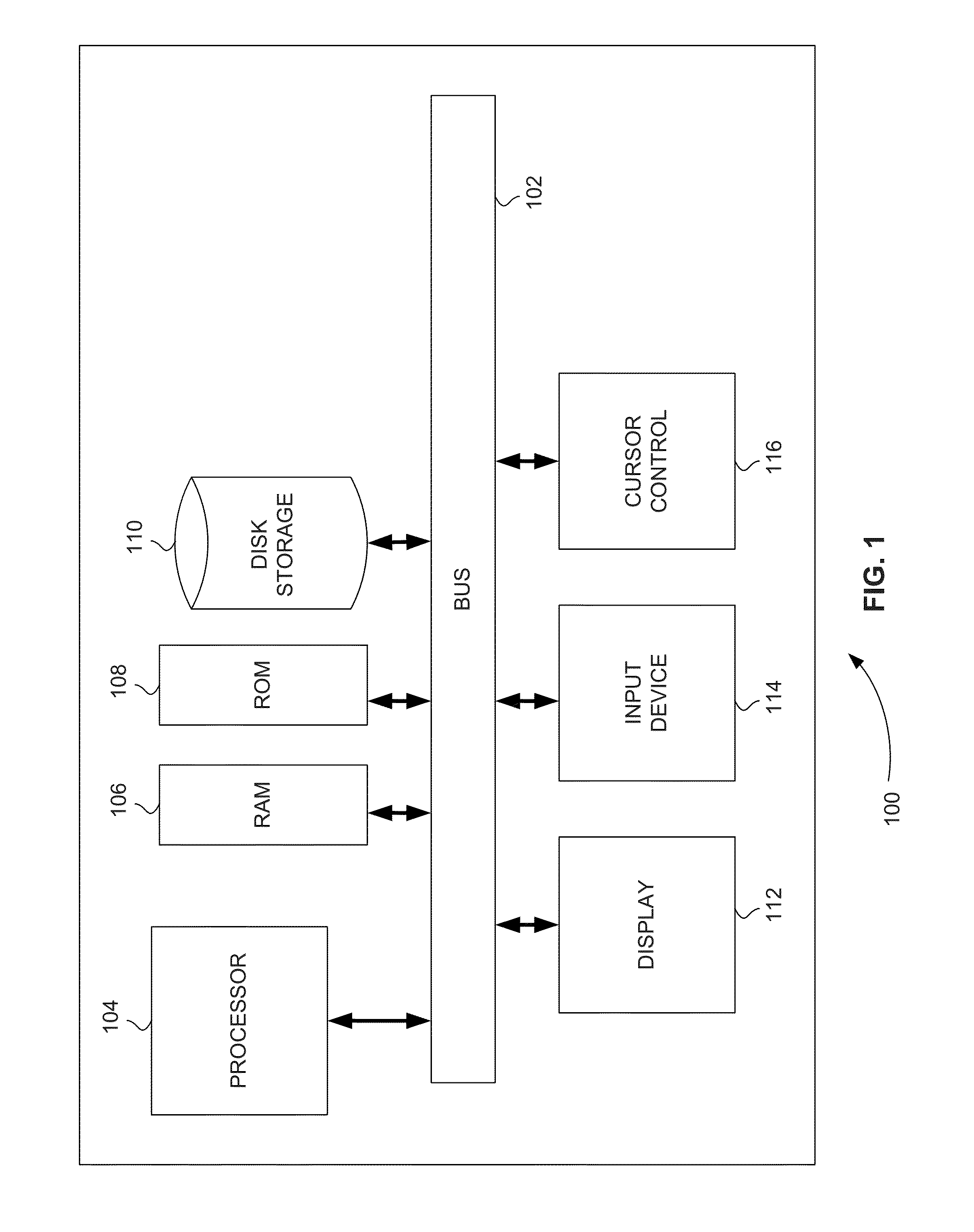
[0034]FIG. 1 is a block diagram that illustrates a computer system 100, upon which embodiments of the present teachings may be implemented. Computer system 100 includes a bus 102 or other communication mechanism for communicating information, and a processor 104 coupled with bus 102 for processing information. Computer system 100 also includes a memory 106, which can be a random access memory (RAM) or other dynamic storage device, coupled to bus 102 for storing instructions to be executed by processor 104. Memory 106 also may be used for storing temporary variables or other intermediate information during execution of instructions to be executed by processor 104. Computer system 100 further includes a read only memory (ROM) 108 or other static storage device coupled to bus 102 for storing static information and instructions for processor 104. A storage device 110, such as a magnetic disk or optical disk, is provided and coupled to bus 102 for storing infor...
PUM
 Login to View More
 Abstract
Description
Claims
Application Information
 Login to View More