Abnormalities that result in fraud, waste and abuse are pervasive in the healthcare industry because ethically challenged individuals, groups and / or corporations abuse the system and then use deceptive tactics, techniques and procedures to avoid detection.
This is compromised because the basic building blocks of deception manifest themselves as moving targets, compromising the ability to
expose deceptive measures.
The ability to pinpoint subterfuge is compromised by a significant lack of
subject matter expertise; ineffective use and / or development of new and emerging algorithmic protocols; limited historical attributes;
adversary knowledge of audit methods and tools and avoidance of areas under scope and review (the investigative metric is $1 M−steal / embezzled $0.9 M); a lack of internal controls within dynamic business environments; a lack of
inventory management controls, creating a “needle in a haystack” environment; tools that use estimates versus targeting specific elements of fraud, waste and abuse; and predictive modeling versus extracting current
active data points.
Industry literature is rampant with instances of transaction errors, waste and criminal fraud.
This program provided limited results of $115 million dollars in Medicare claims that were either “stopped, prevented, or identified,” resulting in a 0.01%
impact on the estimated 19% of Medicare spending that is lost due to fraud, waste and abuse.
In essence, at least eighteen percent of Medicare spending is still lost to fraud, waste and abuse that circumvents existing controls and initiatives.
Based on the 2013 estimated Gross World Product of $73.87 trillion, this projects a potential total global fraud loss of $3.7 trillion alone in this category of fraud.
Counterfeiting, another category of fraud, is another pervasive issue.
These initiatives are limited by their data analytic techniques and / or methods that are functionally disconnected and unorganized, lacking a holistic approach.
Failure by government and private sector entities in the detection, mitigation and prevention of fraud, waste and abuse results from the use of tools that are narrowly focused on a limited range of data points, as opposed to incorporating varying levels of data that are situationally relevant.
This type of strictly data-driven, algorithmic approach creates limitations due to its use as a linear, narrow, and / or exclusively analytically-driven tool that utilizes only fragments of data.
This occurs because the user of the tools is starting off by using only a defined
algorithm, meaning that they only gather certain points of information, narrowing down their input without first gathering an understanding of all of the existing data.
As a result, current analytic methods fail to incorporate key metric components, including behavioral understanding, identification of all relevant fragmented data elements, and the collection,
authentication,
processing, and transformation of data elements using behavioral understanding.
A holistic, all-inclusive finding is not possible without these key elements.
Fragmented analysis and the use of limited algorithmic tools result in the misinterpretation of results and the failure to identify the
etiology of fraud, waste and abuse.
Fragmented or non-holistic analytic tools result in failure to detect, identify and define “real-time” data points that contribute to or completely
mask the indications and warnings of: fraud, unacceptable risk, noncompliance,
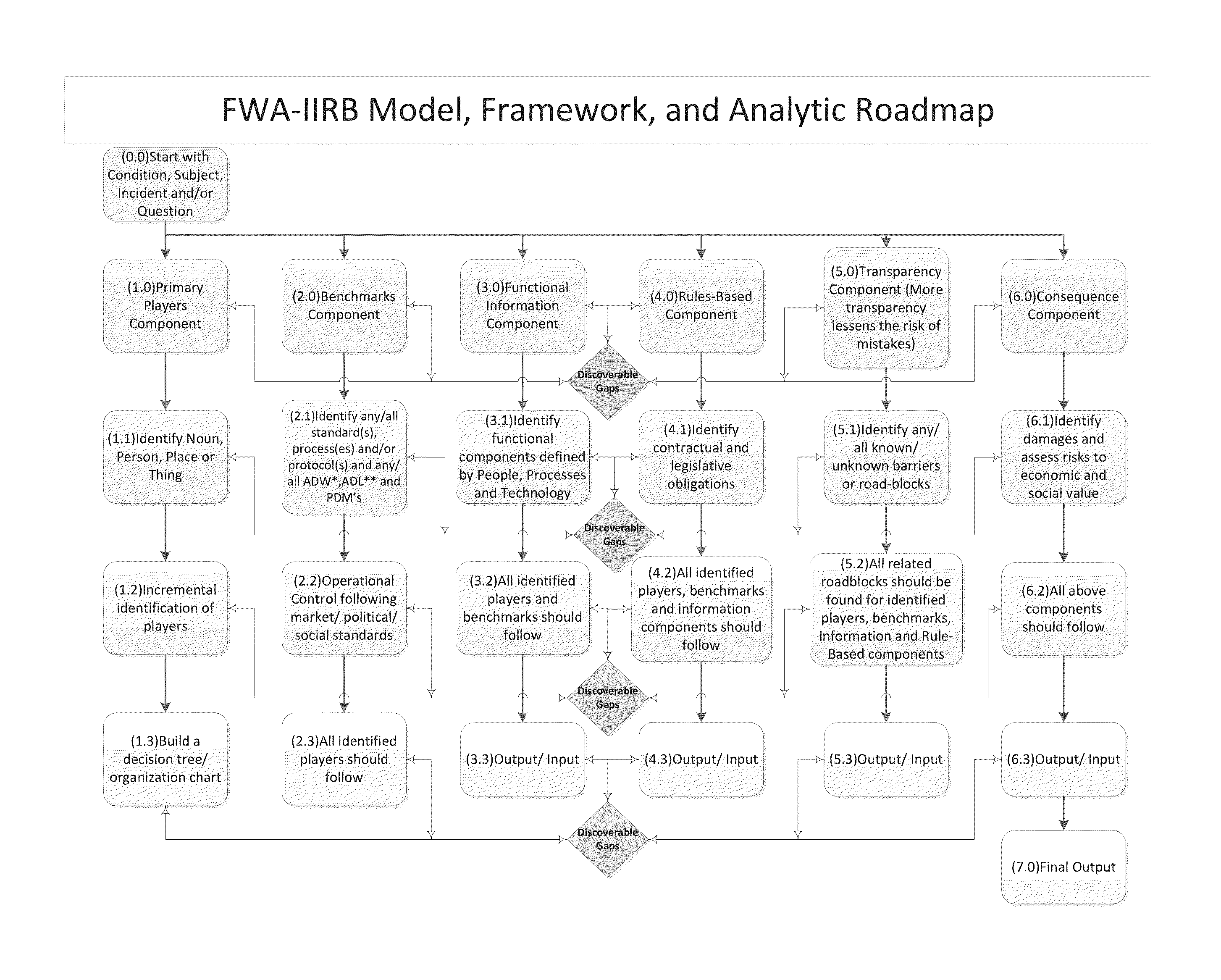
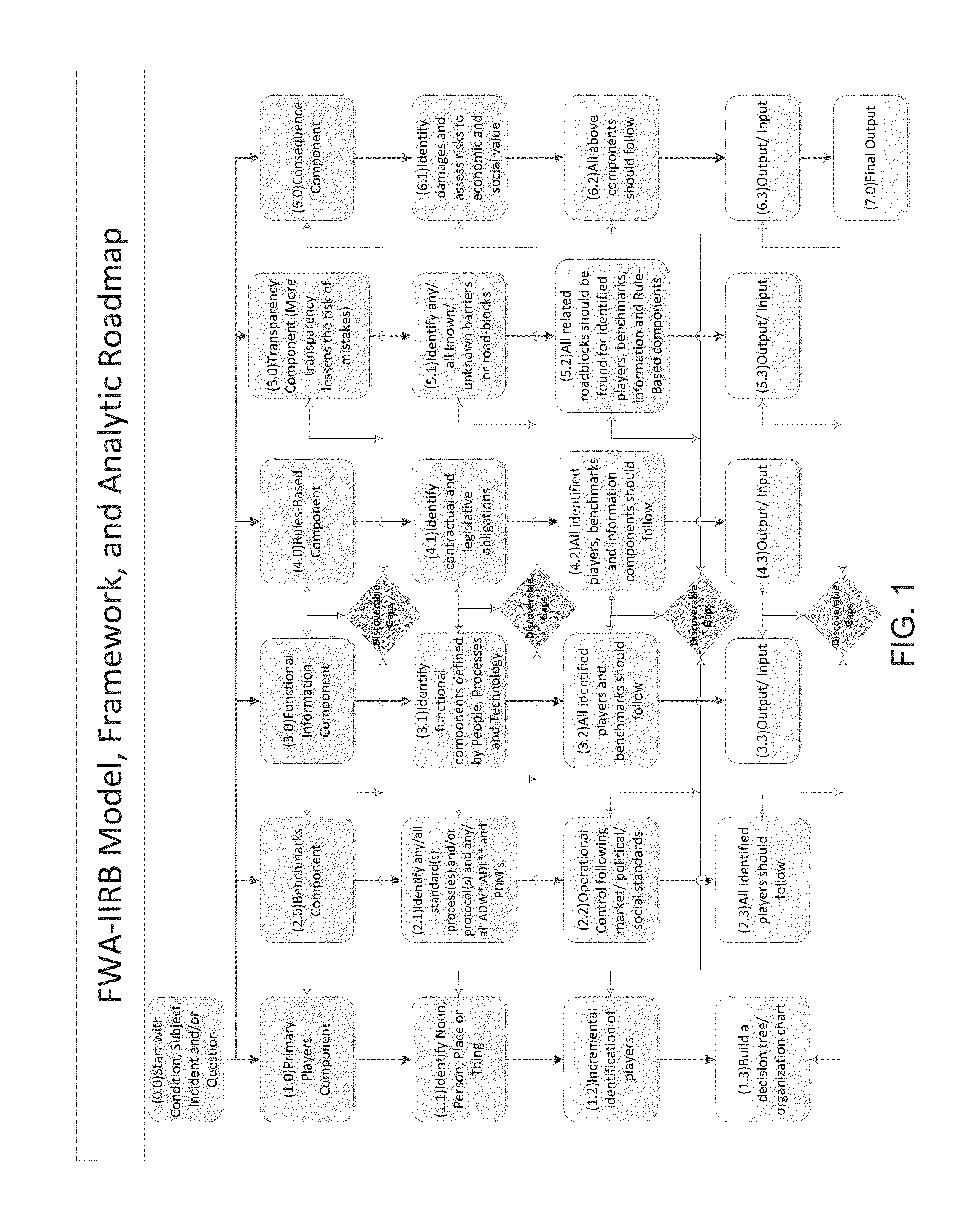
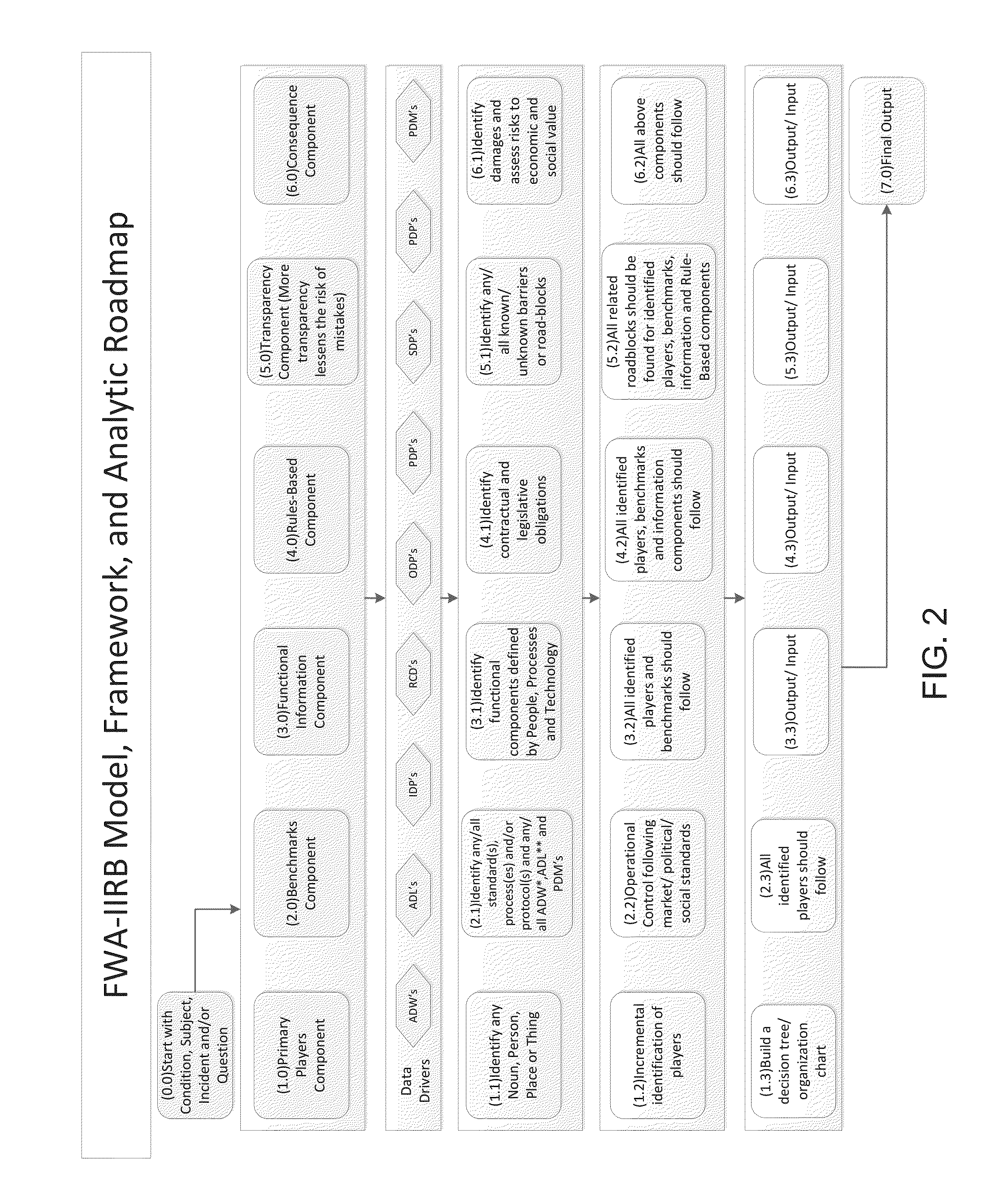
Activities of Daily Living flows (ADL's), Activities of Daily Work flows (ADW's) and corresponding Prevention, Detection and Mitigation work flows (PDM's).
Current
market place tools that apply retrospective, prospective, and concurrent analytic fraud detection and prevention programs are hampered by technical limitations which narrow their scope and effectiveness at detecting fraud, waste and abuse.


 Login to View More
  Login to View More