
Novel oxazolidinone derivative as CETP inhibitor, its preparation method, and pharmaceutical composition comprising the same
a technology of oxazolidinone and cetp, which is applied in the field of new oxazolidinone derivative with inhibitory activity against cetp, can solve the problems of increased risk of arteries narrowing, statin-lineage drugs not being sufficiently effective for treatment, and the efficacy of statin-lineage drugs is not as high as expected
Patent Information
- Authority / Receiving Office
- US · United States
- Current Assignee / Owner
- Publication Date
- 2016-02-11
- Estimated Expiration
- Not applicable · inactive patent
Smart Images
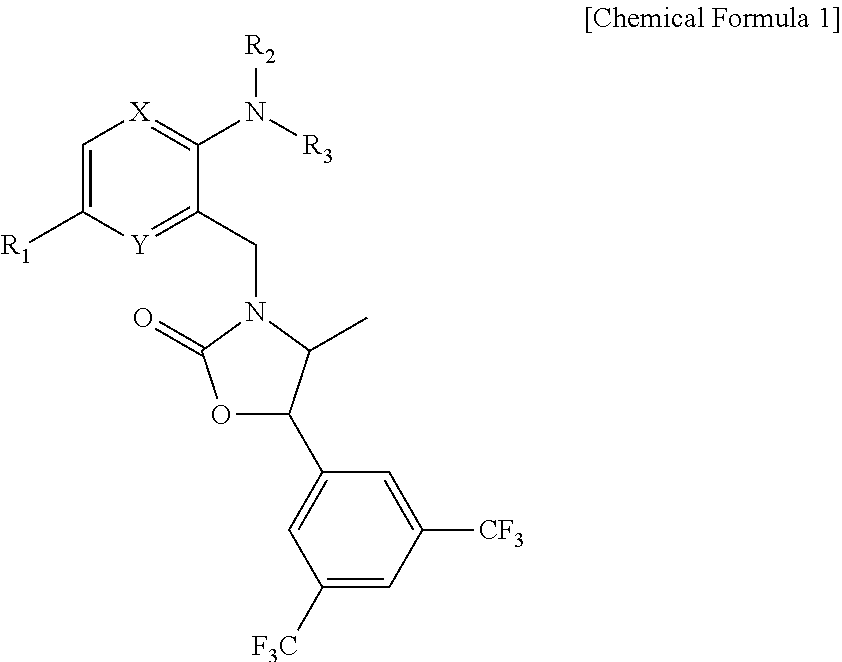
Figure 1 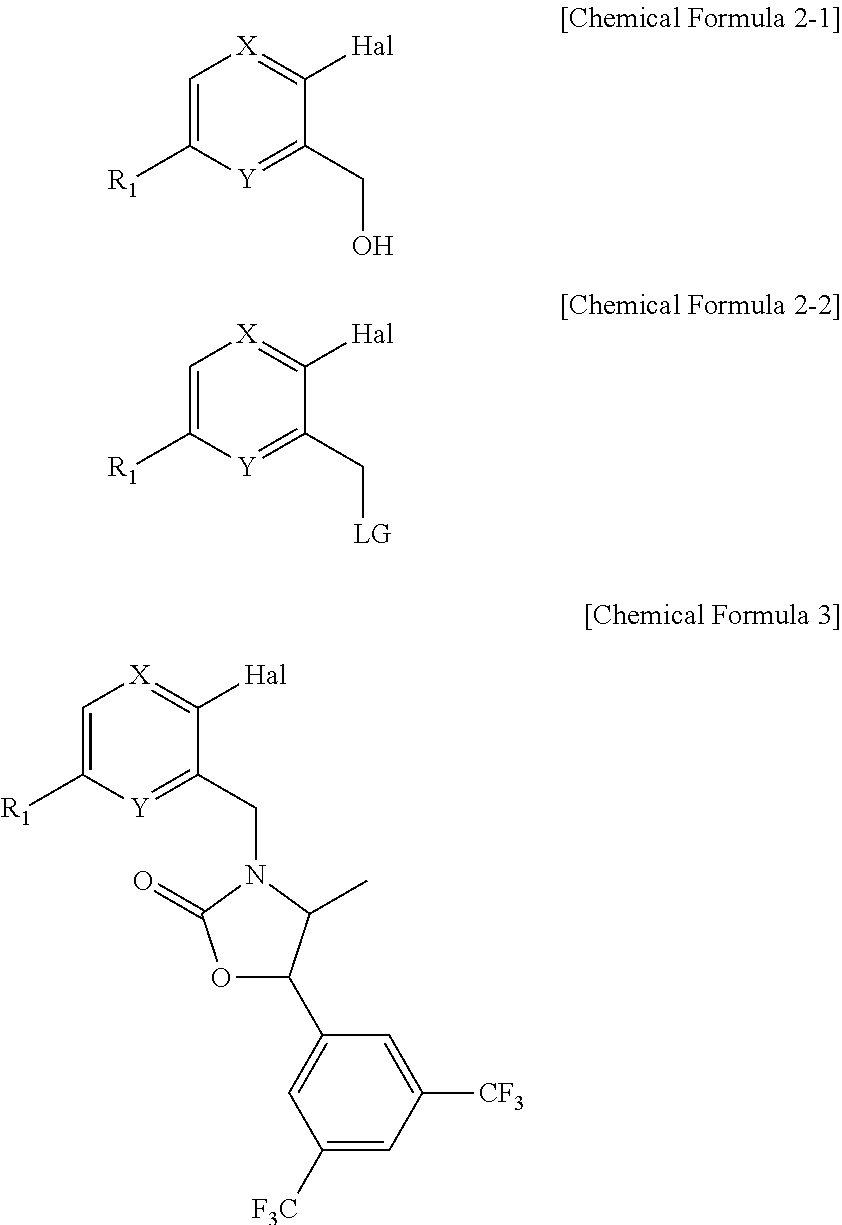
Figure 2 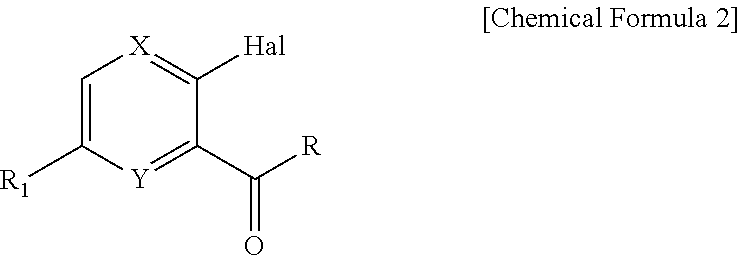
Figure 3
Abstract
Description
TECHNICAL FIELD
[0001] The present invention relates to a novel oxazolidinone derivative with inhibitory activity against CETP, a preparation method thereof, and a pharmaceutical composition comprising the same.BACKGROUND ART
[0002] Coronary heart disease (CHD), also known as atherosclerotic heart disease, is caused by plaque being deposited and building up along the inner walls of the arteries of the heart. The risk of arteries narrowing increases with smoking, insufficient exercise, obesity, diabetes, high blood pressure, and dyslipidemia. CHD is the leading cause of death irrespective of sex and accounts for approximately 500,000 deaths in the United States every year out of 15.8 million CHD patients.
[0003] According to the guidelines of NCEP (National Cholesterol Education Program) ATP-III (Adult Treatment Panel III), management of blood cholesterol levels is very important for the prevention or improvement of CHD. NCEP classified persons with CHD history or CHD-equivalent risk facto...
Examples
example 1
(4S,5R)-5-[3,5-bis(trifluoromethyl)phenyl]-4-methyl-3-[(2-(methyl(tetrahydrofuran-3-yl)amino)-5-(trifluoromethyl)pyridin-3-yl)methyl]-oxazolidin-2-one
[0097]
[Step 1] Preparation of 2-chloro-5-(trifluoromethyl)pyridin-3-yl-methane chloride
[Step 1-1] Preparation of 2-chloro-5-(trifluoromethyl)pyridine-3-carbaldehyde
[0098]
[0099]To a solution of 3-bromo-2-chloro-5-(trifluoromethyl)pyridine (20.00 g, 0.077 mol) in toluene (400 ml), DMF (dimethylformaldehyde) (7.72 ml, 0.10 mol) was dropwise added at −65° C., followed by the addition of n-BuLi (1.57M solution in hexane; 64 ml, 0.10 mol). After stirring for 30 min, the reaction was terminated with 1 N HCl, and then, the reaction mixture was extracted with ethyl acetate. The organic layer was washed with water, dried over anhydrous magnesium sulfate, filtered, and concentrated in a vacuum to obtain 2-chloro-5-(trifluoromethyl)pyridine-3-carbaldehyde. This produce was used in the subsequent reaction without further purification.
[Step 1-2] Pr...
example 2
(4S,5R)-5-[3,5-bis(trifluoromethyl)phenyl]-4-methyl-3-{(2-[ethyl(tetrahydrofuran-3-yl)amino]-5-(trifluoromethyl)pyridin-3-yl)methyl}-oxazolidin-2-one
[0125]
[0126]The title compound was prepared in the same manner as in Example 1, with the exception that ethyl iodide, instead of the methyl iodide in step 5, was employed. 38 mg (93%).
[0127]1H NMR (400 MHz, CDCl3) 8.51 (s, 1H, major), 8.47 (s, 1H, minor), 7.89 (s, 1H, minor), 7.81 (s, 1H, major), 7.80 (s, 1H, minor), 7.76 (s, 2H, minor), 7.74 (s, 2H, major), 5.74 (d, 1H, minor), 5.71 (d, 1H, major), 4.83 (d, 1H, minor), 4.78 (d, 1H, major), 4.33 (m, 1H), 4.29 (m, 1H), 3.99 (m, 4H), 3.76 (m, 2H), 3.63 (m, 1H, minor), 3.49 (m, 1H, major), 3.30 (m, 3H), 2.24 (m, 1H), 1.98 (m, 2H), 0.94 (t, 6H), 0.62 (d, 3H, major), 0.63 (d, 3H, minor).
example 3
(4S,5R)-5-[3,5-bis(trifluoromethyl)phenyl]-4-methyl-3-({2-[(3R,4R)-4-ethoxytetrahydrofuran-3-yl)(methyl)amino]-5-(trifluoromethyl)pyridin-3-yl}methyl)-oxazolidin-2-one
[0128]
[Step 1] Preparation of 3-bromo-N-(4R-ethoxy-tetrahydrofuran-3-yl)-5-(trifluoromethyl)pyridine-2-amine
[0129]
[0130]A solution of 2-chloro-3-bromo-5-trifluoromethyl pyridine (1.17 g, 4.48 mmol) in DMF (4 ml) was added with drops of TEA (triethylamine) (1.24 ml, 8.96 mmol) and then with (4R)-3-ethoxy-4-tetrahydrofuranamine (824 mg, 4.93 mmol), refluxed at 110° C. for 5 hrs with stirring, cooled to room temperature, and quenched with water, followed by extraction with ethyl acetate. The organic layer was dried, filtered, and concentrated. The residue was purified by chromatography to afford the title compound (537 mg, 34%).
[0131]1H NMR (400 MHz, CDCl3) 8.32 (s, 1H), 7.80 (s, 1H), 5.41 (d, J=6.0 Hz, 1H), 5.58 (t, J=5.2 Hz, 1H), 4.11-4.07 (m, 2H), 3.93 (d, J=4.4 Hz, 1H), 3.86-3.78 (m, 2H), 3.74 (d, J=8.4 Hz, 1H), 3.62 ...