

Wound Healing Compositions Involving Medicinal Honey, Mineral ions, and Methylglyoxal, and Methods of Use
a technology of methylglyoxal and composition, applied in the field of wound healing compositions, can solve the problems of reducing the activity of wound protease, affecting the healing effect of wounds, and affecting the healing effect of wounds, and achieve the effect of modulating biochemical mechanisms and reducing the active infection and the active infection
Patent Information
- Authority / Receiving Office
- US · United States
- Patent Type
- Applications(United States)
- Current Assignee / Owner
- Publication Date
- 2016-08-04
Smart Images
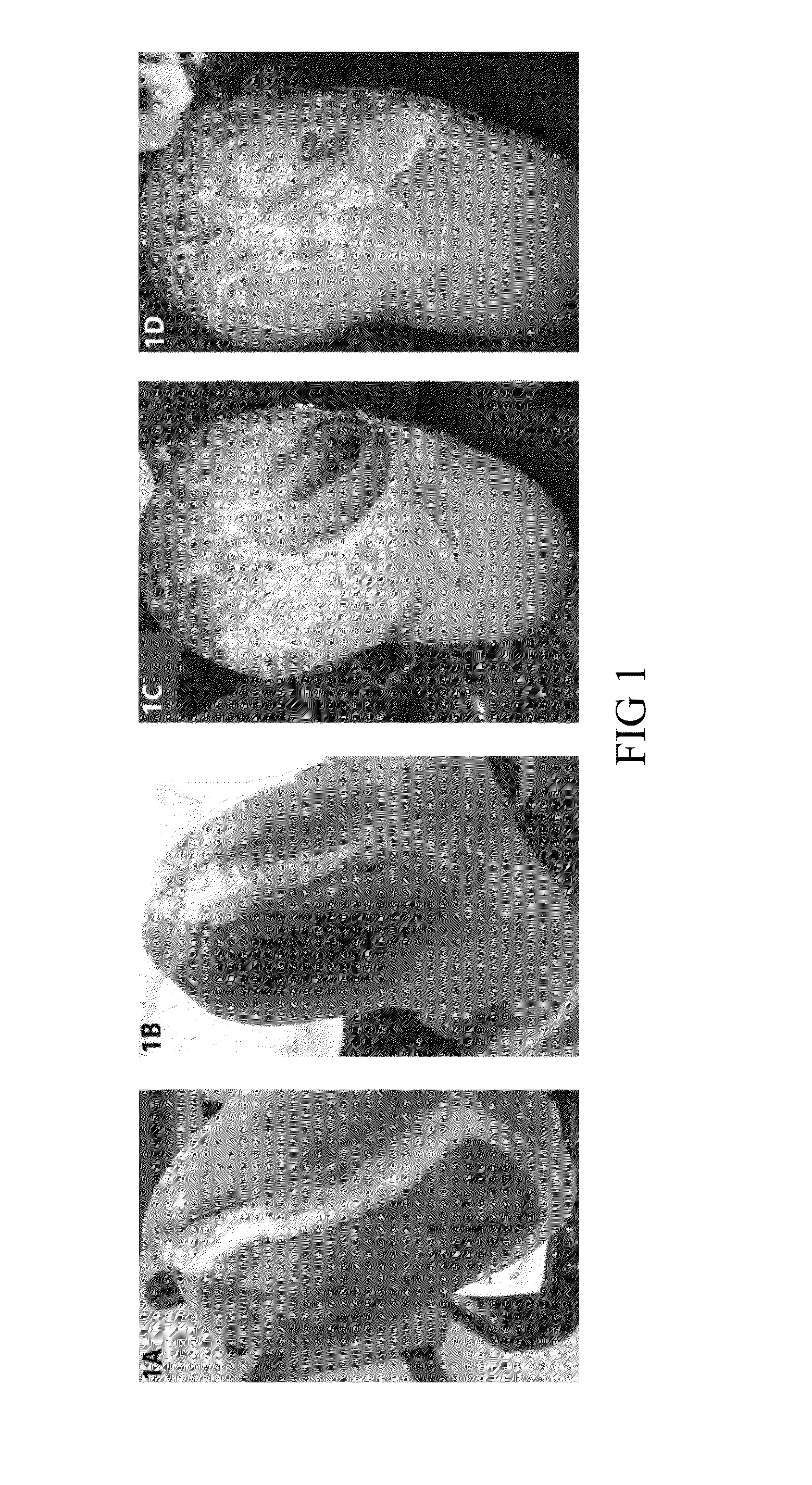
Figure 1 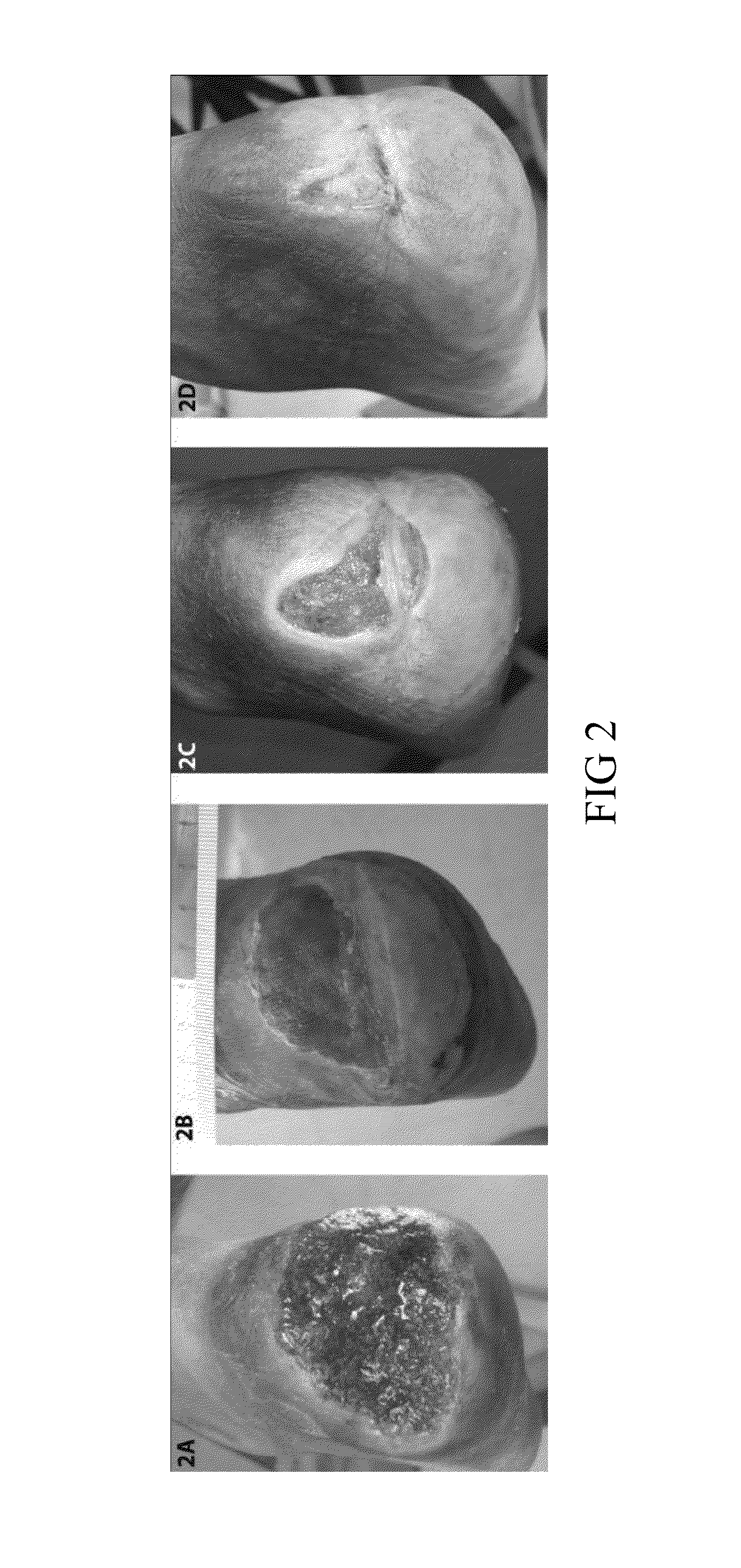
Figure 2 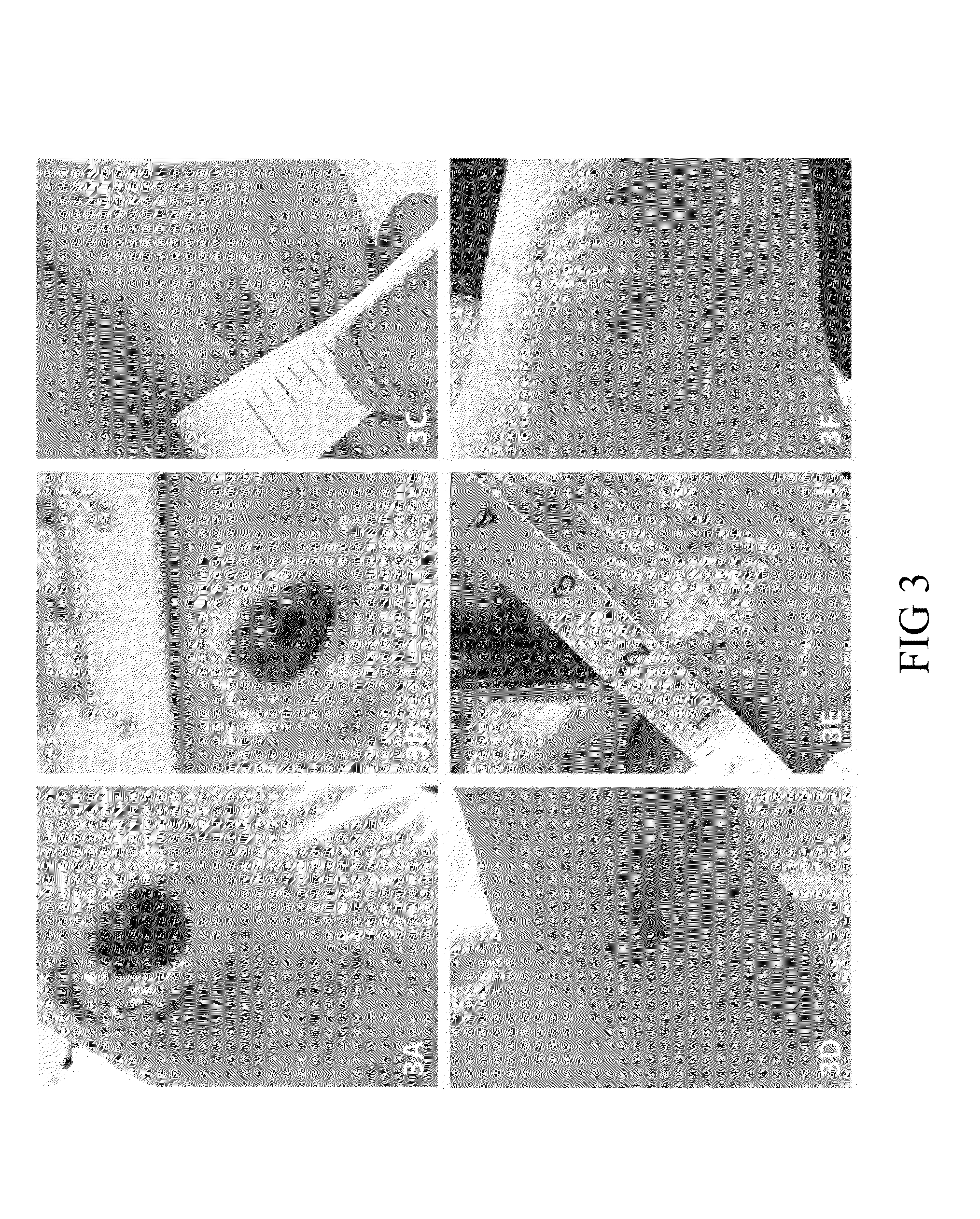
Figure 3
Abstract
Description
CROSS-REFERENCE TO RELATED APPLICATIONS
[0001] This patent application claims the benefit under 35 U.S.C. §119(e) of U.S. Provisional Patent Application No. 62 / 109,369, filed Jan. 29, 2015, which application is incorporated herein by reference.FIELD OF THE INVENTION
[0002] The invention broadly relates to wound healing compositions, more specifically to wound healing compositions including various combinations of medicinal honey, methylglyoxal, pharmaceutically acceptable carriers, inorganic minerals with methylglyoxal, salts, and medicinal buckwheat honey.BACKGROUND OF THE INVENTION
[0003] Undesirable and dangerous side effects and adverse drug interactions are well known for the predominantly synthetic organic pharmaceuticals that have been widely administered over the past several decades. These adverse effects have led many research groups to go back and study, in greater detail, the medicinal properties and mechanisms of action of many natural compounds. Ancient cultures have long be...
Examples
embodiments
[0053]Embodiment 1 is a composition including a medicinal honey with high peroxide-induced and polyphenol-facilitated antimicrobial activity, an effective amount of methylglyoxal (500-2000 mg / kg) to add non-peroxide antimicrobial activity, wherein each of the antimicrobial activities provides a different mechanism of antibacterial inhibition thereby providing a broad spectrum antimicrobial activity effective to reduce the number of viable microorganisms at a wound site.
[0054]Embodiment 2 is the composition of embodiment 1 wherein the medicinal honey is monofloral buckwheat honey that naturally generates 2-4 mM hydrogen peroxide and which naturally contains 275-575 gallic acid equivalents of polyphenol compounds per gram of honey, and wherein the amount of methylglyoxal added is 500-2000 mg per kg of honey.
[0055]Embodiment 3 is a composition including a pharmaceutically-acceptable carrier, an effective amount of an active ingredient of inorganic solids including a magnesium salt, a p...
example 1
Demonstrates Composition 1, Embodiments 1 and 2
[0063]Monofloral buckwheat honey fortified with methylglyoxal at a concentration of 1000 mg / kg is prepared and impregnated into acetate non-woven medical grade dressing (approximately 4 g MGO-fortified buckwheat honey in each 4″×5″ dressing). The dressings are protected with polyethylene liners applied to both sides, and dressings of 4″×5″ are sealed individually in foil pouches constructed of white polyester film fused to aluminum foil that constitutes an excellent barrier. The dressings are then sterilized with gamma radiation and verified as sterile before use.
[0064]Panels 1A, 1B, 1C, and 1D of FIG. 1, show treatment using dressings impregnated with composition 1 of the present invention, MGO-fortified buckwheat honey, of a large infected open amputation wound in the foot of a diabetic patient. A 47 year-old male with a history of plantar diabetic foot ulcers who had recently had all the toes on his left foot amputated and the dermal...
example 2
Demonstrates Composition 1, Embodiments 1 and 2
[0065]Panels 2A, 2B, 2C, and 2D, depicted in FIG. 2, show treatment using dressings impregnated with composition 1 of the present invention, MGO-fortified buckwheat honey, of a large deep pressure ulcer. The MGO-fortified buckwheat honey dressings were also used to treat a large deep pressure ulcer on the right heel of a 59 year-old male. This patient had a history of diabetes and immobility. Before onset of treatment with the sterile MGO-fortified buckwheat honey dressings, the wound measured approximately 6.3 cm×4.4 cm (Panel 2A: 27.7 cm2). Again the patient was instructed on how to change his own dressings every 48 hours. After three weeks of treatment with the sterile MGO-fortified buckwheat honey dressings, the wound area had decreased to 11.2 cm2 (Panel 2B), a 60% reduction in the wound area, and again greater than the 50% wound area reduction within 4 weeks of treatment that is indicative of complete closure within a 12-20 week t...