

Electrophoretic display drive techniques
a display drive and display technology, applied in the field of display technology, can solve the problems of epd based e-readers that are generally relatively slow to update, and one architectural limitation of e-readers
- Summary
- Abstract
- Description
- Claims
- Application Information
AI Technical Summary
Benefits of technology
Problems solved by technology
Method used
Image

Examples
Embodiment Construction
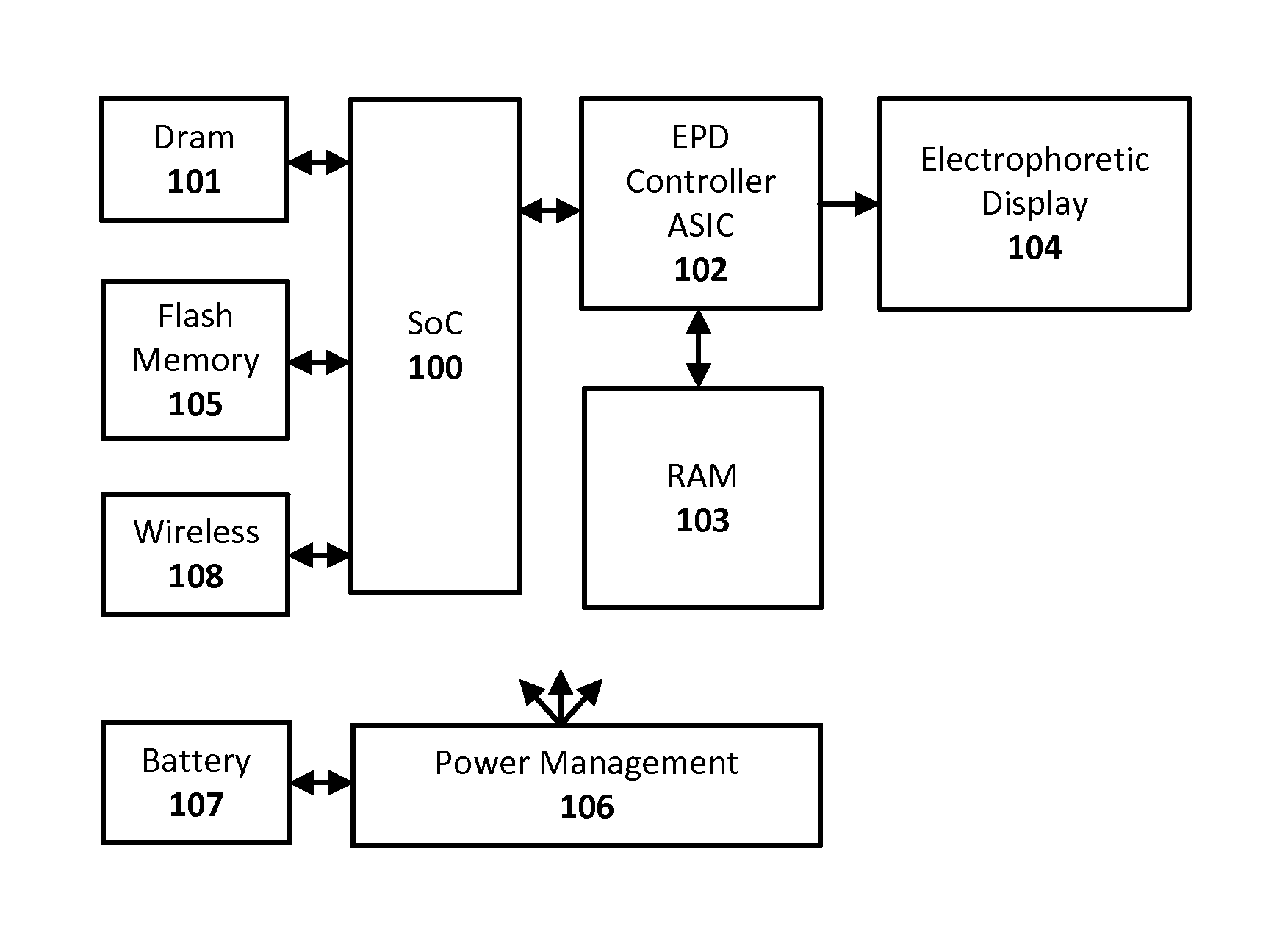
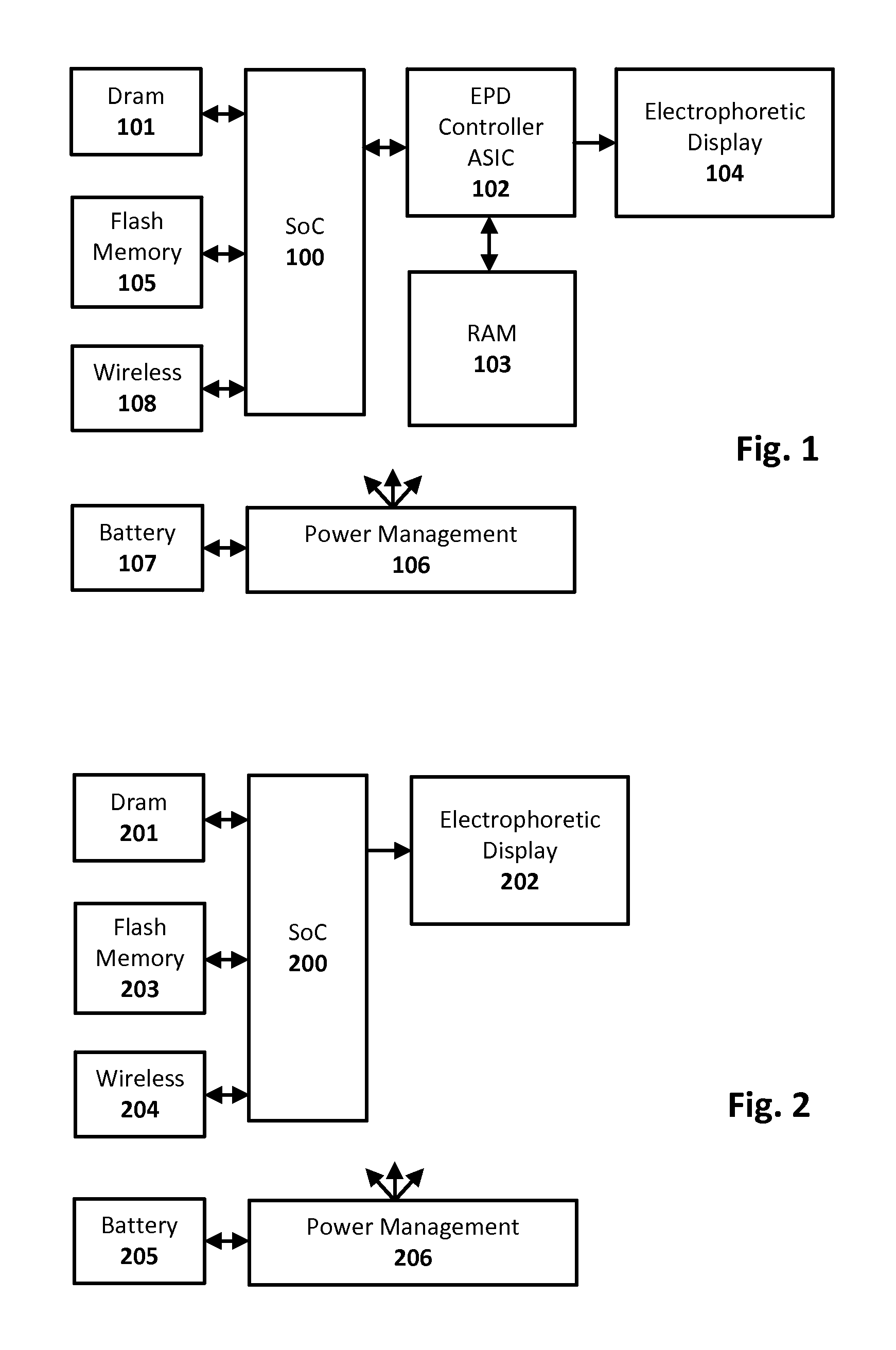
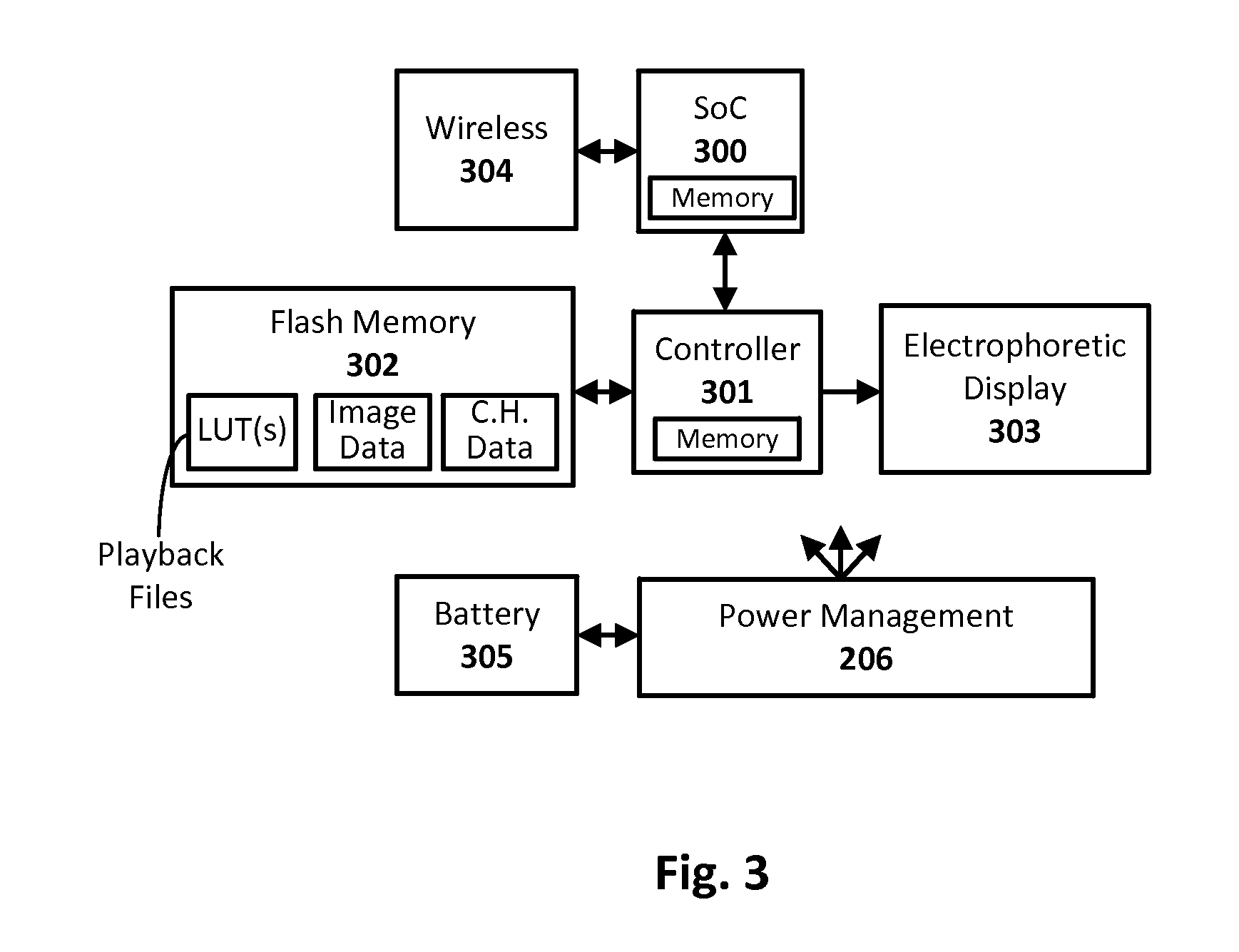
[0010]Techniques are disclosed for efficiently and quickly updating electrophoretic displays (EPD), and other such integrating displays that integrate a time-varying drive signal to change from a current optical state to a next optical state. In an embodiment, a display driver system is configured to update an EPD using a drive signal calculation phase followed by an update display phase. The calculation phase effectively decomposes the image update into a number of compactly encoded intermediate files, and the subsequent update display phase replays the calculated files repeatedly and sequentially to update the display. The compact intermediate files are representations of the drive signals needed to effect the display update and can be implemented in a number of ways. In one example case, a first image data representing the current optical state of the display for a given pixel position is combined with a second image data representing the next optical state of the display for tha...
PUM
| Property | Measurement | Unit |
|---|---|---|
| transition time | aaaaa | aaaaa |
| current optical state | aaaaa | aaaaa |
| optical state | aaaaa | aaaaa |
Abstract
Description
Claims
Application Information
 Login to View More