
Wide angle imaging lens assembly
a wide-angle imaging and lens assembly technology, applied in the field of optical lens assembly, can solve the problems of reducing the system volume and length of the optical lens assembly with the wide-angle function, and the current optical lens assembly capable of performing a wide-angle function has a disadvantage of large volume and length, so as to achieve the effect of reducing system volume and length and favorable optical performan
- Summary
- Abstract
- Description
- Claims
- Application Information
AI Technical Summary
Benefits of technology
Problems solved by technology
Method used
Image

Examples
Embodiment Construction
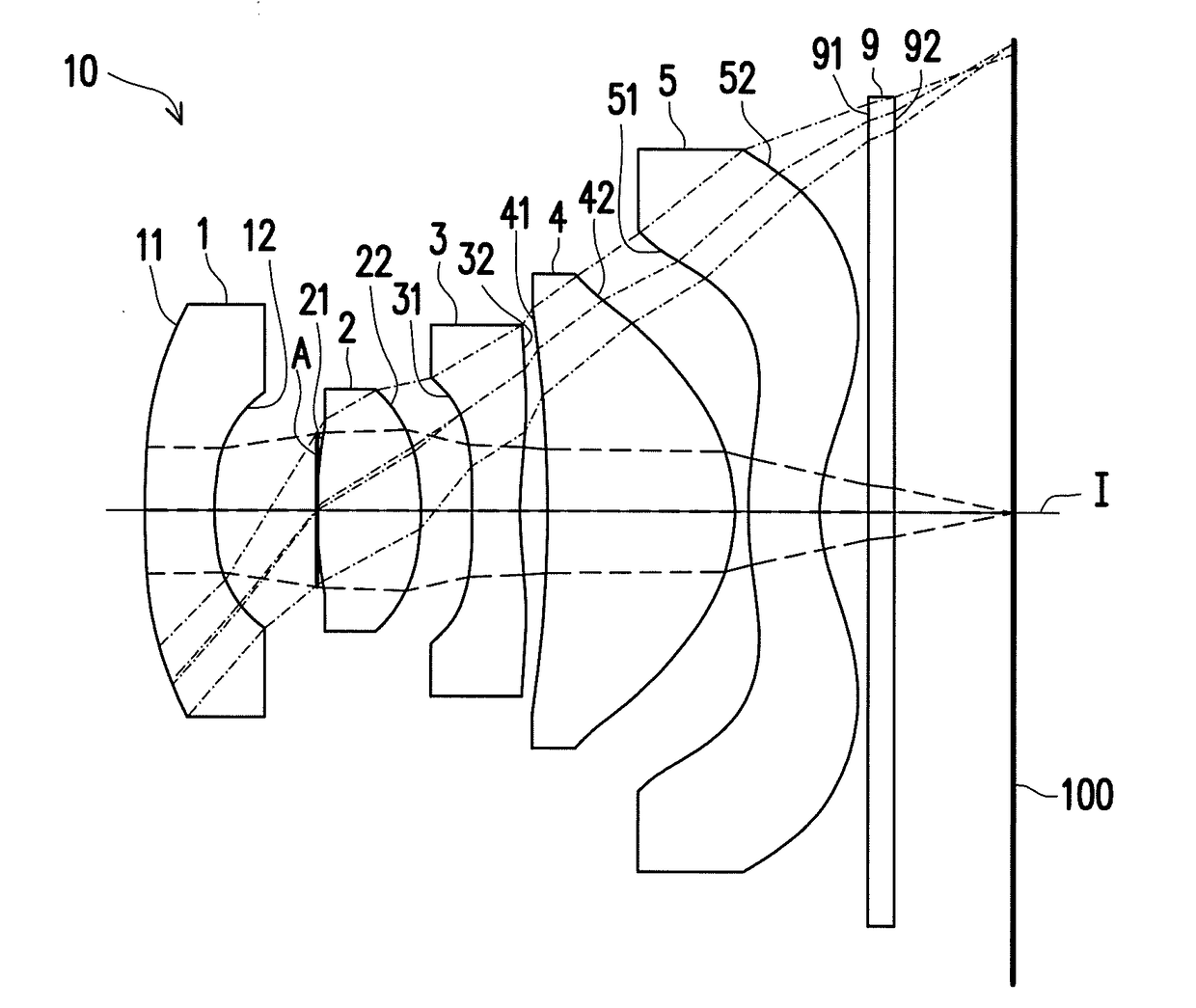
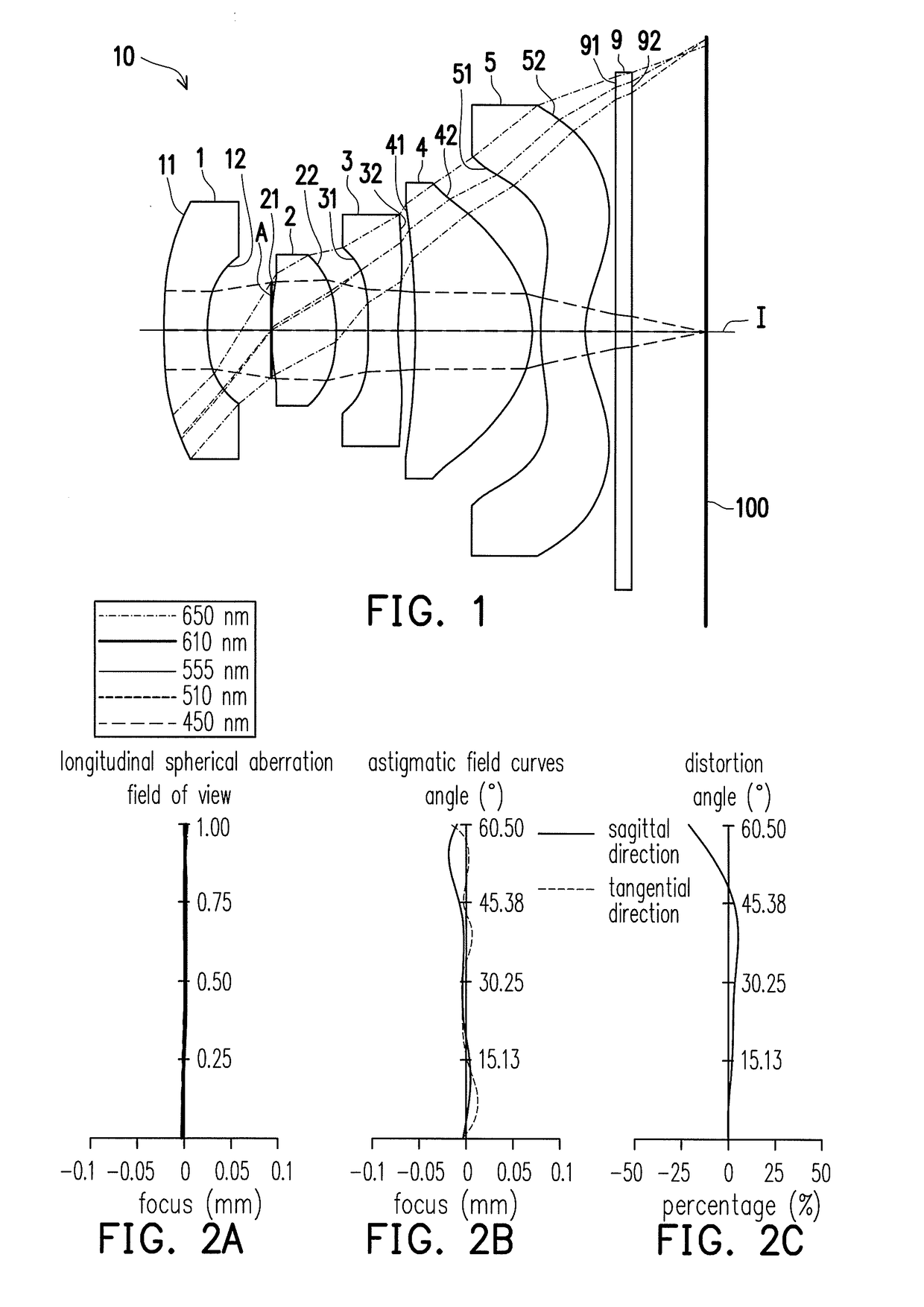
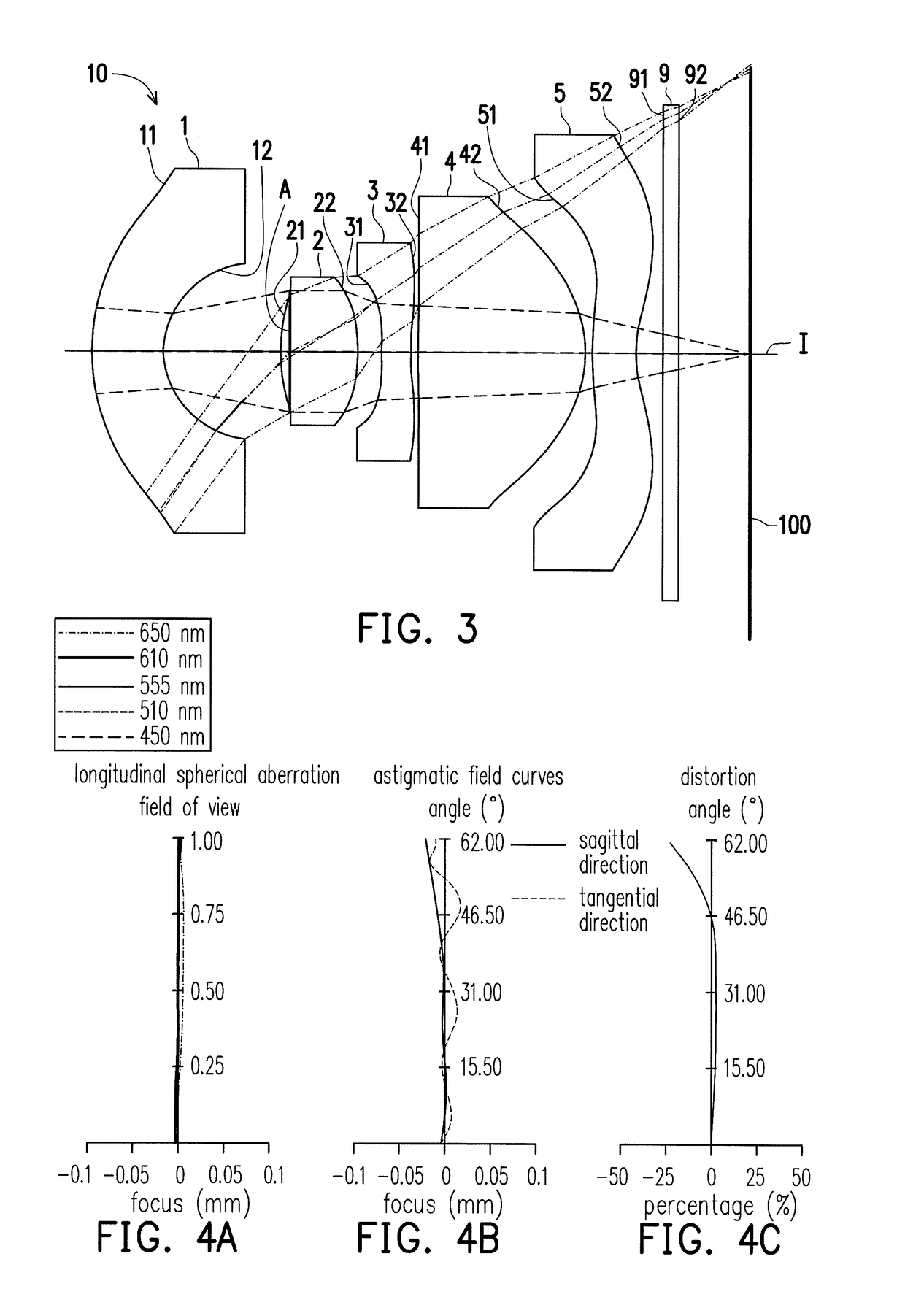
[0024]In the disclosure of this specification, “a lens element having a positive refractive power (or a negative refractive power)” means that a refractive power of the lens element on an optical axis, calculated by applying the theory of Gaussian optics, is positive (or is negative). In a wide angle imaging lens assembly, the lens elements are radially symmetrical with each other with the optical axis as an axis of symmetry. Each lens element has an object-side surface and an image-side surface opposite to the object-side surface. The object-side surface and the image-side surface are defined as a range which an imaging light passes through, wherein the imaging light includes a chief ray and a marginal ray. The object-side surface (or the image-side surface) has an area near the optical axis and a marginal area connected to and surrounding the area near the optical axis. The area near the optical axis is an area which the imaging light passes through on the optical axis. The margin...
PUM
 Login to View More
 Abstract
Description
Claims
Application Information
 Login to View More