
Method and apparatus for forming sand molds via top and bottom pneumatic sand filling perpendicular to the pattern plate
a technology of sand molds and pattern plates, applied in the field of automatic molding machines, can solve the problems of poor filling properties, sand flowability is hindered, and the hardness of the sand mold after compressing may not be uniform, so as to reduce the resistance to sand shooting, reduce maintenance costs, and simplify the structure and manufacturing process.
- Summary
- Abstract
- Description
- Claims
- Application Information
AI Technical Summary
Benefits of technology
Problems solved by technology
Method used
Image

Examples
Embodiment Construction
[0028]The present invention provides a sand casting apparatus and method for forming a sand mold about a matchplate pattern. The invention provides an upper and lower sand shooting apparatus, relative to the pattern, for forming both the cope and drag portions of the mold.
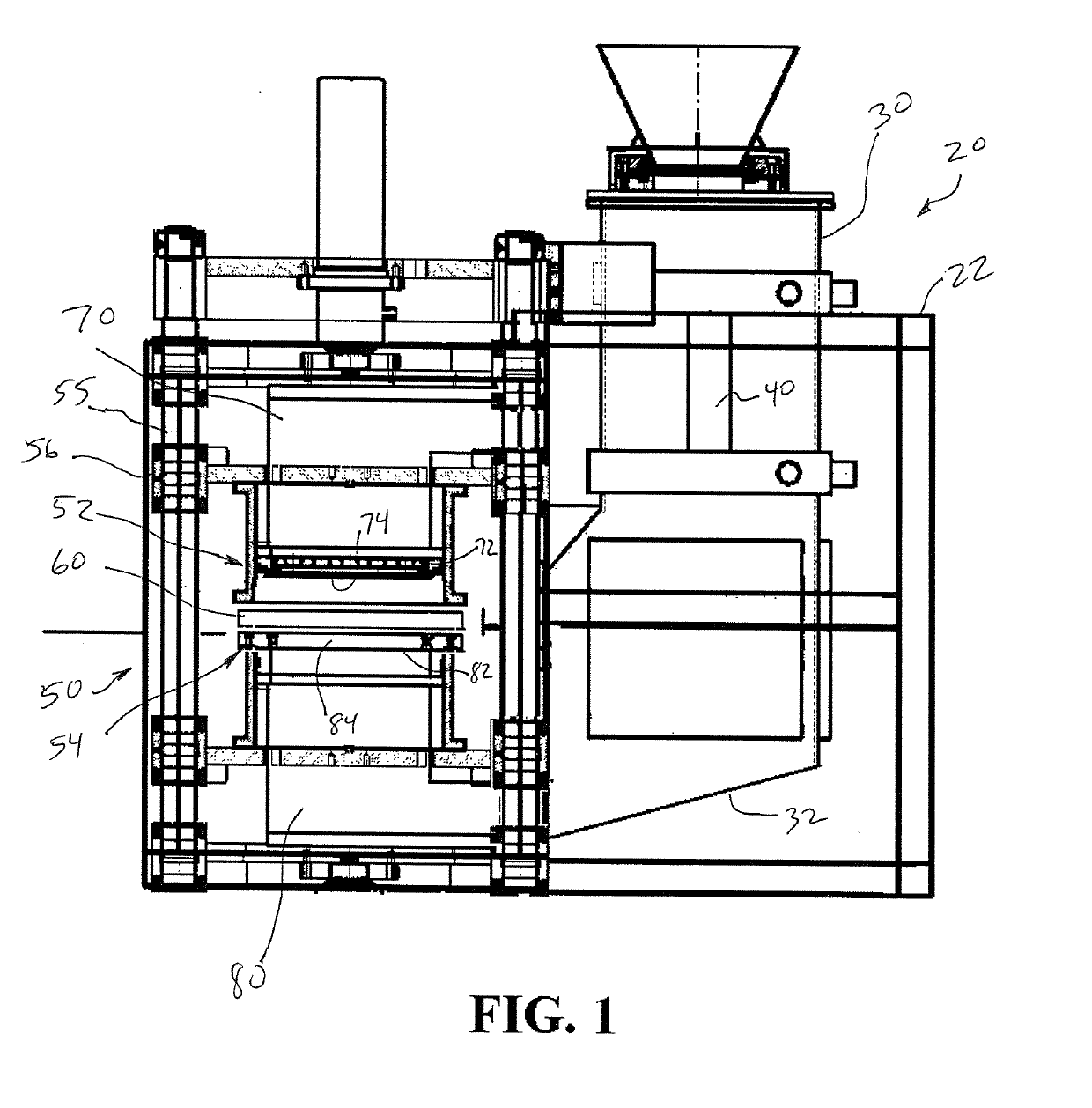
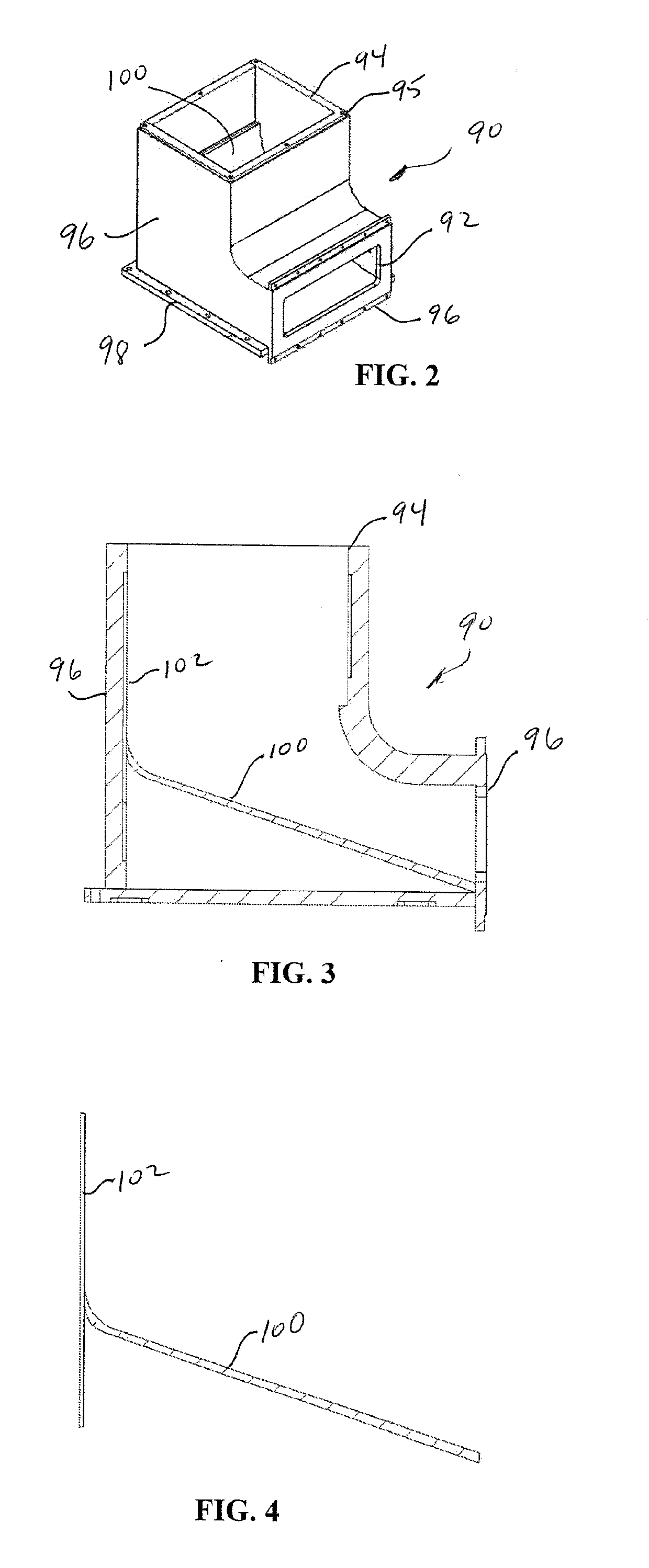
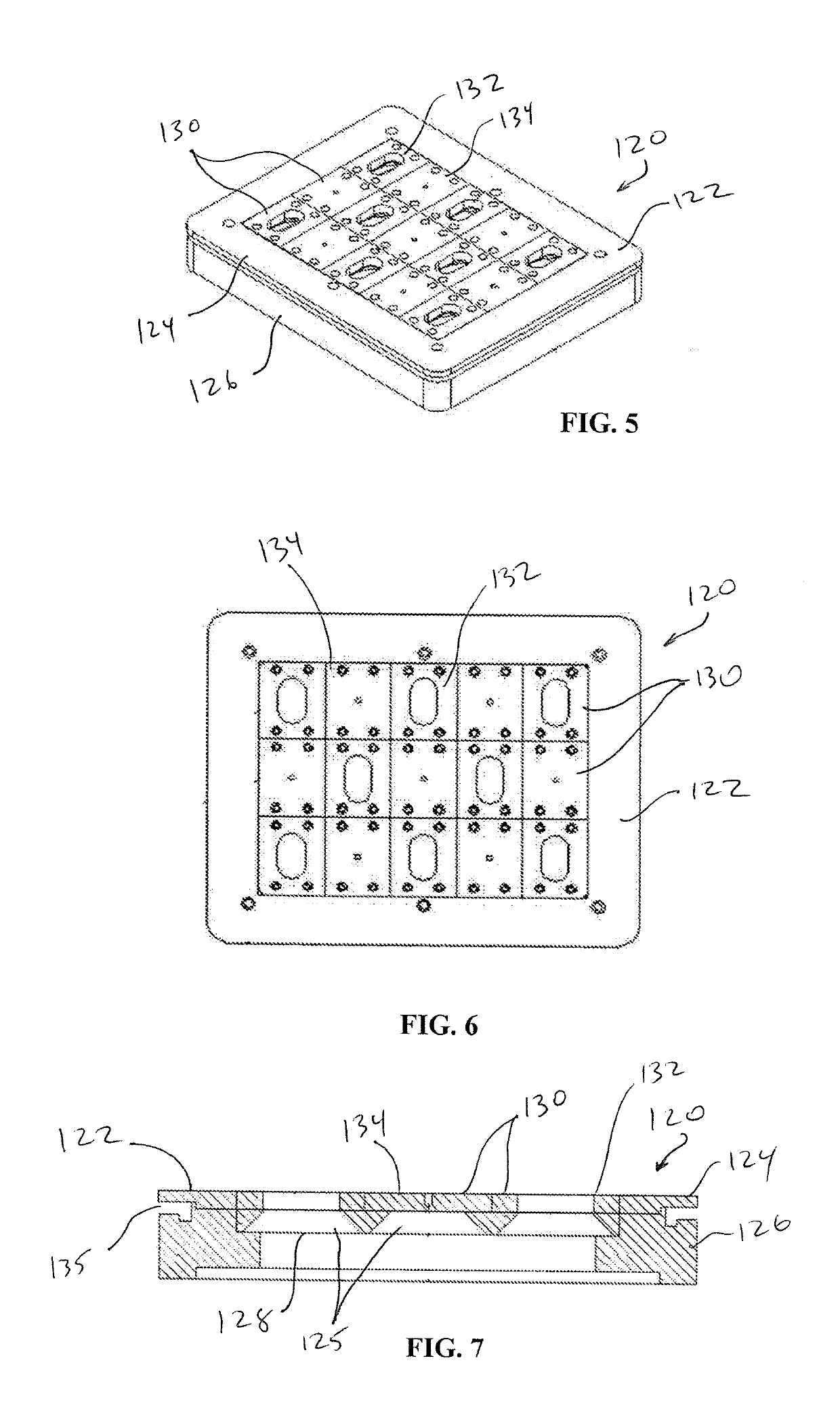
[0029]FIG. 1 generally illustrates relevant components of an automatic matchplate molding machine according to one embodiment of this invention. Several components are representatively illustrated, and other details are not shown for ease of explanation, such as components including motors, pumps, tubing / hoses, moveable arms, and cladding and lateral sand containment shielding. Machines of these types are well known to those of ordinary skill in the art and are widely used throughout the foundry industry, such that these additional components of commercial machines do not require illustration. In view of the fact that many of the details of different types of molding machines or other such machines are known and al...
PUM
 Login to View More
 Abstract
Description
Claims
Application Information
 Login to View More