

Arthropod trapping apparatus and method
a technology of trapping apparatus and trapping method, which is applied in the field of arthropod traps, can solve the problems of large crop loss or excessive use of pesticides, inaccurate assessment of population densities, and large crop loss
- Summary
- Abstract
- Description
- Claims
- Application Information
AI Technical Summary
Benefits of technology
Problems solved by technology
Method used
Image

Examples
Embodiment Construction
)
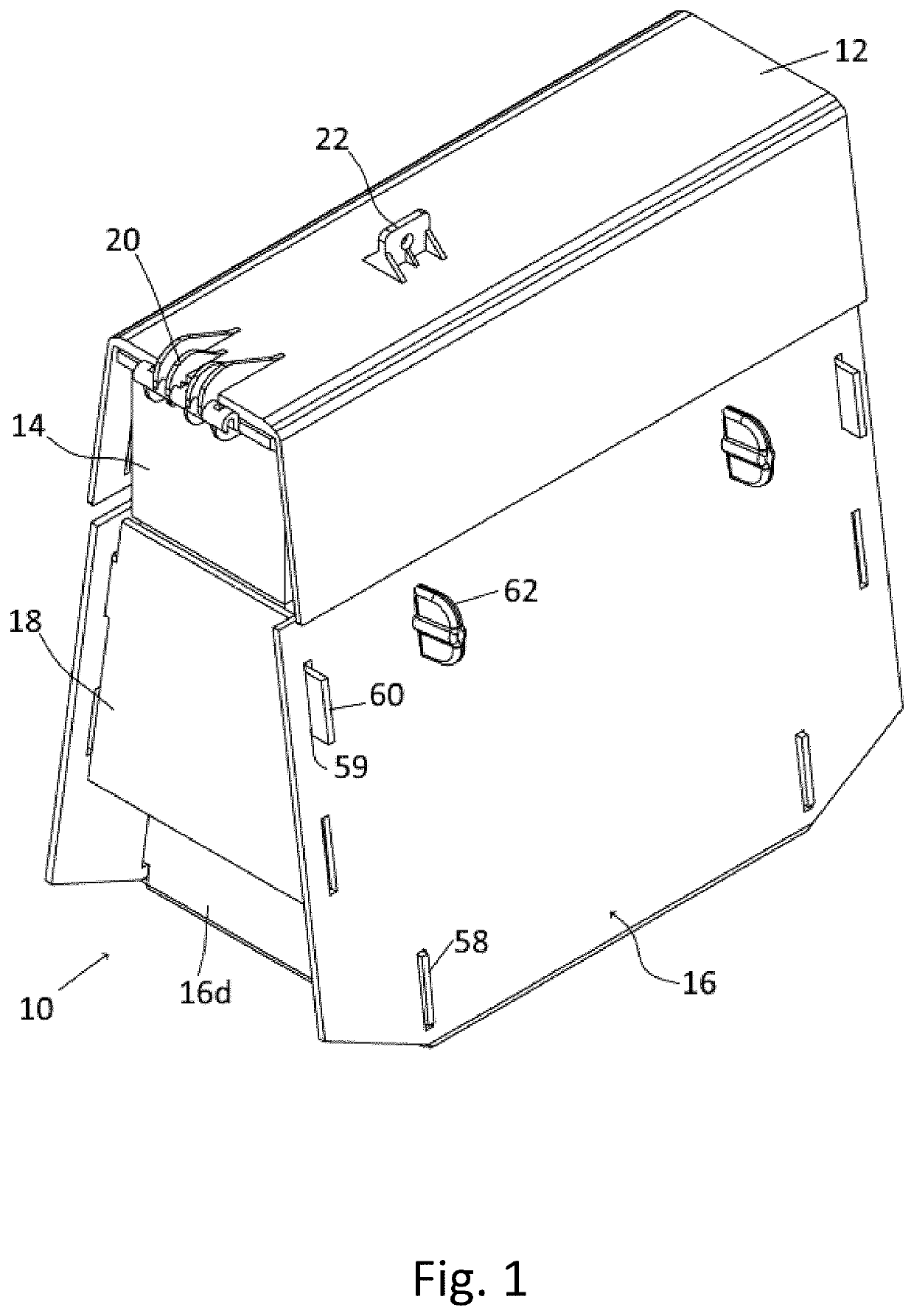
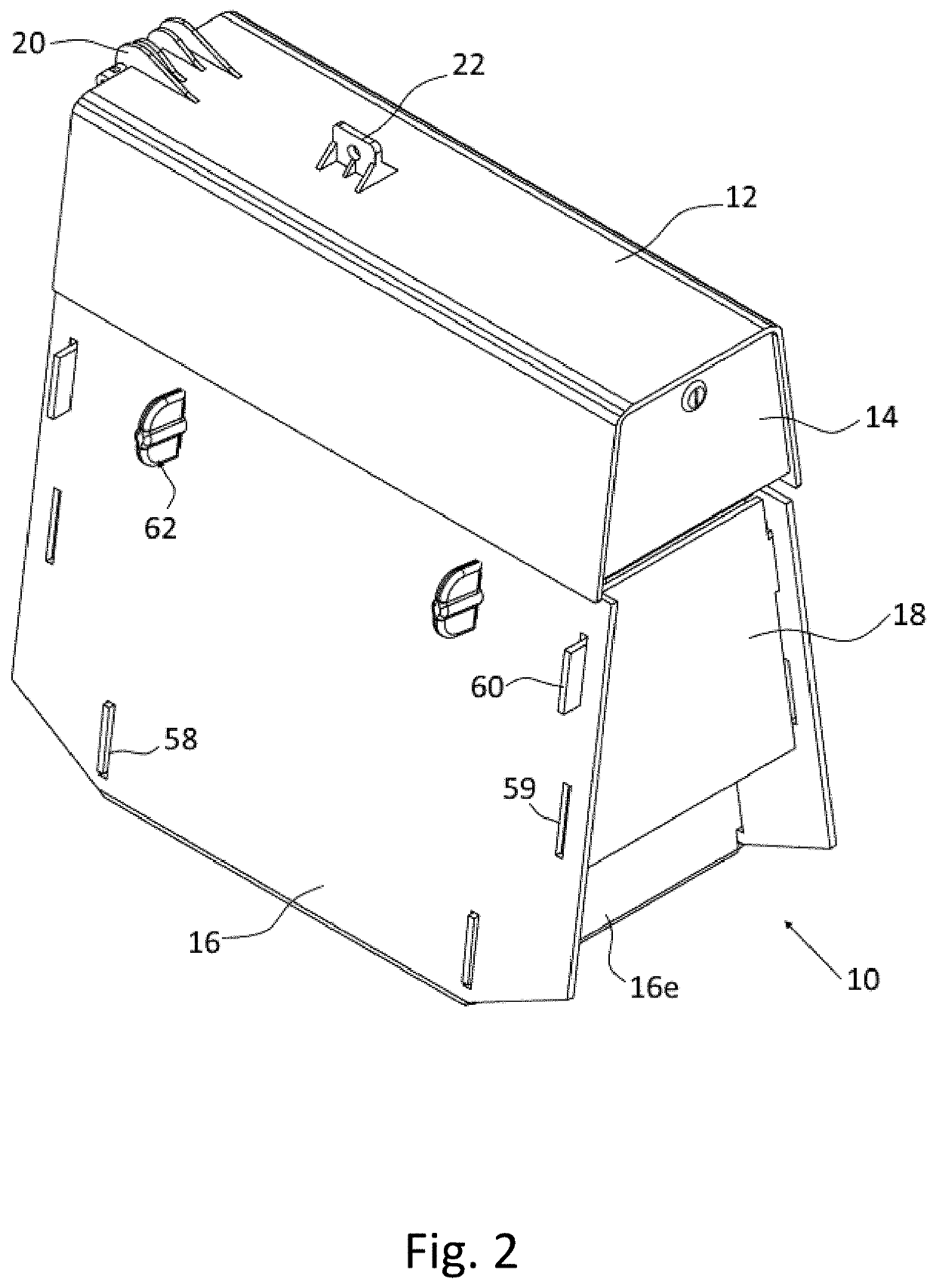
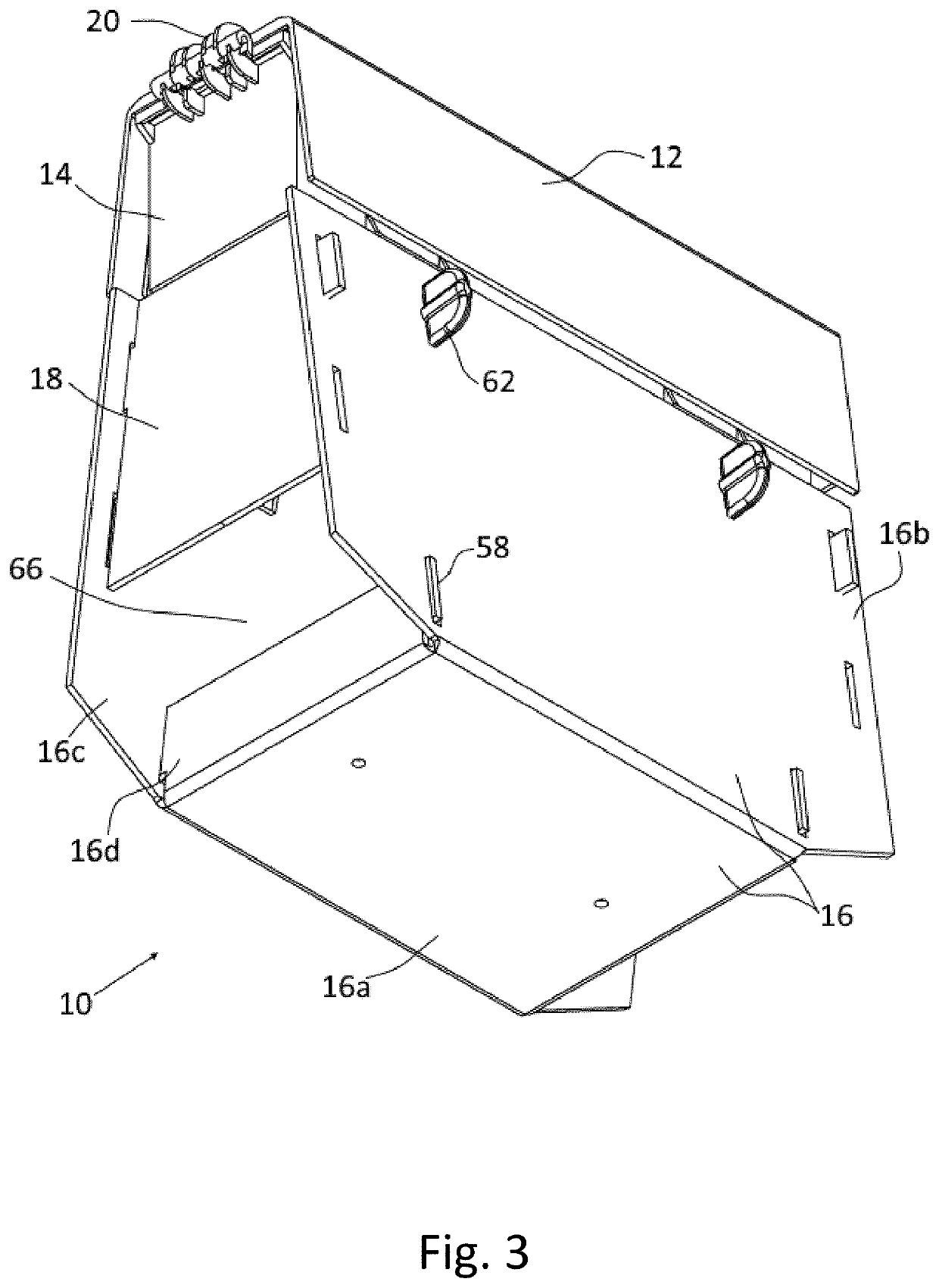
[0046]FIGS. 1-4 are the exterior views of an arthropod trap 10 according to the preferred embodiment. The trap comprises generally a housing comprising an upper housing 14 and its cover 12, an enclosure body 16 and shield side plates 18. Hinge fastening means 20 are provided to attach the cover 12 to the upper housing 14. The top surface of the cover 12 comprises an attachment means such as a lug, a hook or a loop 22, which allows the trap 10 to be hung, for example from a branch of a shrub or tree.
[0047]Referring to FIG. 8, the enclosure body 16 of the trap provides a cavity 24 into which insects and other arthropods may fly. The cavity also includes a sticky media board 26 as a trapping media intended to trap the arthropods. The board 26 is installed horizontally so as to be imaged by a camera 28 that is mounted on an optics platform 30 in the upper housing 14 part of the trap. The trap further includes a power unit compartment 32 (containing batteries 33 in the preferred embodim...
PUM
 Login to View More
 Abstract
Description
Claims
Application Information
 Login to View More