
Printer calibration method and apparatus therefor
a printing and calibration method technology, applied in the field of printing calibration methods and apparatuses therefor, can solve the problems of insufficient conventional calibration methods, insufficient magenta coloring layer thermal sensitivity, and inability to reproduce the grain properly
- Summary
- Abstract
- Description
- Claims
- Application Information
AI Technical Summary
Problems solved by technology
Method used
Image

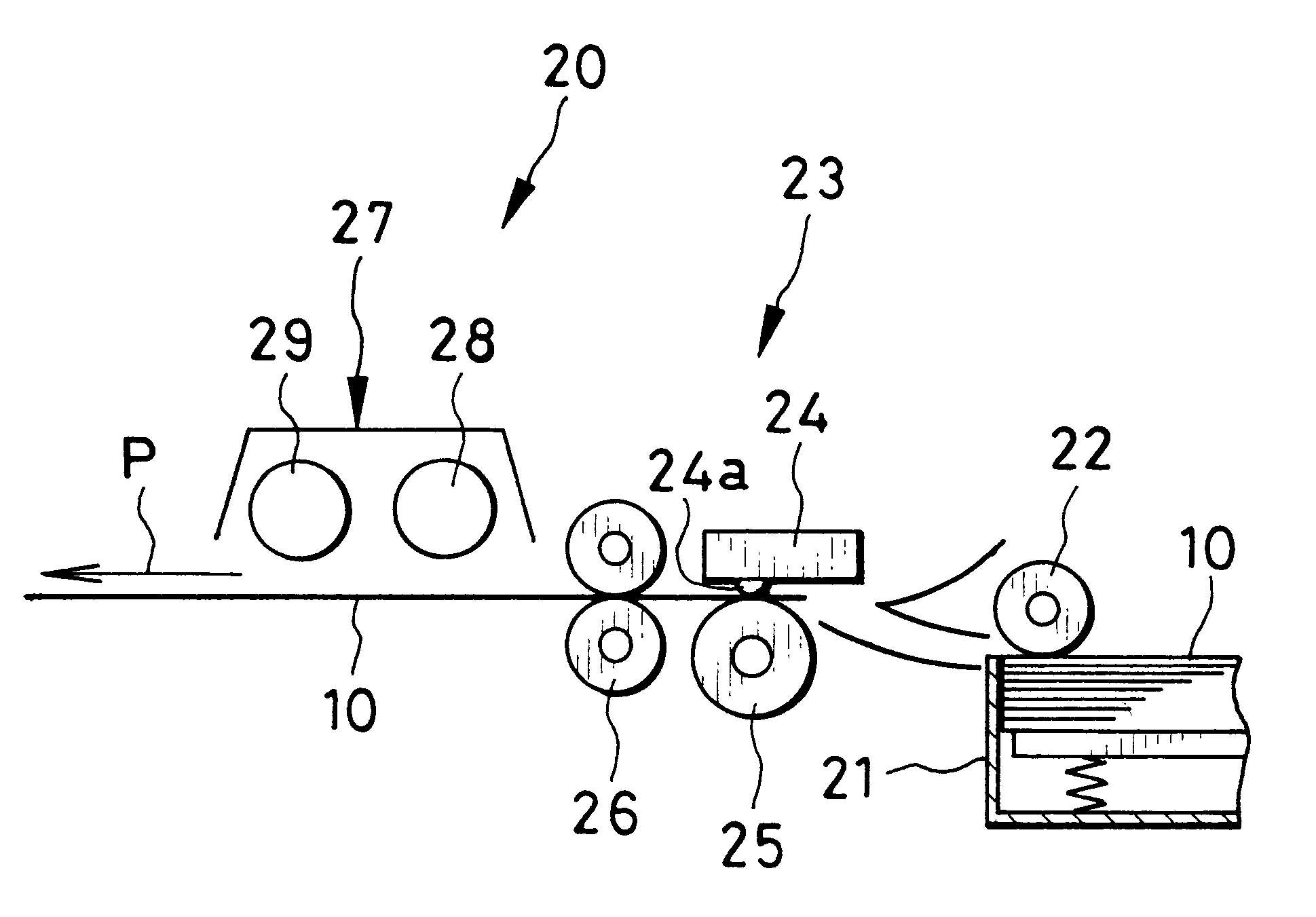
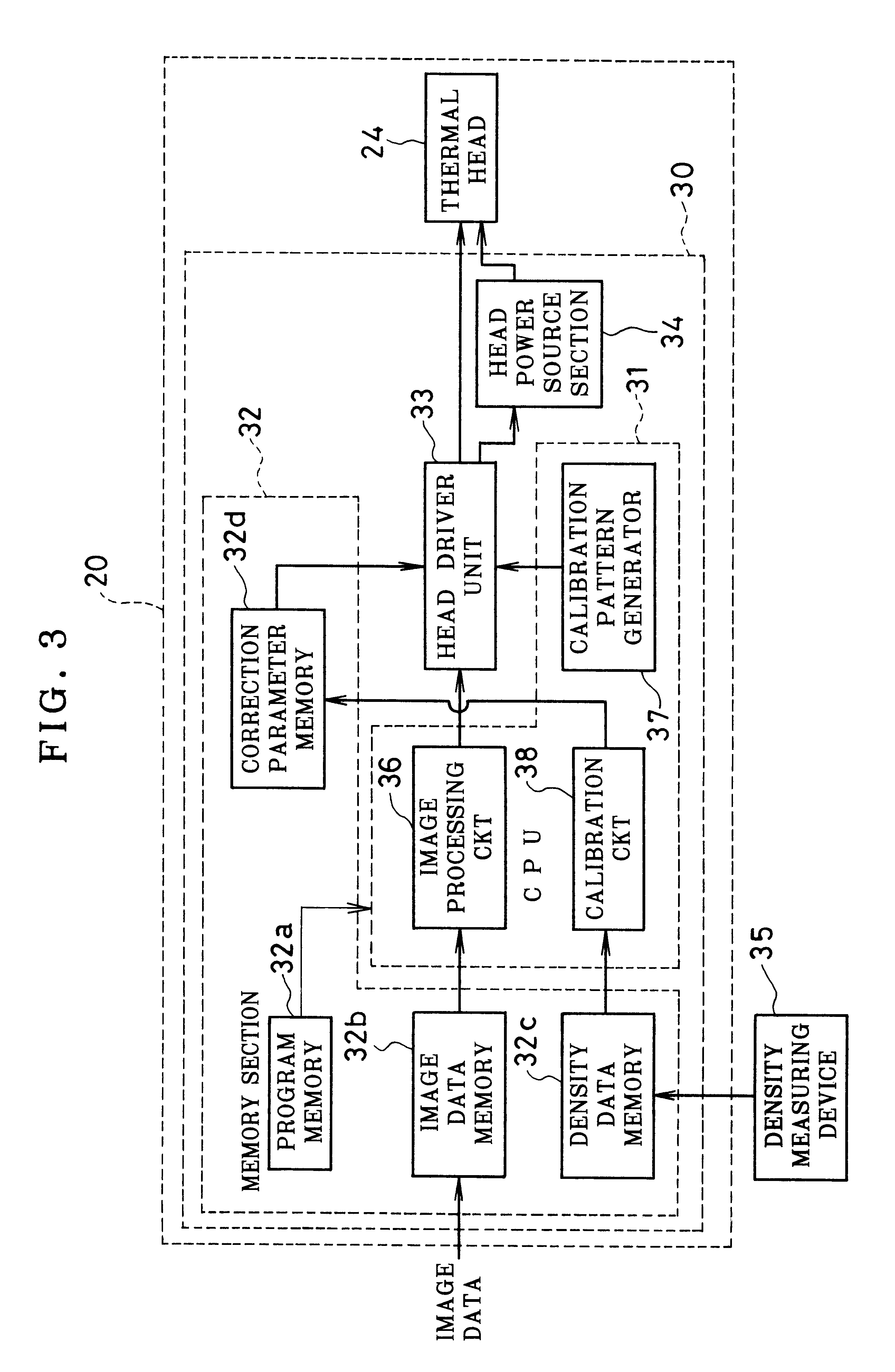
Examples
Embodiment Construction
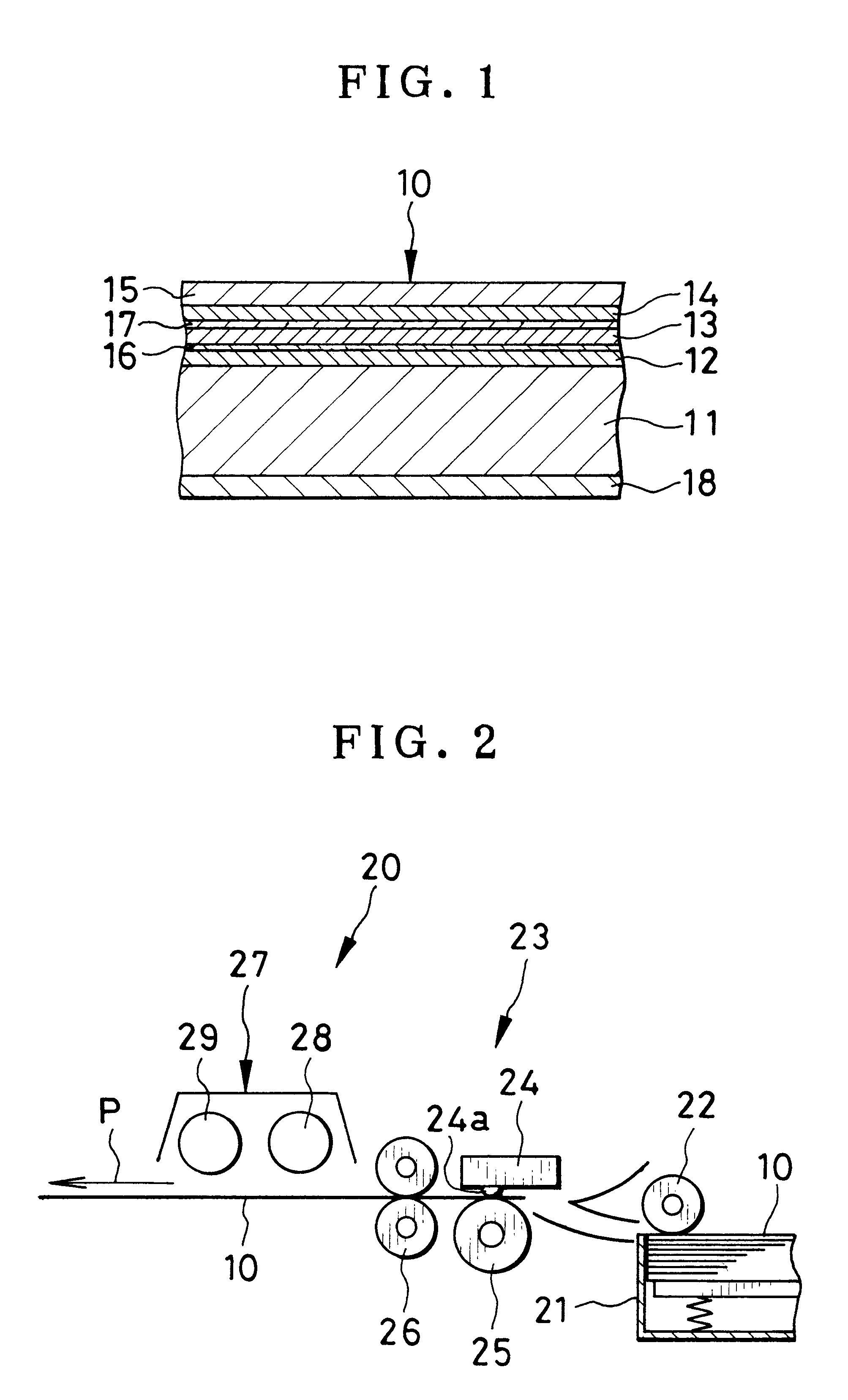
In FIG. 1, a thermosensitive color recording paper 10, hereinafter called simply a recording paper 10, has a layered construction consisting of a base material 11, cyan, magenta and yellow thermosensitive coloring layers 12, 13 and 14, and a protective layer 15, which are formed in this order toward an obverse surface of the recording paper 10. The protective layer 15 is for protecting the coloring layers 12 to 14, and is made of a transparent plastic whose main component is PVA (polyvinyl alcohol).
Thermal sensitivities of the coloring layers 12 to 14 depend on the position from the obverse surface. The cyan coloring layer 12 has the lowest thermal sensitivity, whereas the yellow coloring layer 14 has the highest thermal sensitivity. The position of these coloring layers 12 to 14 may be changeable. Intermediate layers 16 and 17 are formed in between the coloring layers 12 to 14, to control the thermal sensitivities of the coloring layers 12 to 14. Also a backing layer 18 is formed o...
PUM
 Login to View More
 Abstract
Description
Claims
Application Information
 Login to View More