
Apparatus for precision edge refinement of metallic cutting blades
a technology of precision edge and blade, which is applied in the direction of edge grinding machines, other manufacturing equipment/tools, manufacturing tools, etc., can solve the problems of excessively weak or fragile terminus, limited edge perfection, and edge geometry, and achieve the effect of reducing premature failure of edges
- Summary
- Abstract
- Description
- Claims
- Application Information
AI Technical Summary
Benefits of technology
Problems solved by technology
Method used
Image

Examples
Embodiment Construction
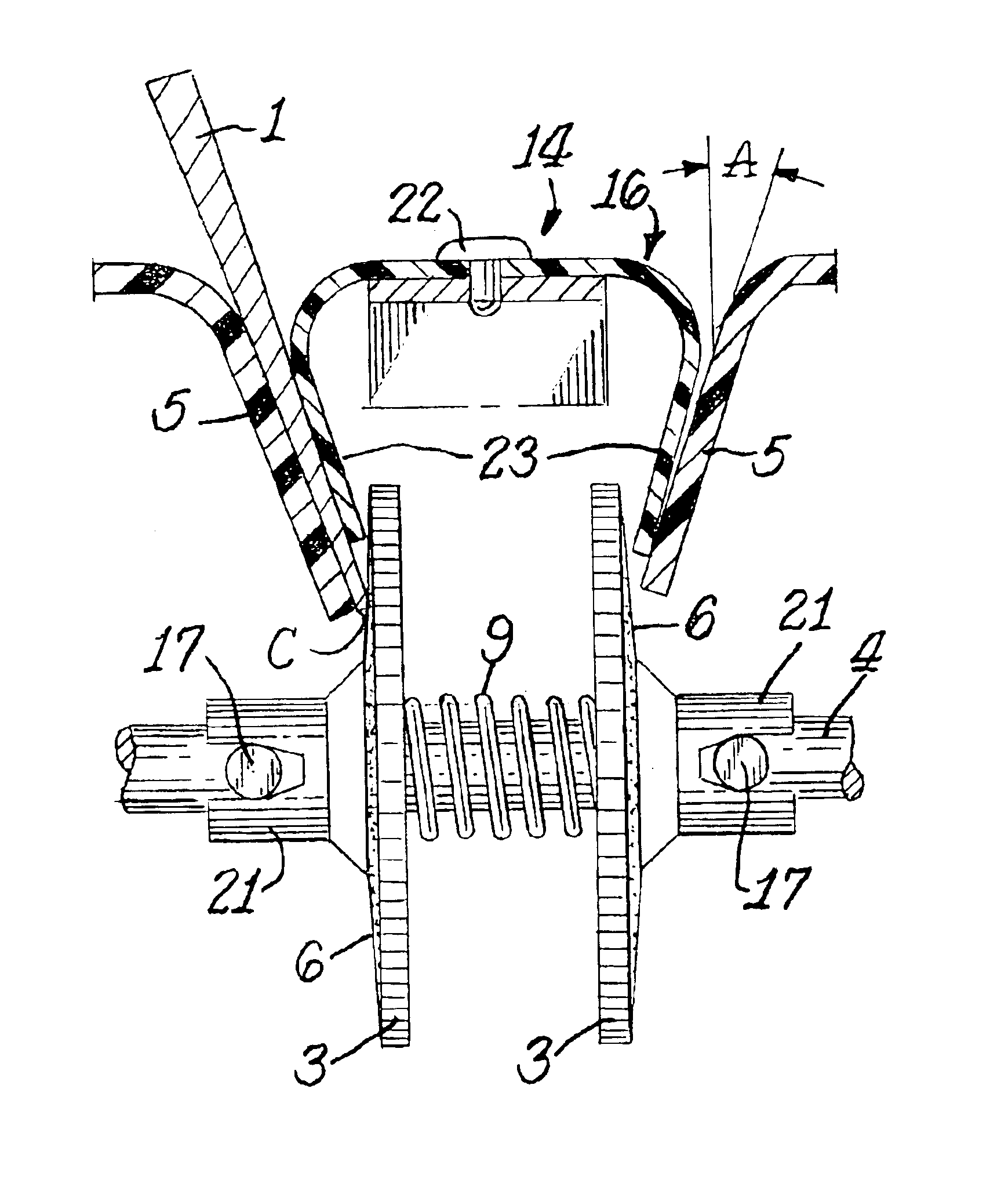
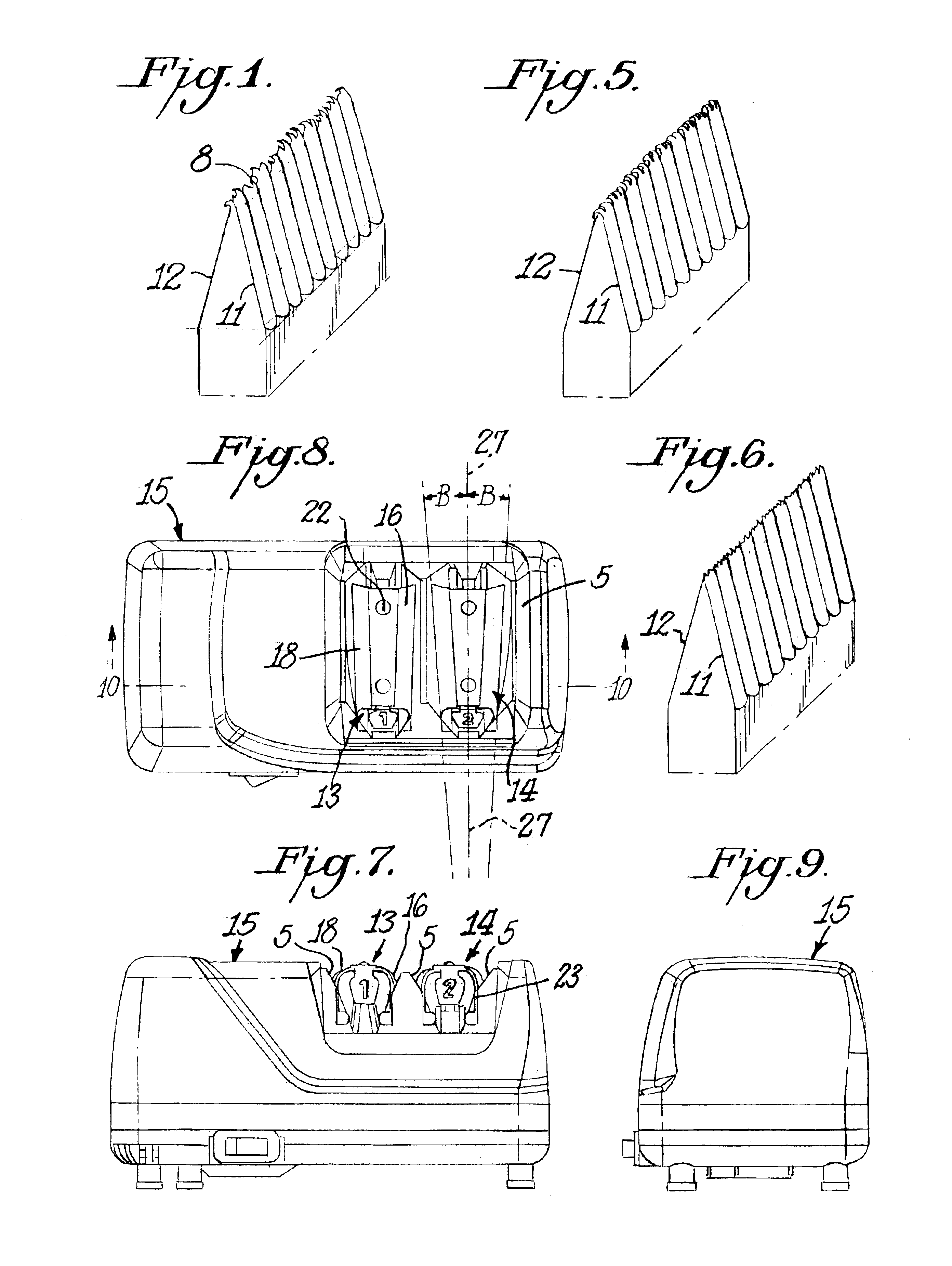
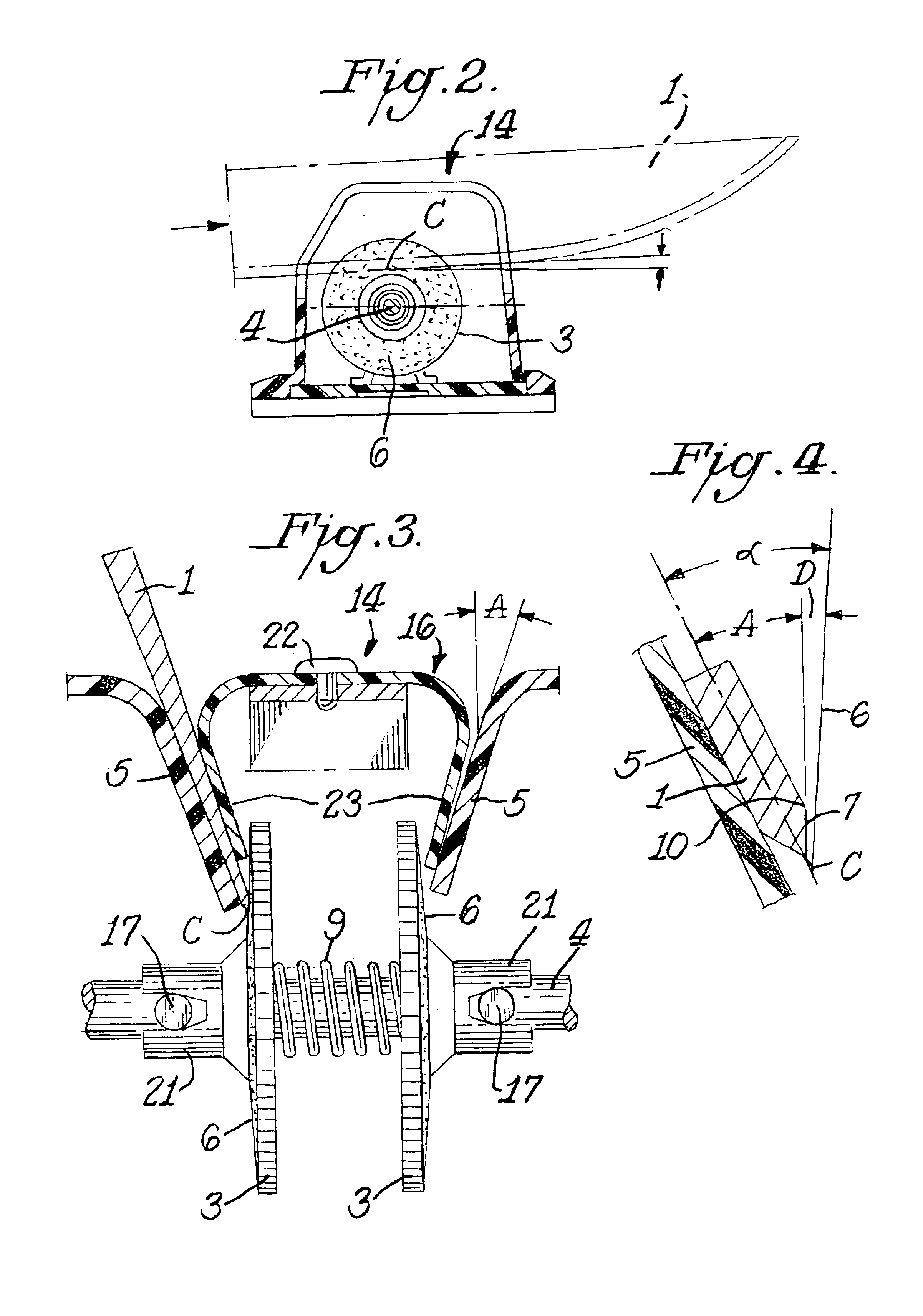
The precision apparatus described here is designed to reshape the cutting edge of metallic knives and blades that have been sharpened first by conventional abrasive means. Abrasive means either powered or manual can create a metal edge by using abrasive materials to cut, skive, or machine metal off of adjacent metal surfaces so that they intersect along a line that constitutes the edge. The abraded surfaces adjacent to the edge, commonly referred to as facets, are formed along an extended relatively thin piece of metal. Each facet is commonly formed on one side of the metal blade at an angle of about 15 to 25 degrees from the flat surface of the blade face. The facets therefore commonly meet at the edge at a total included angle of 30 to 50 degrees, but occasionally edges of smaller or larger angles are encountered. There are also blades with a ground facet on one side of the blade that intersect the opposite face of the blade to form an edge.
While facets and edges could be formed b...
PUM
| Property | Measurement | Unit |
|---|---|---|
| Ra | aaaaa | aaaaa |
| angle | aaaaa | aaaaa |
| Angle | aaaaa | aaaaa |
Abstract
Description
Claims
Application Information
 Login to View More