
Method and system for supplying amino acids or chemical derivatives in liquid form to ruminant livestock
- Summary
- Abstract
- Description
- Claims
- Application Information
AI Technical Summary
Benefits of technology
Problems solved by technology
Method used
Image

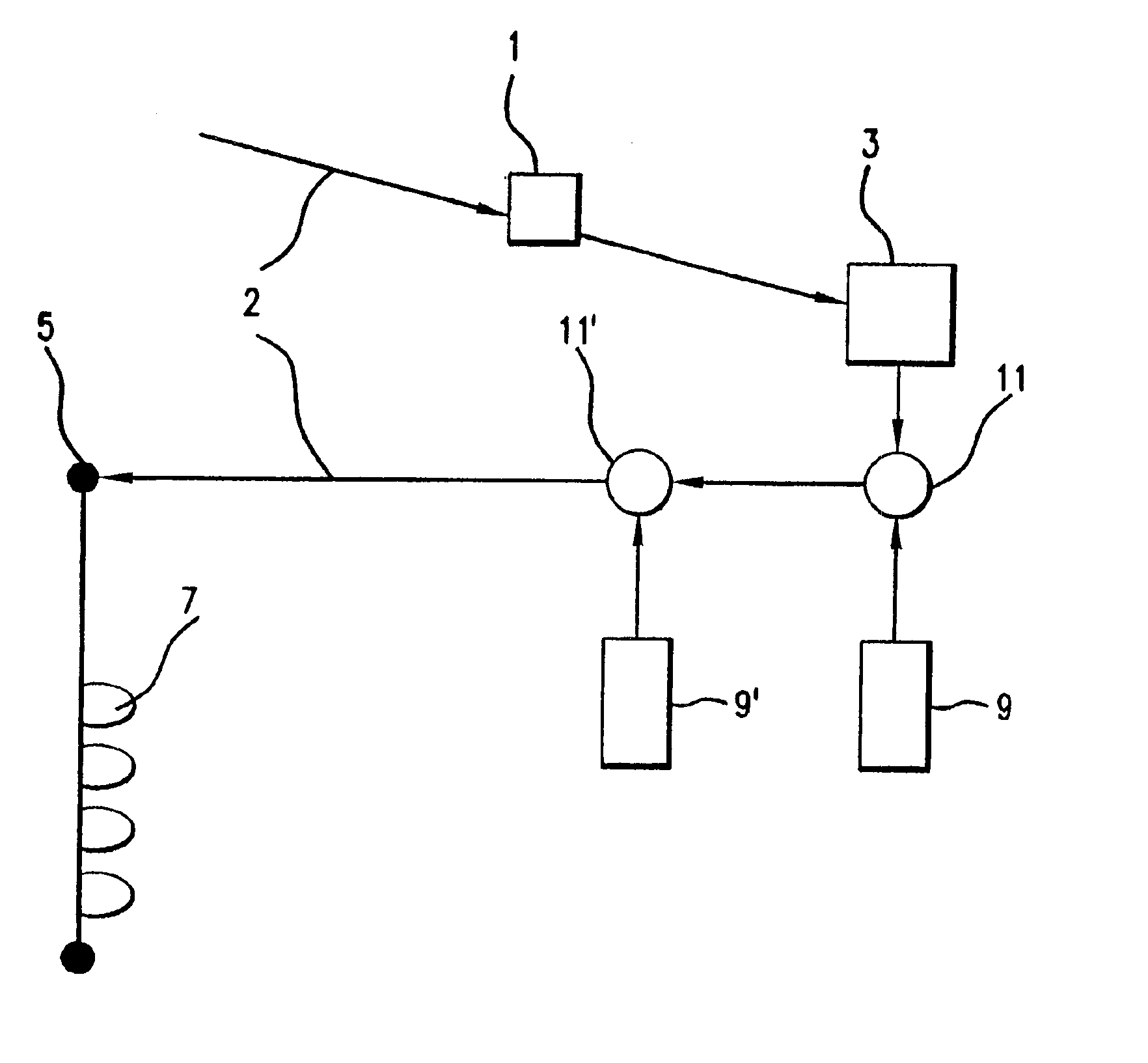
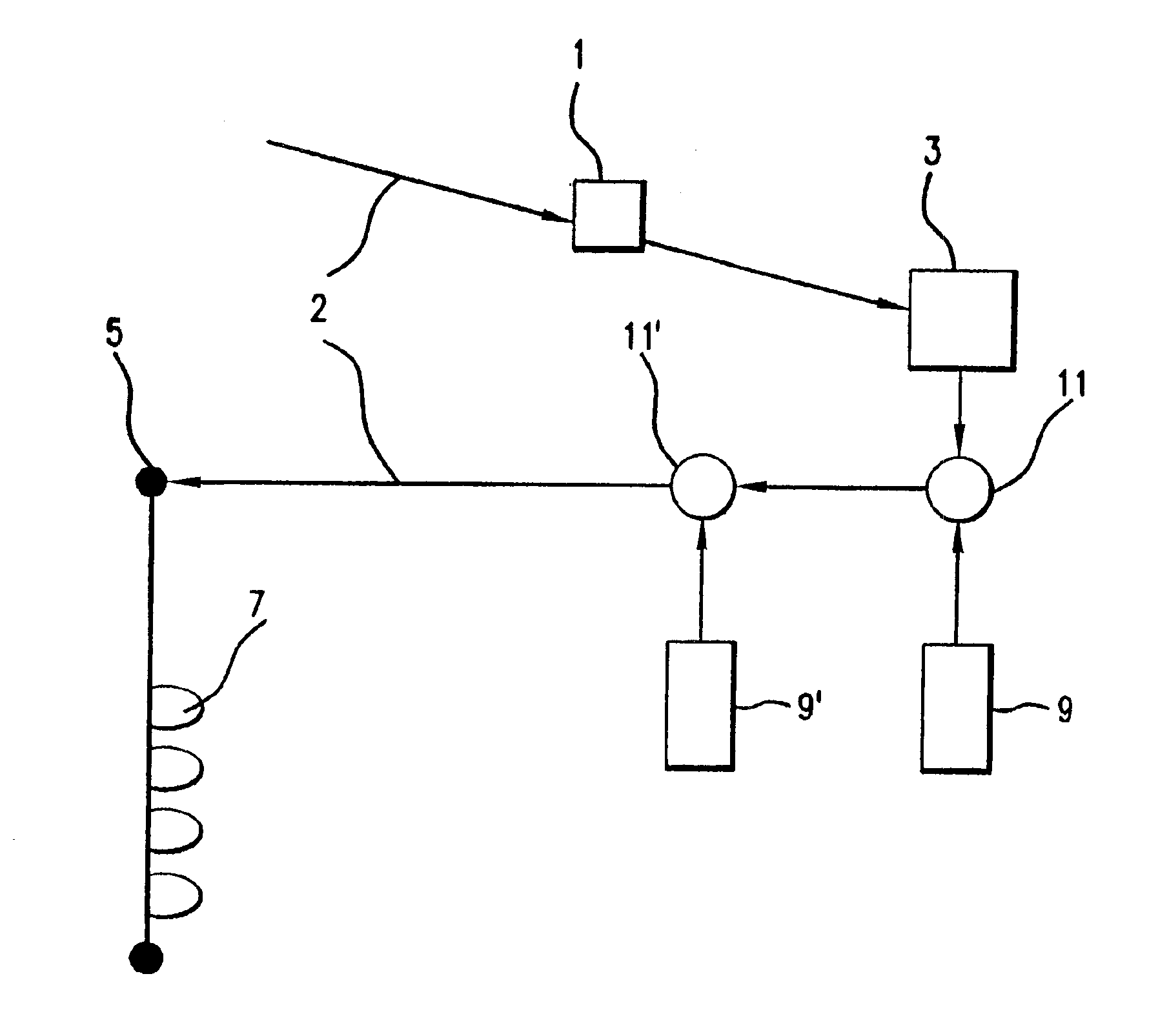
Examples
example 1
The following study, performed using liquid lysine supplied in a 60-gram amino acid dose in a liquid drench to two bovines, gave the following response curves in the plasma level of the lysine, which is an index of its absorption by the animals, and illustrates that the esophageal muscle reflex is active:
Sampling TimeCow 1, plasma lysineCow 2, plasma lysine(minutes)(mg / 100 ml)(mg / 100 ml) 011.073 801.131.0791601.2431.3652401.6132.2453601.7272.4224201.752.4151481.971.9995401.9281.7006001.541.422 24 hours1.441.200
example 2
The following is an example of a calculation for supplying the proper amount of liquid products to ruminant livestock. This calculation can be easily executed by special, simple computerized support, which may be furnished as a complement to the system of the invention.Mean amino acid bioavailability: 20%Mean bovine water consumption: 62.5 L / head / dayNutritional lysine requirements: 20 g / head / dayNutritional methionine requirements: 7 g / head / dayCommercial liquid lysine: 50% amino acid titerCommercial liquid methionine: 88% hydroxy analog amino acid titer
LysineMethionineLiters of H2O drunk / cow / day62.562.5Bioavailable amino acid20grams7grequirementGrams to be supplied based on100g35g20% bioavailability (k = 5)Grams to be supplied based on200g (50%)40g (88%)commercial product concentration(x)Grams of amino acid required per3.20.64liter of water (x: 62.5)Percentage to be titered on the0.32%0.064%equipment mark
example 3
In this example, 24 milking Holstein cows (8 primiparous and 16 multiparous) were used (Table 1). Animals were allotted to four treatment groups (6 animals each group) in a Latin square design and treated according to Table 2.
Each period of the Latin square had an adjustment period of 7 days (base diet) and a treatment period of 14 days (base diet plus amino acid supplementation for treatments T2, T3 and T4). Liquid amino acids were dosed into the drinking water (treatment T3) using individual volumetric pumps to avoid mixing of undiluted products. Tables 3-7 report the base diet and feed composition.
Blood and milk samples were collected during the adjustment and experimental periods according to Table 8. Blood samples were collected before morning meal, then centrifuged and plasma was collected for lysine and methionine determination. Milk samples were collected in two consecutive milkings from all cows using a lactometer, refrigerated at 4° C. and analyzed for fat, protein and lac...
PUM
 Login to View More
 Abstract
Description
Claims
Application Information
 Login to View More