Object tracking

a technology of object tracking and tracking device, applied in the direction of instruments, electric signalling details, mechanical actuation of burglar alarms, etc., can solve the problems of signal collision potential and need a separate transceiver
US6989741B2Inactive Publication Date: 2006-01-24FORWARD THINKING TRACKING LLC

Patent Information

Authority / Receiving Office
US · United States
Current Assignee / Owner
FORWARD THINKING TRACKING LLC
Publication Date
2006-01-24
Estimated Expiration
Not applicable · inactive patent

Smart Images

  • Figure 1
    Figure 1
  • Figure 2
    Figure 2
  • Figure 3
    Figure 3
Patent Text Reader

Abstract

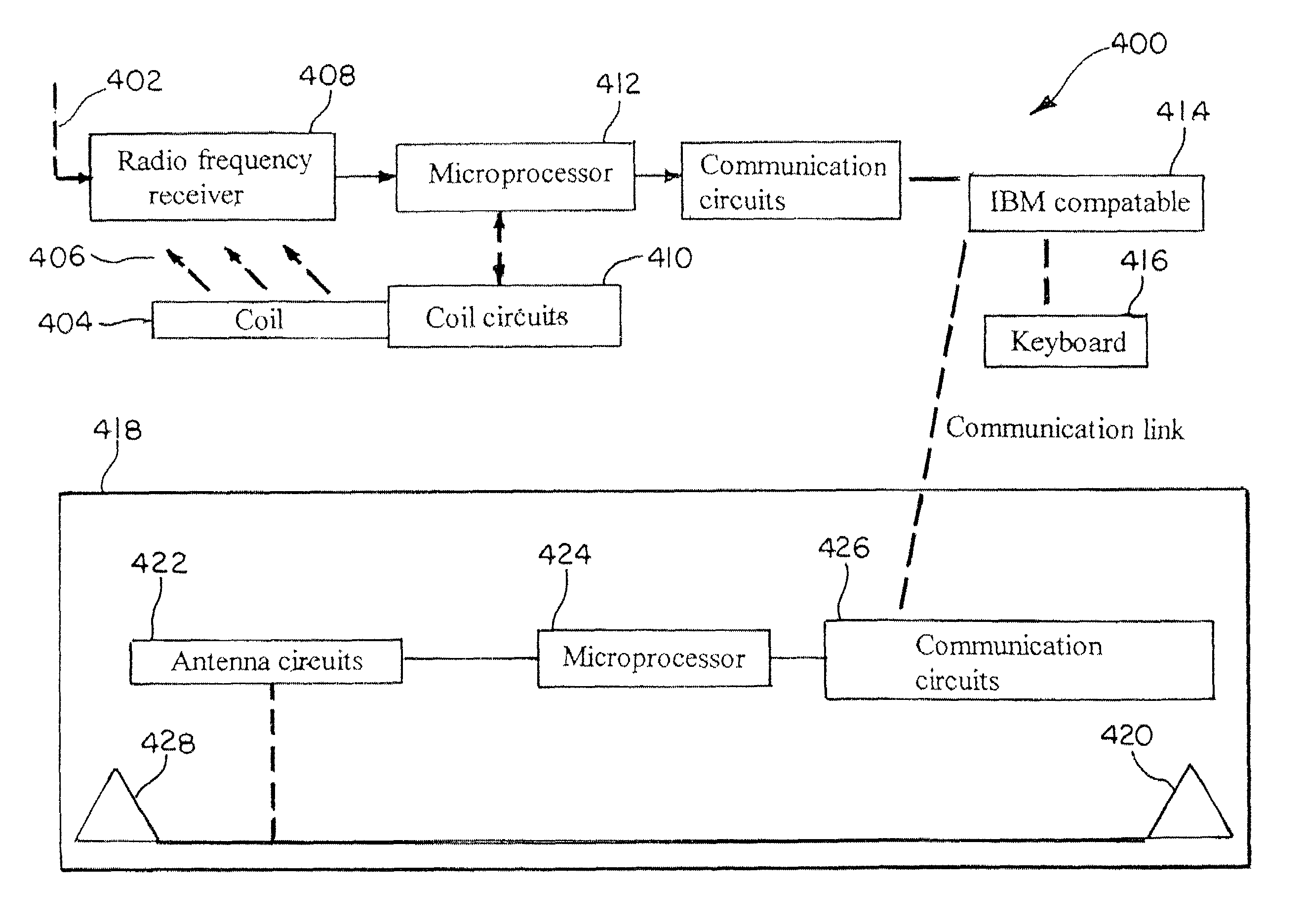
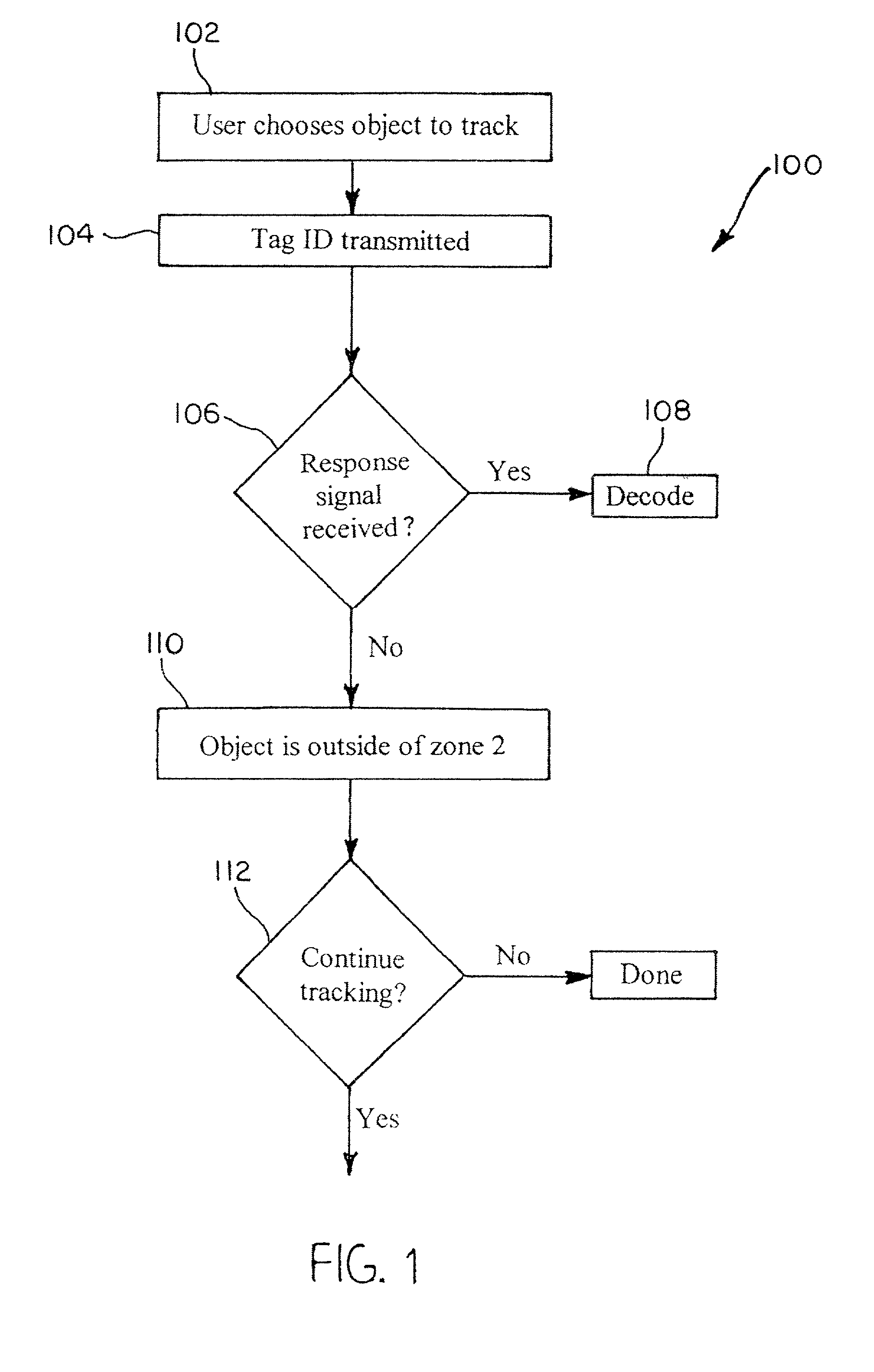
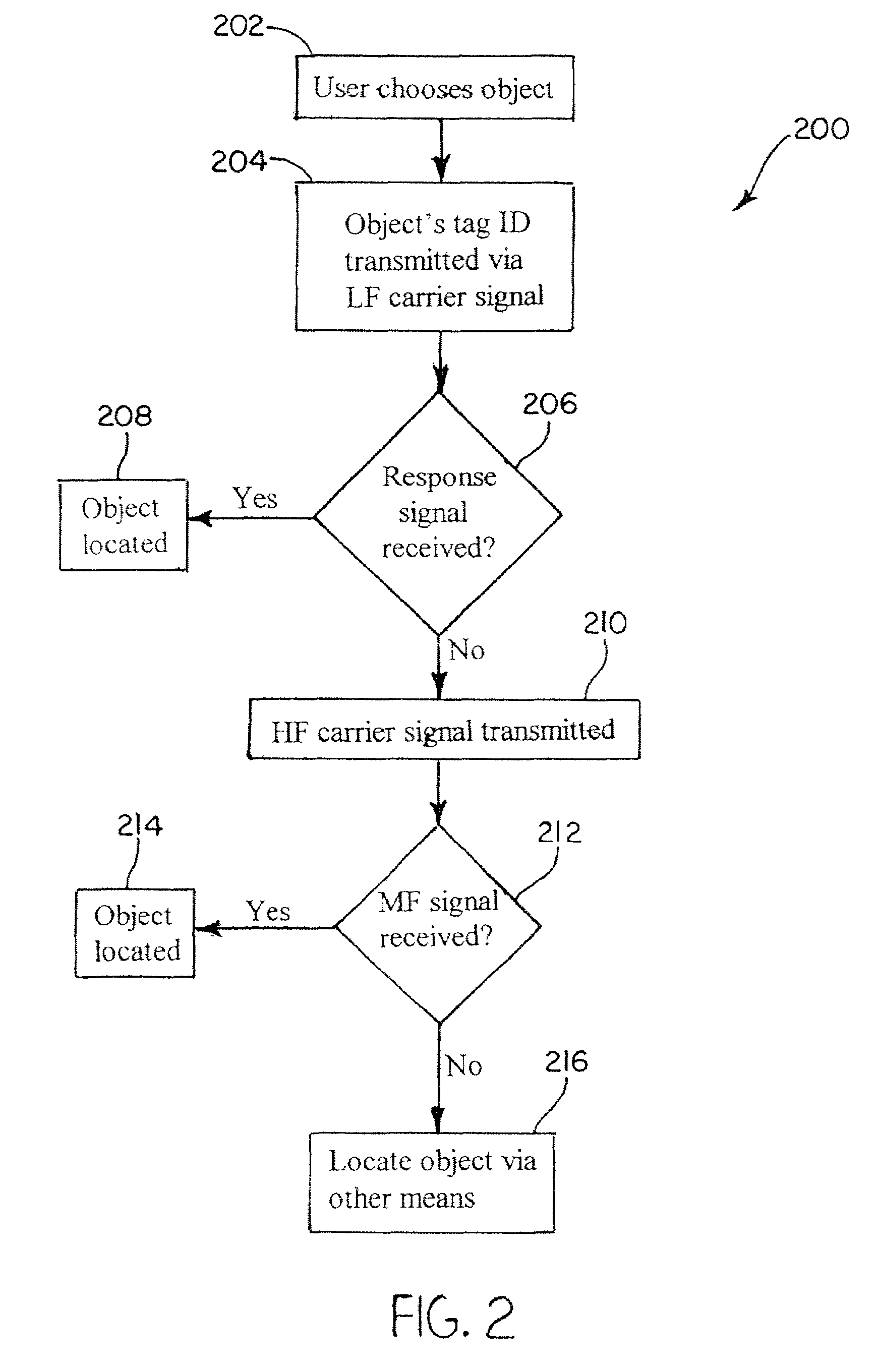
Methods and systems for tracking objects. Systems of the present invention include a base station capable of transmitting and receiving signals at multiple frequencies. Each object to be tracked has attached to it what for the purpose of the present specification is referred to as an electronic tag (“E-Tag”). Each E-Tag can transmit signals that can be received and interpreted by the base station and each E-Tag can receive and interpret signals transmitted by the base station. The transmitting (and receiving) of signals between the base station and an E-Tag allows the base station to track the E-Tag, and therefore, track the object to which the E-Tag is attached. Methods utilized to track objects in accordance with the present invention vary depending on the distance of the object from a base station (“range” of the object). The distances from the base station are divided into zones with the lowest numbered zone (that is, zone 1) being closest to the base station and the highest numbered zone being farthest away from the base station. Typically, embodiments of the present invention are adapted to track objects in four different zones. LF and HF communications can be utilized to track objects in zones 1 and 2, triangulation can be used to track objects in zone 3, and global location techniques can be utilized to track objects in zone 4. In a typical application, zone 1 covers a storage enclosure such as a desk drawer, a file cabinet, or a safe for example. Zone 2 frequently covers a room or a building, zone 3 covers up to the maximum distance for which triangulation technology can be used to track an object, and zone 4 covers the maximum distance for which global location techniques can be used to track an object.
Need to check novelty before this filing date? Find Prior Art

Description

FIELD OF THE INVENTION

[0001] The present invention relates generally to object tracking. More specifically, the present invention relates to the use of RFID technology and triangulation technology to track objects at varying distances from a source.BACKGROUND OF THE INVENTION

[0002] Various types of systems and methodologies are known in the art for tracking items. Tracking an item may involve locating or identifying a stationary object (a car key, book, or file, for example) that has been temporarily misplaced. One example of such a system is referred to as an inventory control system. When the object is valuable, such as with jewelry, or the key to a vehicle, it may be desirable to control access to the object, or to locate the object within a predetermined area. Tracking can also involve a continuous monitoring of a moving object (personnel or vehicles, for example) over a period of time.

[0003] It is known in the art to utilize radio frequency identification (“RFID”) technology for t...

Claims

the structure of the environmentally friendly knitted fabric provided by the present invention; figure 2 Flow chart of the yarn wrapping machine for environmentally friendly knitted fabrics and storage devices; image 3 Is the parameter map of the yarn covering machine
Login to View More