Task chair

a task chair and task technology, applied in the field of chairs, can solve the problems of unintentional disconnection, damage to equipment, difficult to produce task chairs suitable for a broad spectrum of individuals, etc., and achieve the effect of convenient manipulation of medical equipment, clean appearance, and convenient us

US7080885B2Inactive Publication Date: 2006-07-25THE KERR
19 Cites 35 Cited by

Patent Information

Authority / Receiving Office
US · United States
Patent Type
Patents(United States)
Current Assignee / Owner
Publication Date
2006-07-25
Estimated Expiration
Not applicable · inactive patent

Smart Images

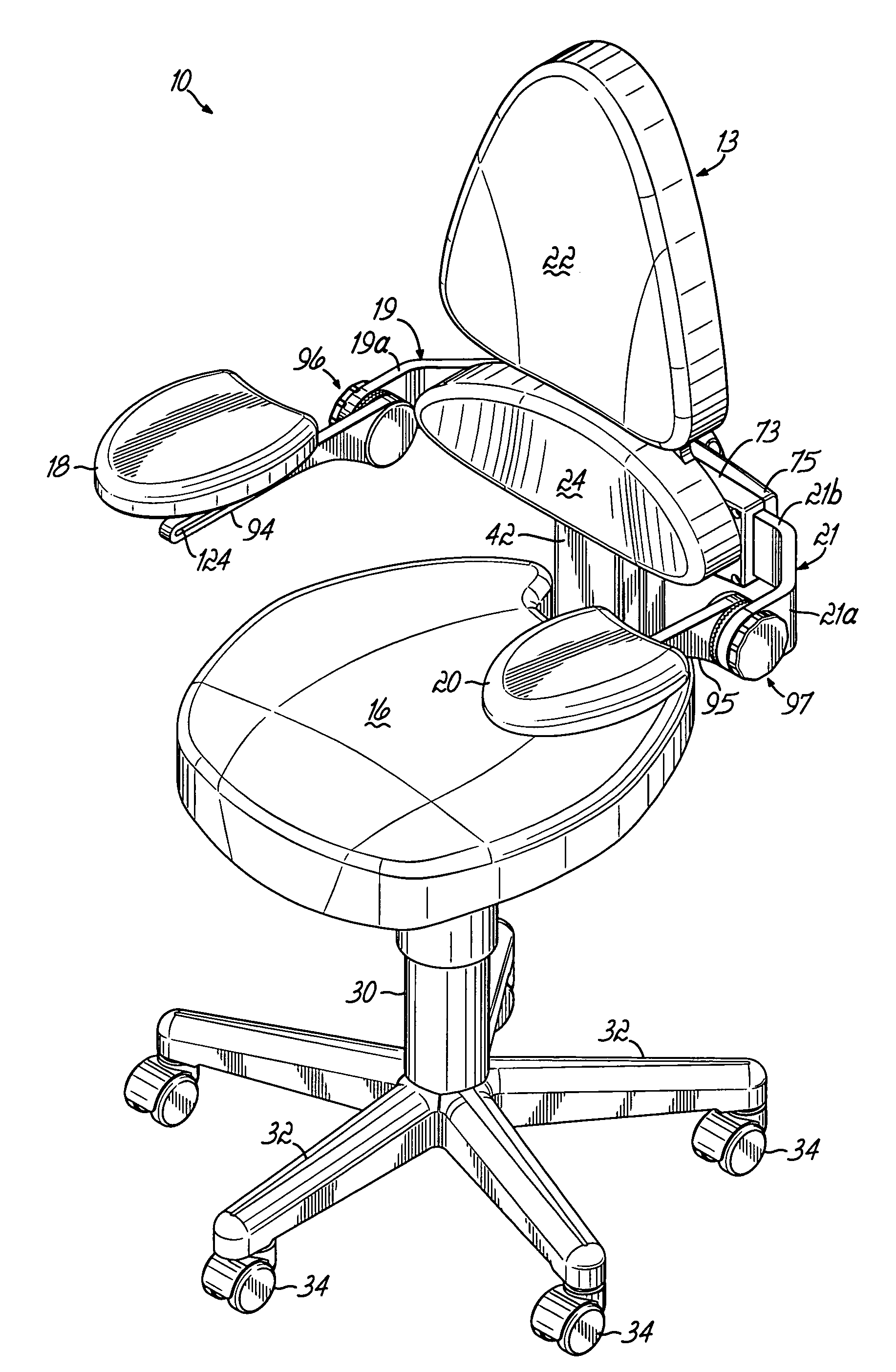
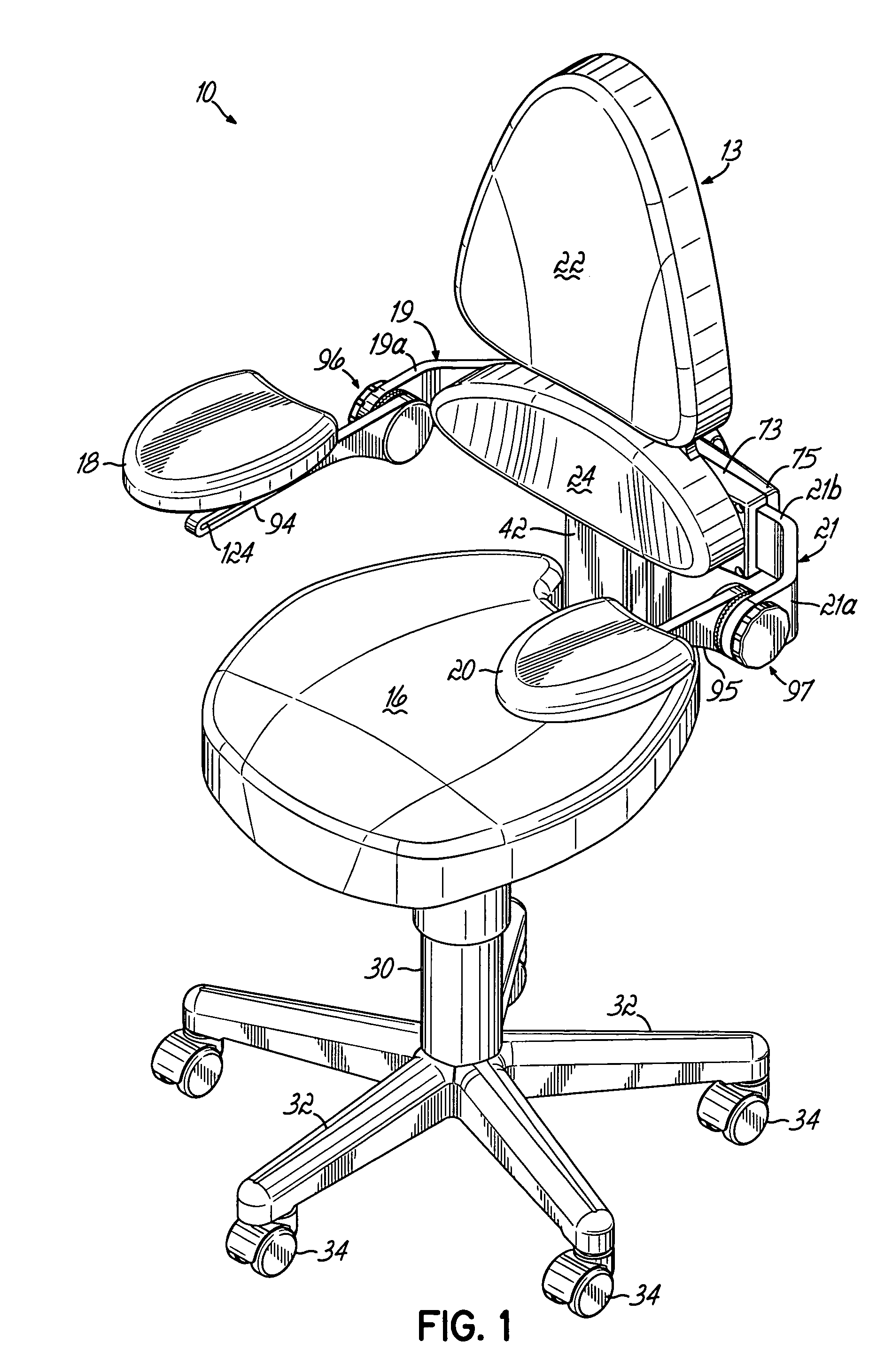
  • Figure 1
    Figure 1
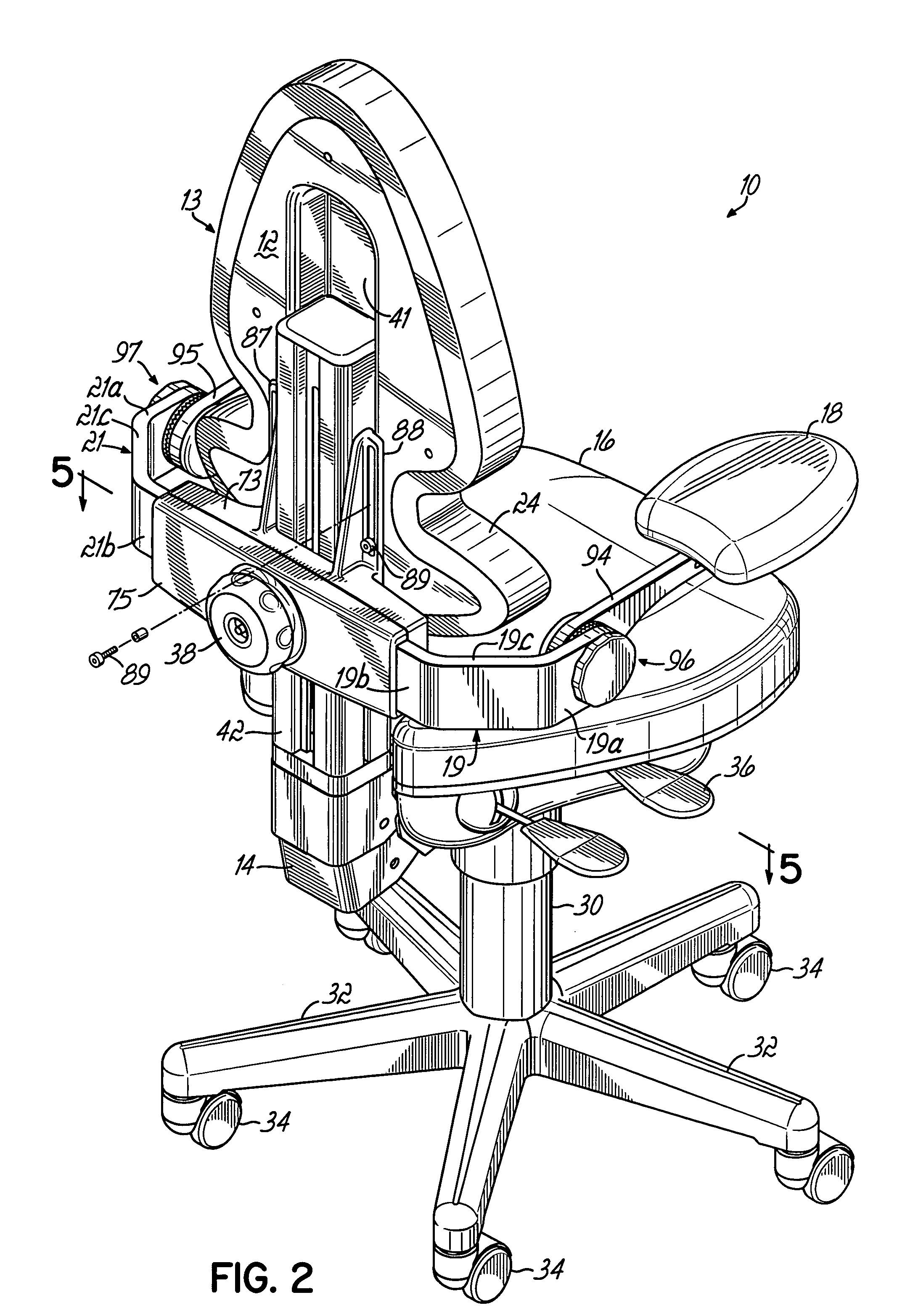
  • Figure 2
    Figure 2
  • Figure 3
    Figure 3
Patent Text Reader

Abstract

A task chair equipped with a mechanism for independently adjusting the height and width of support arms by the manual operation of a single adjustment knob. Each of the support arms includes a first arm portion and a second arm portion that are pivotally coupled by corresponding pivot joints. Each second arm portion carries one of a pair of arm pads. Each second arm portion may be inclined relative to the corresponding first arm portion for inclining the corresponding arm pad relative to a seat plate of the task chair. Each arm pad is joined with the corresponding second arm portion by a coupling mechanism that permits movement of each arm pad with two degrees of translational freedom and one degree of rotational freedom.
Need to check novelty before this filing date? Find Prior Art

Description

CROSS-REFERENCE TO RELATED APPLICATIONS

[0001] This application claims the benefit of U.S. Provisional Application No. 60 / 520,859 filed on Nov. 18, 2003, and the disclosure of which is hereby incorporated by reference herein in its entirety.FIELD OF THE INVENTION

[0002] The invention relates generally to chairs, and in particular, to a task chair having position-adjustable support arms.BACKGROUND OF THE INVENTION

[0003] Task chairs are familiar items of furniture commonly used in an office or other occupational environment by persons while working in a seated position. Traditionally, producing a task chair suitable for a broad spectrum of individuals is a difficult endeavor. A primary reason for this difficulty encountered by task chair manufacturers is that users of task chairs vary greatly in their body shape, relative physical size and proportions.

[0004] To enhance comfort, manufacturers create task chairs characterized by a high degree of adjustability so that the task chair can be con...

Examples

Embodiment Construction

[0033]References herein to terms such as “vertical”, “horizontal”, etc. are made by way of example, and not by way of limitation, to establish a frame of reference. Terms, such as “anterior”, “posterior”, “on”, “above”, “below”, “under”, “upper”, “lower”, “over”, “beneath”, “right”, “left”, “rear”, and “front” are defined with respect to a person seated in the task chair. It is understood various other frames of reference may be employed for purposed of describing the task chair without departing from the spirit and scope of the invention.

[0034]With reference to FIGS. 1 and 2, a task chair, constructed in accordance with the present invention, is designated generally by the reference numeral 10. Task chair 10 includes a seat cushion 16 and arm pads 18, 20 situated near the free ends of respective support arms 19, 21. Task chair 10 further includes a back assembly, generally indicated by reference numeral 13, with a back cushion 22, a lumbar pad 24, and a back support member 12 to wh...