Utility companies are often unwilling to run utilities to
a site until the service meter can be secured from theft of service and secured from damage during continued construction.
An additional issue that has grown in importance is the act of bringing the utilities to the site from the
common line.
This has caused problems in the sequential digging of trenches from the most downstream utility distribution point to the construction site.
Each utility typically digs its own trench, but only after having any previously installed utilities marked, which adds costs but still does not eliminate accidents.
Safety requirements to keep gas utility meters a
minimum distance from electrical connections that are defined as a “source of ignition” and to keep electrical lines a
minimum distance from gas lines in a common
ditch, as well as scheduling complications, have discouraged the use of the same trench for electrical and gas lines.
Further, the lack of security has discouraged the early installation of gas service.
However, in northern climates, the temperature can also adversely affect materials and workers.
Although portable
propane heaters are often used, such heaters typically require very large and cumbersome tanks and are very localized in their effect.
Unfortunately, to date there have not been accepted
natural gas preconstruction meters that are sufficiently reliable and which can ensure proper mounting and spacing relative to nearby electrical service.
However, preconstruction gas utility meters are less common and essentially involve the earlier installation of a meter directly on an upwardly extending rigid
gas supply line.
A problem encountered in the use of the utility meter pedestal disclosed in U.S. Pat. No. 4,864,467 is that the rigid,
metal flat strap secured to the top of the foundation is subject to being detached from the foundation and the utility meter pedestal pulled outwardly away from the foundation by building contractors, because the location of said strap conflicts with the operations of carpenters and masons working behind the pedestal in the process of constructing a building on the top of the foundation.
Under such construction conditions, the utility meter pedestal disclosed in said patent is subject to damage, and a subsequent rejection by electrical inspectors.
Also, follow-up repair operations are necessitated which increase the costs of employing such utility meter pedestals.
A
disadvantage in the use of the utility meter pedestal disclosed in the '467 patent is that it is difficult to secure accurately the pedestal post in a vertical position on a foundation, because of the fact that both the lower mounting plate and the rigid,
metal flat strap for attachment to the top of the foundation must be attached by power driven nails while the post is held manually in a vertical position by the use of a carpenter's level.
Still another
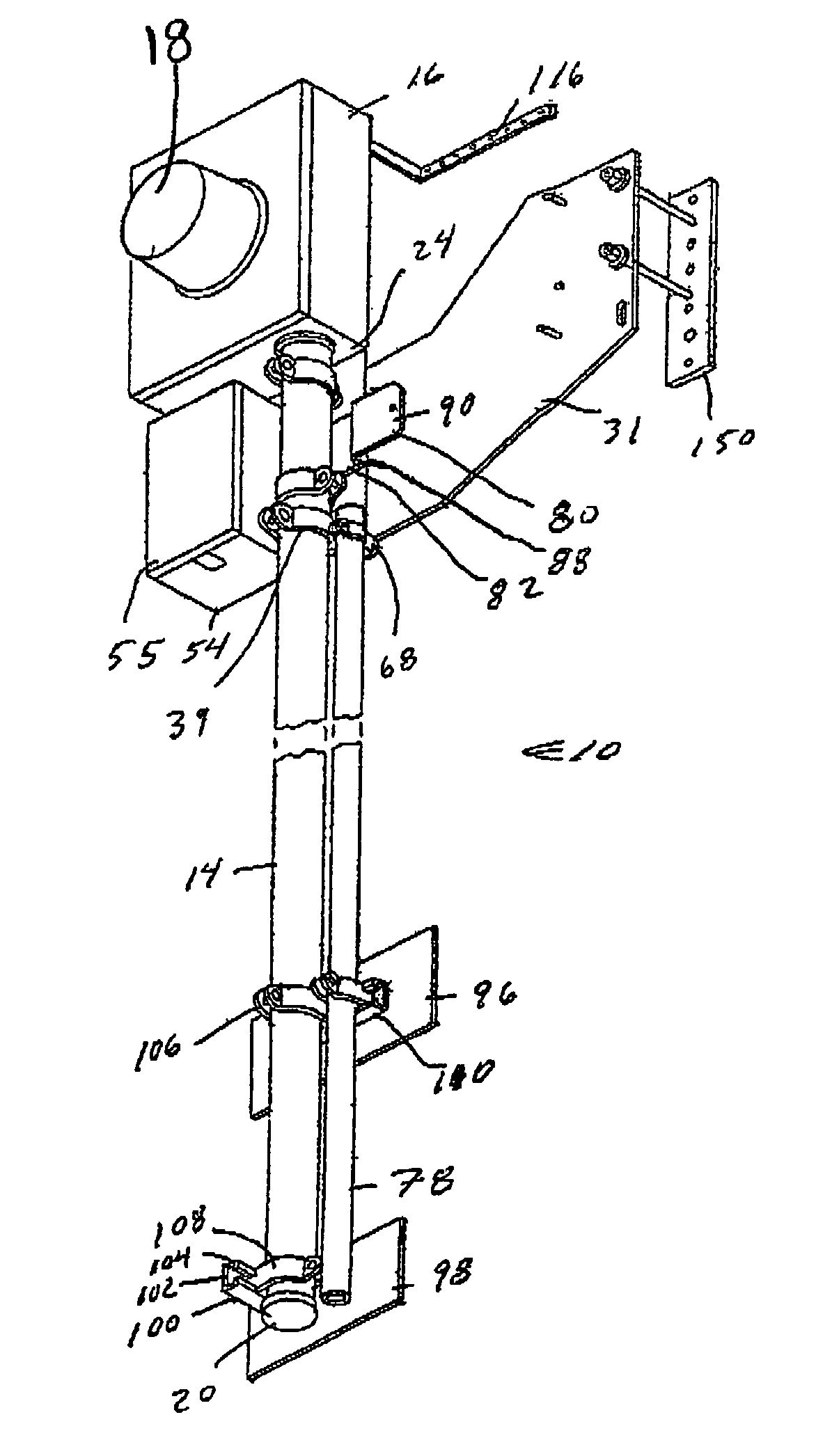
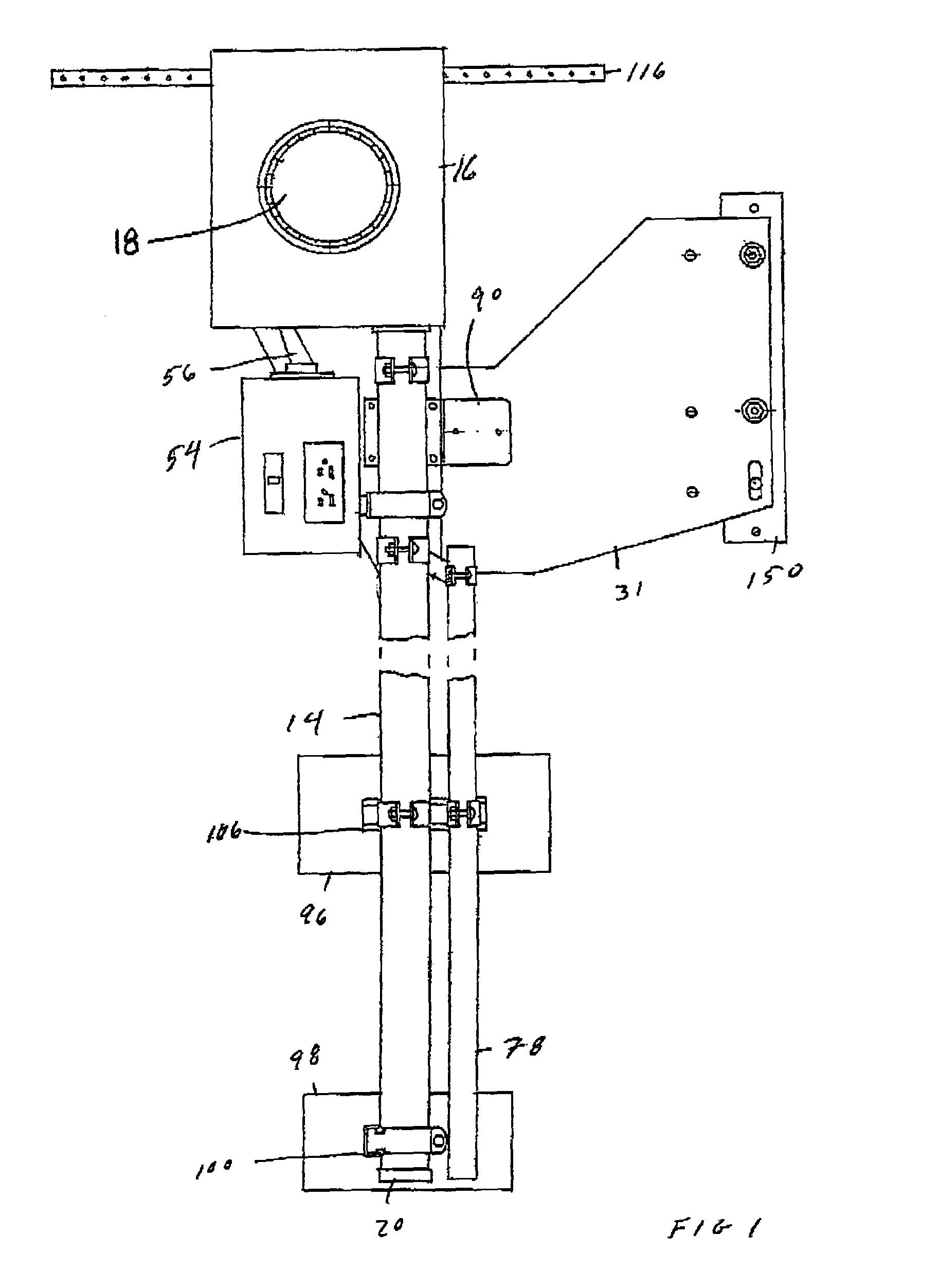
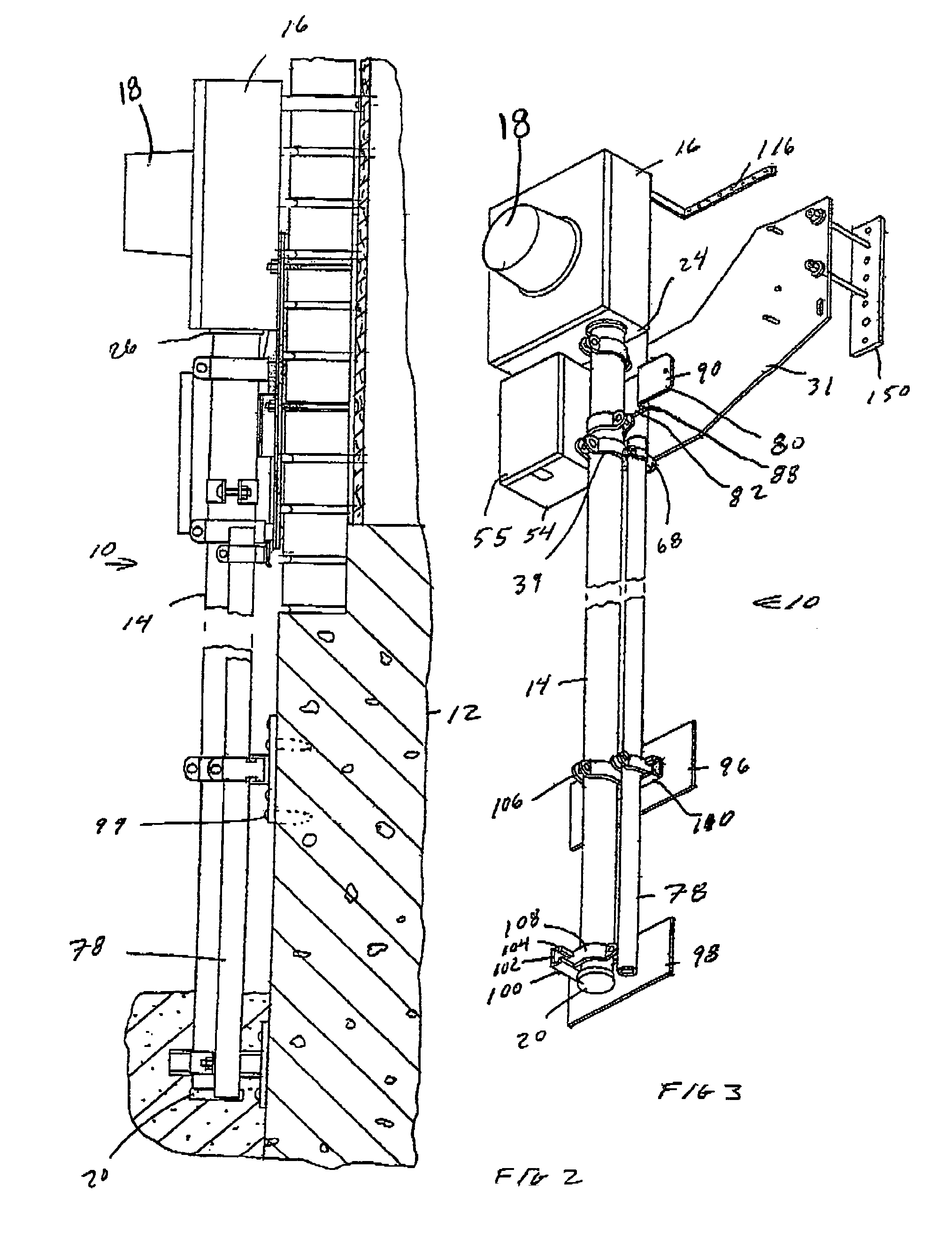
disadvantage in the use of the utility meter pedestal disclosed in the '467 patent is that it requires an additional member, besides the rigid, vertical steel post, in the form of a
service line conduit to house the power
line extension from an underground utility
service line to the meter box attached to the top of the rigid, vertical steel post.
The utility meter pedestal disclosed in said patent also does not provide any service conduit, for housing communications cables such as phone and
cable television service lines, to prevent damage to such cables during a
building construction period.
Without such a separate service conduit the last mentioned cables are left
lying on the ground by the foundation where they may be damaged, and need repair or replacement, at added costs.
However, there was still the obstacle of locating and coordinating installation of gas utility in addition to other utilities.



 Login to View More
  Login to View More