

Watch cuff
a cuff and watch technology, applied in the field of watch cuffs, can solve the problems of premature failure, interference with observation, impair operation, etc., and achieve the effect of preserving the tailored appearance of the watch cuff and being easily visible and accessibl
- Summary
- Abstract
- Description
- Claims
- Application Information
AI Technical Summary
Benefits of technology
Problems solved by technology
Method used
Image

Examples
Embodiment Construction
[0030]Preferred embodiments of the invention will now be described with reference to various examples of how the invention can best be made and used. Like reference numerals are used throughout the description and several views of the drawing to indicate like or corresponding parts.
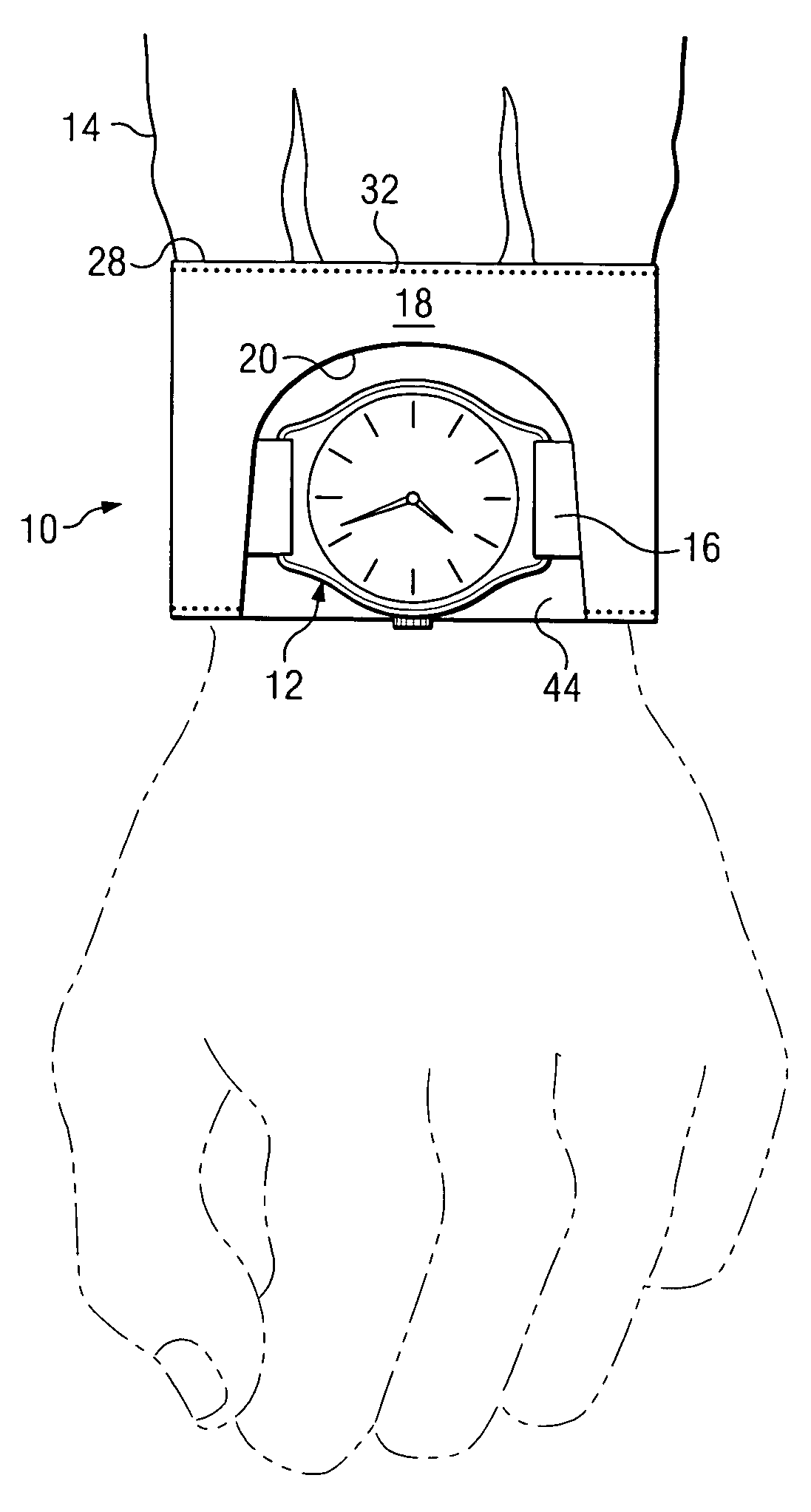
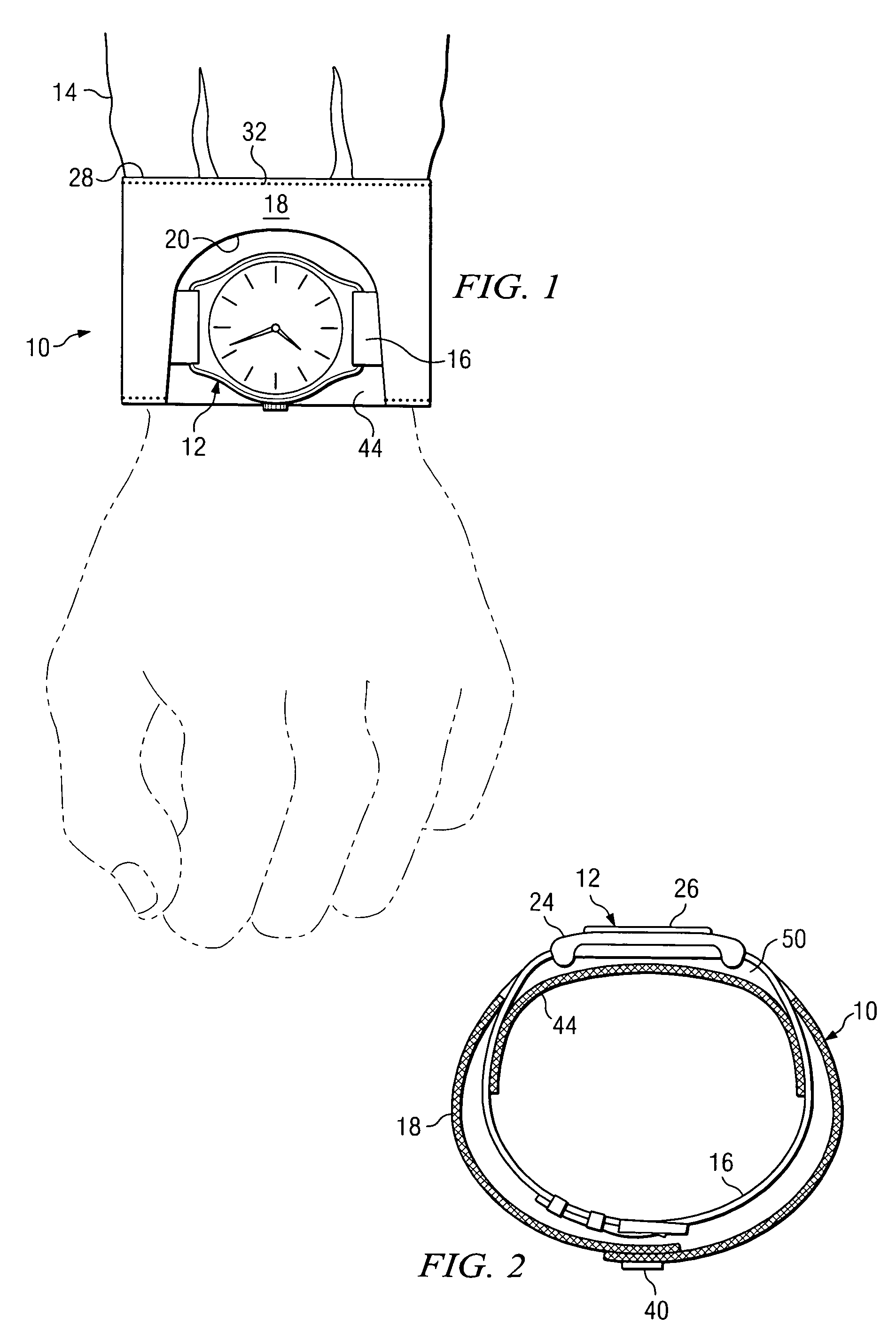
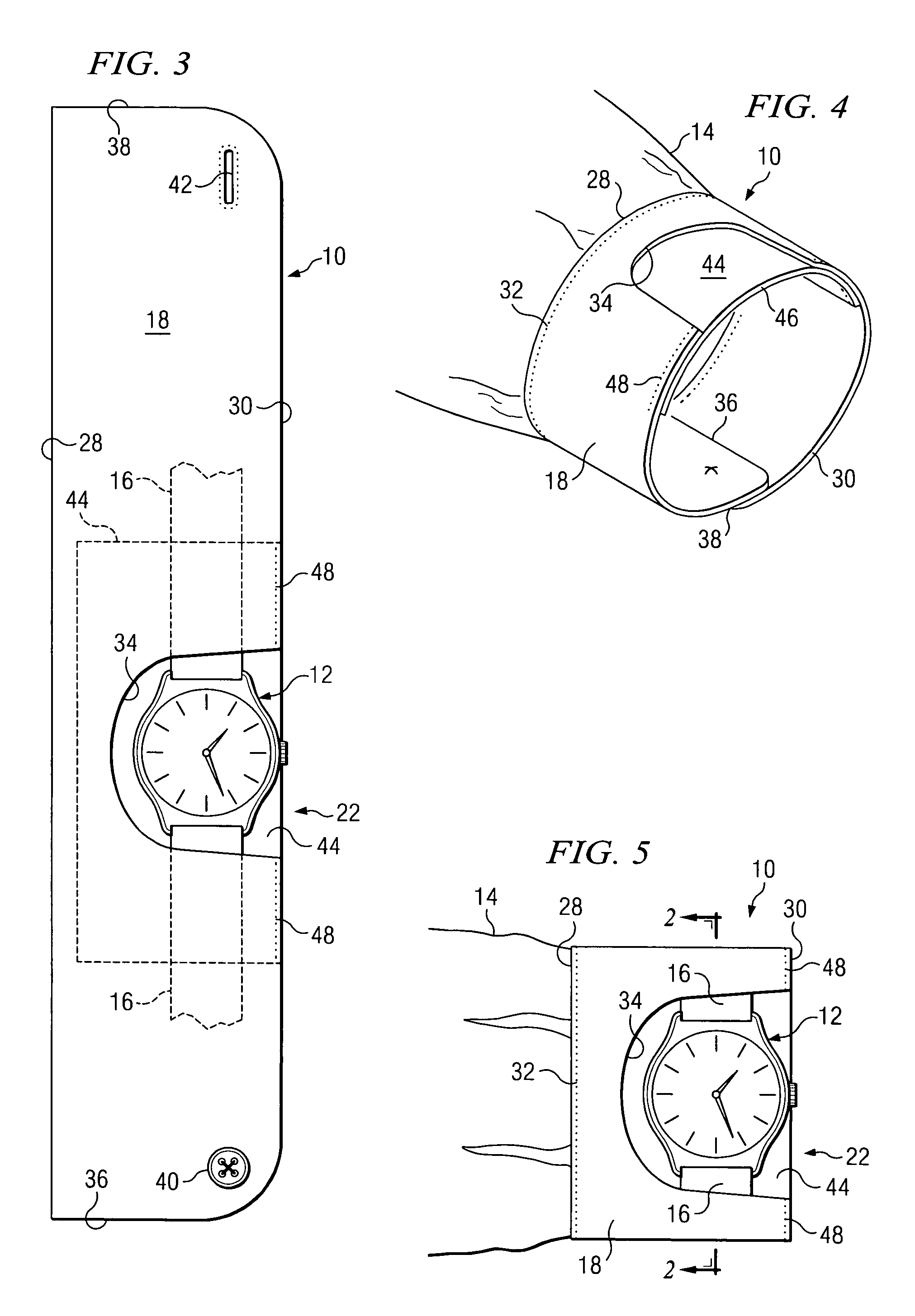
[0031]Referring now to FIG. 1 and FIG. 4, a watch cuff 10, having means for displaying a conventional wristwatch 12 or other wrist-mounted instrument, is attached as a barrel cuff extension on a sleeve 14 of a long-sleeved shirt or similar garment, for example a man's dress shirt. The watch cuff 10 will accommodate a wristwatch 12 having a conventional strap 16 or expansion band for retaining the watch in an operative viewing position on the wrist of a wearer.
[0032]The watch cuff 10 includes a cuff band 18 that is intersected by a cut-out opening 20 forming a viewing window 22 through which the body 24 and face 26 of a wristwatch or other wrist-mounted instrument can be viewed and accessed when the watch ...
PUM
 Login to View More
 Abstract
Description
Claims
Application Information
 Login to View More