
Method for making a cylinder
a technology of cylinders and cylinder bodies, applied in the field of making cylinders, can solve the problems of high manufacturing cost of cylinders and engines, costly processing machines, and known methods, and achieve the effect of rapid and cost-effective manufacture of cylinders
- Summary
- Abstract
- Description
- Claims
- Application Information
AI Technical Summary
Benefits of technology
Problems solved by technology
Method used
Image

Examples
Embodiment Construction
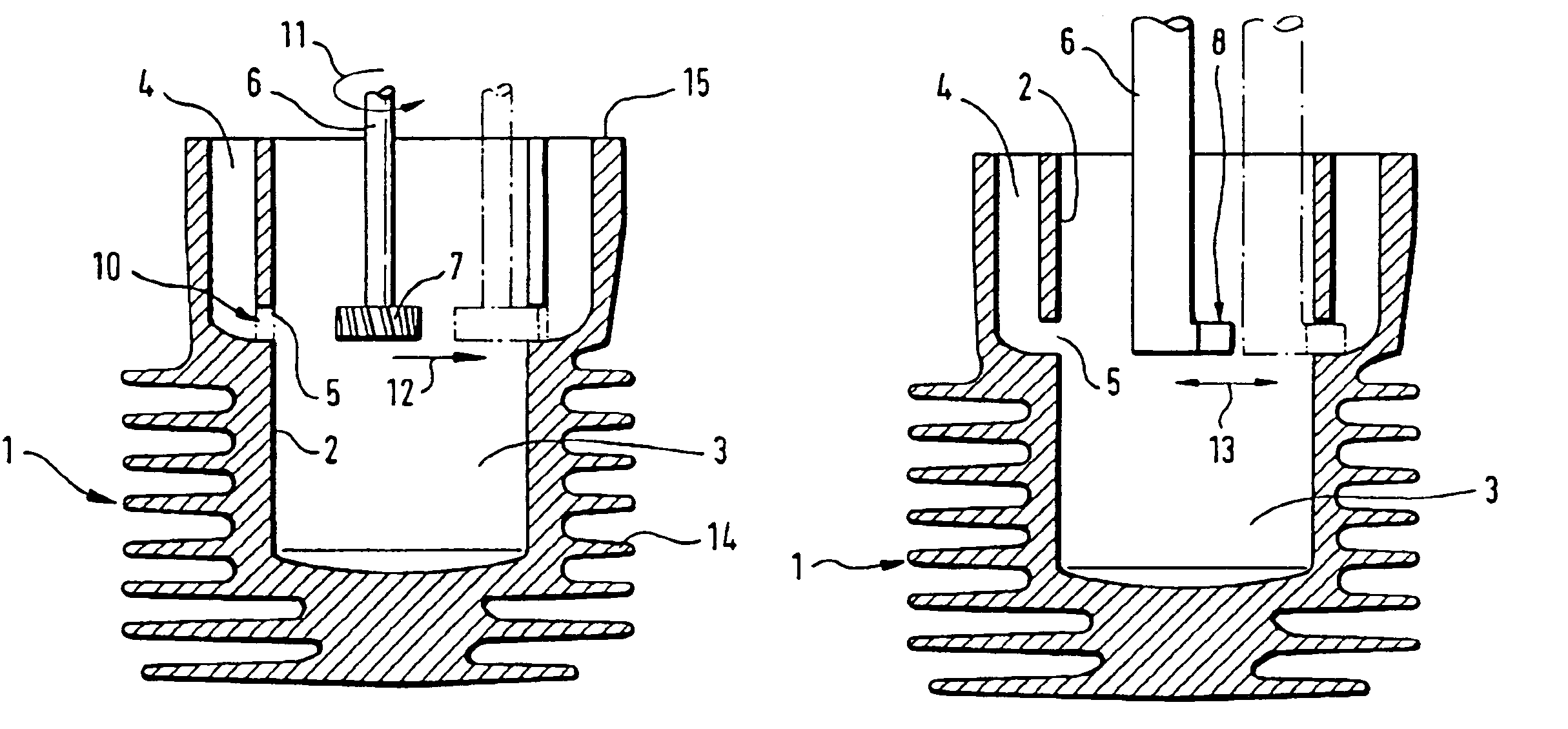
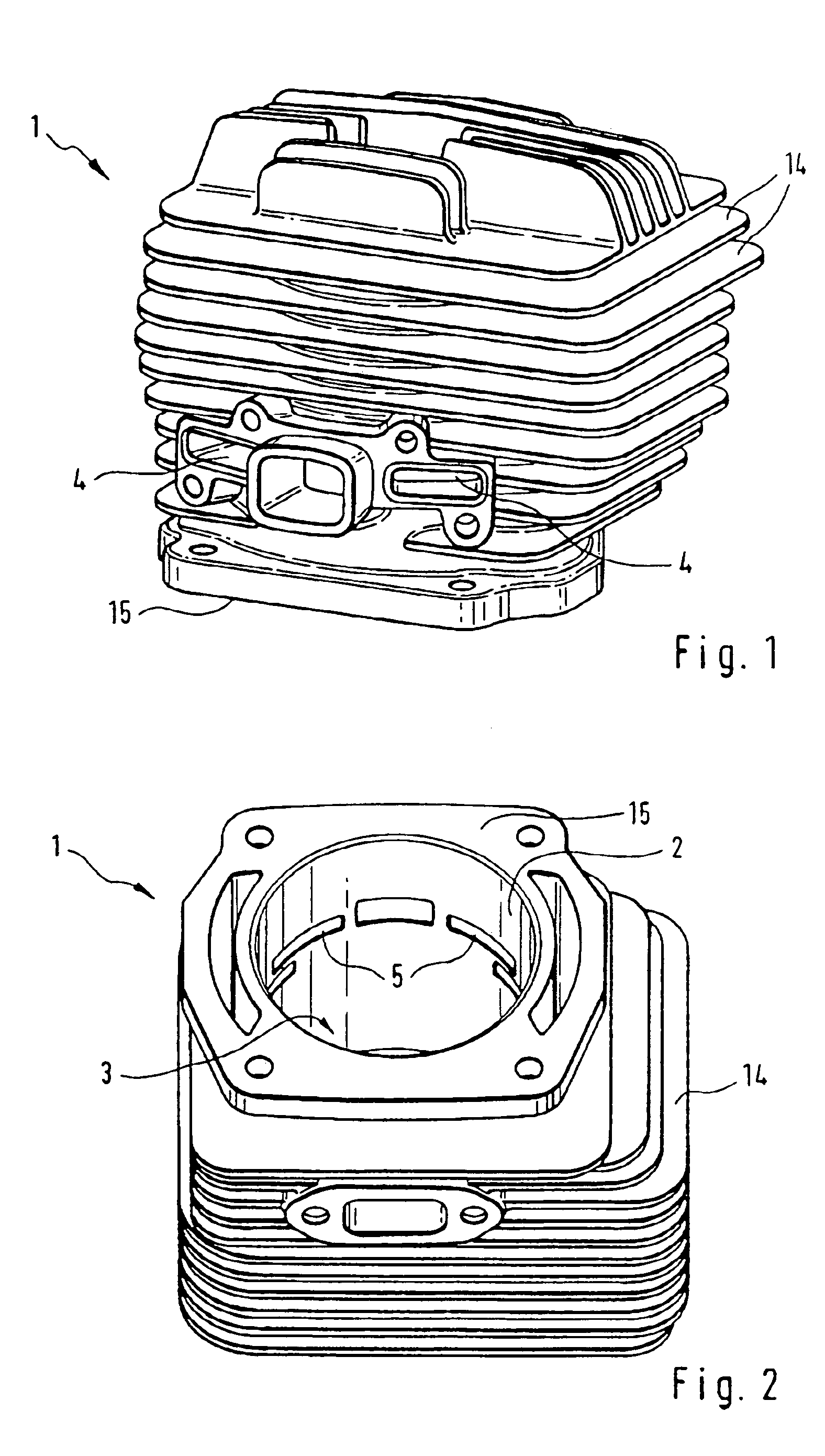
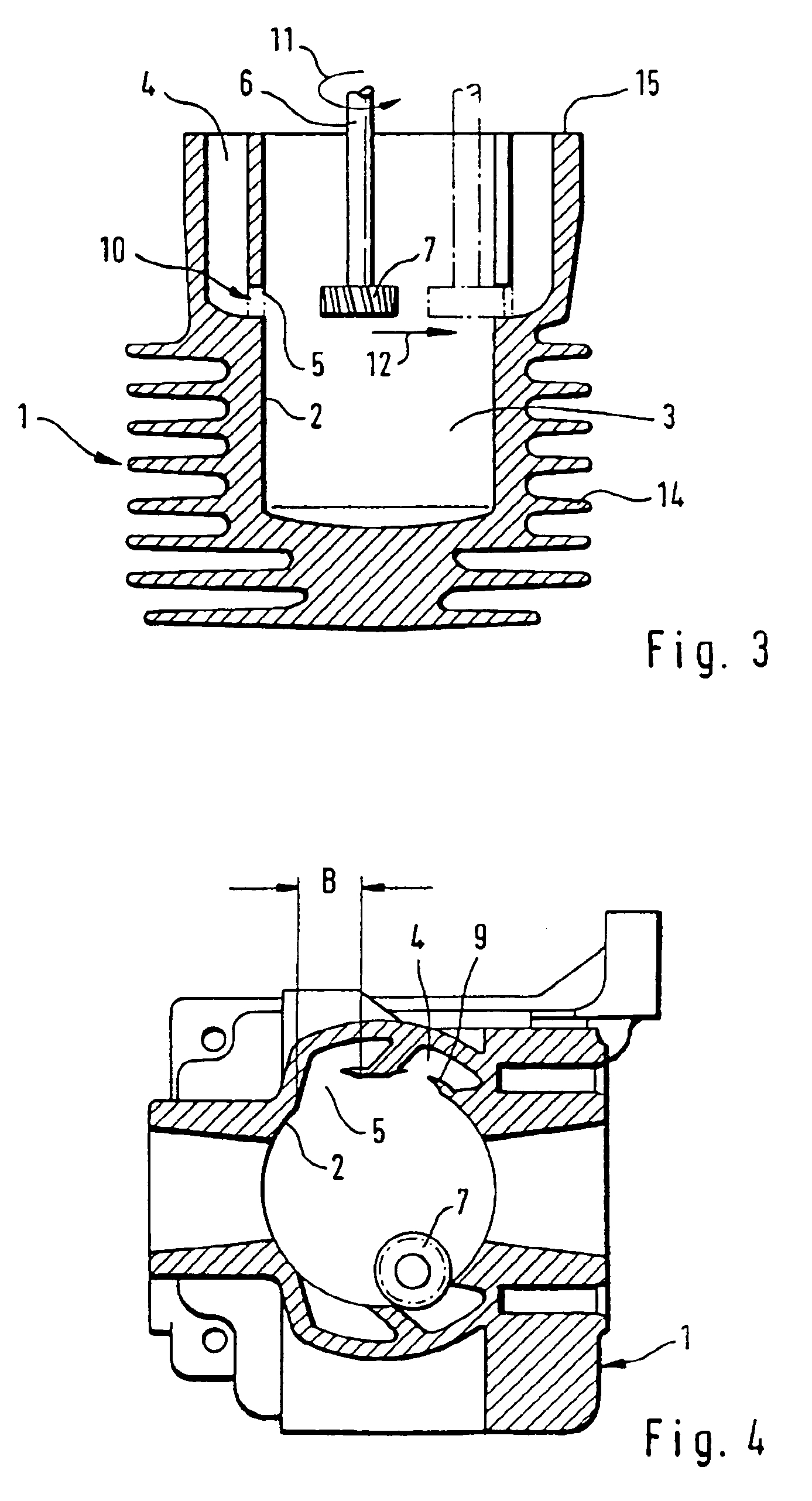
[0020]FIGS. 1 and 2 show a cylinder housing 1 for an internal combustion engine of a portable handheld work apparatus which is originally formed as a pressure die cast part and delimits with a cylinder wall 2 an interior space 3 for accommodating a reciprocating piston. The cylinder wall 2 is equipped with cooling ribs 14 on its outer side for air cooling the cylinder. The cylinder housing 1 is cast integrally and is open at one end for insertion of the reciprocating piston. The open end is configured with a planar flange 15 for connecting to an engine block. Control windows 5 are machined into the cylinder wall 2 and define the openings of transfer channels 4 into the interior space 3 of the cylinder and are opened and closed during operation of the engine for the purpose of a charge exchange by the reciprocating movement of the piston. Depending upon the type of construction of the engine, the transfer channels 4 can supply air or can be supplied with an air / fuel mixture from the ...
PUM
| Property | Measurement | Unit |
|---|---|---|
| thrust | aaaaa | aaaaa |
| attack angle | aaaaa | aaaaa |
| height | aaaaa | aaaaa |
Abstract
Description
Claims
Application Information
 Login to View More