Unlock instant, AI-driven research and patent intelligence for your innovation.
Interstitial prostatism model animal
Inactive Publication Date: 2008-08-26
TAIHO PHARMA CO LTD
View PDF0 Cites 42 Cited by
Summary
Abstract
Description
Claims
Application Information

AI Technical Summary
This helps you quickly interpret patents by identifying the three key elements:
Problems solved by technology
Method used
Benefits of technology
[0055](c) selecting a test substance that reduces the stromal area ratio or weight based on the result obtained in (b) in comparison with the stromal area ratio or weight of the implanted tissue of the non-human animal model for prostatic stromal hyperplasia before administering the test substance.
Problems solved by technology
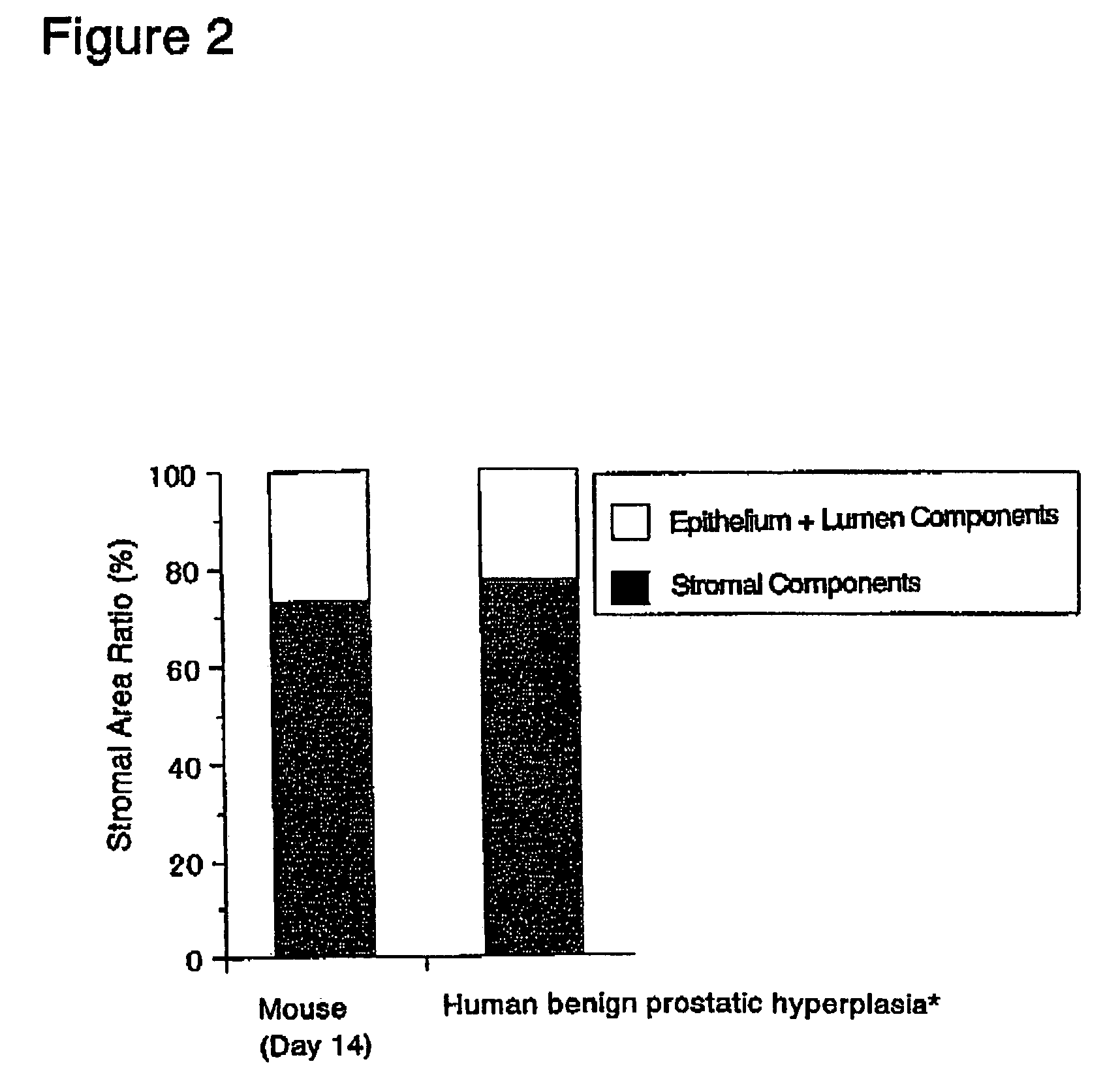
However, the matured prostate glands derived from the mouse and rat obtained by the above-described method exhibited epithelial-dominant tissue structures, which are different from the stroma-dominant tissue structures observed in human benign prostatic hyperplasia.
Method used
the structure of the environmentally friendly knitted fabric provided by the present invention; figure 2 Flow chart of the yarn wrapping machine for environmentally friendly knitted fabrics and storage devices; image 3 Is the parameter map of the yarn covering machine
View more
Image
Smart Image Click on the blue labels to locate them in the text.
Viewing Examples
Smart Image
Click on the blue label to locate the original text in one second.
Reading with bidirectional positioning of images and text.
[0169]Under etheranesthesia, fetuses were removed from female SD rats that were 21 days pregnant. From the removed male fetuses, urogenital sinuses were removed also under etheranesthesia while observing through a stereoscopic microscope. The urogenital sinuses were stored in a sterilized culture medium until implantation.
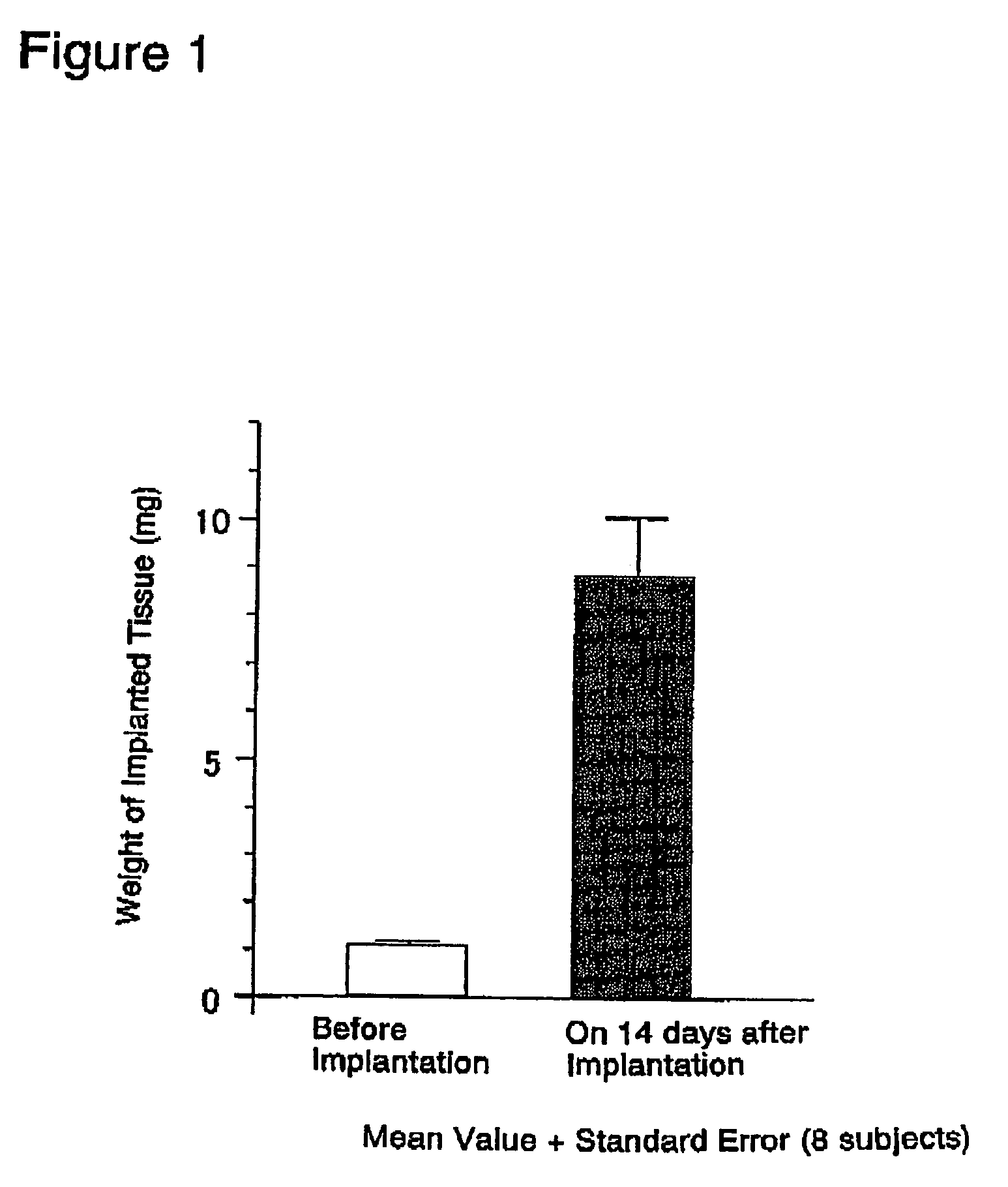
[0170]The abdominal skin adjacent the left femoral region of 6-week old BALB / c male nude mice was cut open about 2 to 3 mm under etheranesthesia. A single rat fetal urogenital sinus obtained in (1) above was subcutaneously implanted after incision using a forceps and the incision was sutured. Thereafter, these nude mice were reared in clean racks (Rat Bracket Cages, 3 to 4 mice / cage) for 2 weeks under the following conditions:[0171]Temperature: 20 to 26° C.[0172]Humidity: 30 to 70%[0173]Lighting hours: 12-hour light-dark cycle;...
[0184]Under ether anesthesia, fetuses were removed from female SD rats that were 20 days pregnant. From the removed fetuses, the urogenital sinuses were removed under ether anesthesia while observing through a stereoscopic microscope. The urogenital sinuses were stored in a sterilized culture medium until implantation.
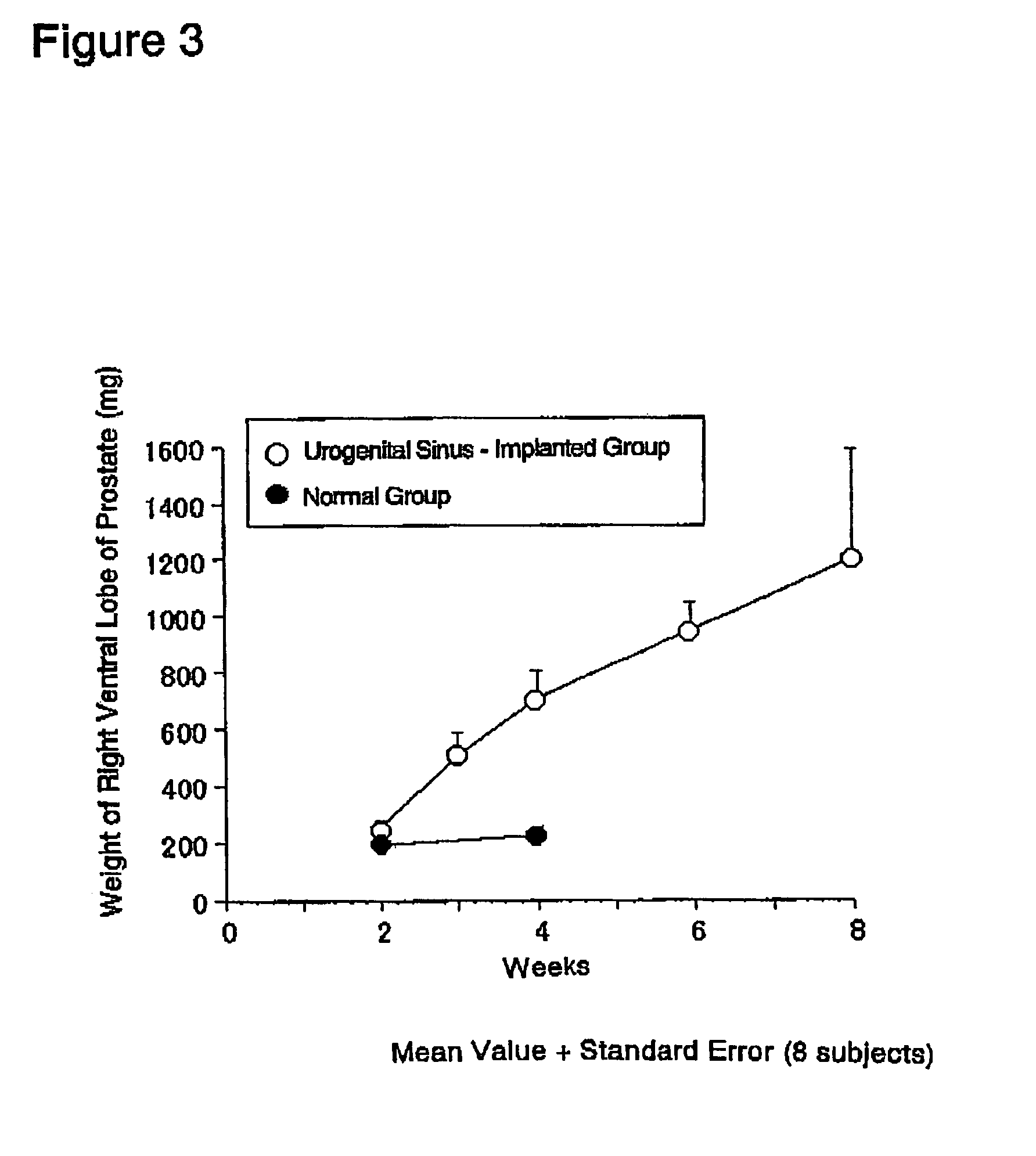
[0185]The prostate glands were exposed by midline incision using 6-week old male SD rats under ether anesthesia. The capsule of prostate right ventral lobe was slightly cut open while observing through a stereoscopic microscope. Two of the fetal urogenital sinuses obtained in (1) above were implanted using a forceps beneath the capsule, and the incision in the capsule was sutured. The cutabdominal skin then closed and the rats were reared for 2 to 8 weeks in normal rearing cages (Rat Bracket Cages, 3 to 4 rats / cage) under the following conditi...
[0199]Urogenital sinuses were removed from the fetuses of female SD rats (donor animal) that were 20 days pregnant in the same manner as in Example 2 (1). The urogenital sinuses were stored in a sterilized culture medium until implantation.
[0200]In the same manner as in Example 2 (2), a single rat fetal urogenital sinus obtained in (1) above was implanted beneath the capsule of prostate right ventral lobe of each 6-week old male SD rat (recipient animal) (n=18×2), and the prostatic capsule was sutured. The implanted rats were reared in normal rearing cages for 3 to 6 weeks thereafter.
(3) Weighing of Implanted Tissue (Rat Fetal Urogenital Sinus-derived Tissue)
[0201]The implanted tissues (rat fetal urogenital sinus-derived tissues) were removed from the above-prepared rats under ether anesthesia on 3 weeks (n−18) and 6 weeks (n=18) after implantation, and were...
the structure of the environmentally friendly knitted fabric provided by the present invention; figure 2 Flow chart of the yarn wrapping machine for environmentally friendly knitted fabrics and storage devices; image 3 Is the parameter map of the yarn covering machine
Login to View More
PUM
Login to View More
Abstract
The present invention provides an animal model for prostatic stromal hyperplasia, and a method for screening for a substance effective for preventing / treating human benign prostatic hyperplasia using the animal model. The animal model for prostatic stromal hyperplasia is produced by implanting the fetal urogenital sinus of a non-human animal under the skin or beneath the prostatic capsule of a non-human animal belonging to the species of the same as or different from the animal. A substance effective for preventing / treating human benign prostatic hyperplasia can be screened by administering a test substance to the animal model and measuring the preventive or therapeutic effect of the test substance upon the implanted tissue (fetal urogenital sinus or tissue derived therefrom).
Description
[0001]This application is the U.S. National Phase under 35 U.S.C. §371 of International Application PCT / JP02 / 04477, filed on May 8, 2002, which claims priority of Japanese Patent Application No. 2001-138123, filed May 9, 2001. The International Application was published under PCT Article 21(2) in a language other than English.TECHNICAL FIELD[0002]The present invention relates to an animal model for prostatic stromal hyperplasia and a process for producing it. The invention also relates to a method for screening for a substance effective for preventing or treating human benign prostatic hyperplasia using such an animal model. The invention is further directed to a method for evaluating the preventive or therapeutic effect of each test substance on human benign prostatic hyperplasia.BACKGROUND OF THE INVENTION[0003]The prostate gland is a chestnut-shaped, hard mass of tissue located in the anteroinferior part of the male urinary bladder and between the urinary bladder and the urogenit...
Claims
the structure of the environmentally friendly knitted fabric provided by the present invention; figure 2 Flow chart of the yarn wrapping machine for environmentally friendly knitted fabrics and storage devices; image 3 Is the parameter map of the yarn covering machine
Login to View More
Application Information
Patent Timeline
Application Date:The date an application was filed.
Publication Date:The date a patent or application was officially published.
First Publication Date:The earliest publication date of a patent with the same application number.
Issue Date:Publication date of the patent grant document.
PCT Entry Date:The Entry date of PCT National Phase.
Estimated Expiry Date:The statutory expiry date of a patent right according to the Patent Law, and it is the longest term of protection that the patent right can achieve without the termination of the patent right due to other reasons(Term extension factor has been taken into account ).
Invalid Date:Actual expiry date is based on effective date or publication date of legal transaction data of invalid patent.