

One-way data transfer system with built-in data verification mechanism
a data transfer system and data verification technology, applied in the field of data network security, can solve the problems of unfavorable data transfer of data or information of any kind, physical inability to transfer data or information in the reverse direction, and inability to hack the imposed unidirectionality of data flow
- Summary
- Abstract
- Description
- Claims
- Application Information
AI Technical Summary
Problems solved by technology
Method used
Image

Examples
Embodiment Construction
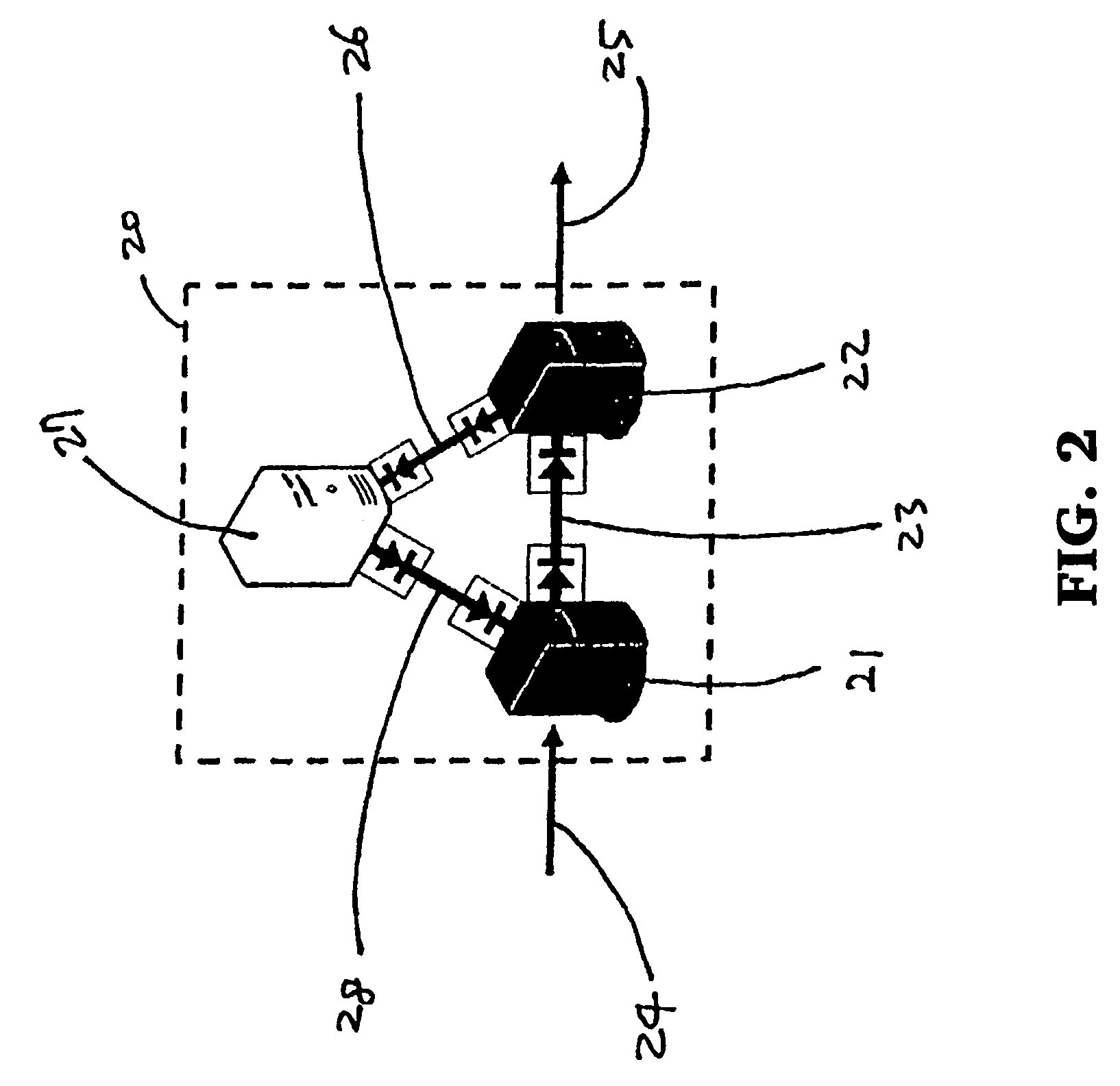
[0034]Illustrated in FIG. 2 is a schematic diagram of an embodiment of the present invention for a one-way data transfer system with built-in verification mechanism. The system 20 comprises a Send Node 21 coupled to the source network through a connection 24, a Receive Node 22 coupled to the destination network through a connection 25, and a Feedback Node 27. The Send Node 21 is connected to the Receive Node 22 by a one-way data link 23, the Receive Node 22 is connected to the Feedback Node 27 by a one-way data link 26, and the Feedback Node 27 is connected to the Send Node 21 by a one-way data link 28. As indicated by the arrow-bar symbols (only intended to symbolize the unidirectionality of data flow) in FIG. 2, the system 20 is designed to only allow unidirectional data flow from the Send Node to the Receive Node, from the Receive Node to the Feedback Node, and from the Feedback Node to the Send Node. It is noted that this embodiment of the present invention allows no direct bila...
PUM
 Login to View More
 Abstract
Description
Claims
Application Information
 Login to View More